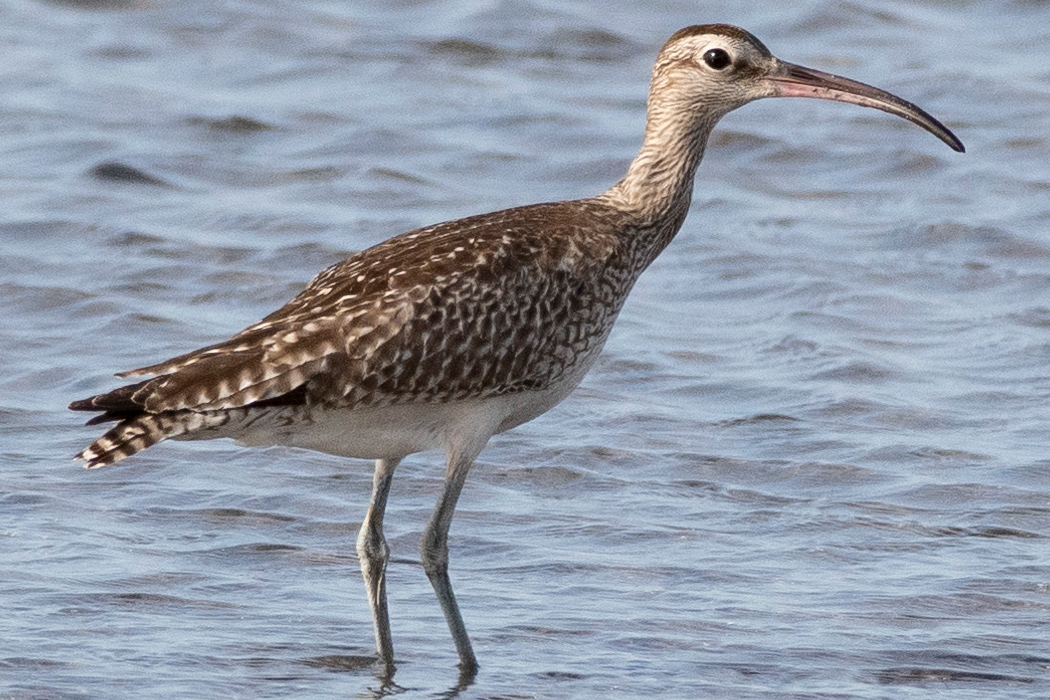
Whimbrel
| Scientific name | Numenius phaeopus |
| English name | Whimbrel |
| Japanese name | 中杓鴫 |
| Class | Aves |
| Order | Charadriiformes |
| Family | Scolopacidae |
| Genus | Numenius |
| Species | phaeopus |
| Subspecies | --- |
| Full length | about 40cm |
| Distribution | across the world. |
Characteristics
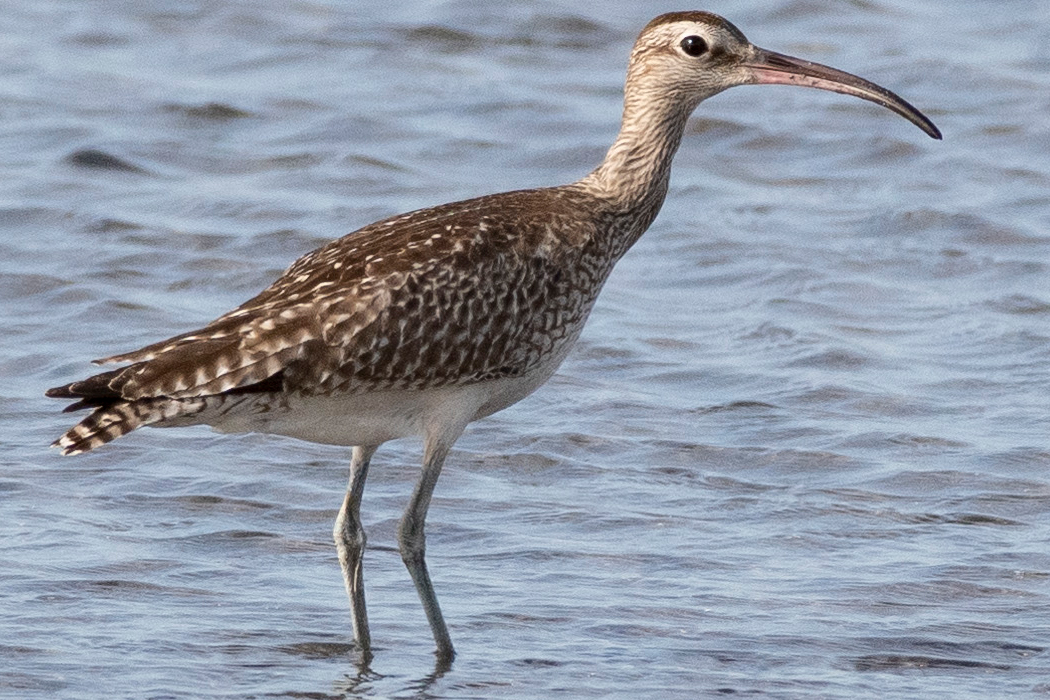
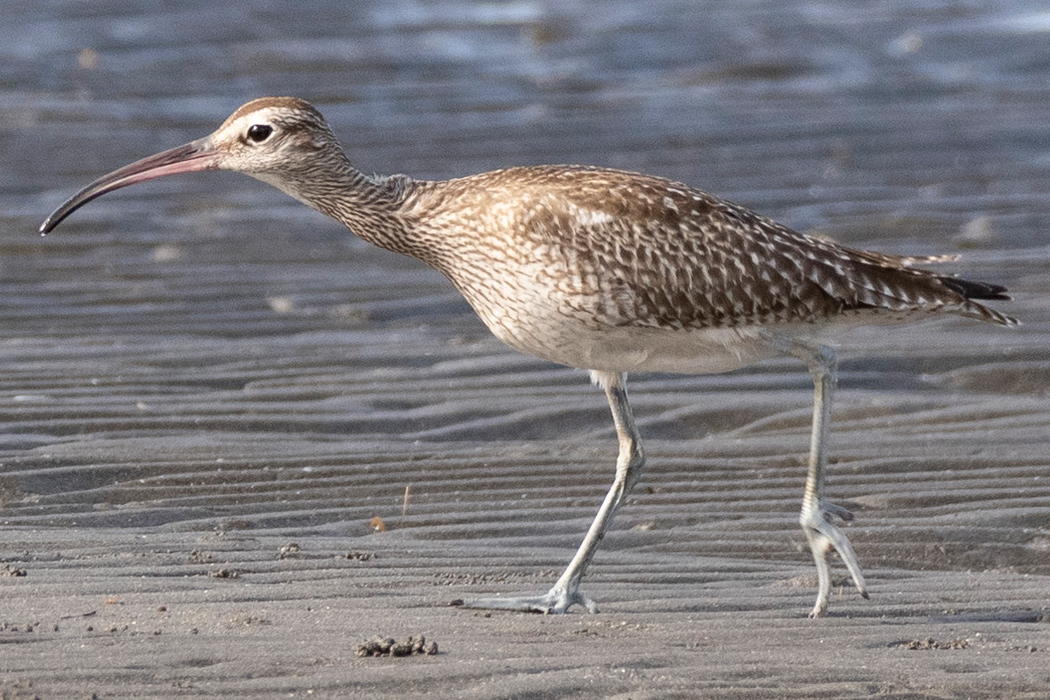
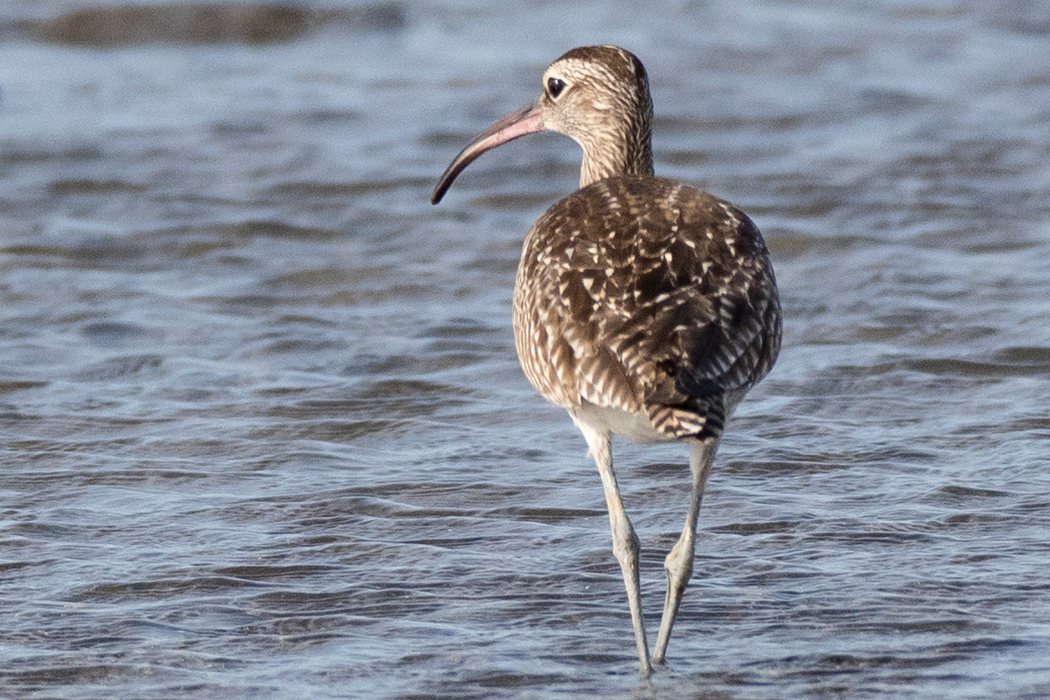
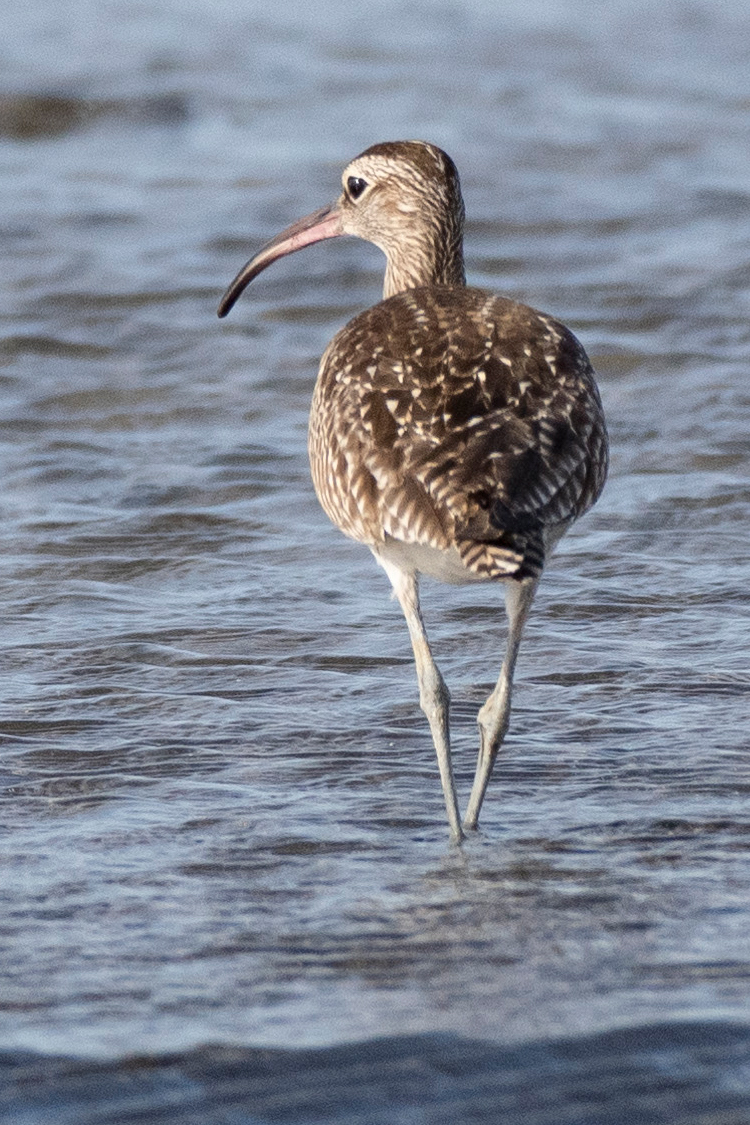
This sandpiper has a distinctive beak with a downwardly curved tip. Its color is a mixture of gray and brown. The midline of the head runs clearly, and the face looks like a striped pattern of brown and white. The beak is lead-colored or flesh-colored. The legs are blue-gray.
Ecology
It flies to tidal flats and rice fields as a migratory bird. They sometimes travel in small groups, but when migrating they form large flocks.
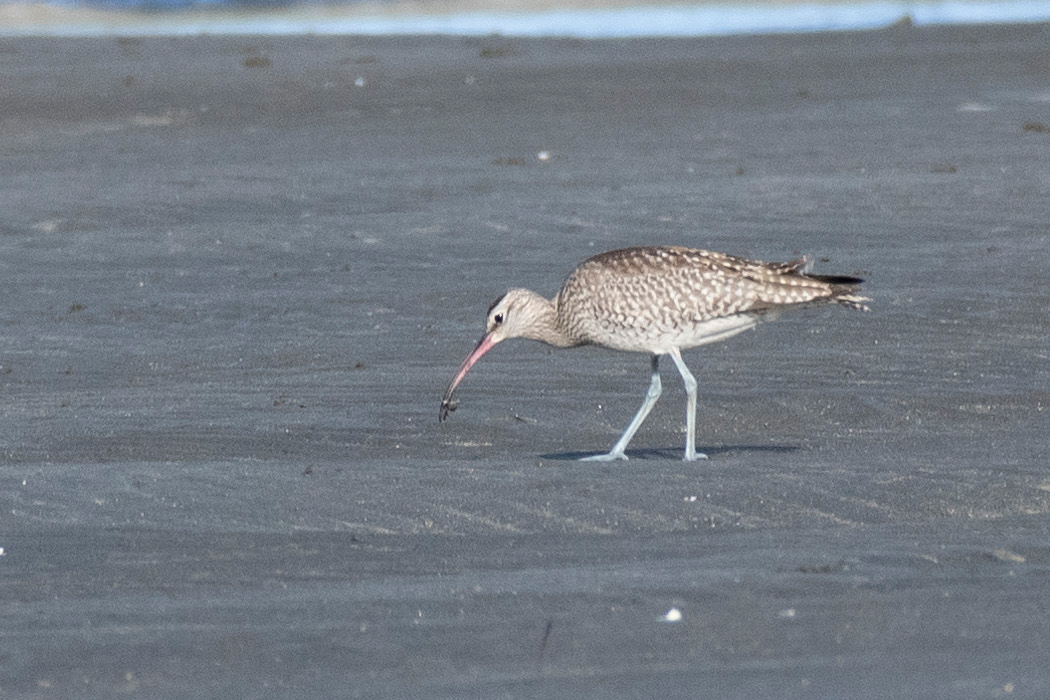
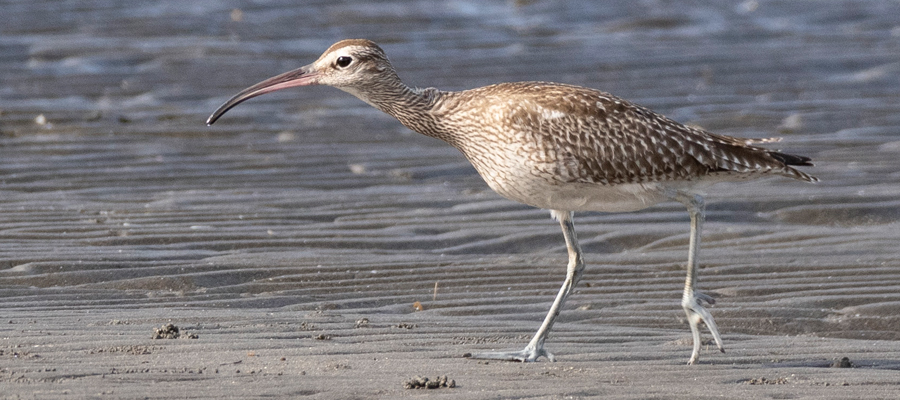
They dig their beaks into the sand to capture and eat small animals such as crustaceans.
Habitat
Sanbanze
I photographed two of them walking along Sanbanze in the morning. It was walking a little far from the water's edge. It foraged with its beak in the sand.
When you stretch your neck, it becomes an elongated silhouette.
Pictures
Introducing a picture of Whimbrel.