Long-toed Stint
| Scientific name | alidris subminuta |
| English name | Long-toed Stint |
| Japanese name | 雲雀鴫 |
| Class | Aves |
| Order | Charadriiformes |
| Family | Scolopacidae |
| Genus | alidris |
| Species | subminuta |
| Subspecies | --- |
| Full length | 14cm |
| Distribution | Breeds in Siberia and migrates south for the winter. |
Characteristics
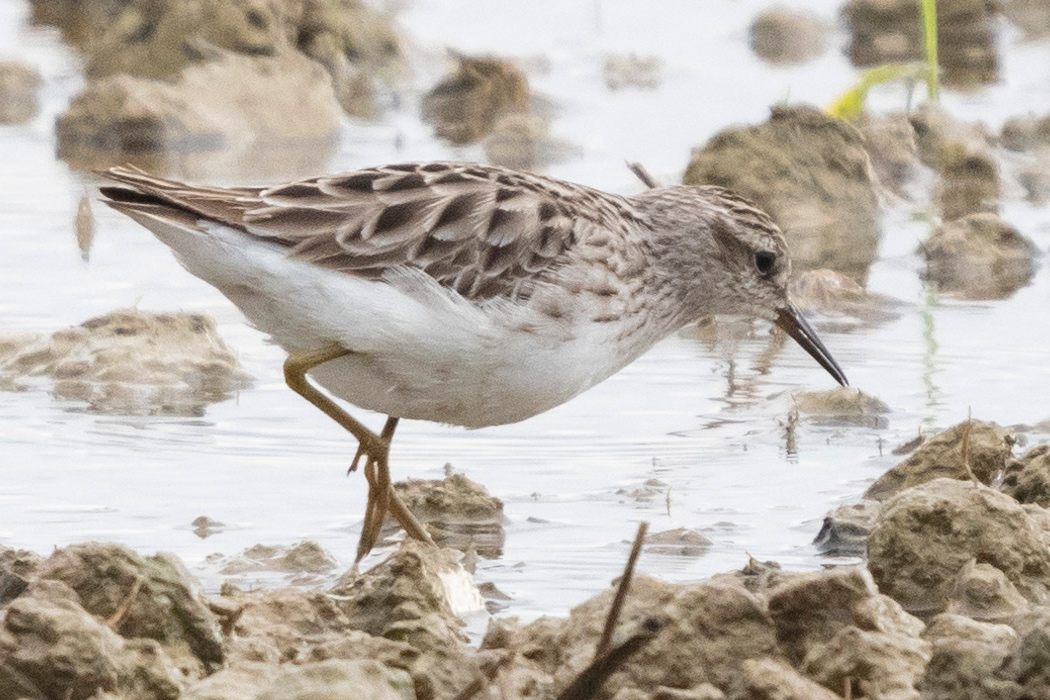
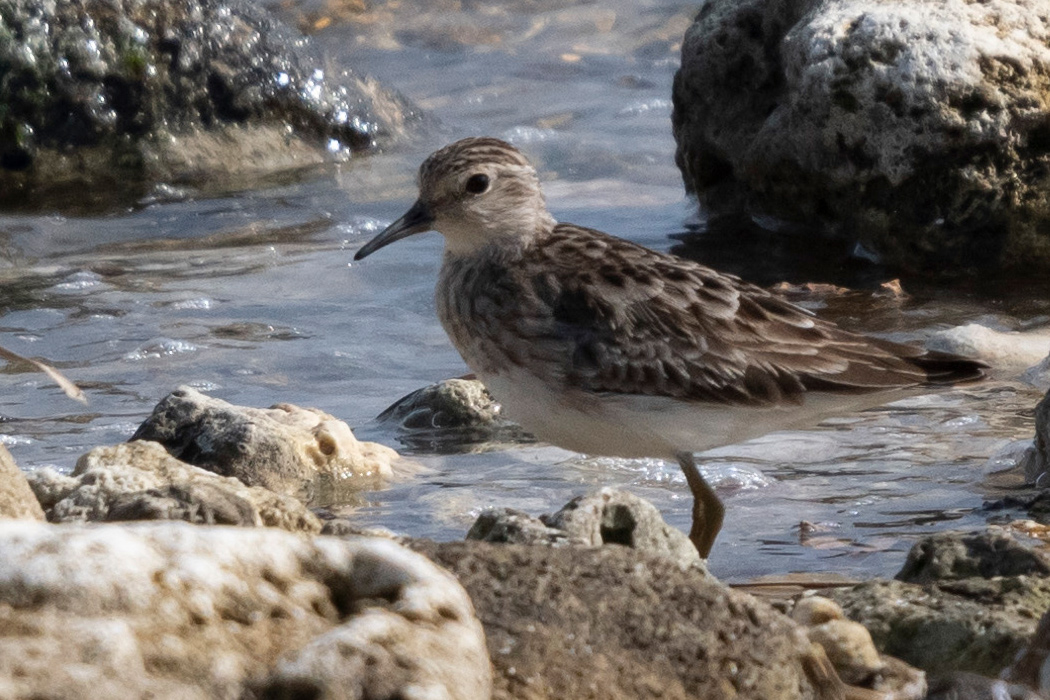
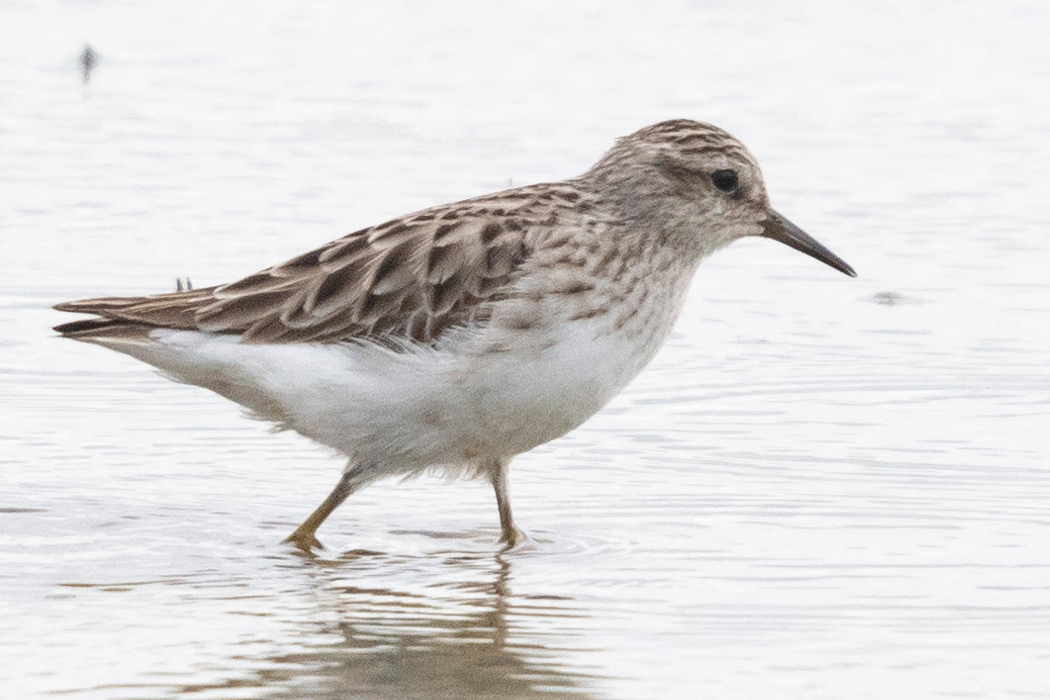
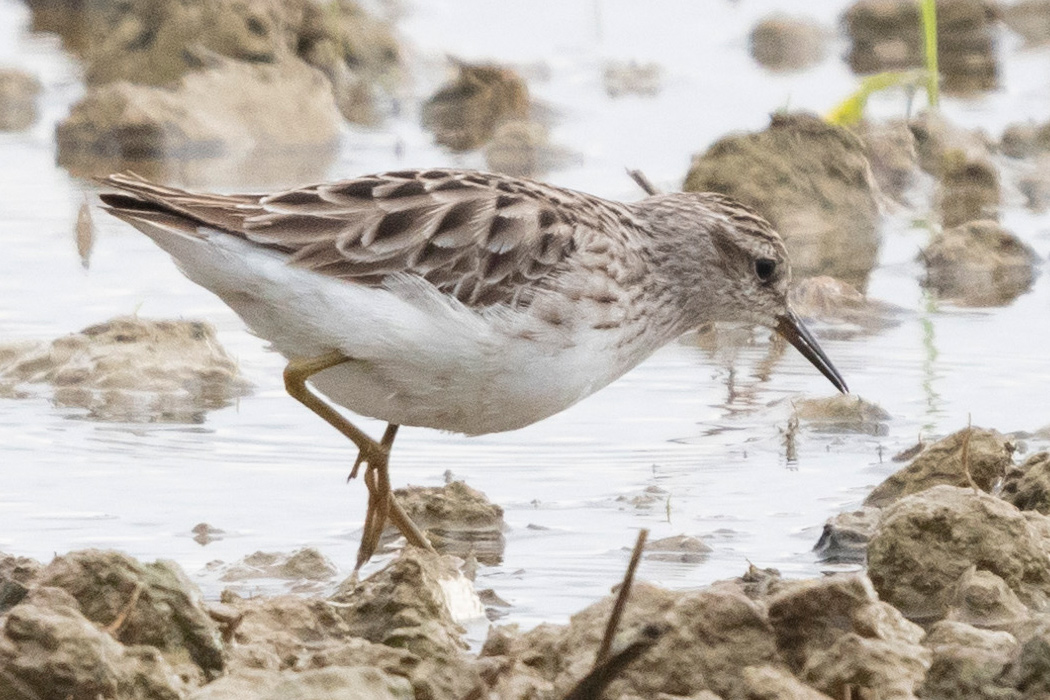
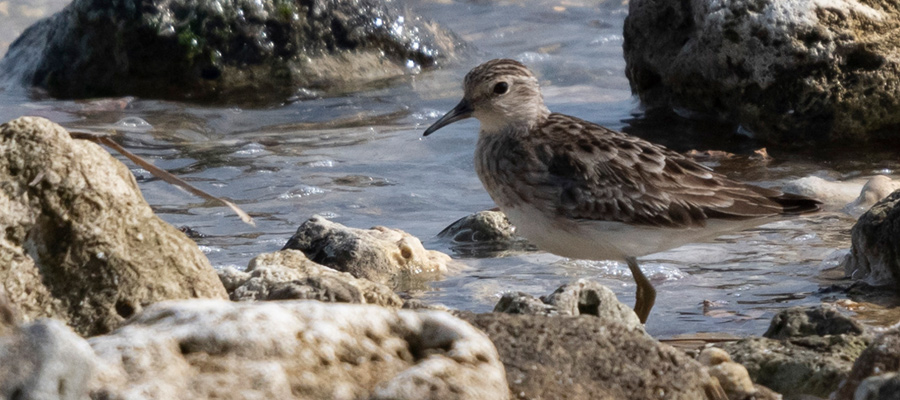
A small sandpiper with a total length of 14 cm. The upper part of the body is brown with vertical stripes. The throat and belly are white, and the chest area is pale brown. The eyebrows are whitish, and the eye line of a color that looks like the back is running. The beak is dark brown and the legs are yellowish green to yellow. In winter, the plumage turns lighter and loses its brown color.
Calls
When it takes off, it calls with a small voice called "pururu".
Ecology
Inhabit paddy fields and wetlands. Moves in small groups of 2-3 birds and eats crustaceans and mollusks in shallow water. It breeds in the Kamchatka Peninsula and comes to Japan in spring and autumn.
Habitat
Foraging in paddy fields
I took this photo while walking along the shallow waterside of a paddy field in winter. It was walking alone across rice paddies looking for food.
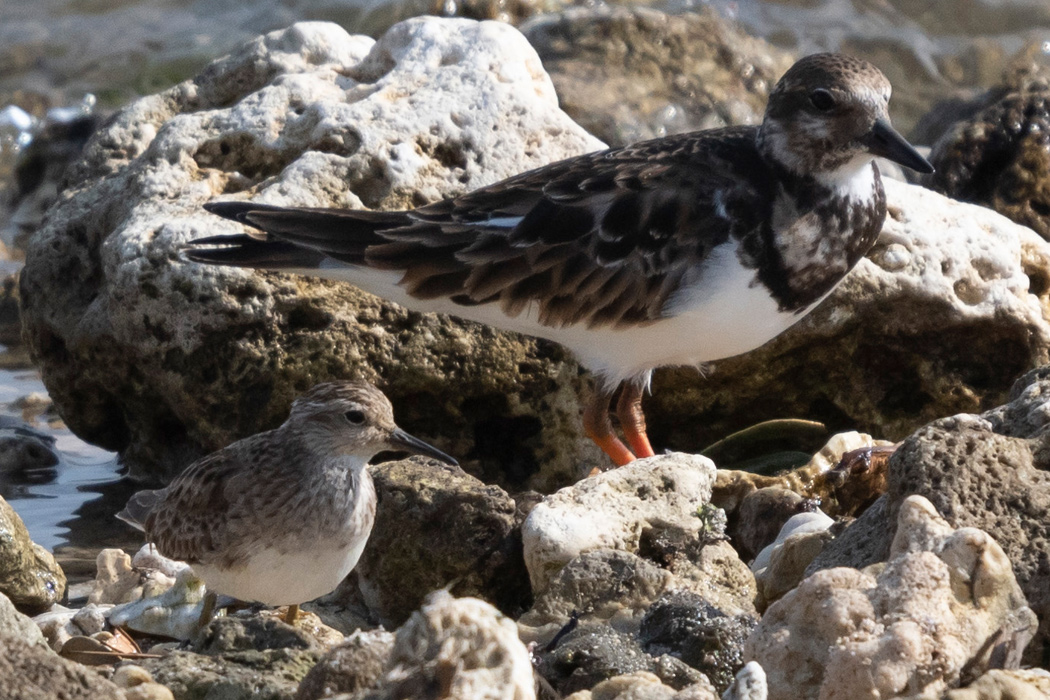
Merge with the sandpipers on the beach
I found a skylark mixed with the red sandpiper on the beach. The color of the body was very similar to that of a rock. Standing side by side with the red-headed sandpiper, the small size of the body stood out.
Pictures
Introducing a picture of Long-toed Stint.