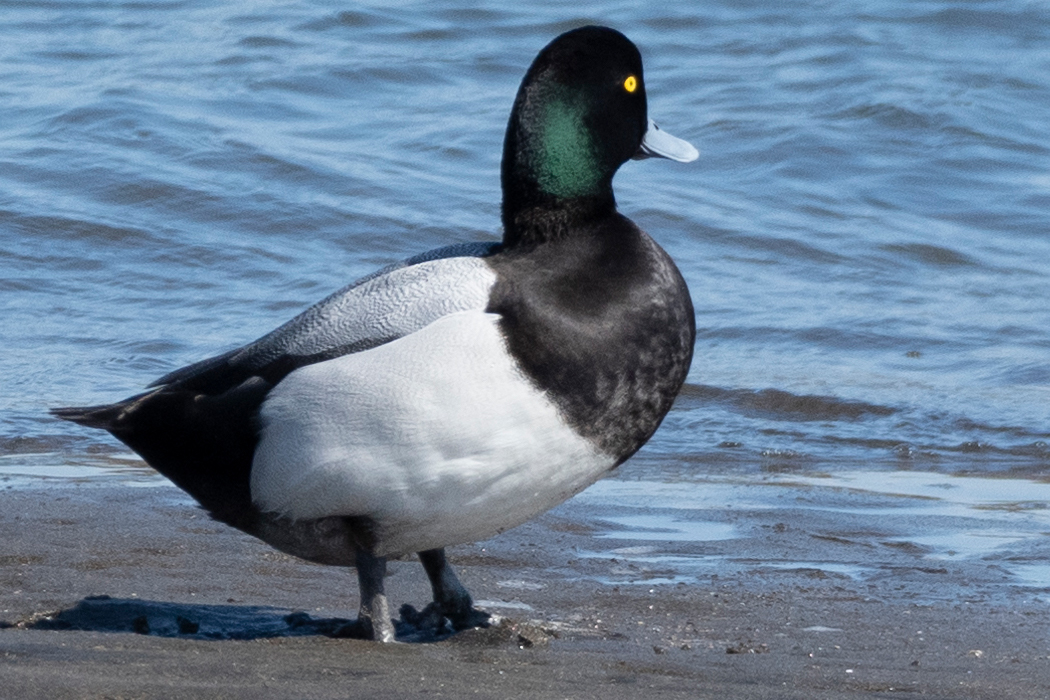
Greater Scaup
| Scientific name | Aythya marila |
| English name | Greater Scaup |
| Japanese name | 鈴鴨 |
| Class | Aves |
| Order | Anseriformes |
| Family | Anatidae |
| Genus | Aythya |
| Species | marila |
| Subspecies | -- |
| Full length | about 45cm. |
| Distribution | It is widely distributed in the Northern Hemisphere and migrates to Japan as a winter bird. |
Characteristics
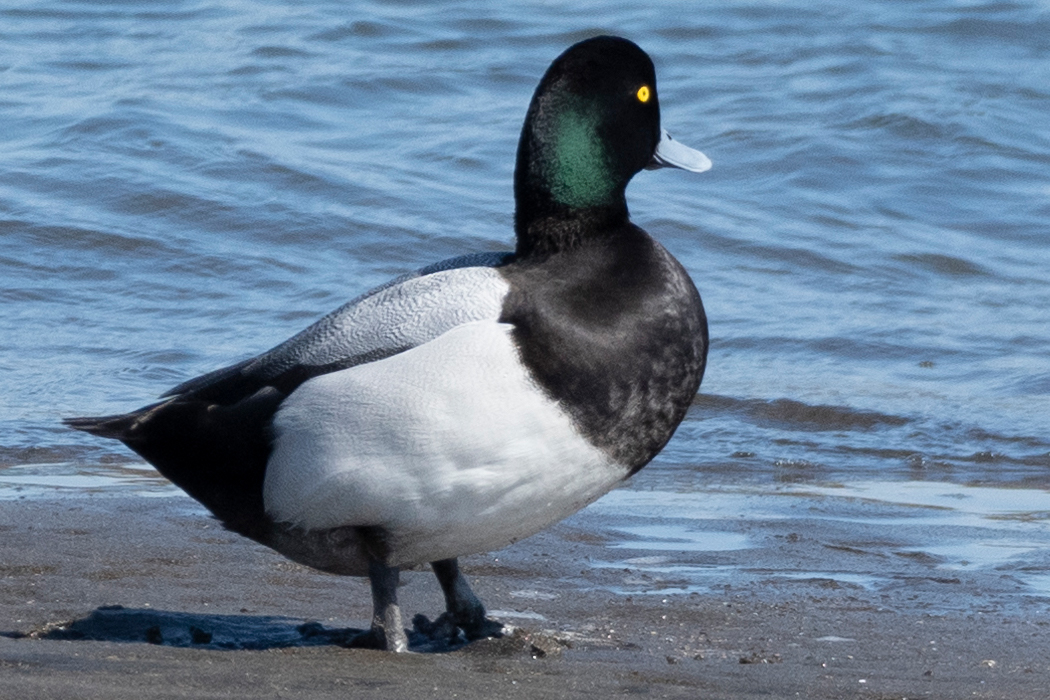
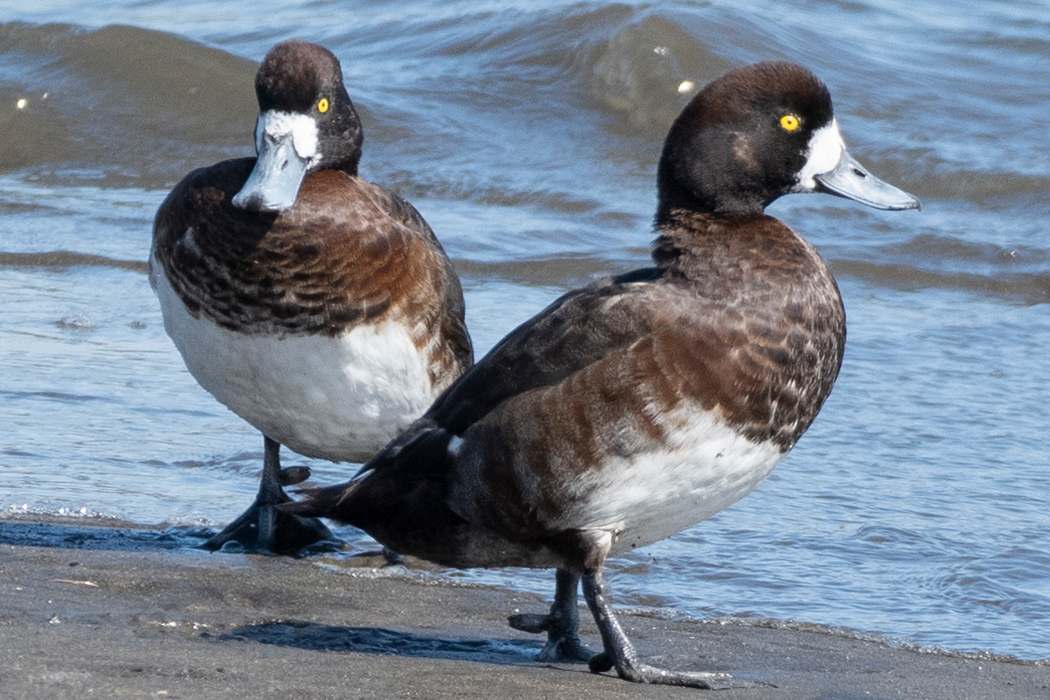
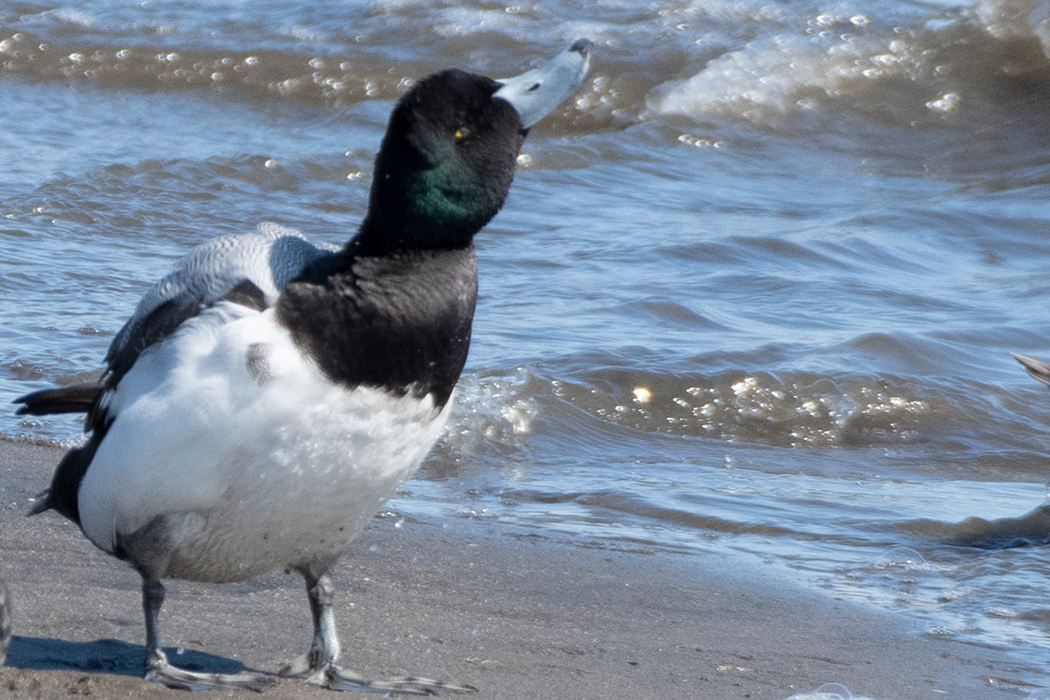
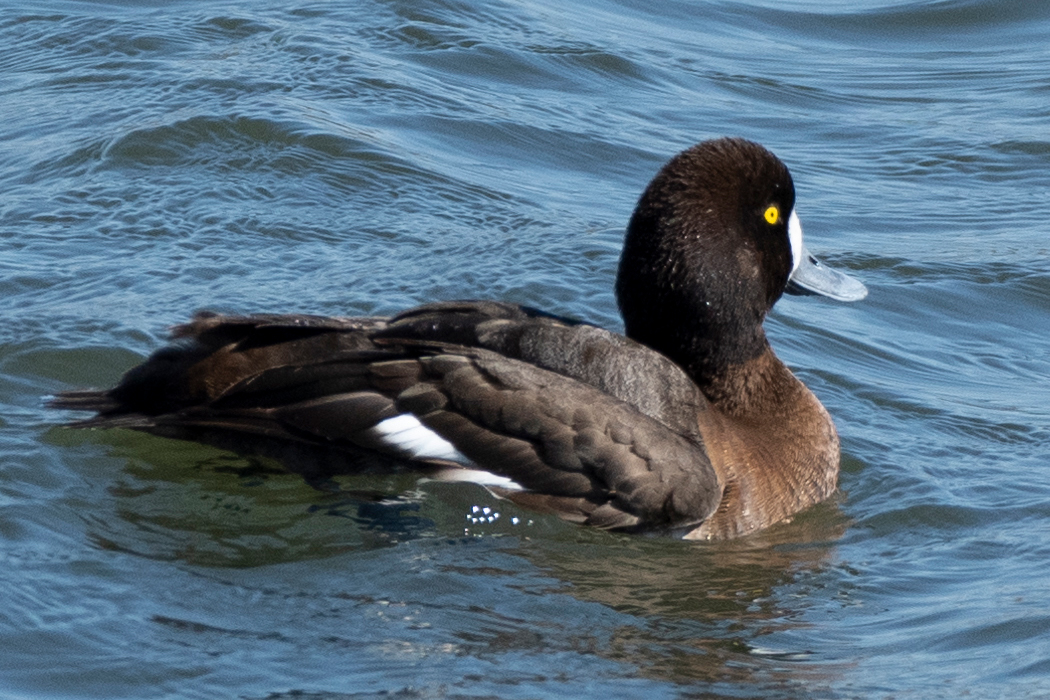
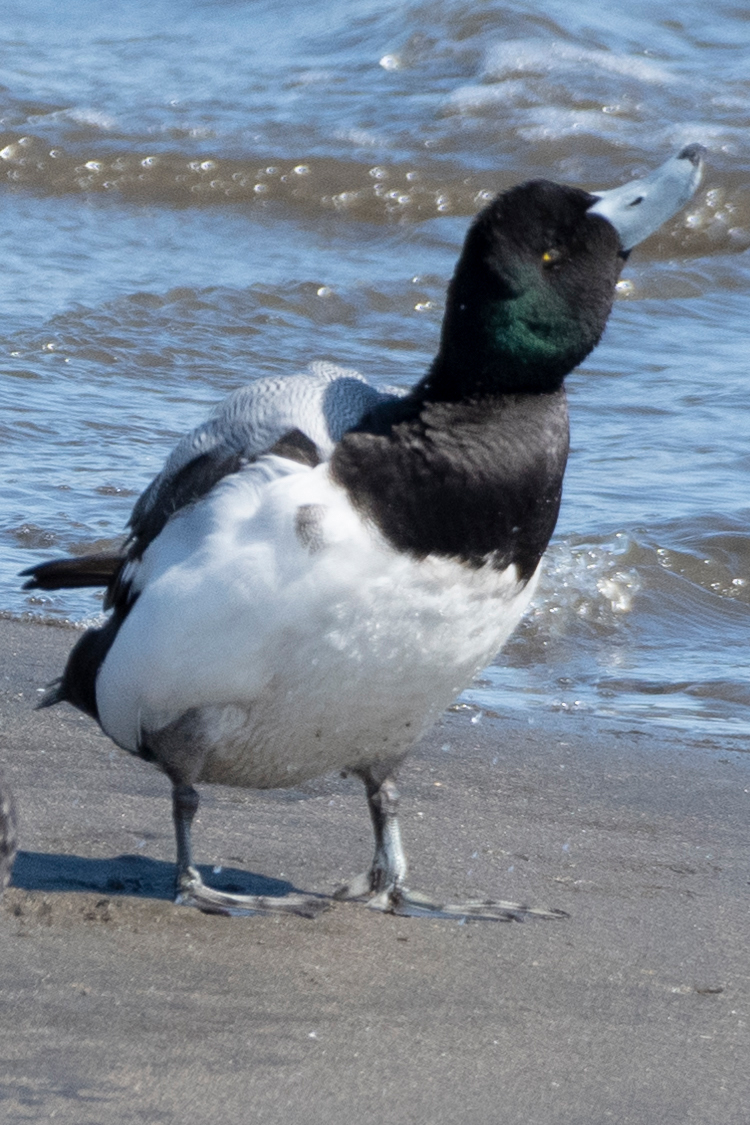
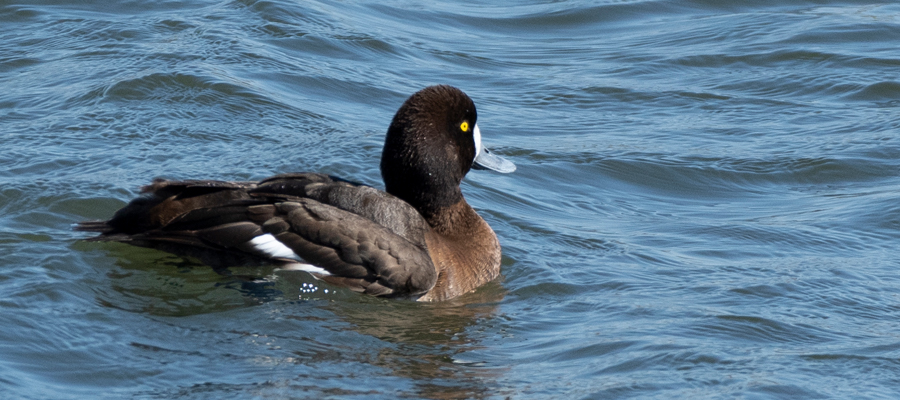
A black and white duck. Males have a black body with a shiny green tinge. Females are generally black-brown with a white base to their beak. They do not have a crest. Their beak is blue-gray with a black tip. Their irises are yellow.
The call of the Greater Scaup
They make a long "ga" sound, and sometimes make short, punctuated sounds.
Distinguishing between the Greater Scaup and the Tufted Duck
Their coloring is very similar to that of the Tufted Duck, but there are a few things to distinguish them from each other. First, the Tufted Duck has a crest, whereas the Greater Scaup does not. Also, the black and white of the Greater Scaup is not as clear as that of the Tufted Duck, and the black and white are mixed together in a wavy pattern around the waist. The females are also very similar, but the Greater Scaup's head is rounder.
Ecology
A large number of them fly to the coast as winter birds. They are often seen resting in flocks on the sea.
They can also be seen near the sea or in lakes and marshes. They dive to eat seaweed and animal matter.
Habitat
The beach at Kasai Rinkai Park
I photographed a small flock relaxing on the beach at Kasai Rinkai Park in spring. A mixture of males and females were sitting on the beach. After a while, they stretched out, started walking, and swam out to sea. The male's shiny head looked beautiful when the sunlight hit it.
Pictures
Introducing a picture of Greater Scaup.