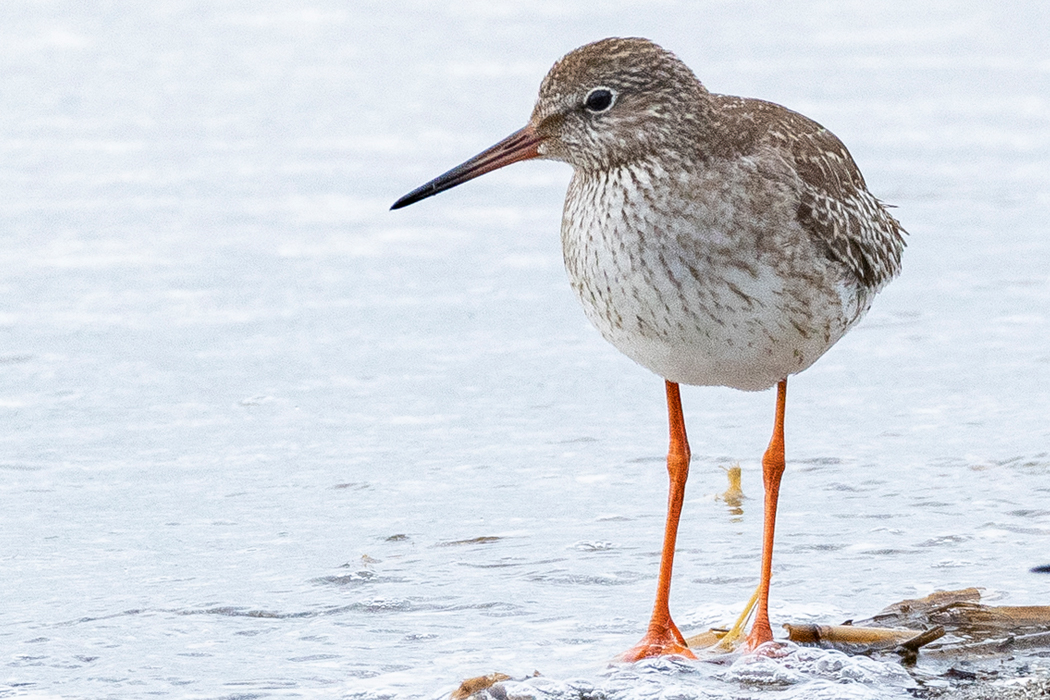
Common Redshank
| Scientific name | Tringa totanus |
| English name | Common Redshank |
| Japanese name | 赤足鷸 |
| Class | Aves |
| Order | Charadriiformes |
| Family | Scolopacidae |
| Genus | Tringa |
| Species | totanus |
| Subspecies | --- |
| Full length | 28cm. |
| Distribution | Distributed in Eurasia and Africa. They come to Japan as migratory birds. |
Characteristics
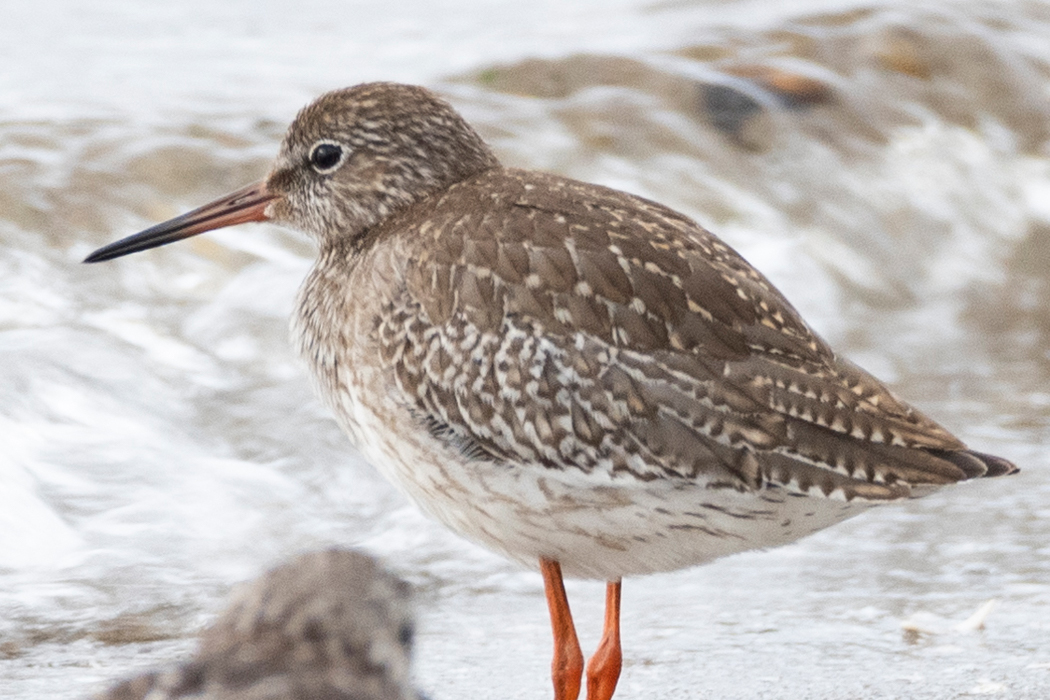
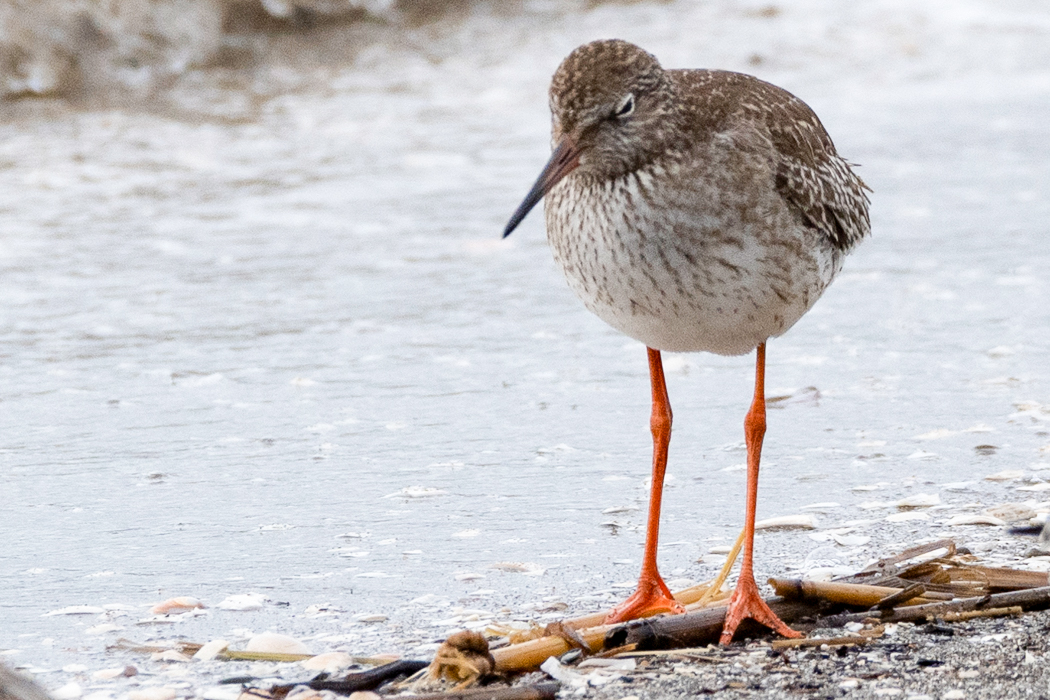
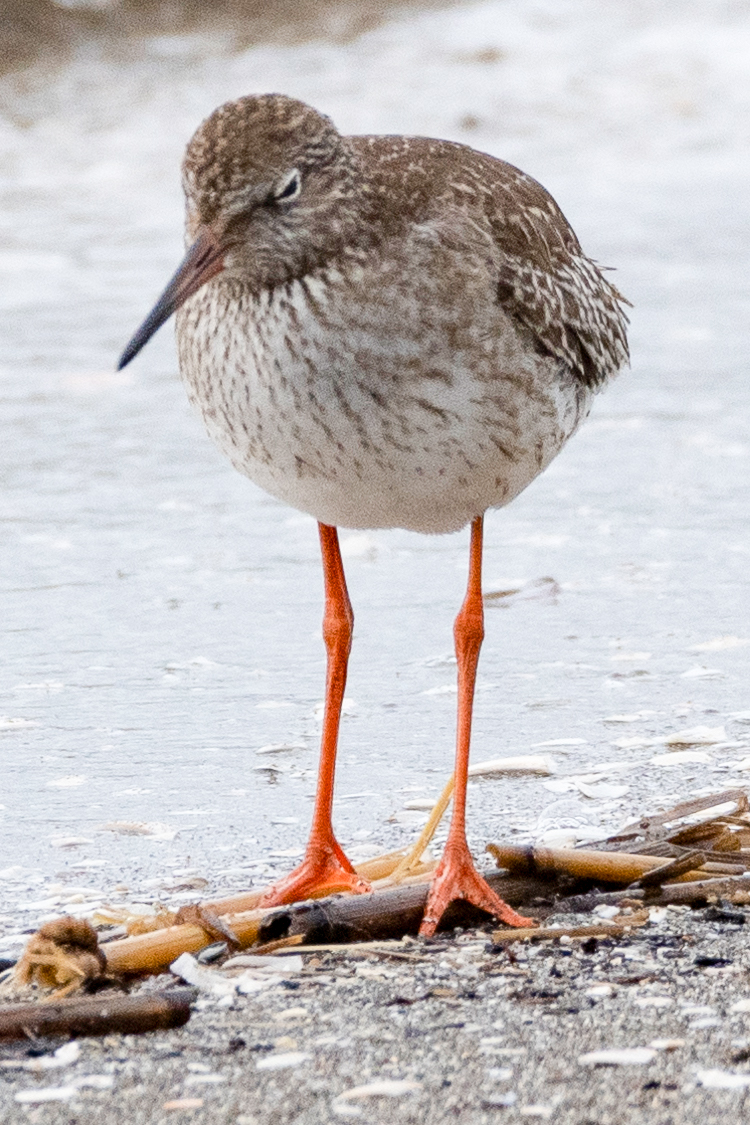
A medium-sized snipe with distinctive orange legs.
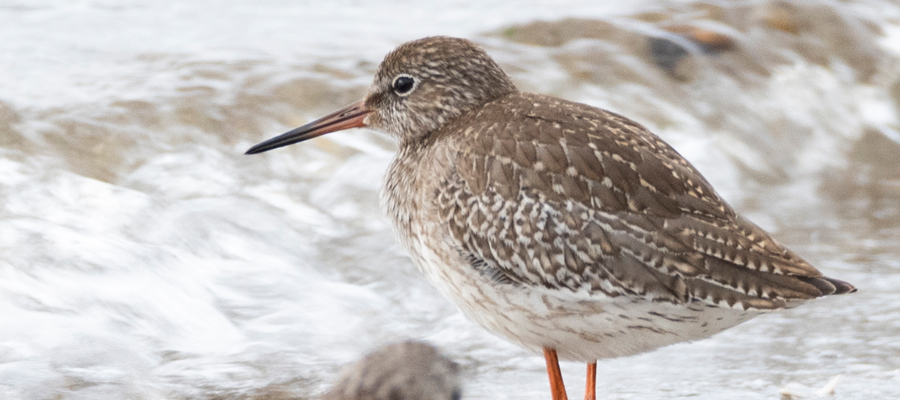
It is about 28cm long, with a brown back and white underside. There are brown vertical stripes running from the throat to the belly. The upper and lower parts of the bill are pink to flesh-colored from the base to about half, and the tip is lead-colored. There is a white eye ring around the eye.
How to distinguish between a Common Redshank and a Spotted Sandpiper (winter plumage)
The color and length of the beak are the distinguishing features. The Common Redshank has pink above and below the beak, while the Spotted Sandpiper's upper beak is black all the way to the base. The Spotted Sandpiper's beak is longer and sharper looking.
Ecology
They fly to tidal flats and coasts as migratory birds. They are often seen alone or in small groups.
They eat animal matter such as shellfish and crustaceans on the coast.
Habitat
Sanbanze in autumn
A lone bird was standing alone near the coast of Sanbanze early in the morning, among barred godwits and dunlins.
While the other snipes were walking around, it stayed still, barely moving from the water's edge.
Its red legs stood out.
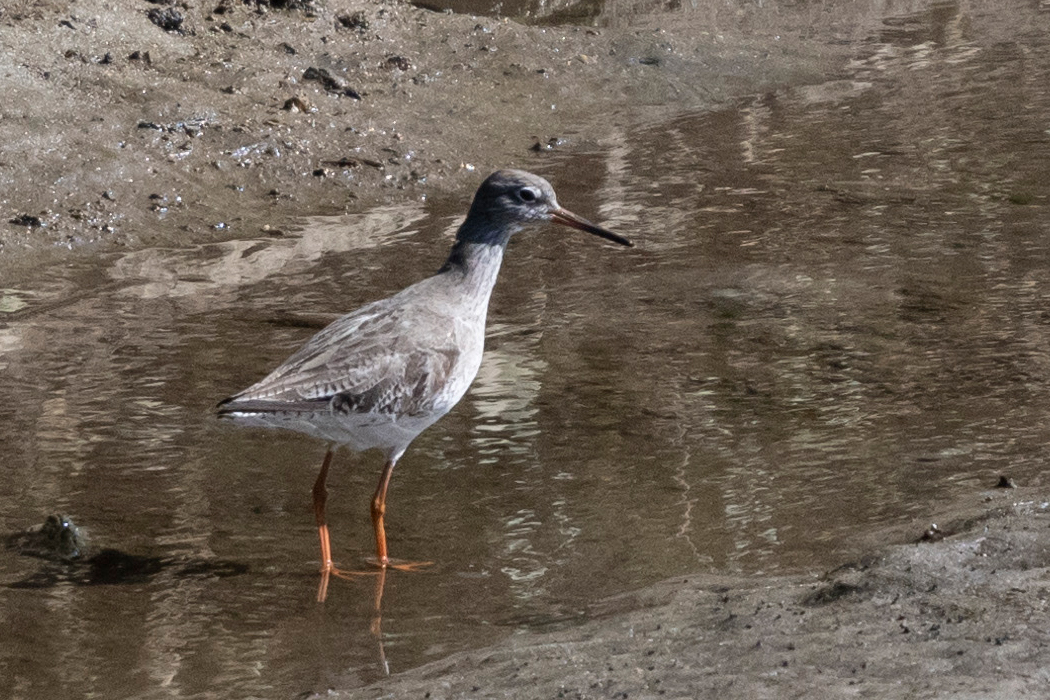
Estuary of Ishigaki Island
I photographed a lone bird walking at the estuary near the coast of Ishigaki Island. After staying still for a while, it walked up the river.
Pictures
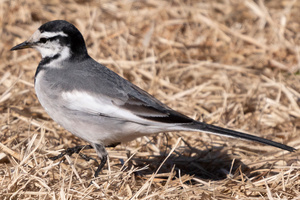
Introducing a picture of Common Redshank.