White Wagtail
A familiar bird that bobs its tail up and down.
| Scientific name | Motacilla alba |
| English name | White Wagtail |
| Japanese name | 白鶺鴒 |
| Class | Aves |
| Order | Passeriformes |
| Family | Motacillidae |
| Genus | Motacilla |
| Species | alba |
| Full length | 21cm |
| Distribution | Widely distributed from the Eurasian continent to northern Africa. |
White Wagtail Characteristics and Morphology
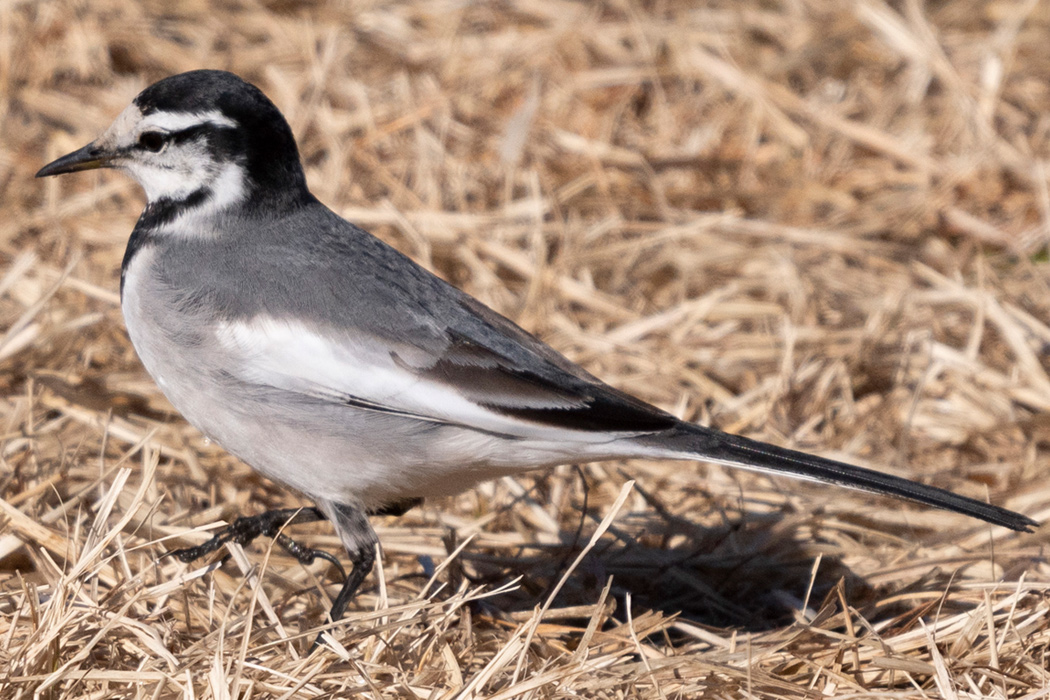
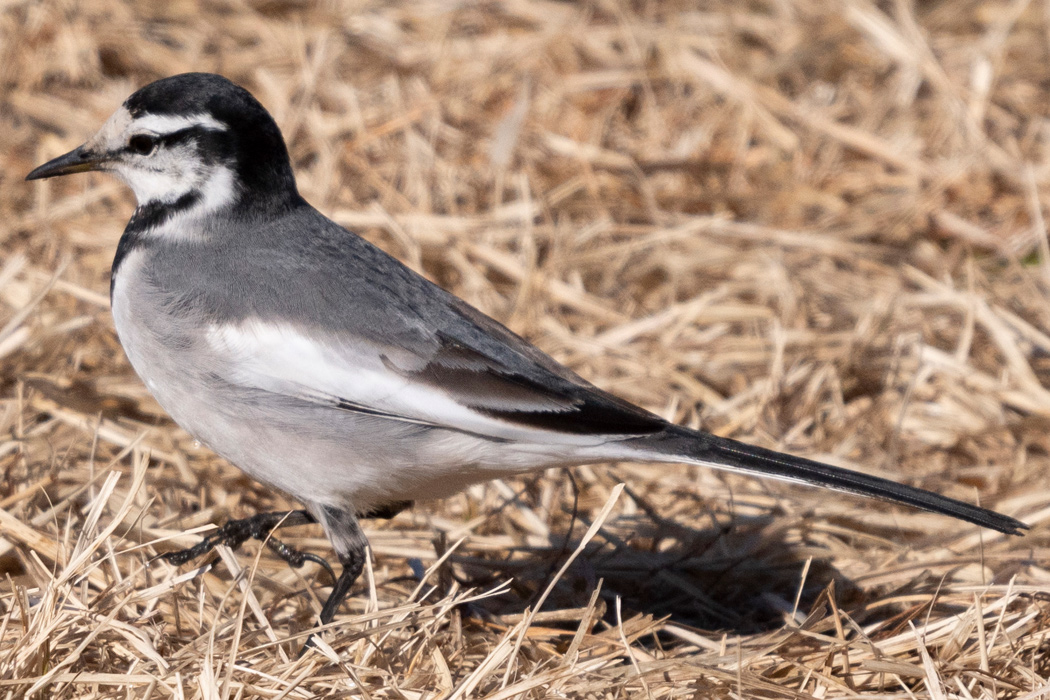
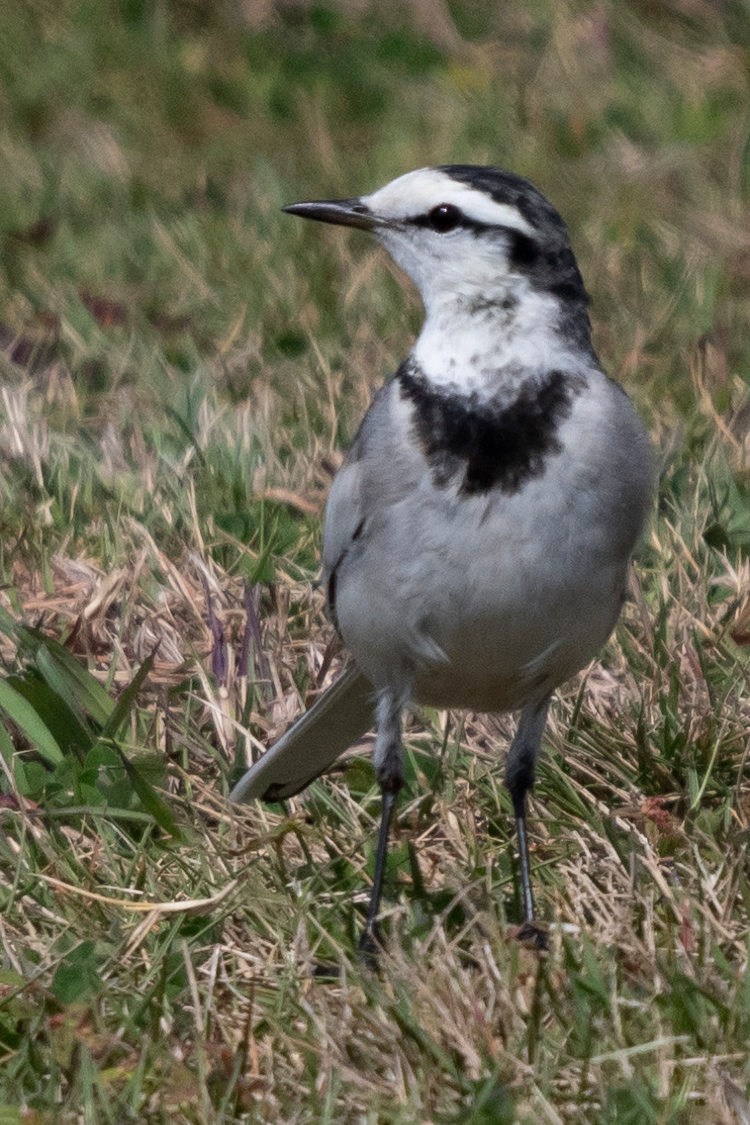
A slender silhouette with a long tail. Overall black and white, though it is only "white" to a certain extent and not quite as snowy as its Japanese name might suggest.
The face is white, with a single black eyestripe running from the base of the bill, across the eye, to the back of the head.
The back ranges from gray to black. The summer plumage has a deeper black color.
The tail feathers are long and are a darker color, closer to black, than the back.
There is a visual difference where the Japanese wagtail has black below the eyes, while the White wagtail is white below the eyes. Since both species are commonly encountered, it is best to compare them in person. Both inhabit watersides. Those seen in urban areas or on station platforms are usually White wagtails. In the author's impression, the White wagtail seems more bold about entering human-inhabited environments.
Male
The white area on the forehead is larger than in females, and the black plumage on the breast is also more extensive.
Female
Appears slightly blacker than the male.
The forehead appears smaller compared to the male. The black area on the breast is also slightly smaller.
Juvenile
Has a pale brownish tint overall.
Song
Calls with sounds like "chupi-chupi-chupi," "chun-chun," or "tsii-tsii." Compared to the Japanese wagtail, its voice sounds slightly clearer.
White Wagtail Ecology
Habitat
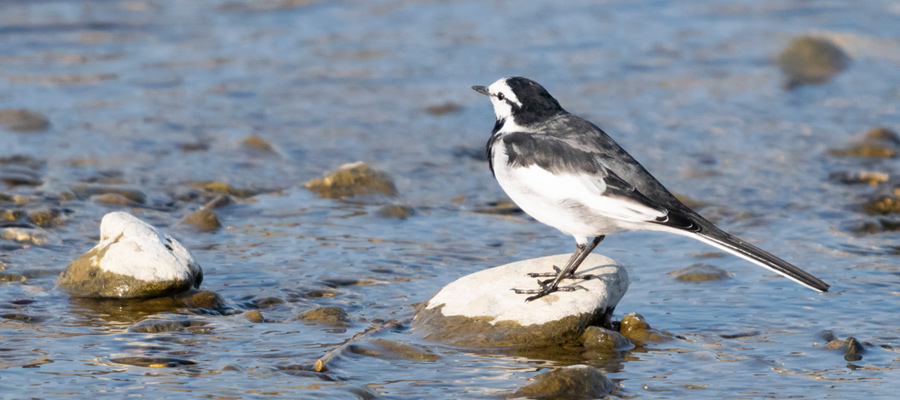
Widely inhabits watersides and urban areas. It also enters human living spaces, such as train station platforms.
Food
Eats insects, earthworms, and similar prey.
Life Cycle
In summer, they establish territories and compete with Japanese wagtails and Grey wagtails. After breeding, they can be seen with their pale-colored juveniles.
White Wagtail Photos
White Wagtail Photos are introduced.
Tap the photo to open the detail page.

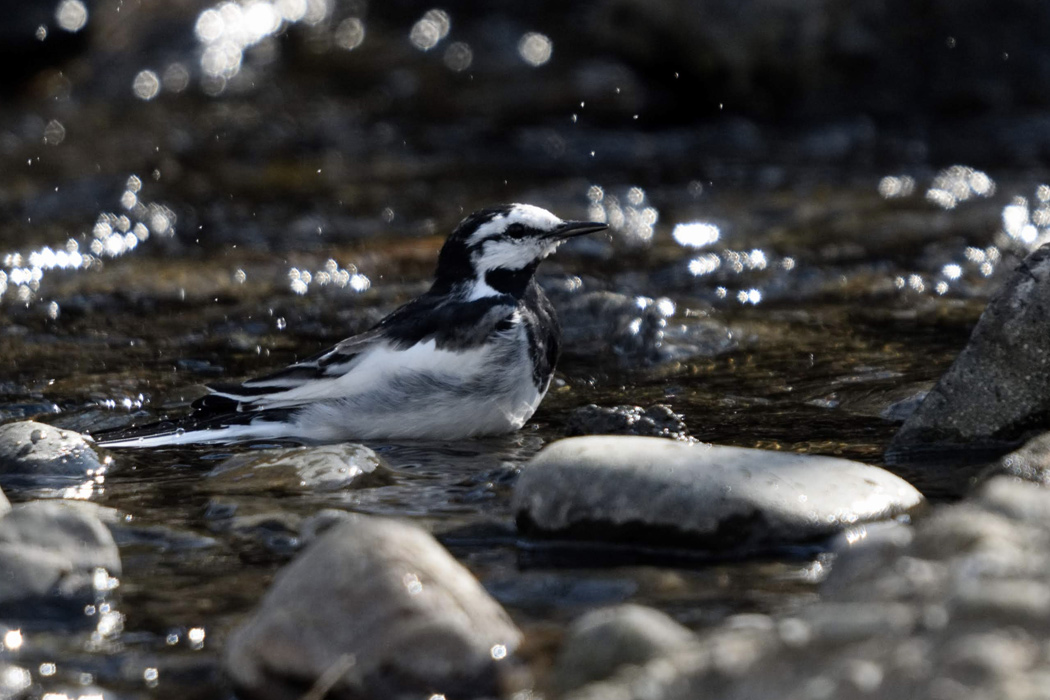
White Wagtail Behavior
Walks on the ground while bobbing its long tail up and down. It flies with rapid wing beats. Its flight path follows a shallow undulating (wave-like) pattern.
White Wagtail Information
Naming
The scientific name "alba" is derived from the word for "white." The English name is similar.
White Wagtail Found Locations
Asa River, Hachioji City
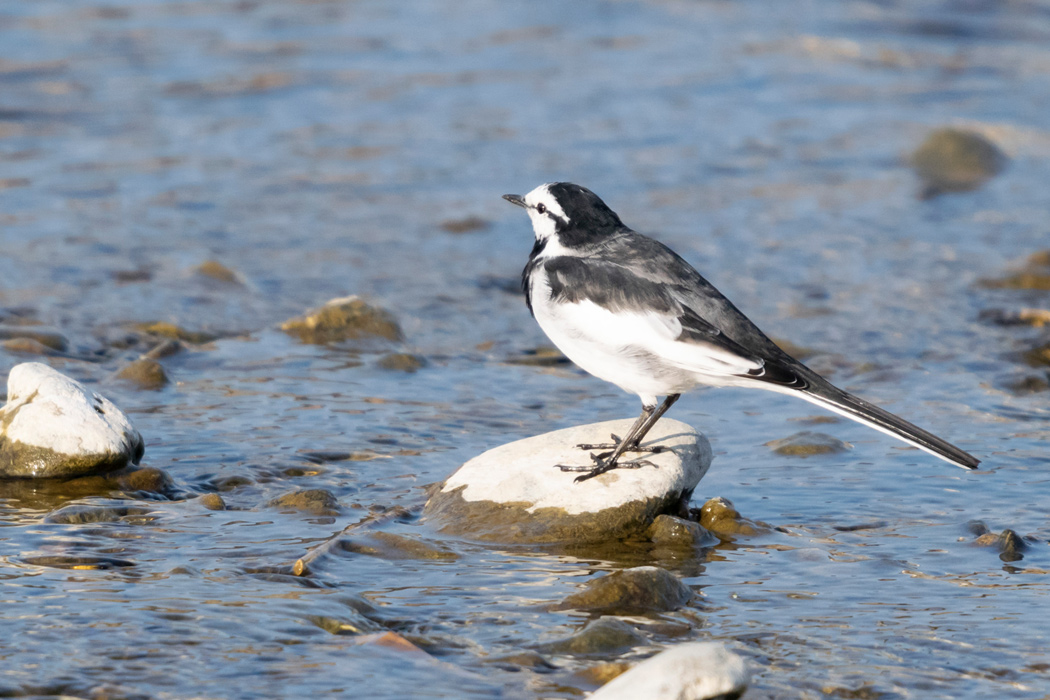
Photographed on the riverbed ground and in the water.
They are commonly seen not just along rivers but also on suburban roadsides. They seem to have little fear of humans, and I occasionally see them scavenging for food on station platforms. They also seem to enjoy bathing and can be found soaking in shallow parts of the river. Because it is so similar to the Japanese wagtail, it is a bird I used for a lot of identification practice when I first started birdwatching.
Picture book
hides well in sand...... Read more
ornamental flower with developed calyx. "Patient love"....... Read more
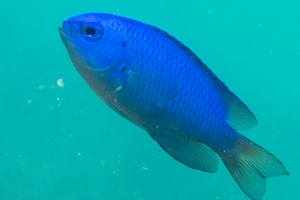
A beautiful blue like neon....... Read more
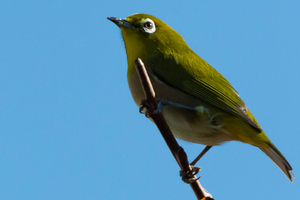
Characterized by its distinct, pure white eye-ring....... Read more
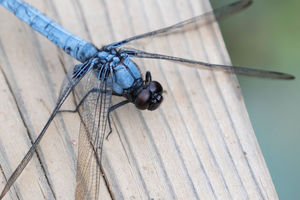
Appears a more vivid light blue than the Orthetrum albistylum (Common Skimmer)...... Read more
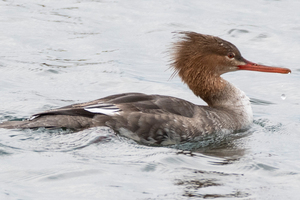
Comes to coastal coves in winter....... Read more