Japanese Rat Snake
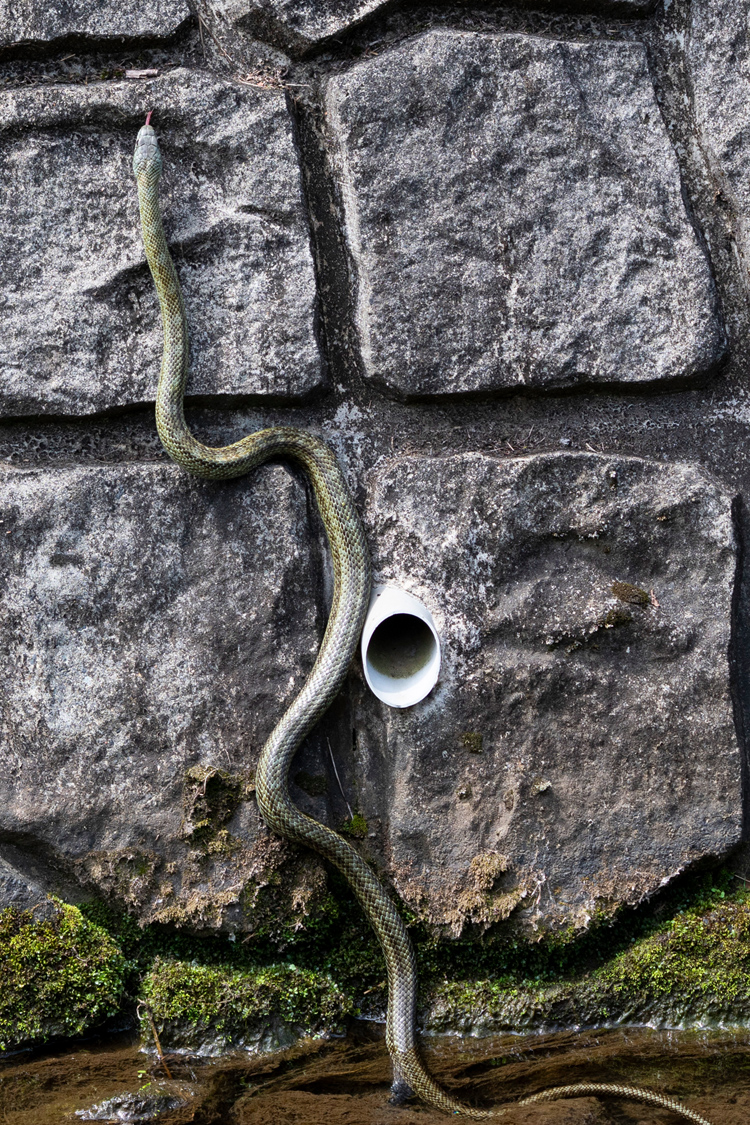
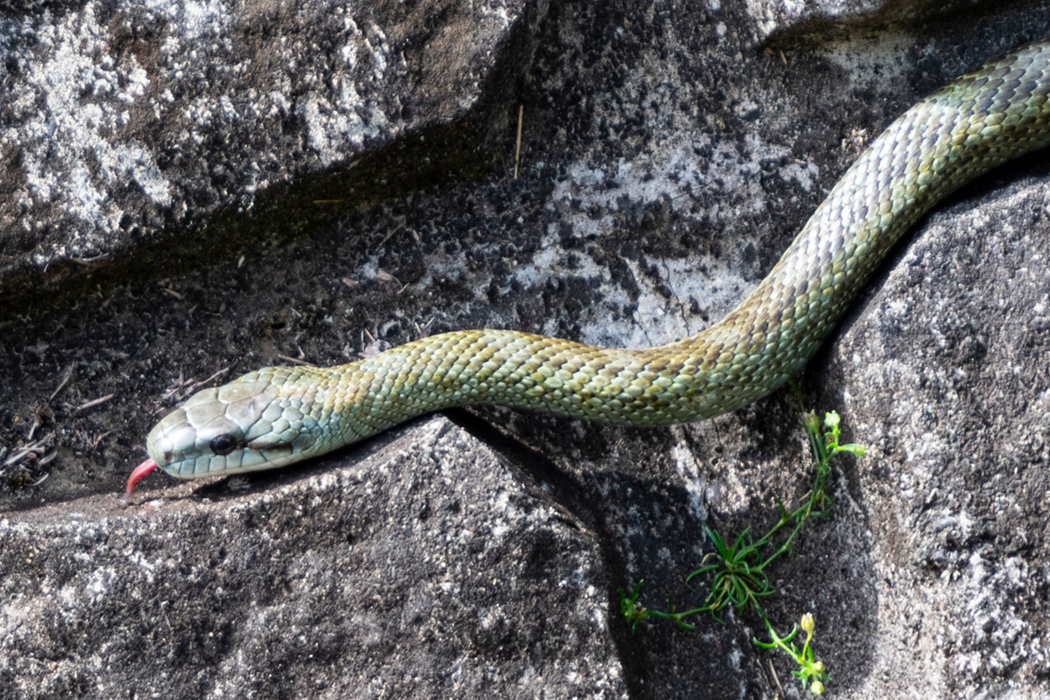
A Japanese Rat Snake reaching up to 2m.
| Scientific name | Elaphe climacophora |
| English name | Japanese Rat Snake |
| Japanese name | 青大将 |
| Class | Reptilia |
| Order | Squamata |
| Family | Colubridae |
| Genus | Elaphe |
| Species | climacophora |
| Full length | 100-200cm |
| Distribution | Inhabits all of Japan. |
Japanese Rat Snake Characteristics and Morphology
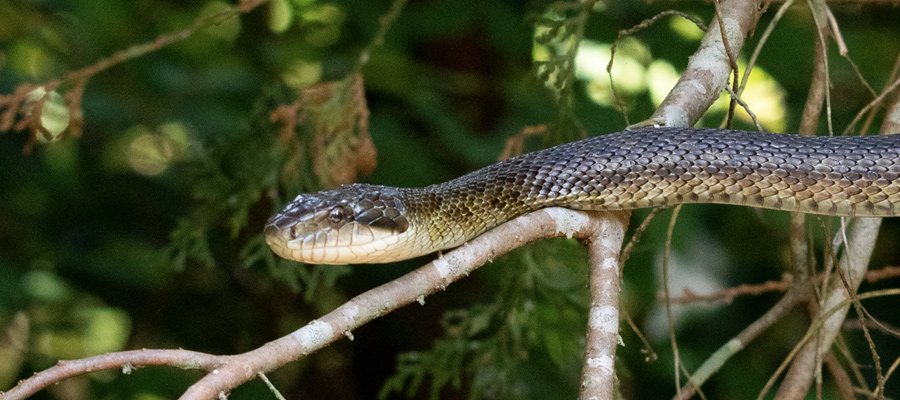
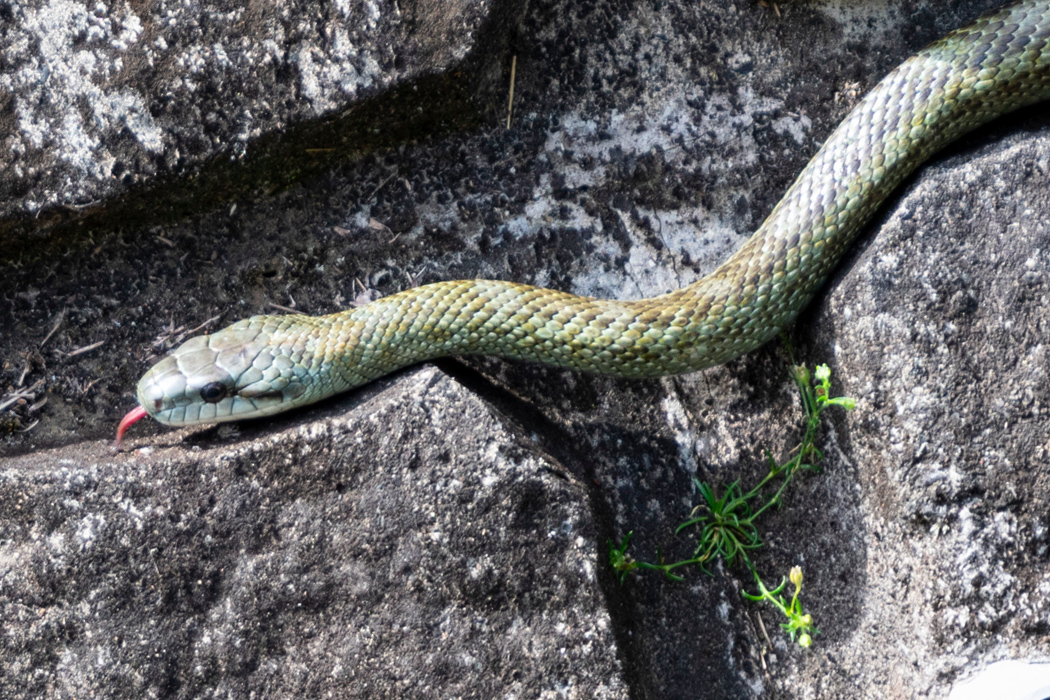
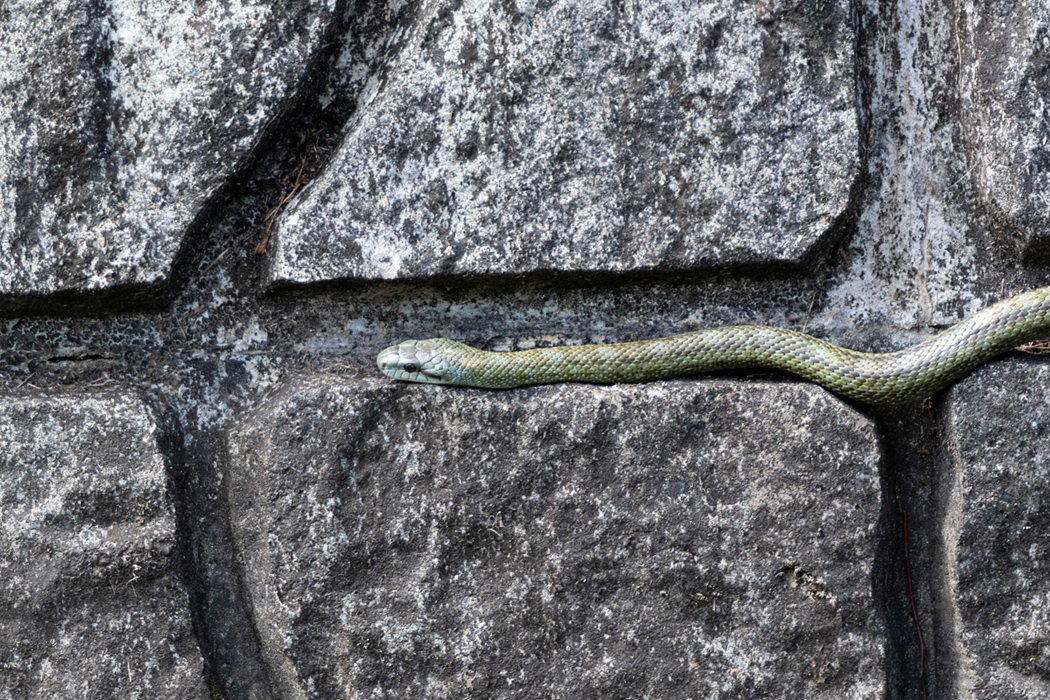
The largest snake in mainland Japan, with large individuals reaching a total length of about 200cm. The entire body is a dull green or olive color, with dark brown longitudinal stripes.
The head is angular, and there are black streaks behind the eyes.
Juvenile
The body color of juveniles is close to gray.
They have brown lattice patterns and resemble the Japanese Pit Viper (Mamushi).
Japanese Rat Snake Ecology
Habitat
Forests, parks, and grasslands throughout Japan. Also seen in irrigation canals and warehouses near human dwellings.
Food
Diurnal; feeds on rodents and birds in trees or on the ground surface.
Life Cycle
Breeds from spring to summer and is said to live for over 10 years.
Japanese Rat Snake Photos
Japanese Rat Snake Photos are introduced.
Tap the photo to open the detail page.
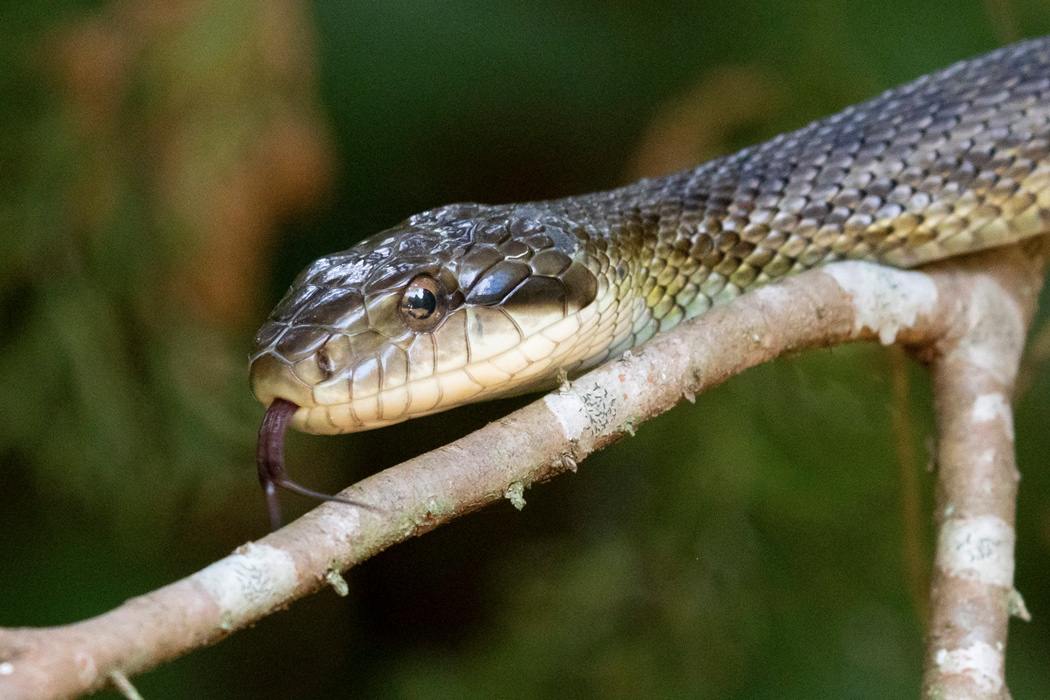
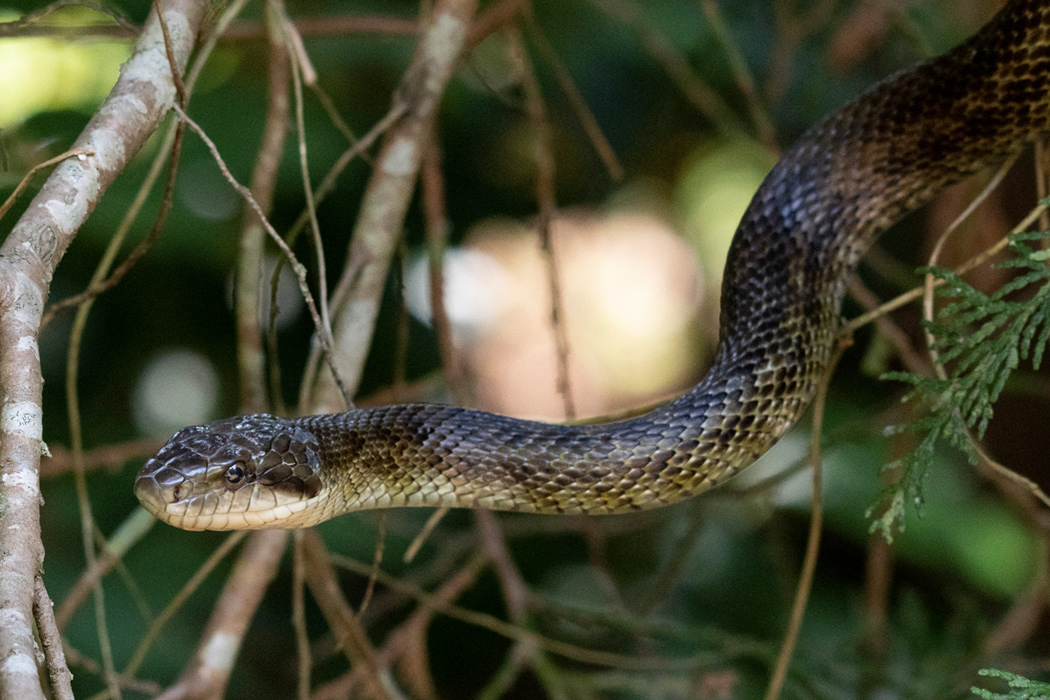
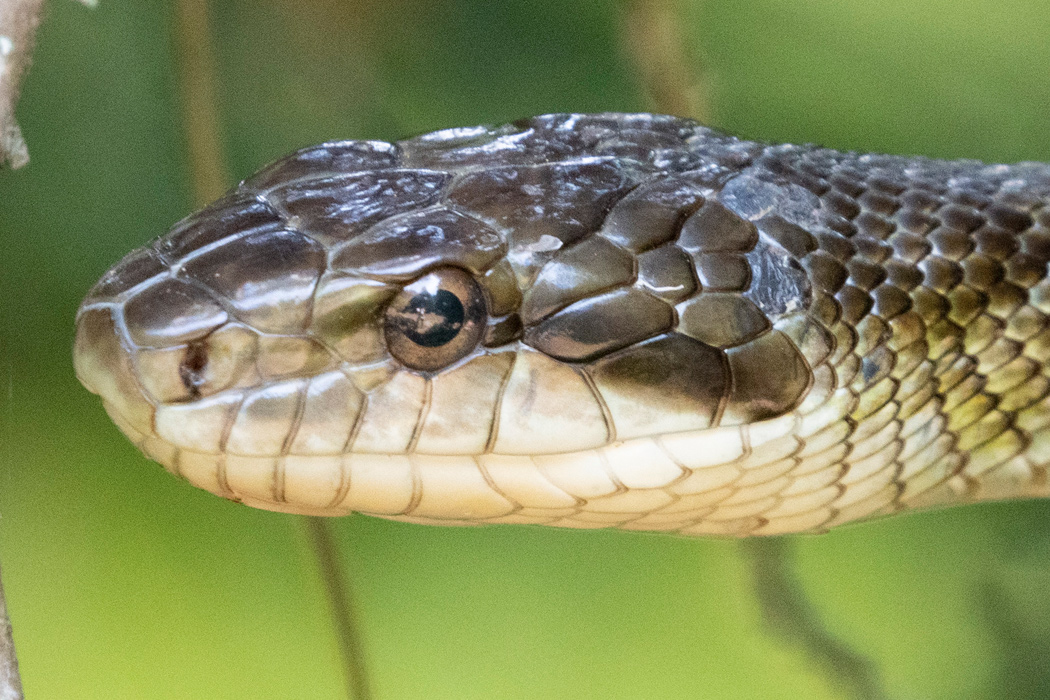
Japanese Rat Snake Behavior
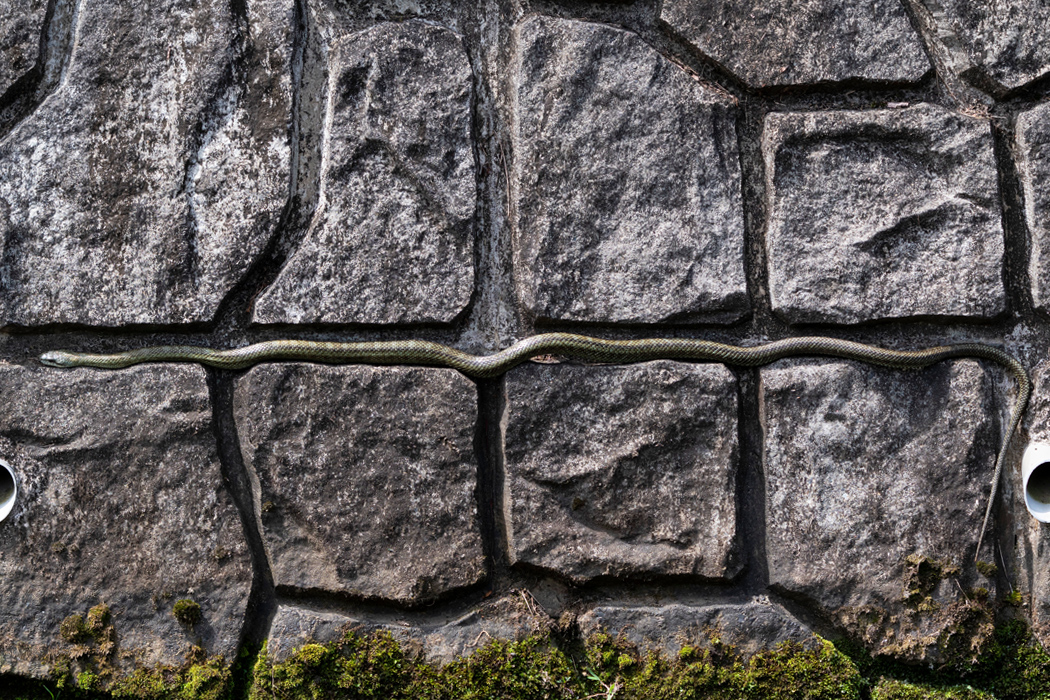
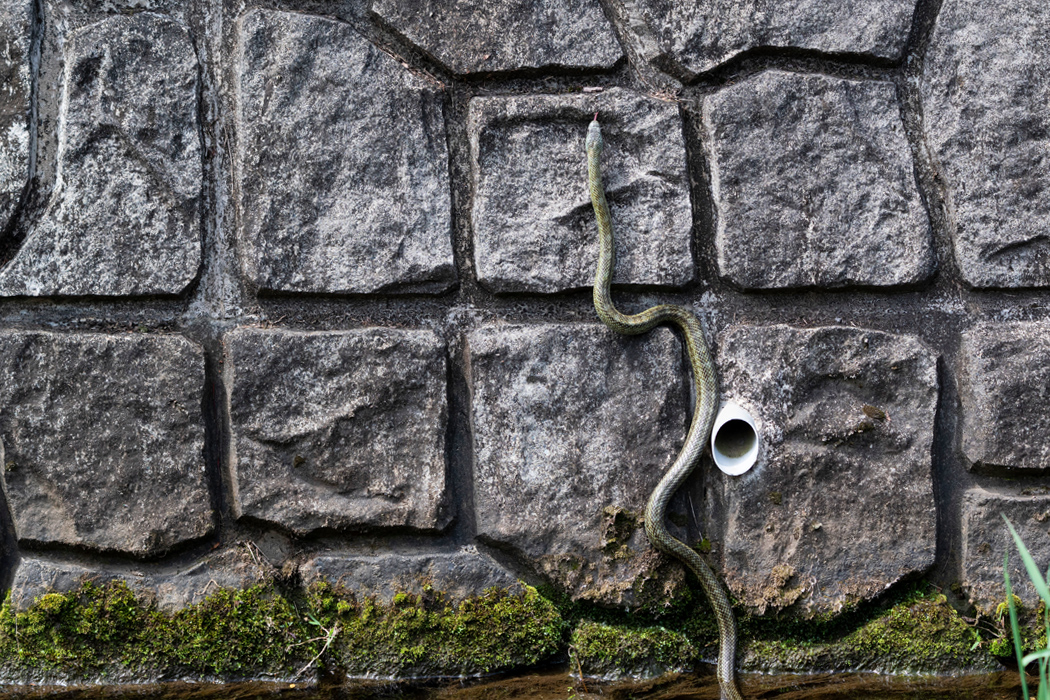
They skillfully climb trees and walls by hooking their ventral keels (lateral ridges on the belly). They also occasionally swim in water.
Japanese Rat Snake Information
Naming
The scientific name "climacophora" means "bearing a ladder/lattice," which is thought to derive from the patterns on the backs of juveniles. The Japanese name "Aodaishou" represents its large, "blue" (which meant green in old Japanese) appearance. The English name "Rat Snake" comes from its diet of rodents.
Relationship with Humans
They have had a long relationship with humans. They were considered beneficial animals because they eat rats, while also being feared for occasionally eating domestic birds.
The White Snakes of Iwakuni
In Iwakuni City, Yamaguchi Prefecture, albino versions of the Japanese Rat Snake are protected as objects of faith known as the "White Snakes of Iwakuni" and are designated as a National Natural Monument.
Japanese Rat Snake Found Locations
Yudono River, Hachioji City
I discovered one inside the Yudono River in Hachioji City. Watching from above, it skillfully climbed the concrete wall along the river by following a groove. It was a large individual about 150cm in total length. It flicked its tongue occasionally.
In the sun by the edge of a forest
I found an individual about 150cm long in a sunny clearing within a forest in Hachioji City. It quickly slithered away into the bushes and coiled around a tree. It hooked its body onto a branch and raised the first few dozen centimeters of its head to survey the surroundings.