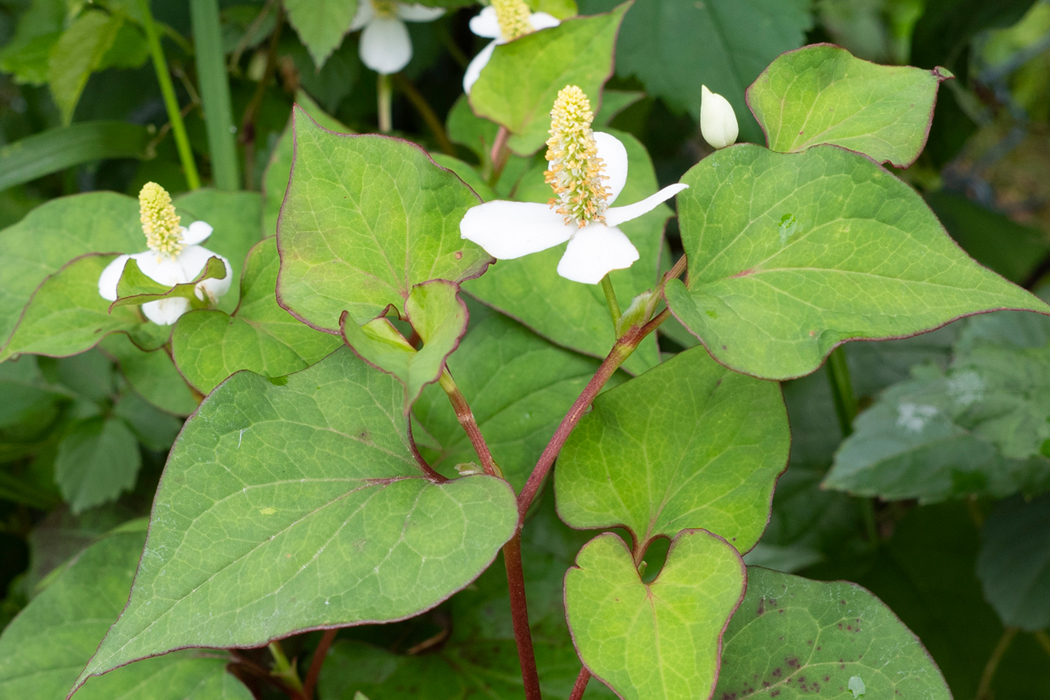
Fish mint
It has a distinctive odor, but it is not poisonous.
| Scientific name | Houttuynia cordata |
| English name | Fish mint |
| Japanese name | 蕺 |
| Class | magnoliids |
| Order | Piperales |
| Family | Saururaceae |
| Genus | Houttuynia |
| Species | cordata |
| Full length | 20-60cm (height) |
| Distribution | Distributed in East Asia and Southeast Asia. In Japan, it is found from southern Hokkaido and southward. |
Fish mint Characteristics and Morphology
A wild grass characterized by its unique odor.
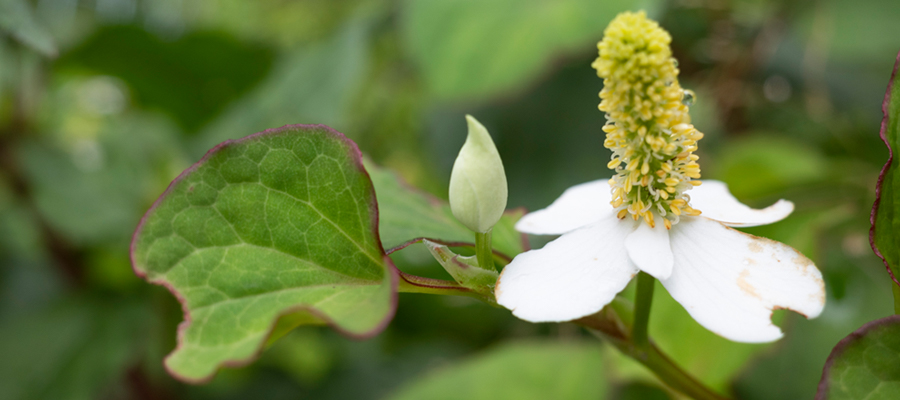
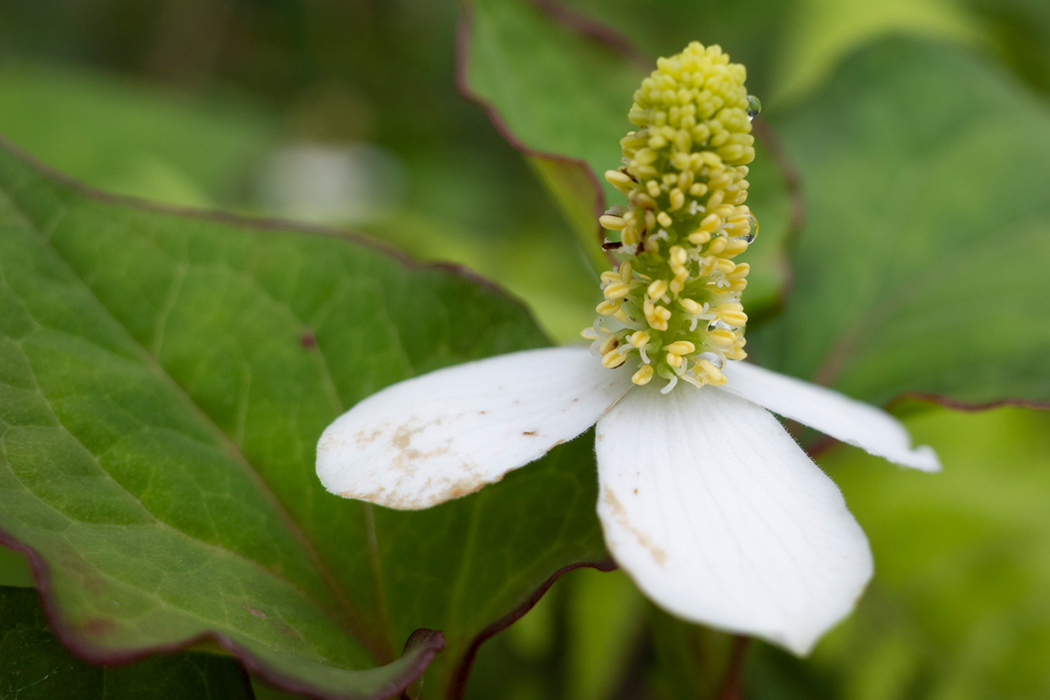
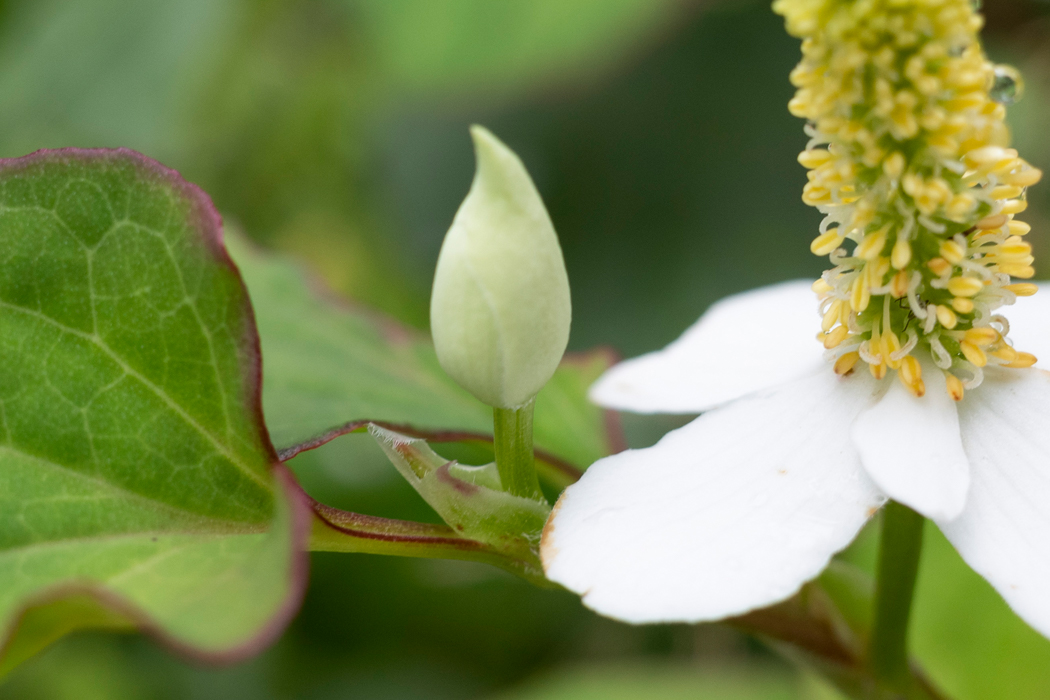
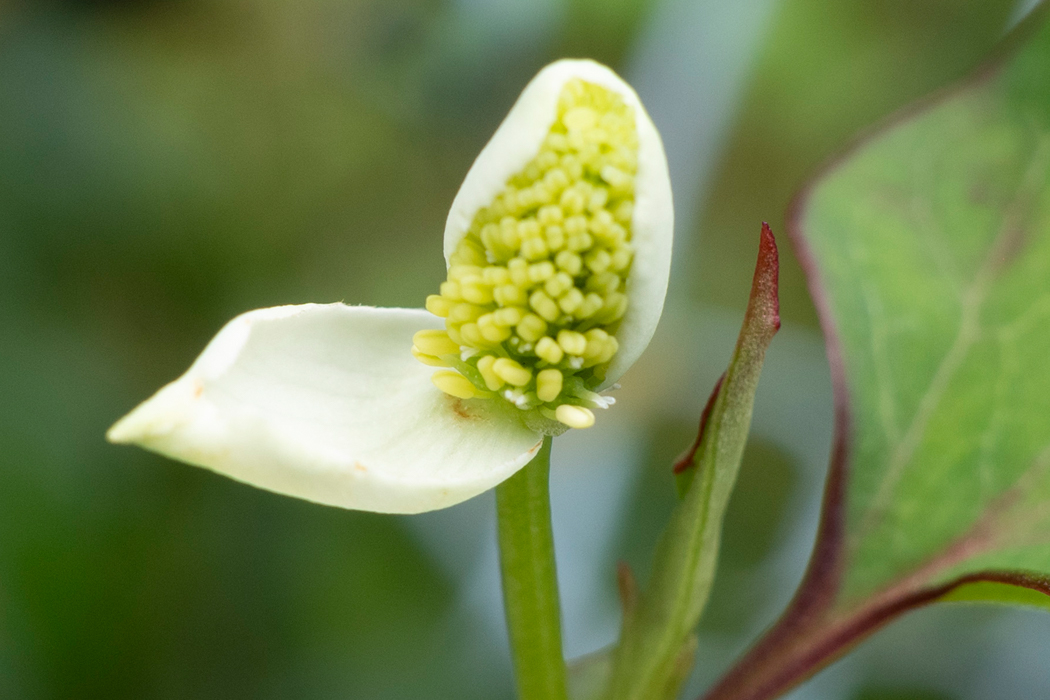
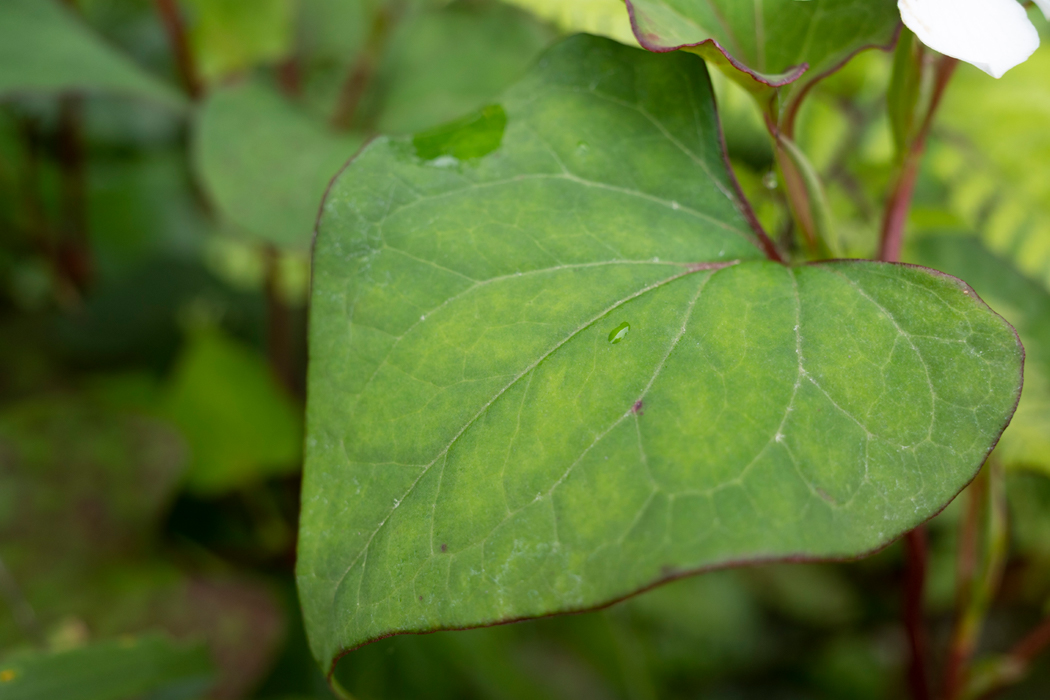
The white, petal-like parts are leaves called bracts, and the true flowers grow densely in the center of the bracts. The spadix blooms from the bottom up. The leaves are cordate (heart-shaped), lack gloss, and have pointed tips. The edges are reddish-purple.
Fish mint Ecology
Habitat
Grows in clusters in dark, damp places.
Life Cycle
Flowers bloom from spring to summer. It is highly reproductive, so it will grow quite a bit if left unattended. It also reproduces from underground stems.
Fish mint Photos
Fish mint Photos are introduced.
Tap the photo to open the detail page.
Fish mint Information
Naming
The specific name "cordata" means "heart-shaped" and is derived from the shape of the Houttuynia cordata leaf. The English name "Fish mint" comes from the fact that the unique odor is compared to the fishy smell of seafood.
Fish mint Found Locations
Along the Sakaigawa River
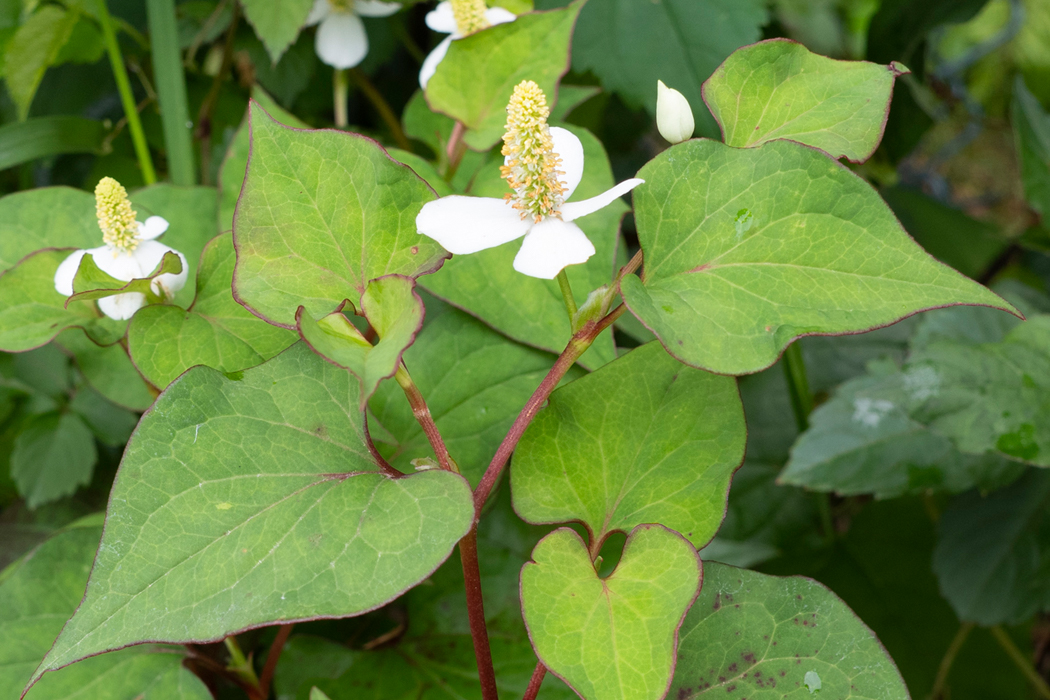
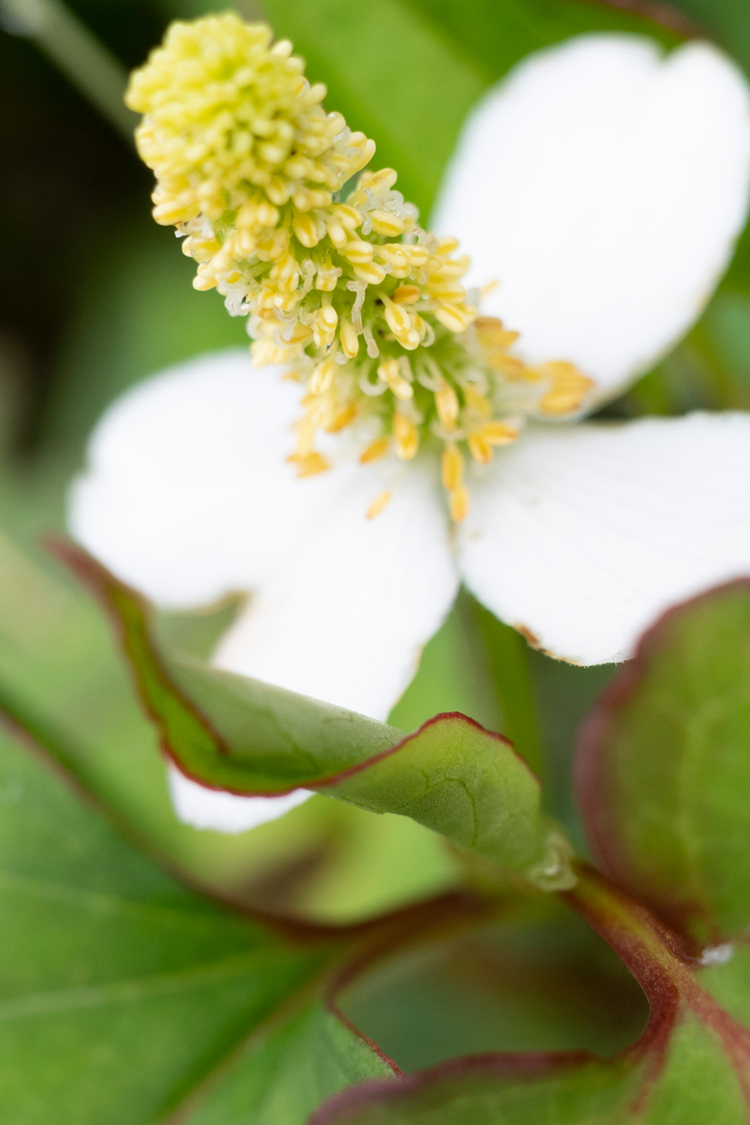
I photographed flowers growing in clusters in a dark, damp vacant lot along the Sakaigawa River. Some had inflorescences emerging from bracts that were just beginning to open. The inflorescences emerged from the bottom, which I believe corresponds to the order in which they bloom (from bottom to top).
The bracts that open in a cross shape look like flowers and stand out well in the dark.
Picture book
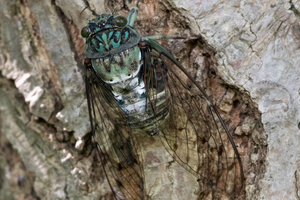
As its Japanese name suggests, it makes the sound "meenminmin"....... Read more
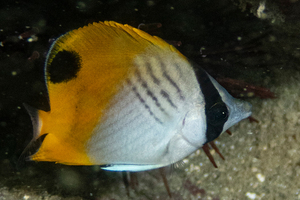
A diagonal black parallel line runs....... Read more
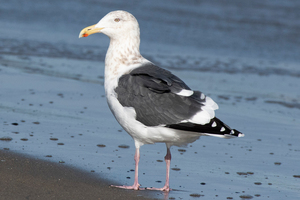
Black back and flight feathers....... Read more
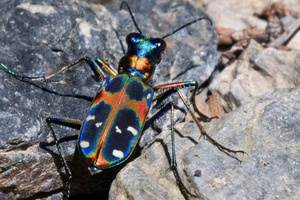
A beetle with a beautiful metallic luster....... Read more
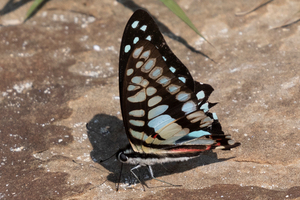
With a light blue band....... Read more
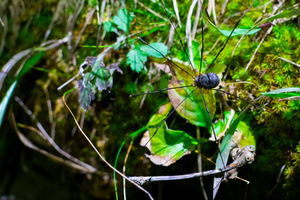
Has wire-like legs and is nicknamed "Uncle Long Legs" in the United States....... Read more