Long-tailed Tit
A popular wild bird known for its adorable face.
| Scientific name | Aegithalos caudatus |
| English name | Long-tailed Tit |
| Japanese name | 柄長 |
| Class | Aves |
| Order | Passeriformes |
| Family | Aegithalidae |
| Genus | Aegithalos |
| Species | caudatus |
| Full length | 14cm |
| Distribution | Widely distributed across the Eurasian continent. |
Long-tailed Tit Characteristics and Morphology
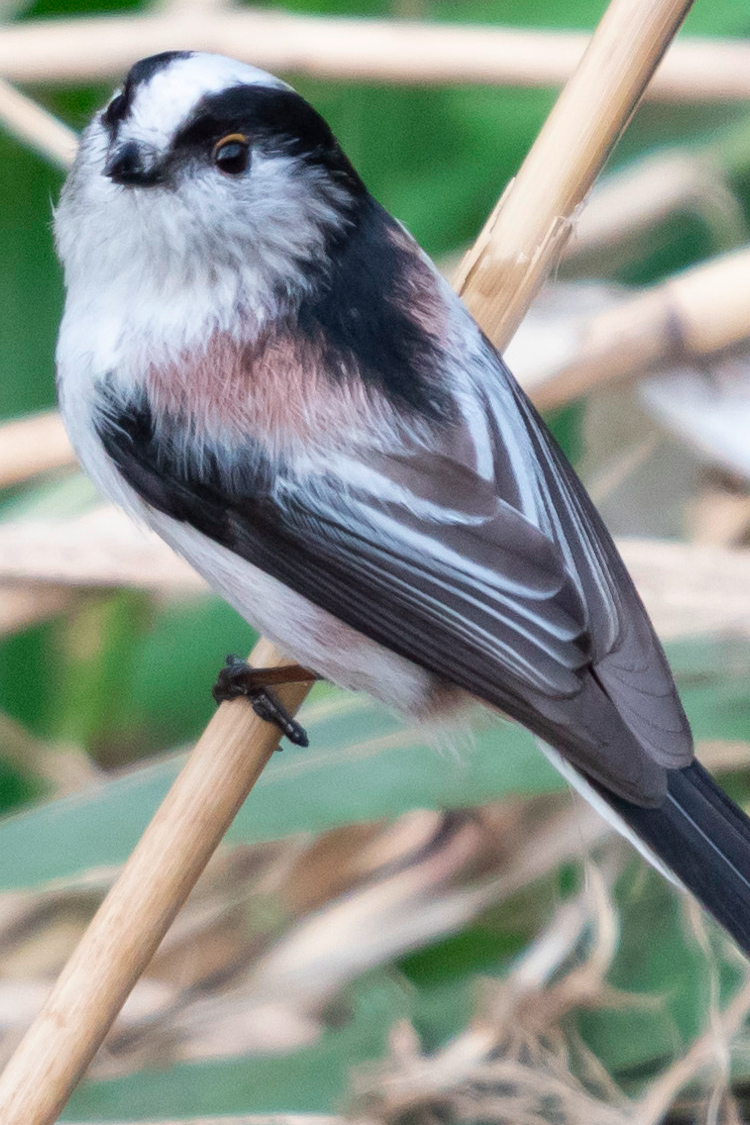
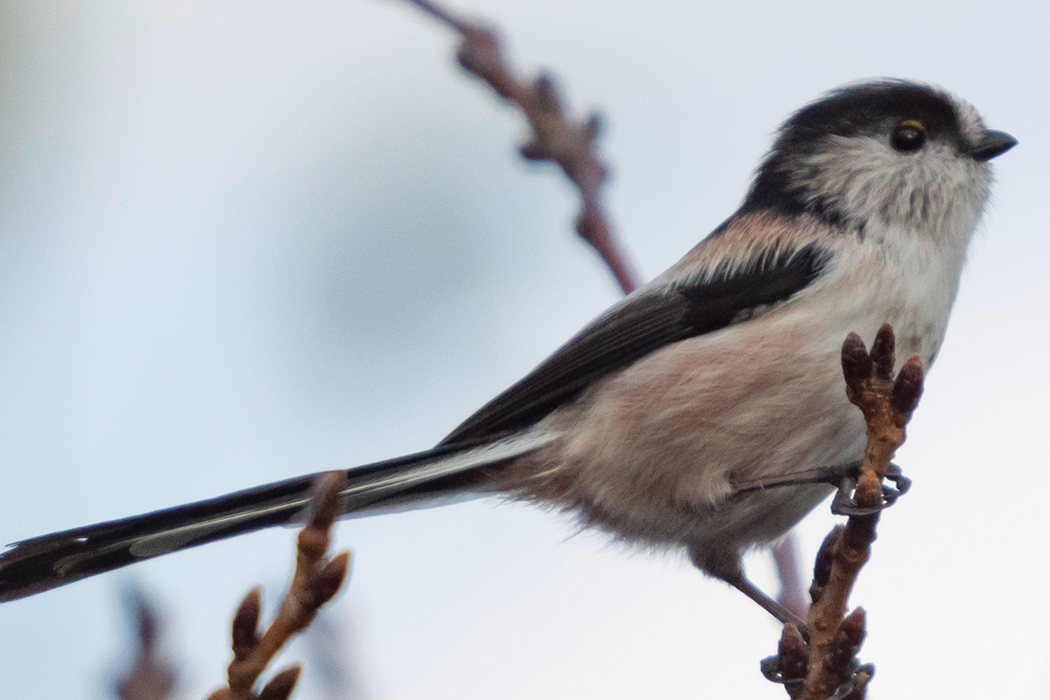
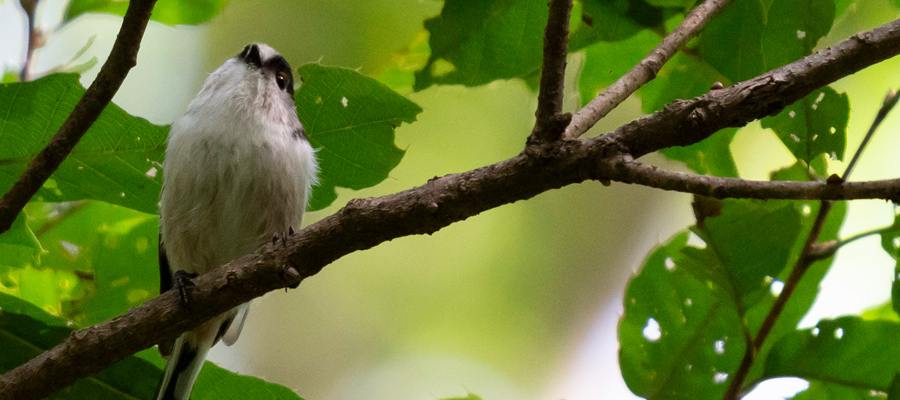
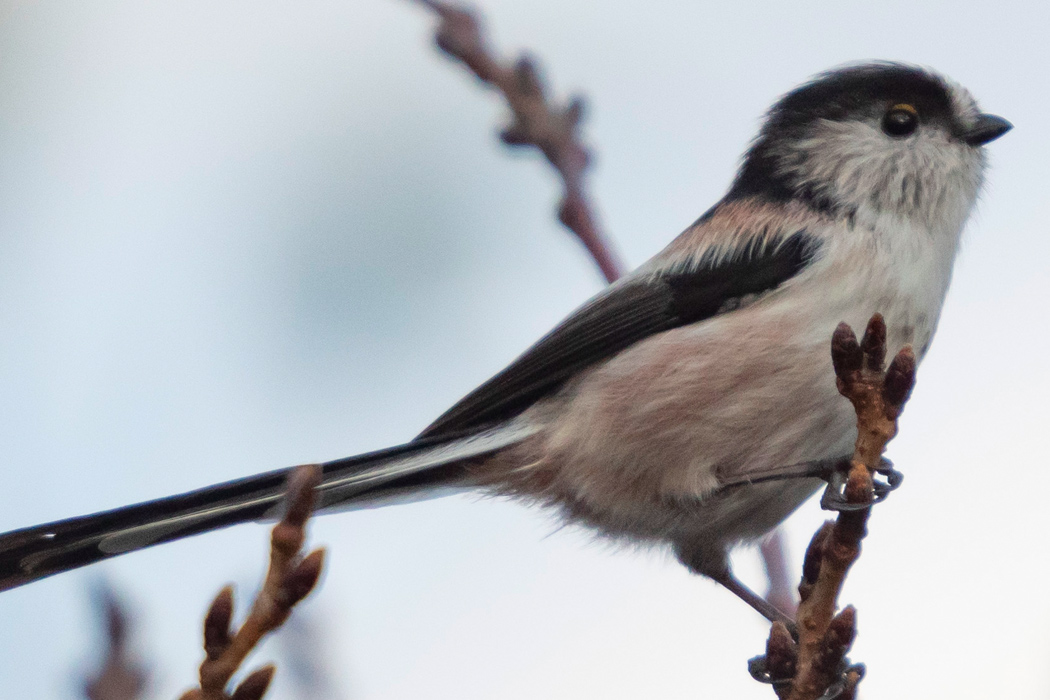
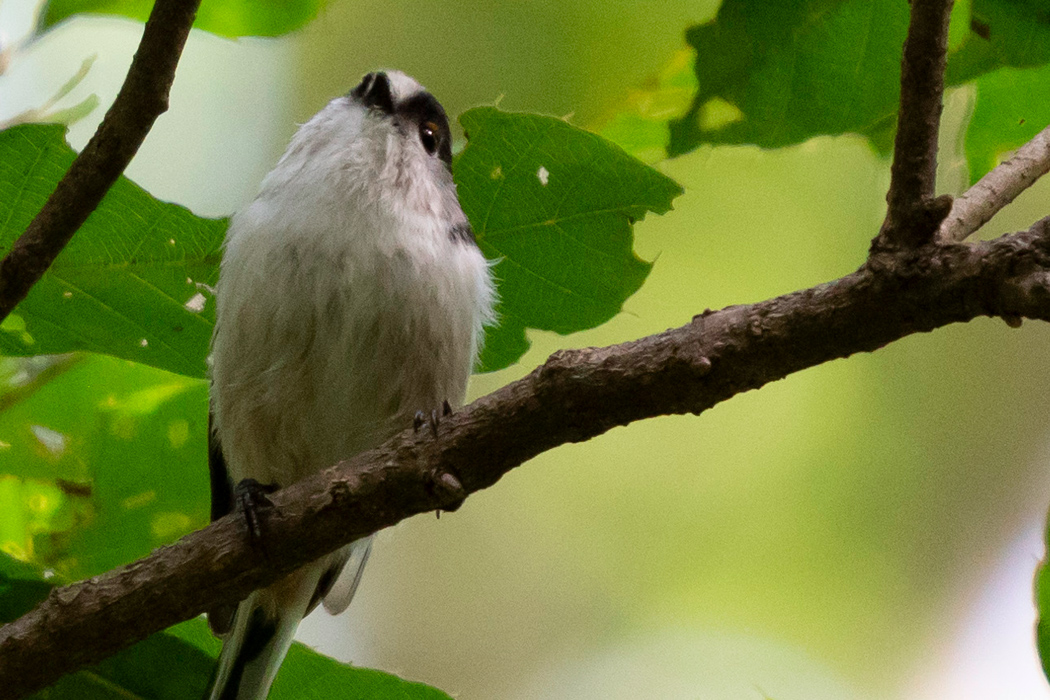
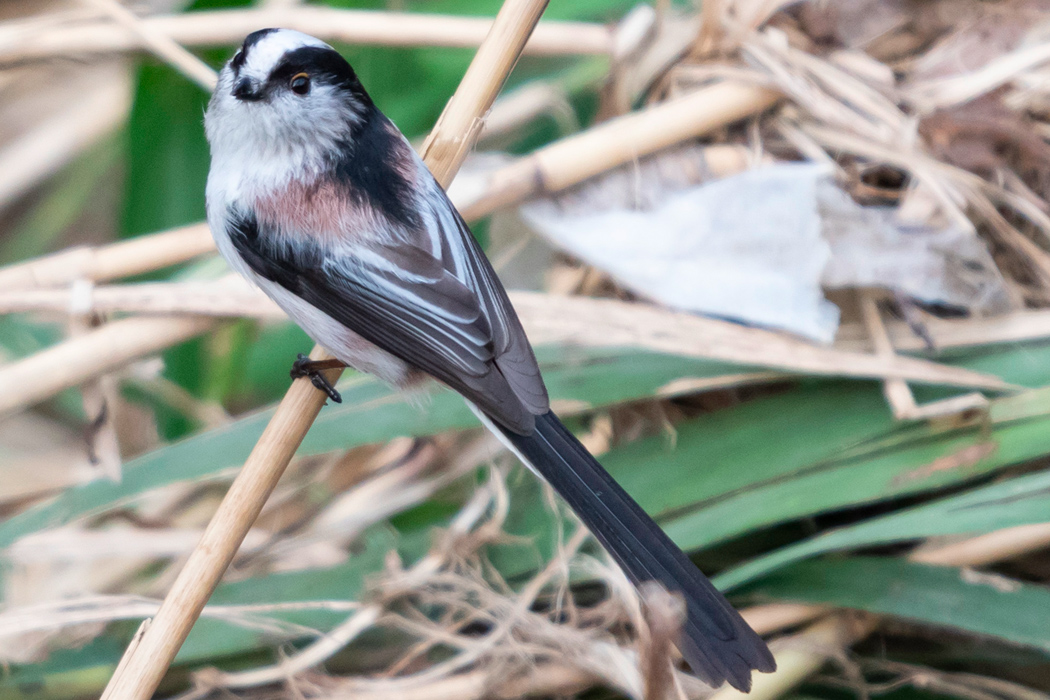
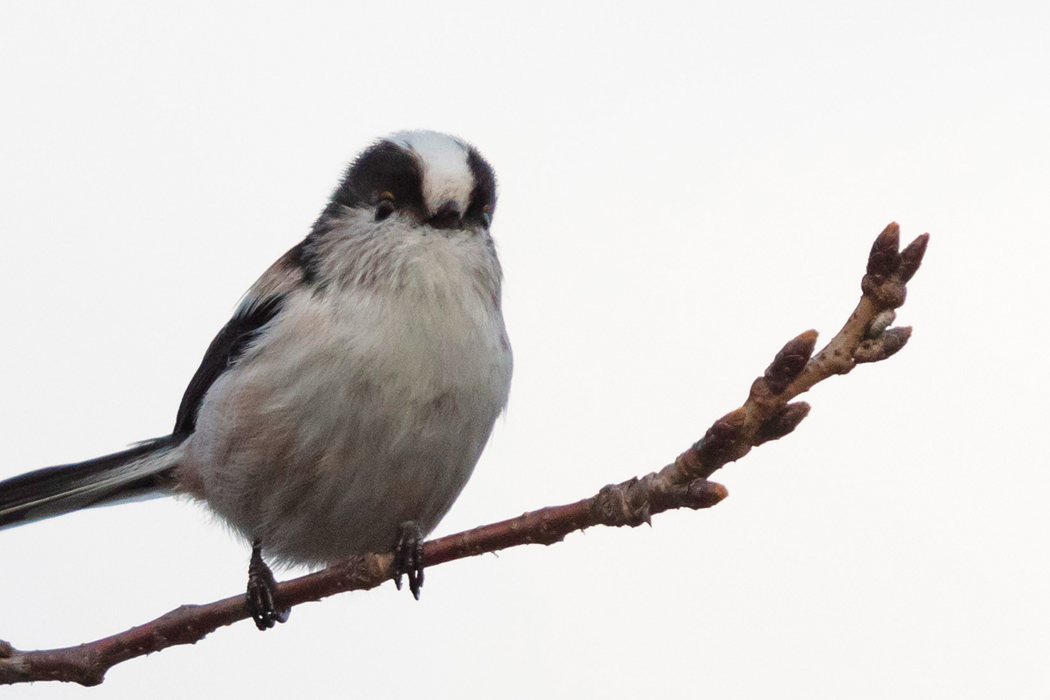
Characterized by a round body and a long tail. The general impression is whitish. Males and females look the same.
The head is small and appears integrated with the body. The median crown stripe is white, and the sides of the head are black from the eyebrows to the back of the neck. The bill is a very small, lead-colored triangle.
The body is round. The wings are black, and the belly is white. The shoulders and the base of the tail are a pale reddish-purple.
The tail feathers are very long, which is the origin of its Japanese name. They are black. The legs are thin and lead-colored.
The Shima-enaga found in Hokkaido is a subspecies of the Long-tailed tit. It has many fans due to its cute appearance. The difference is that the Shima-enaga's head is entirely white.
Juvenile
Juveniles have blackish-brown parts that are slightly lighter and closer to brown than in adults.
Song
They have a tiny voice that matches their appearance. They call with "chiririri" or "chuririri," and sometimes a slightly harsher "juririri." Rather than a single bird singing, it sounds more like the overlapping voices of a small flock. The "chee" sound is somewhat similar to a Great tit, but it is thinner and raspier than the clear "tsu-pi tsu-pi" song.
Long-tailed Tit Ecology
Habitat
Inhabits forests near plains and mountains. Often seen in parks and on roadside trees.
Food
Feeds on insects and spiders, and sometimes drinks tree sap.
Life Cycle
Long-tailed tits are known for skillfully building nests using moss and spider webs. They weave branches into a circular shape and line the inside with soft materials like moss for comfort. In spring, they breed by laying around 10 eggs in these elaborate nests. Breeding occurs in spring, and chicks can be seen from around April. Siblings are sometimes seen huddling together on a branch.
Long-tailed Tit Photos
Long-tailed Tit Photos are introduced.
Tap the photo to open the detail page.
Long-tailed Tit Behavior
They move through forests in flocks of about a dozen individuals. These flocks often include other small birds like Great tits and Varied tits. When sleeping in trees, the flock huddles together, sometimes looking like a row of skewered dumplings (kushi-dango).
Long-tailed Tit Information
Naming
The scientific name "caudatus" means "having a long tail," sharing the same origin as the Japanese name. The English name follows suit. In Japanese, "Enaga" is written with characters meaning "long handle," comparing the long tail to the handle of a ladle.
They are also known for "helpers"—individuals that failed to breed themselves and instead assist other pairs with raising their chicks.
Long-tailed Tit Found Locations
Komiya Park, Hachioji City
I encountered a flock of dozens of birds at Komiya Park in Hachioji City. They seemed to be touring the park along with Great tits and Varied tits. As the flock approaches, the voices of the Long-tailed tits can be heard from afar. Some curious individuals came down to branches at eye level, while others emitted quiet, wary calls.
Long-tailed Tit Observation Log
These are the observation logs where we found Long-tailed Tit.
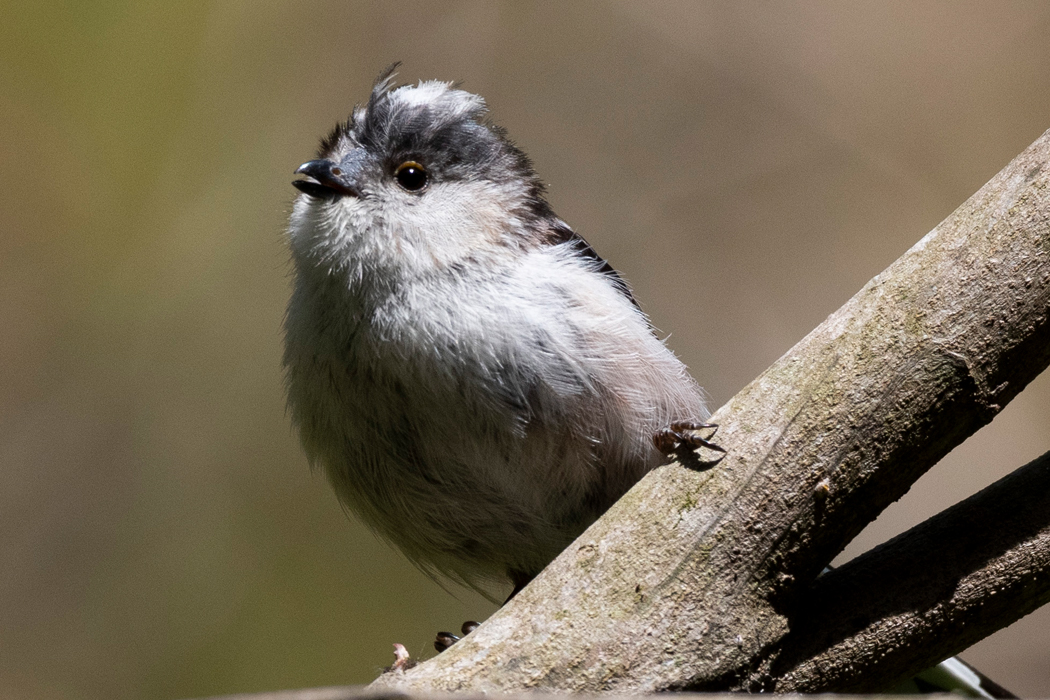
I spotted a Long-tailed Tit along the forest road by the stream. It was perched on a side branch, eating small insects.
Read more >
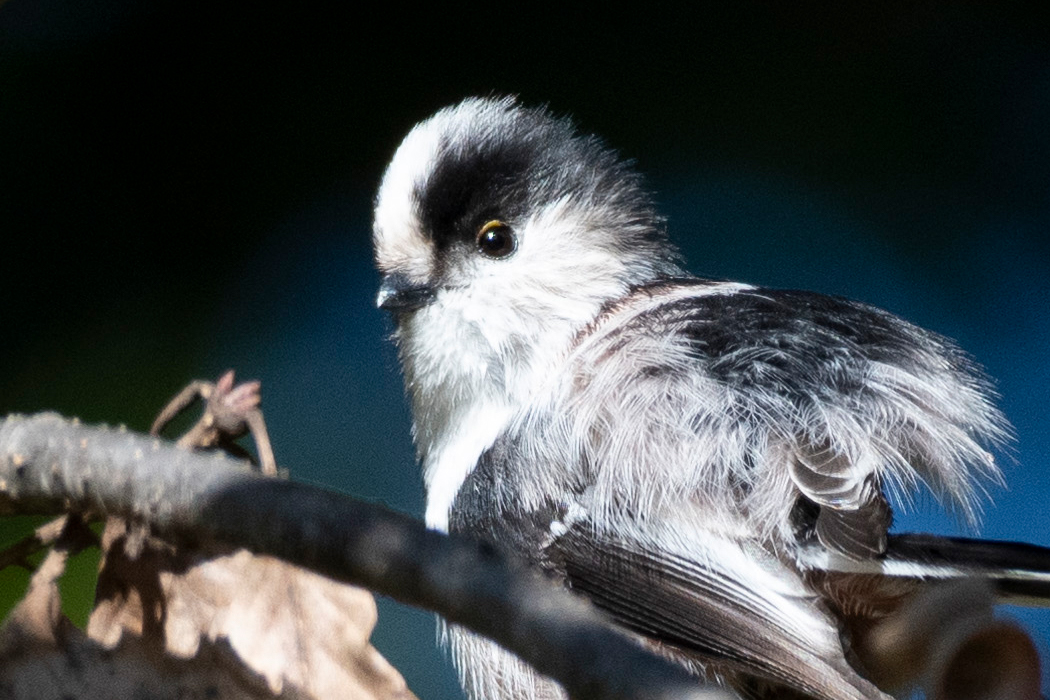
The upper plaza was bustling with mixed flocks of Japanese Tits and Long-tailed Tits.
Read more >
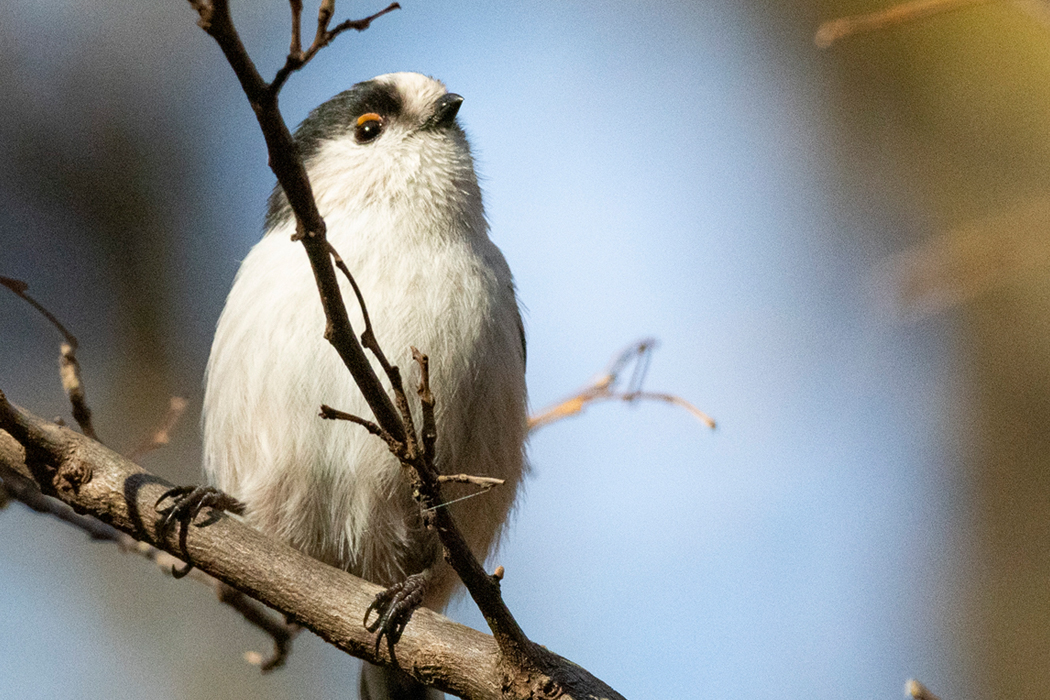
A mixed flock of Long-tailed Tits and other tits were flying all over the park.
Read more >
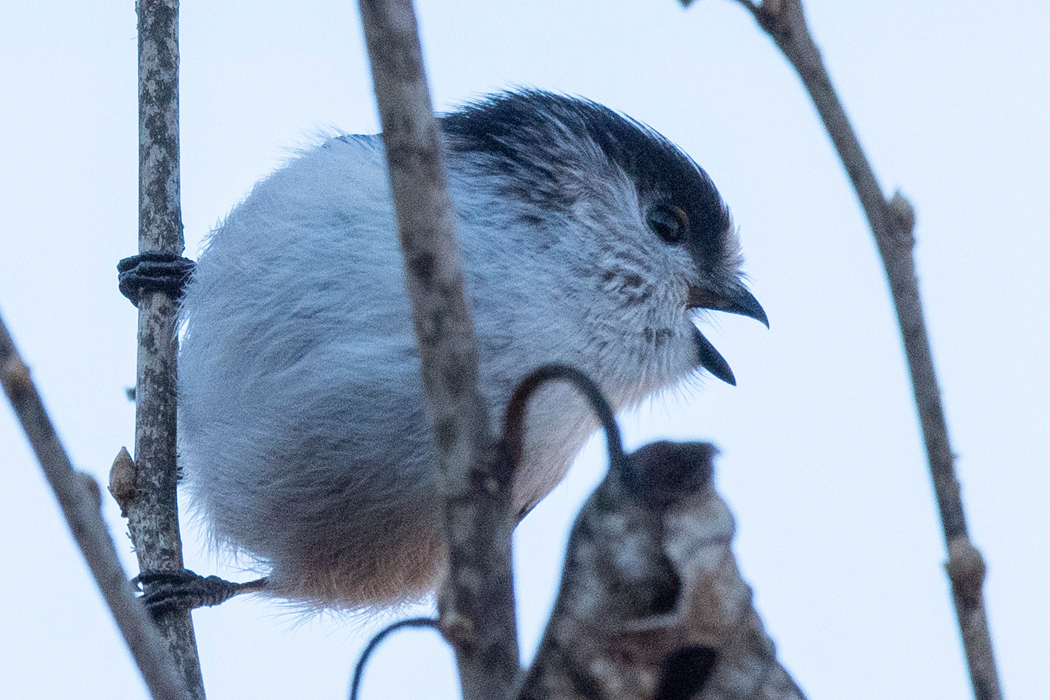
There were many Long-tailed Tits when I went down to the Yudonogawa River.
Read more >
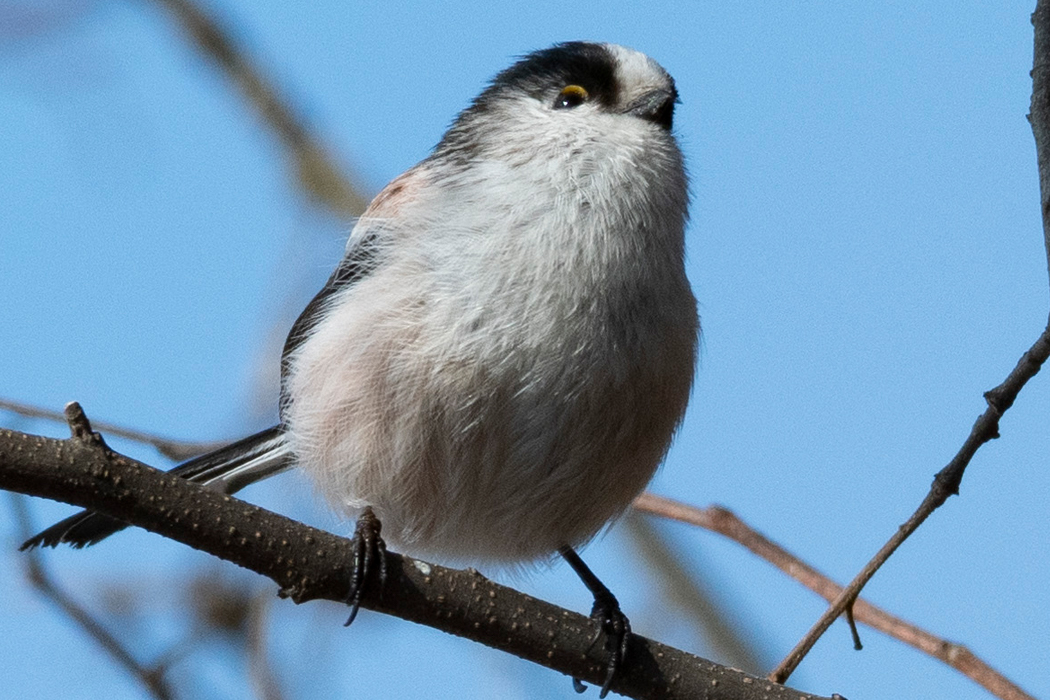
A flock of Long-tailed Tits came to the side of the field.
Read more >