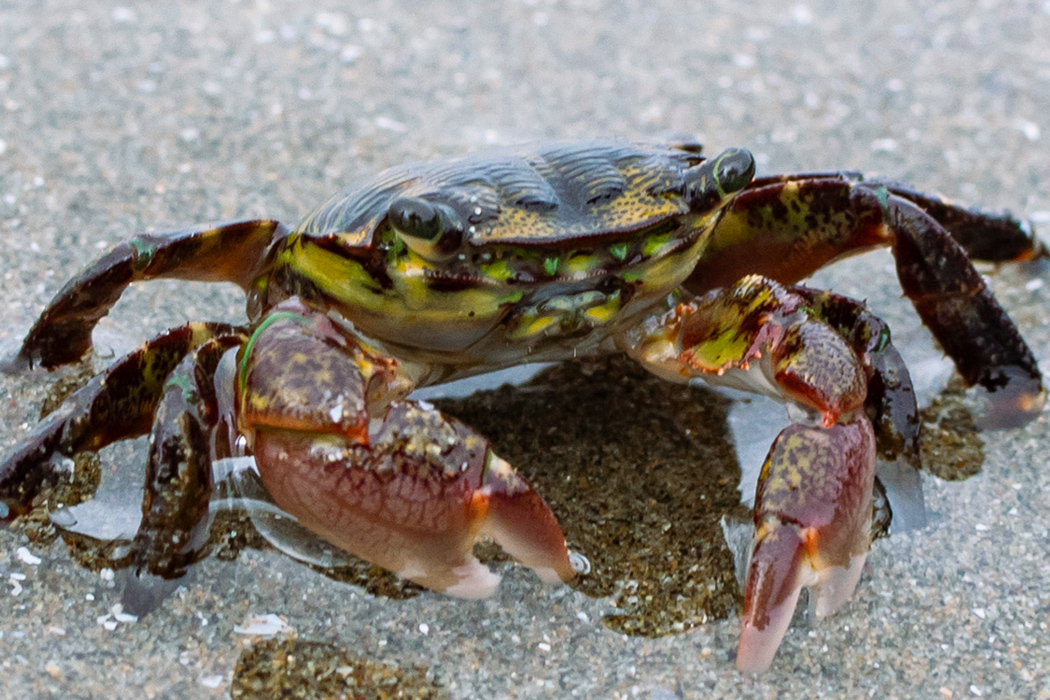
Asian shore crab
Crabs found while playing on the shore.
| Scientific name | Hemigrapsus sanguineus |
| English name | Asian shore crab |
| Japanese name | 磯蟹 |
| Class | Malacostraca |
| Order | Decapoda |
| Family | Varunidae |
| Genus | Hemigrapsus |
| Species | sanguineus |
| Full length | Approximately 25mm |
| Distribution | Widely distributed in the Western Pacific |
Asian shore crab Characteristics and Morphology
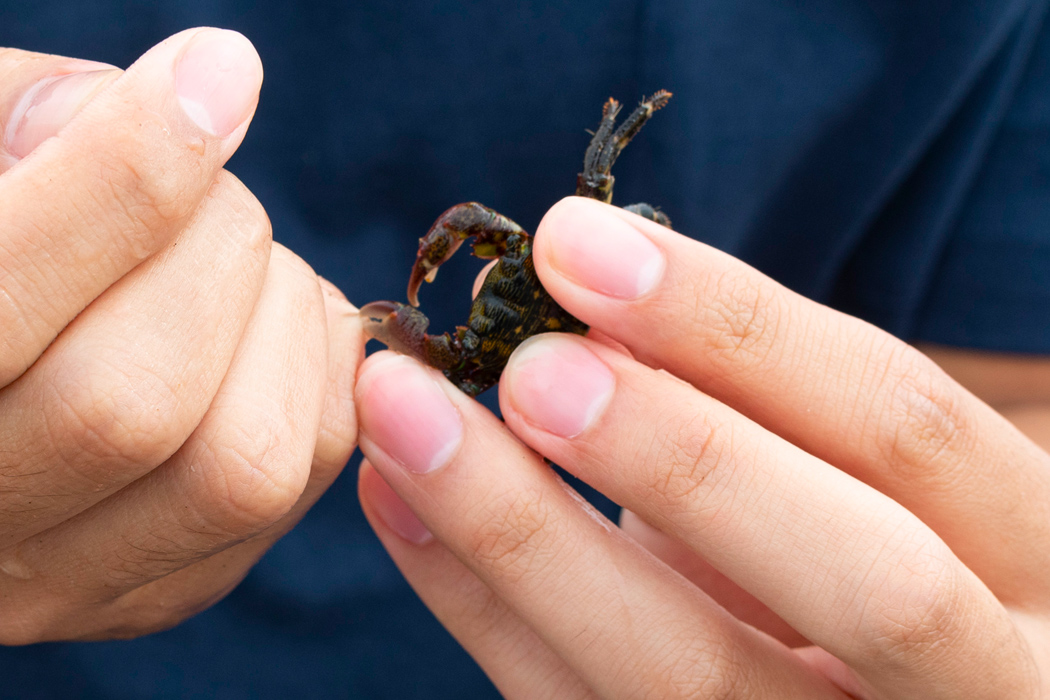
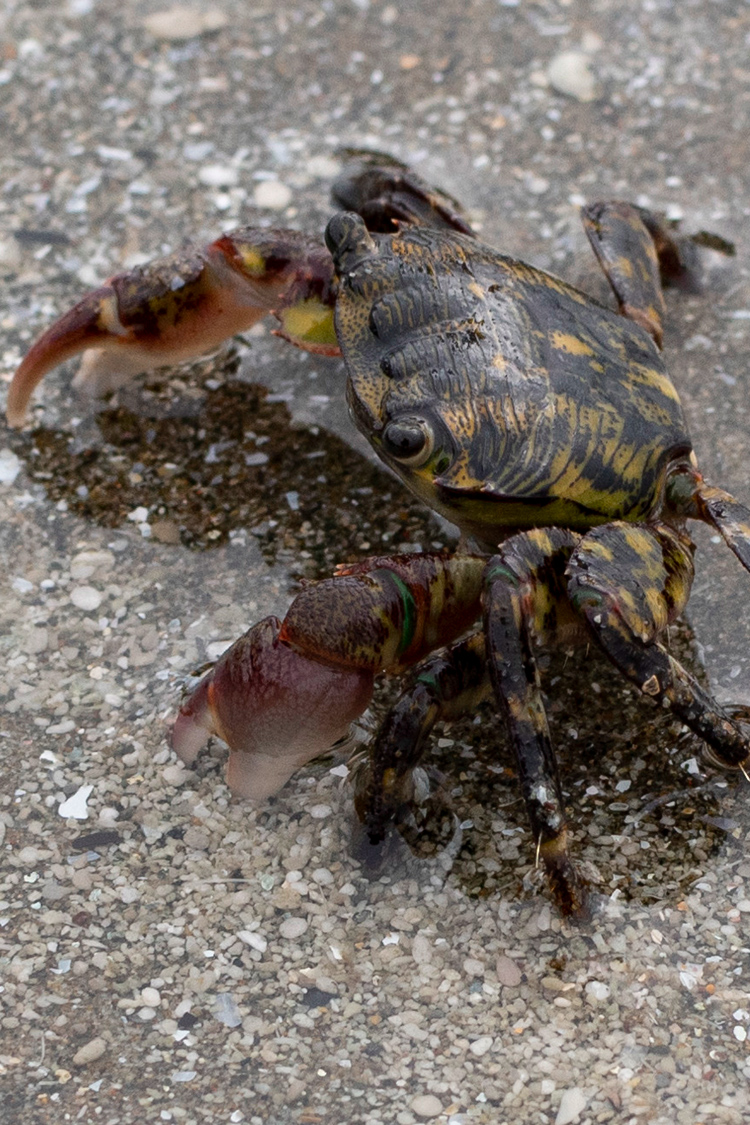
The body color ranges from reddish-purple on the back to the walking legs, with green and yellow mottled patterns. Most are less than 3cm, but some individuals grow to about 4cm.
The left and right claws are the same size.
They have a flattened carapace. The ventral side is whitish.
The walking legs have light brown parts.
Male
Males have a narrow abdominal flap.
Female
Females have a wide, oval-shaped abdominal flap.
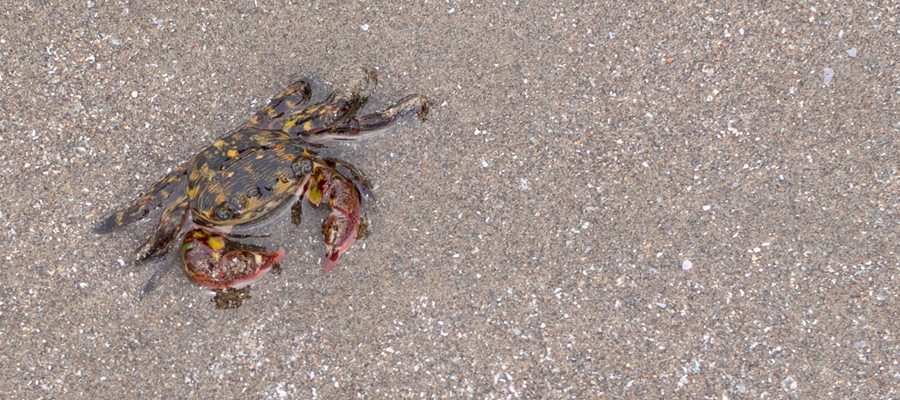
Asian shore crab Ecology
Habitat
Commonly found along the coast. They inhabit rocky areas and gaps in tetrapods.
Food
They are omnivorous and eat anything, including seaweed, small fish, and shellfish.
Life Cycle
They breed from late April to summer.
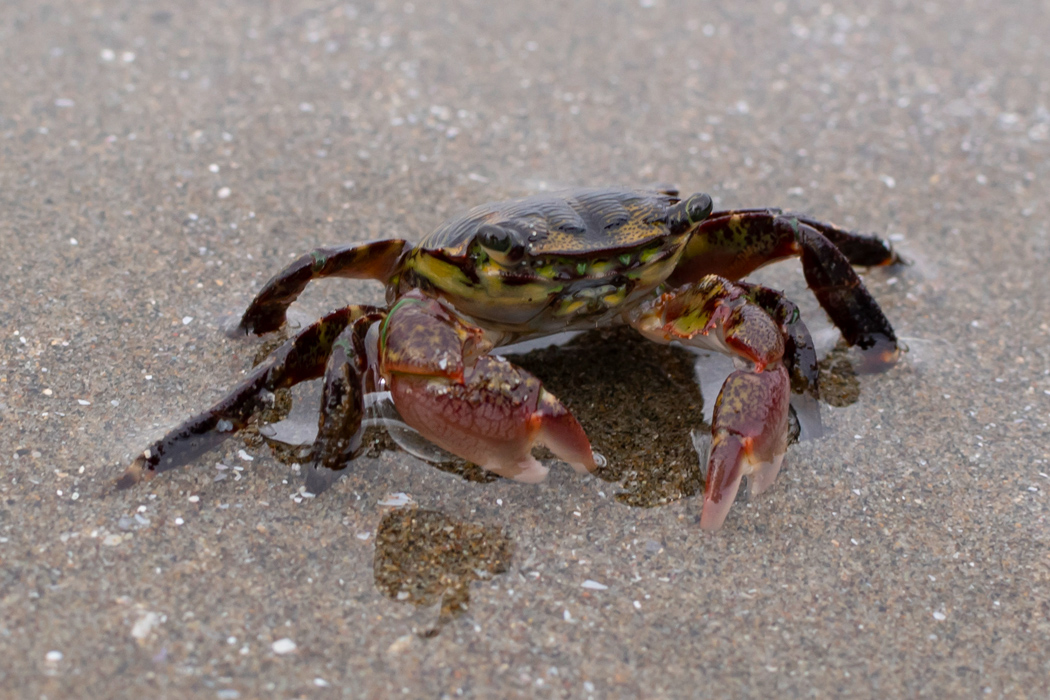
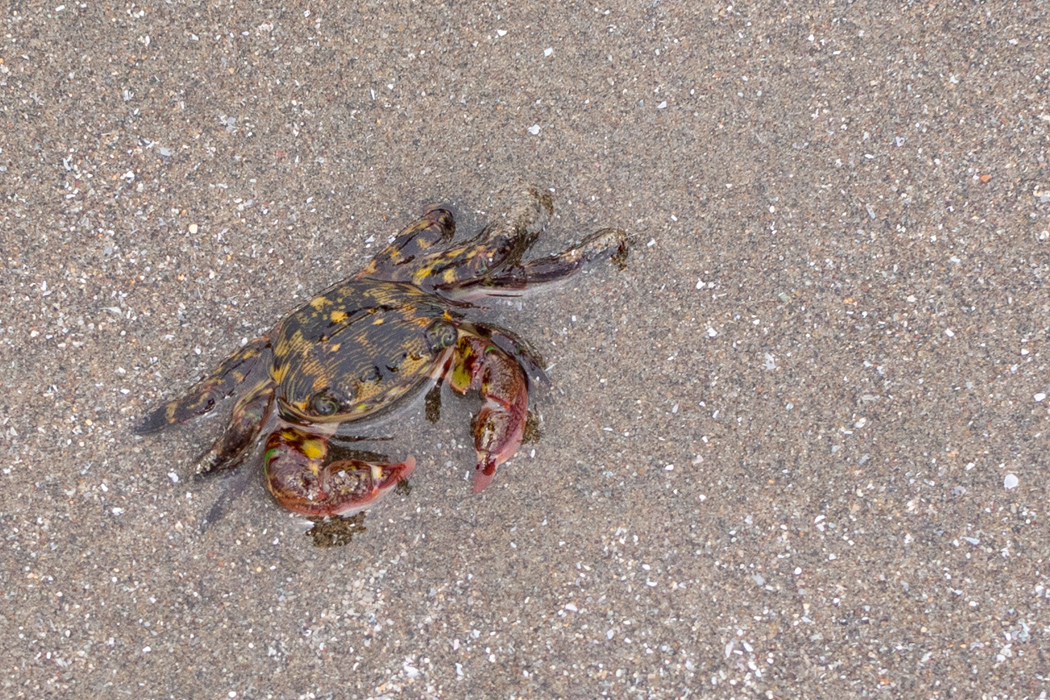
Asian shore crab Photos
Asian shore crab Photos are introduced.
Tap the photo to open the detail page.
Asian shore crab Behavior
They hide from natural enemies such as birds and black sea bream. They also compete with each other for food and territory.
Asian shore crab Information
Naming
The scientific name 'sanguineus' means 'blood red' and is derived from the color of the carapace and walking legs. In Japanese, it is also called 'Hanasaki crab' because it turns a bright red color when boiled.
How to eat Hemigrapsus sanguineus
Although not an edible crab, it can be eaten in miso soup. You can catch them near fishing spots, so you might as well eat them. Since they can be easily caught on the shore, you can take them home and keep them as pets. Hemigrapsus sanguineus will die in fresh water, so they must be raised in seawater. Keep the water clean and feed them small fish and shellfish. It is necessary to prepare artificial seawater at a pet store, etc.
Asian shore crab Found Locations
Kujūkuri Beach, Chiba Prefecture
I caught it on the tetrapods at Katakai Beach on Kujūkuri Beach in Chiba Prefecture. It was a Hemigrapsus sanguineus with a carapace size of less than 3cm, and it was easy to catch, but it hurt when my finger was pinched by its claws. There were also larger ones than this individual, but I was too scared to catch them with my bare hands. There were many things that Hemigrapsus sanguineus would like on the tetrapods, such as seaweed and shellfish.
Picture book
spines on dorsal fin....... Read more

Bronze body scattered with fine white spots....... Read more
A mouth slit behind the eyes and lined with sharp teeth....... Read more
Characterized by bristling feathers on the top of the head....... Read more

Flashy crimson body color....... Read more

Japanese endemic species living in mountain streams...... Read more