Eurasian Magpie
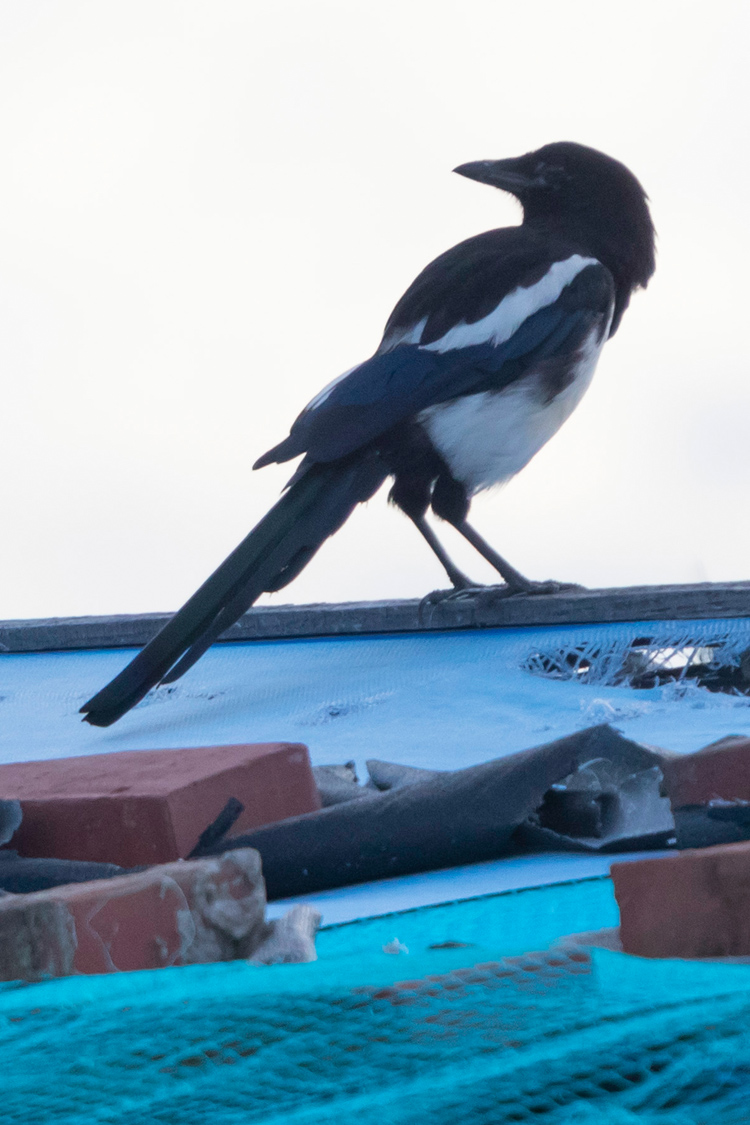
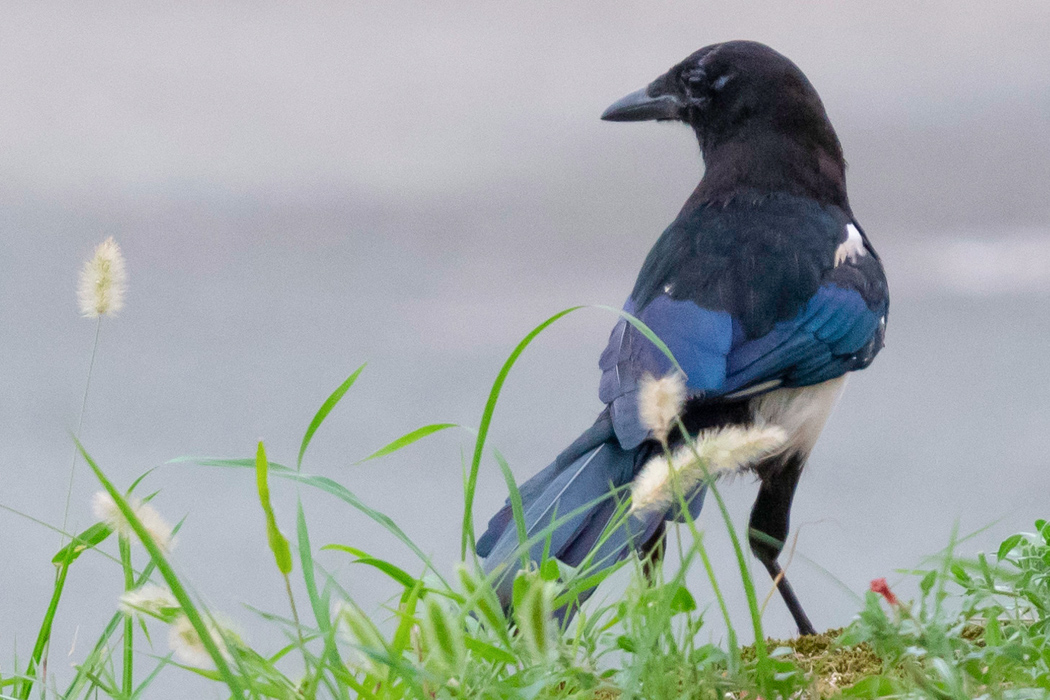
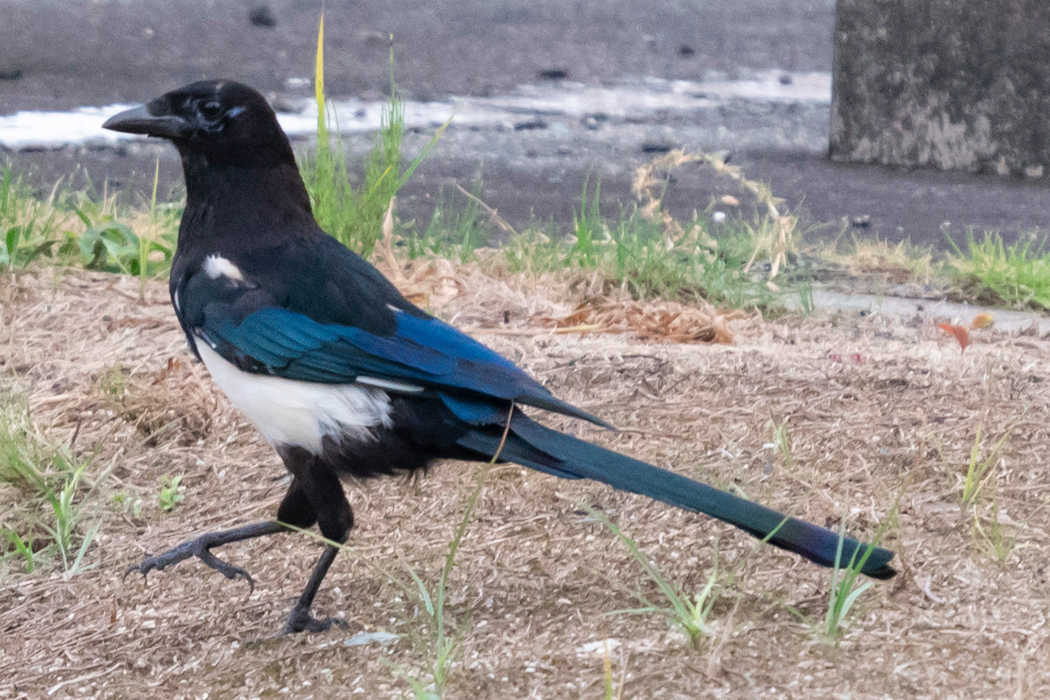
Possesses vivid blue feathers.
| Scientific name | Pica serica |
| English name | Eurasian Magpie |
| Japanese name | 鵲 |
| Class | Aves |
| Order | Passeriformes |
| Family | Corvidae |
| Genus | Pica |
| Species | serica |
| Full length | 45cm |
| Distribution | Hokkaido, Niigata, Nagano, Fukuoka, Saga, Nagasaki, and Kumamoto Prefectures. |
Eurasian Magpie Characteristics and Morphology
A size smaller than a crow, with a silhouette very similar to the Azure-winged magpie.
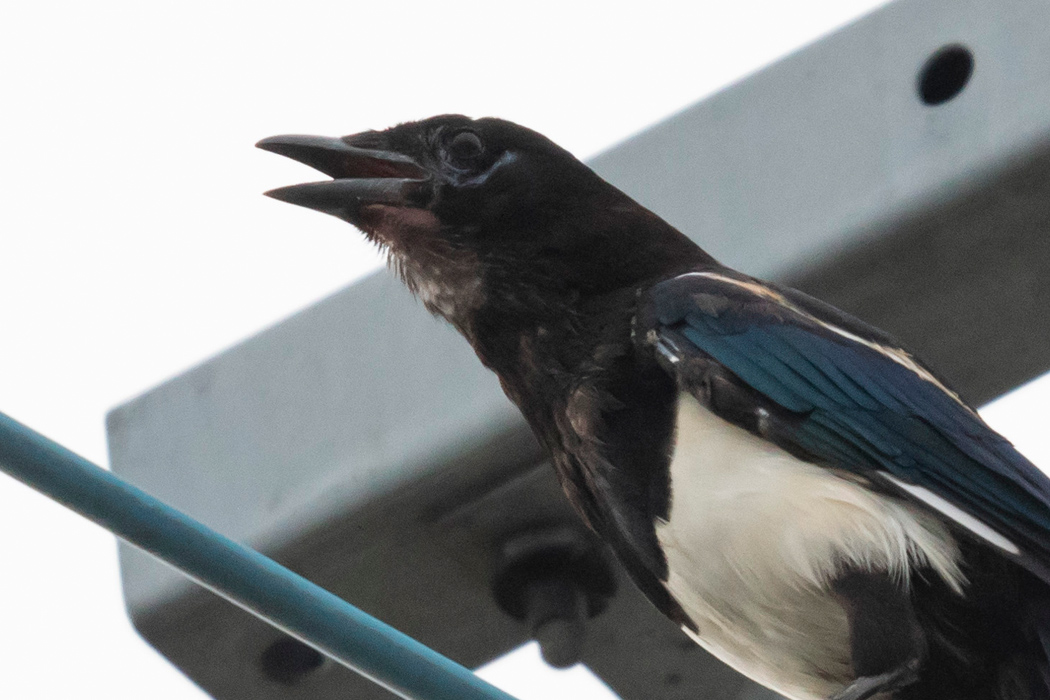
The head shape is very similar to a crow and is entirely black. The bill is slightly more modest and smaller than a crow's. Males and females look the same.
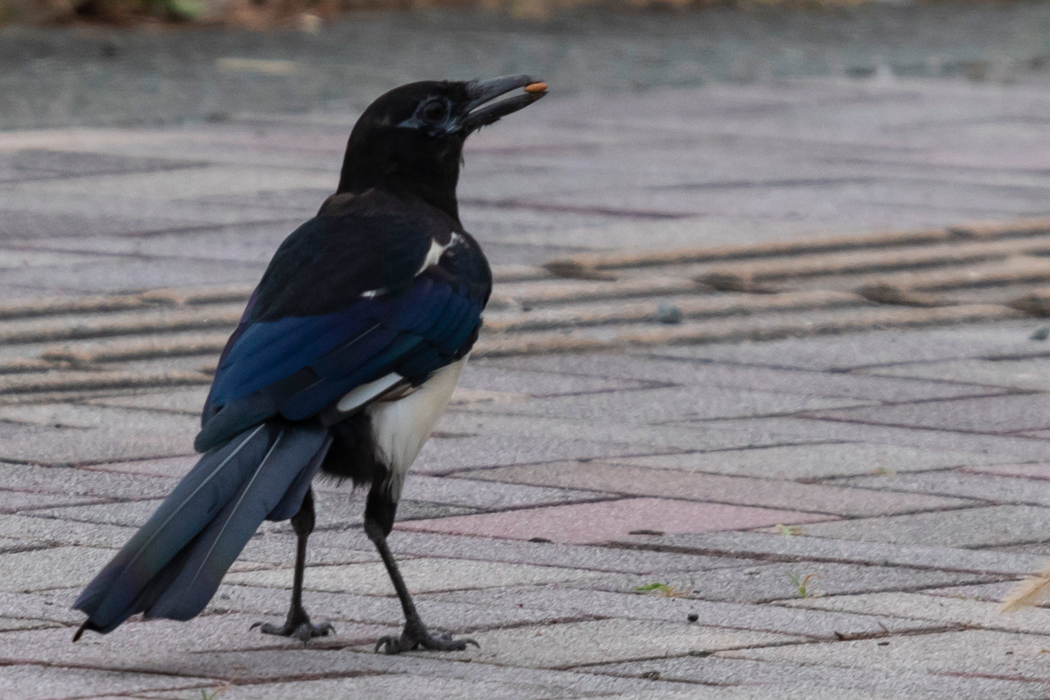
The back features a beautiful gradation from deep blue to blue-green toward the tail. The shoulder area is white. The breast is black, and the belly is pure white. The primary feathers are white, while the secondaries are a mixture of black and blue.
The tail feathers are long and often spread open while flying. The color is complex, mixing not just blue but green as well.
Its silhouette is very similar to the Azure-winged magpie, but the Oriental magpie is one size larger.
Juvenile
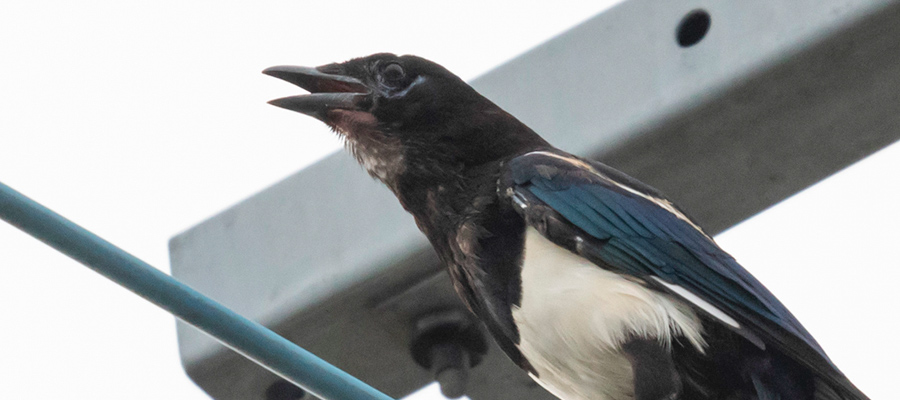
Juveniles have relatively similar coloration to adults.
The bill is mixed with flesh tones.
Song
They call with a harsh, mechanical voice like "kyoo-kyoo-kyoo" or "kasha-kasha-kasha." When the author was searching for them, I imagined they would sound like Azure-winged magpies. In reality, the calls are not that similar, but they share the characteristic harsh and somewhat noisy quality common to the crow family.
Eurasian Magpie Ecology
Habitat
Lives in trees in agricultural lands and urban areas. In Japan, they primarily breed in the agricultural lands of the Saga Plain. These populations are thought to have been artificially introduced from the Korean Peninsula in the 17th century.
Food
Omnivorous, eating everything from insects to seeds and grains. In agricultural areas, they have been valued as beneficial birds because they eat locusts. They breed by nesting on utility poles or in trees at heights of 8 meters or more.
Life Cycle
They do not form large flocks, typically acting in pairs or with a few juveniles. When the author discovered them in Omuta City, Fukuoka Prefecture, a pair was calling to each other.
Eurasian Magpie Photos
Eurasian Magpie Photos are introduced.
Tap the photo to open the detail page.


Eurasian Magpie Behavior
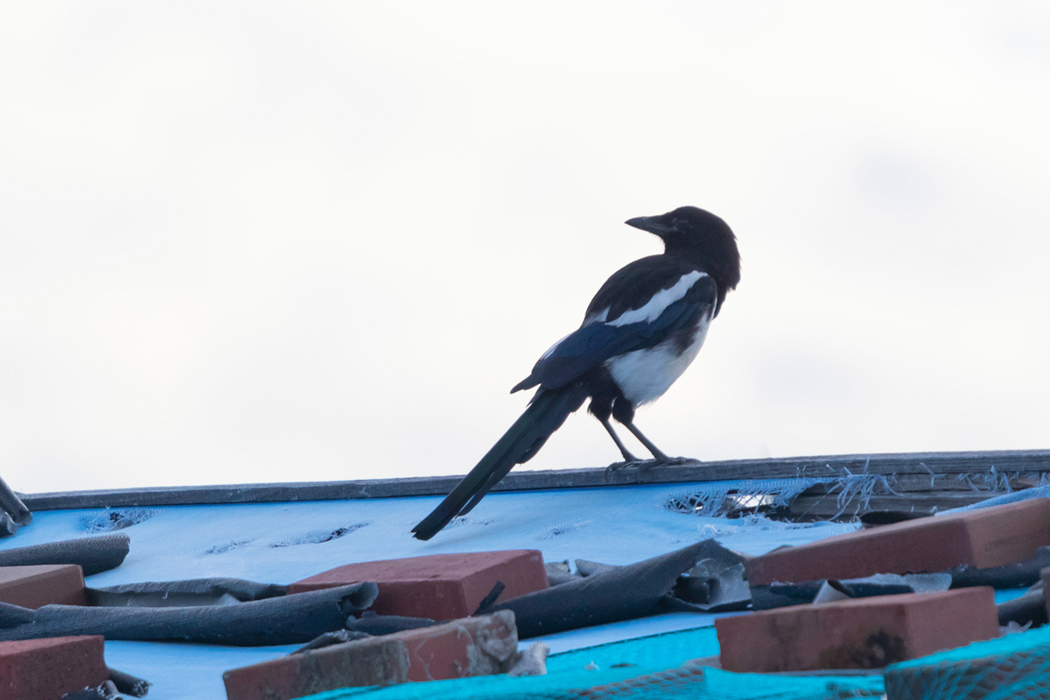
They watch from atop trees or utility poles and descend to the ground to walk. Their movements are very similar to the Azure-winged magpie.
Eurasian Magpie Information
Naming
The scientific name "serica" means "silk," referring to China, a famous silk producer. In Japan, it has the alias "Kachi-garasu" (Victory Crow), derived from its call.
High Intelligence
Magpies possess extremely high intelligence and were the first birds to pass the mirror test. They closely observe human movements.
Scientific Name
Previously classified as "Pica pica," research in molecular phylogenetics has led the Japanese population to be recognized as an independent species, "Pica serica" (Ornithological Society of Japan - Check-list of Japanese Birds, 8th Revised Edition).
Eurasian Magpie Found Locations
Omuta City, Fukuoka Prefecture
Found in the city of Omuta, Fukuoka Prefecture. It was perched on a utility pole, and at first, I thought it was just a crow, but I realized it was an Oriental magpie because of its white belly. Looking only at the head, it looks very much like a crow.
While walking through the urban area to observe further, I heard an unfamiliar call and looked up to find an Oriental magpie on the roof of a house. It was moving between utility poles and gardens in a residential complex, picking up and eating seeds from the ground.