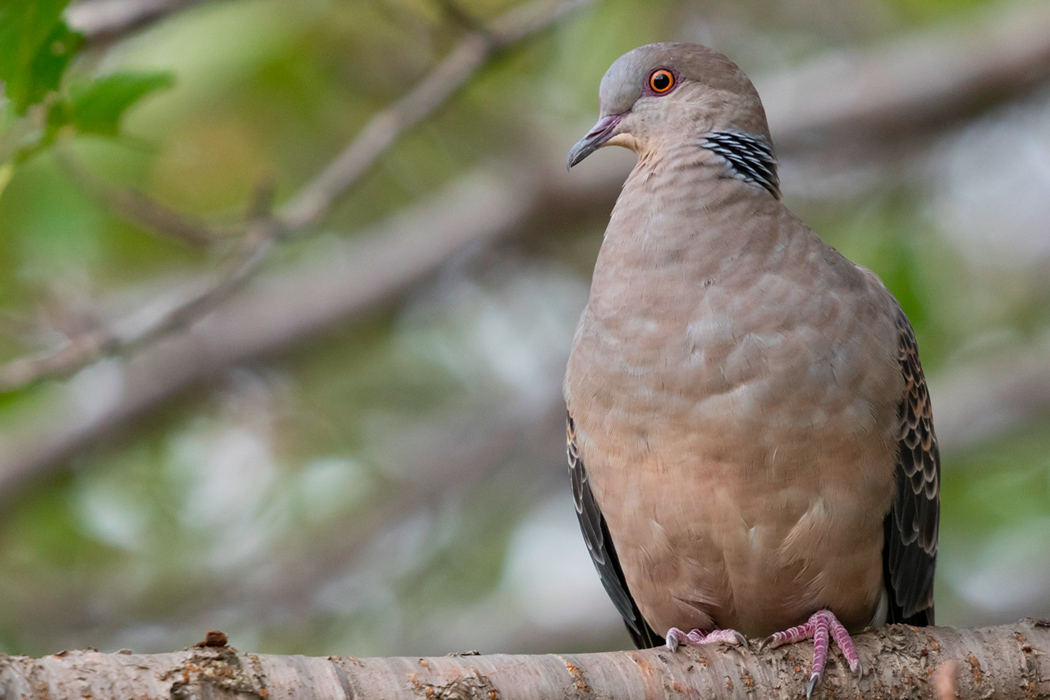
Oriental Turtle Dove
Its call sounds like "Dē-dē-po-pō"
| Scientific name | Streptopelia orientalis |
| English name | Oriental Turtle Dove |
| Japanese name | 雉鳩 |
| Class | Aves |
| Order | Columbiformes |
| Family | Columbidae |
| Genus | Streptopelia |
| Species | orientalis |
| Full length | Approximately 33cm |
| Distribution | Eastern Eurasia |
Oriental Turtle Dove Characteristics and Morphology
The entire body is a plain gray color. Males and females are the same color.
The head is grayish-brown. The beak is lead-colored. The iris is reddish.
The wings have scale-like brownish feathers. The abdomen is brownish. There are also patterns at the base of the neck. The chest bulges out significantly.
The edges of the tail feathers are white. The legs are flesh-colored.
Song
The song is a repetition of "Dē-dē po-pō," which everyone has heard. It is quite loud and memorable.
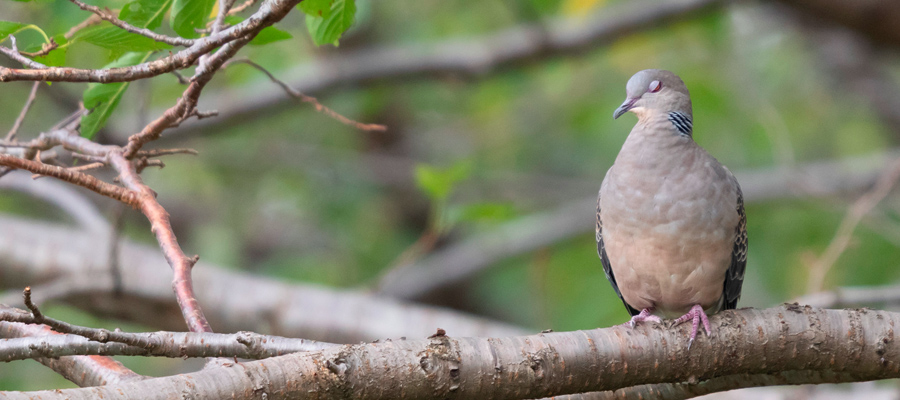
Oriental Turtle Dove Ecology
Habitat
Widely inhabits areas from mountains to plains. It used to live in the mountains, but now it can be seen even in human settlements without fearing humans.
Food
Omnivorous, eating relatively anything, including plant seeds and insects.
Life Cycle
They build nests with twigs not only on trees but also on artificial structures for breeding. Eggs hatch in about 15 days, and the chicks leave the nest in another 15 days.
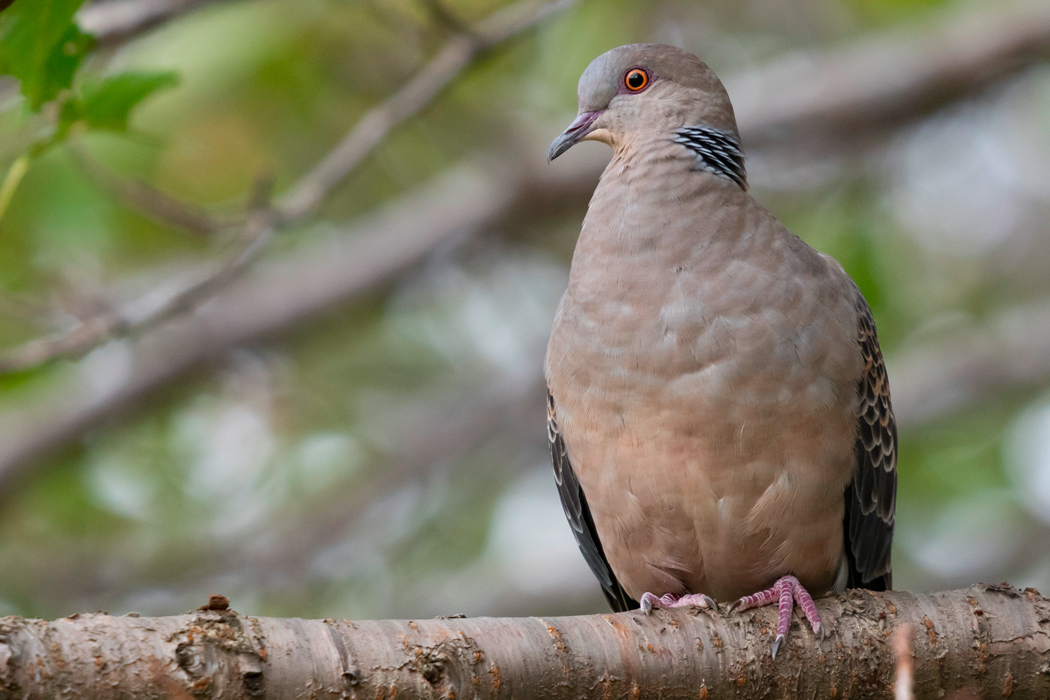
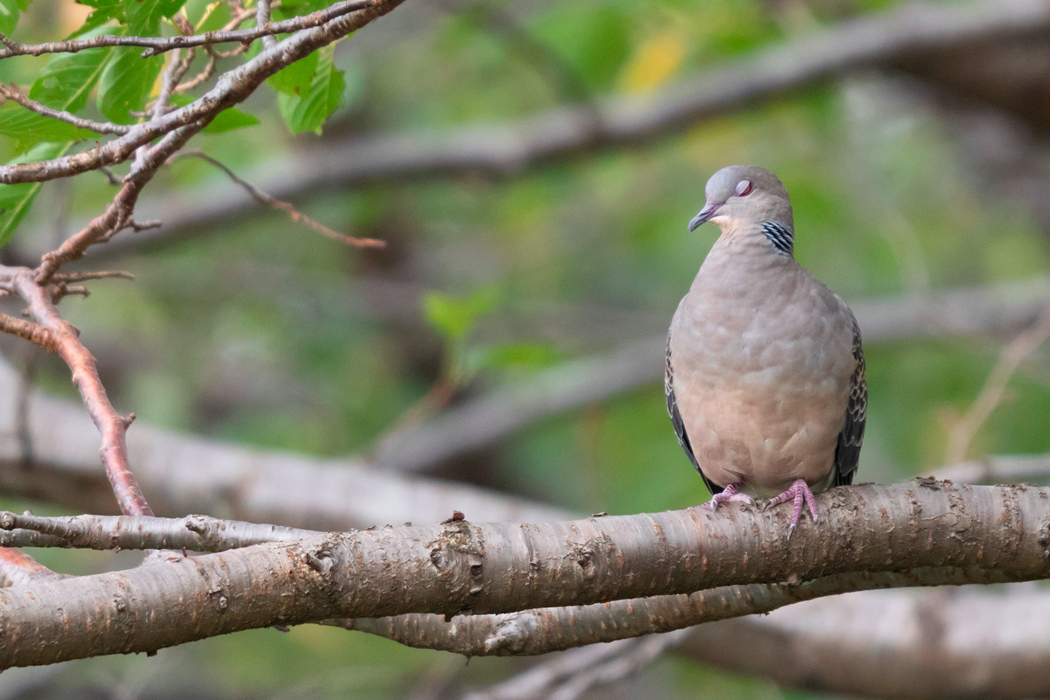
Oriental Turtle Dove Photos
Oriental Turtle Dove Photos are introduced.
Tap the photo to open the detail page.
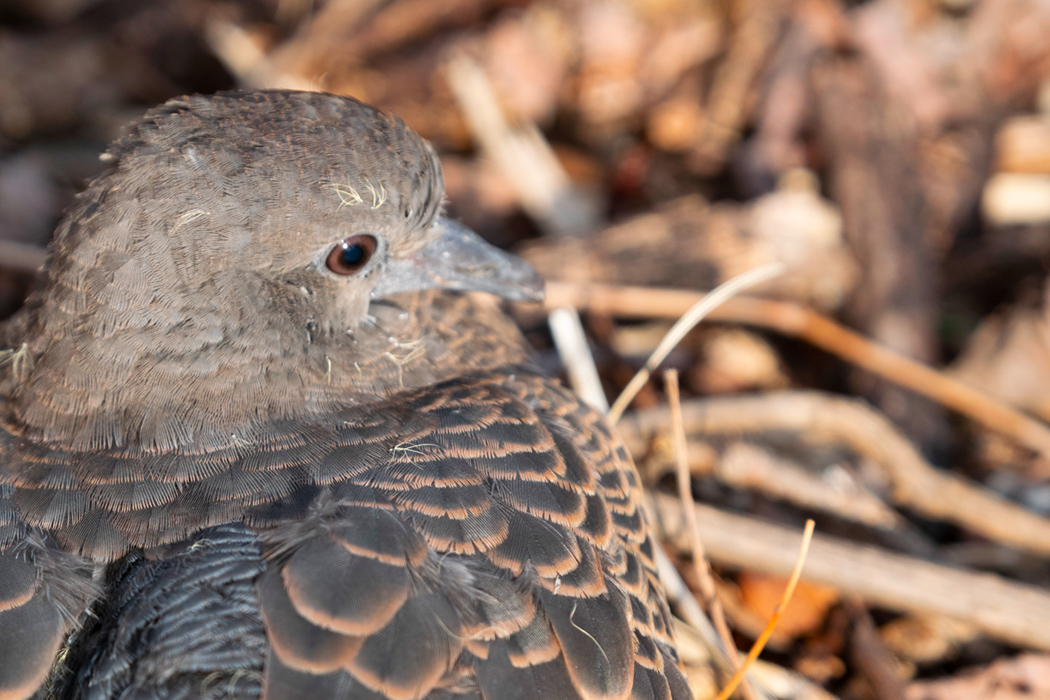
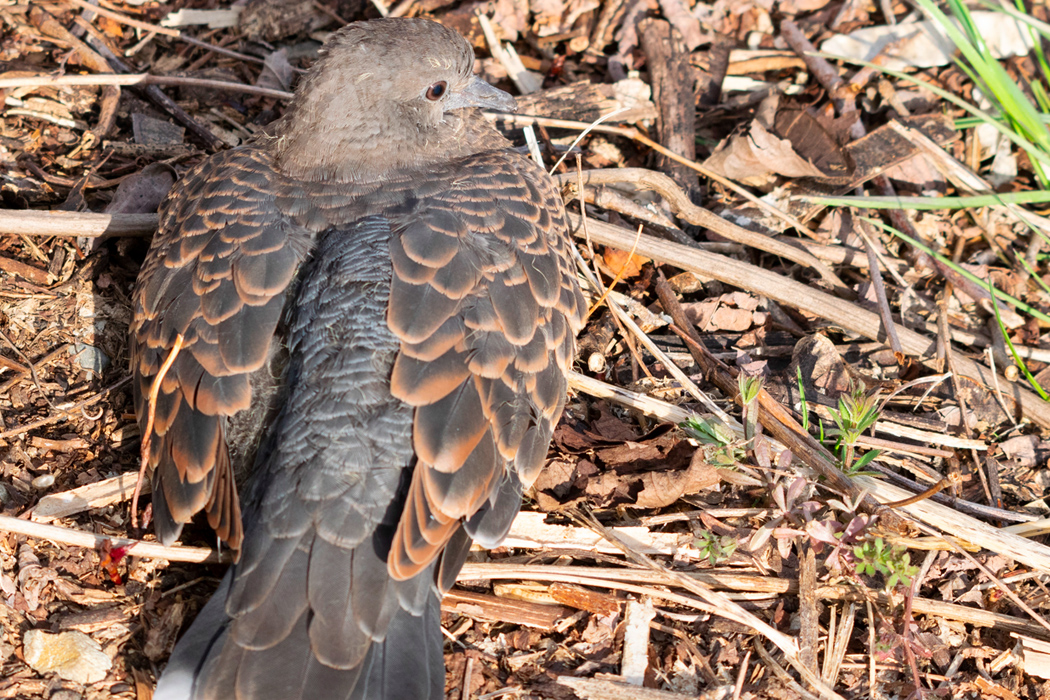
Oriental Turtle Dove Behavior
They often act in pairs and can be seen perched on electric wires together. The distinctive cooing is done by the male.
Oriental Turtle Dove Information
Naming
The scientific name "orientalis" means "eastern," referring to its origin in Asia. The "Turtle" in the English name does not refer to the reptile but comes from its call. In Japanese, it is called 'Kijibato' because the scale-like feathers resemble those of a pheasant (kiji). Another name is Yamabato (mountain dove).
Oriental Turtle Dove Found Locations
Katkurajō跡 Park, Hachiōji
I photographed a Yamabato at Katakurajō跡 Park in Hachiōji.
The Yamabato is quite brave; when it is quietly chasing other wild birds, it does not run away even if you get quite close. It's not that it doesn't notice humans, but it gives the impression that it has decided that you probably won't cause harm and remains still.
When I hear the male's song on a summer morning, it gives me an indescribable feeling that it is summer.
Oriental Turtle Dove Video
Oriental Turtle Dove is introduced by video.
It was resting on a branch.
Oriental Turtle Dove Observation Log
These are the observation logs where we found Oriental Turtle Dove.
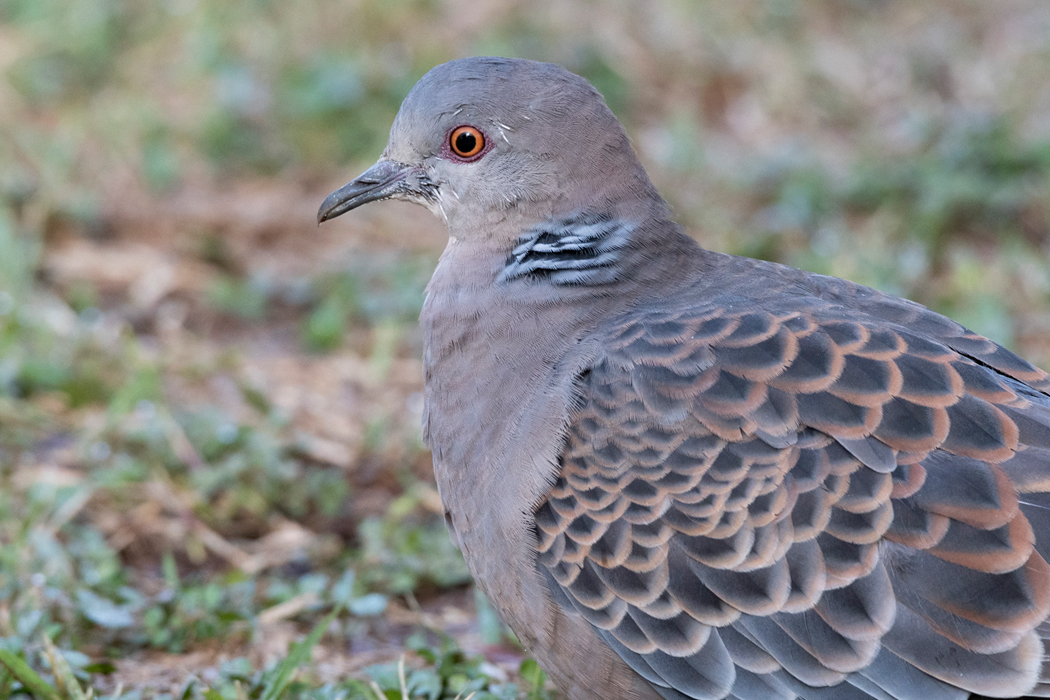

Picture book
Eyeballs line the edge of the back....... Read more
Yellow feathers on the head resembling a chrysanthemum flower...... Read more

running brown band....... Read more
Characterized by bristling feathers on the top of the head....... Read more

The most familiar sea turtle....... Read more
Short crest and pointed head....... Read more