Eurasian Oystercatcher
| Scientific name | Haematopus ostralegus |
| English name | Eurasian Oystercatcher |
| Japanese name | 都鳥 |
| Class | Aves |
| Order | Charadriiformes |
| Family | Haematopodidae |
| Genus | Haematopus |
| Species | ostralegus |
| Subspecies | --- |
| Full length | about 45cm |
| Distribution | Distributed in Eurasia. They come to Japan as migratory birds and winter birds. |
Characteristics
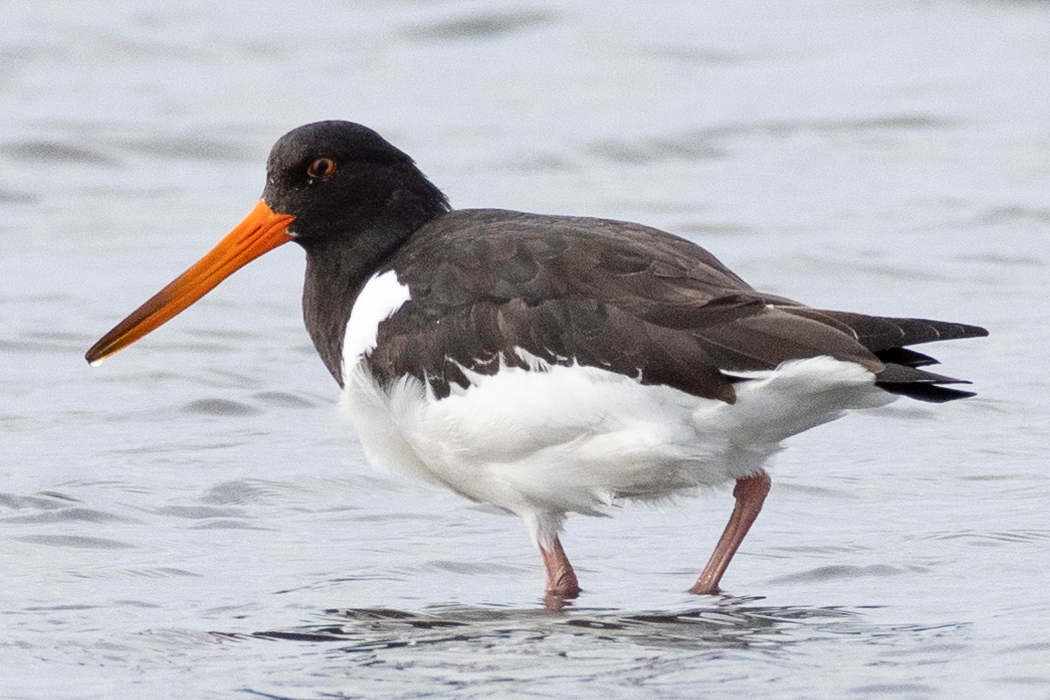
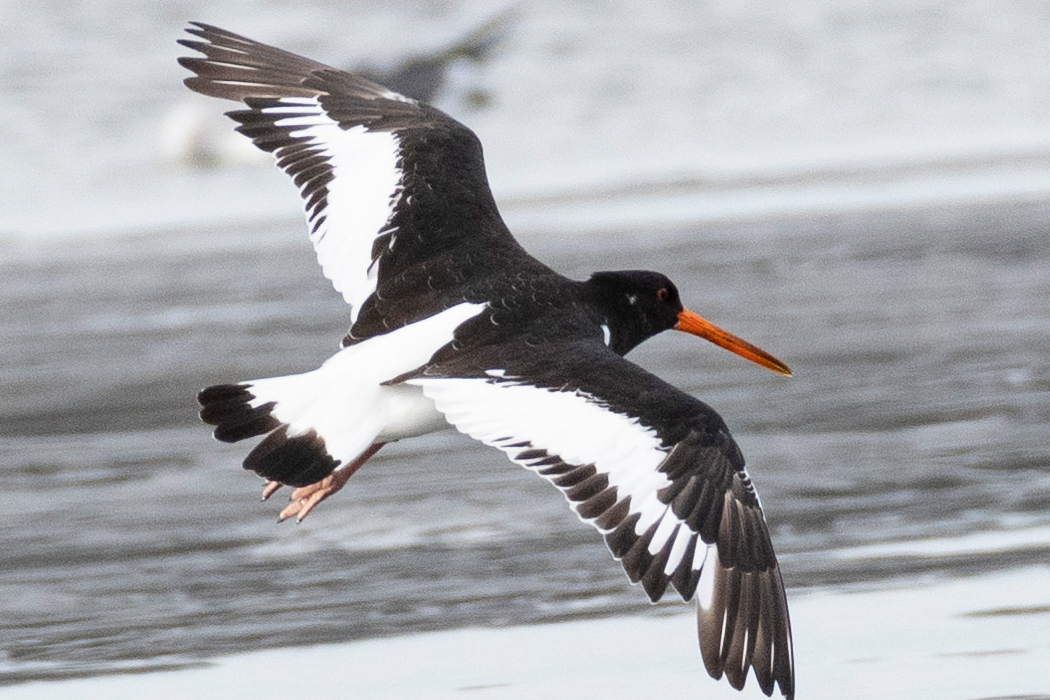
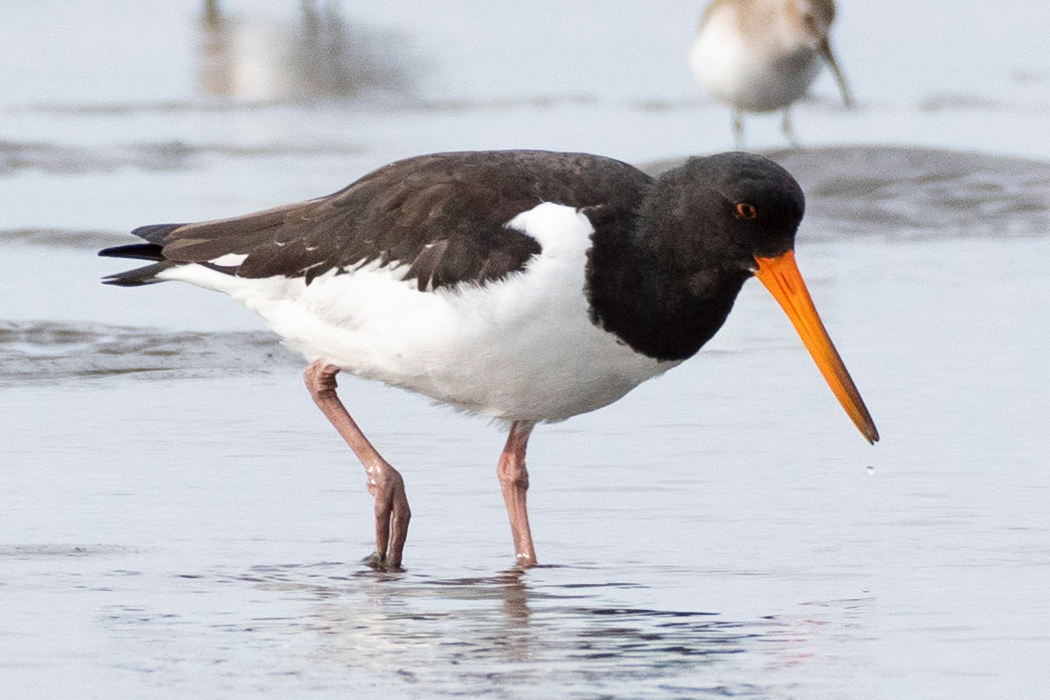
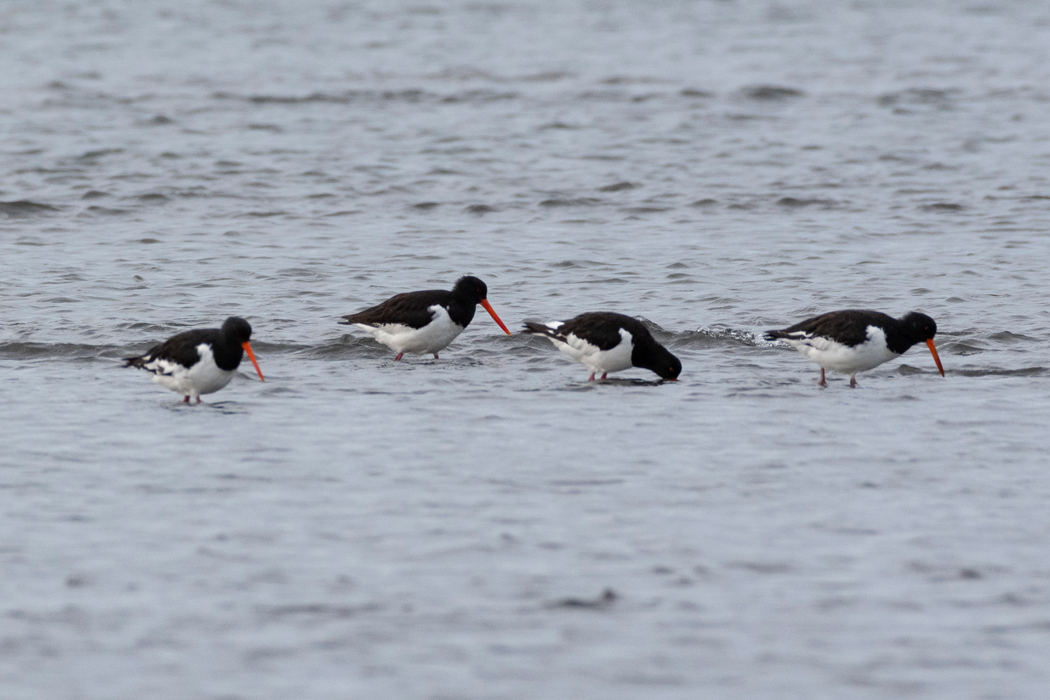
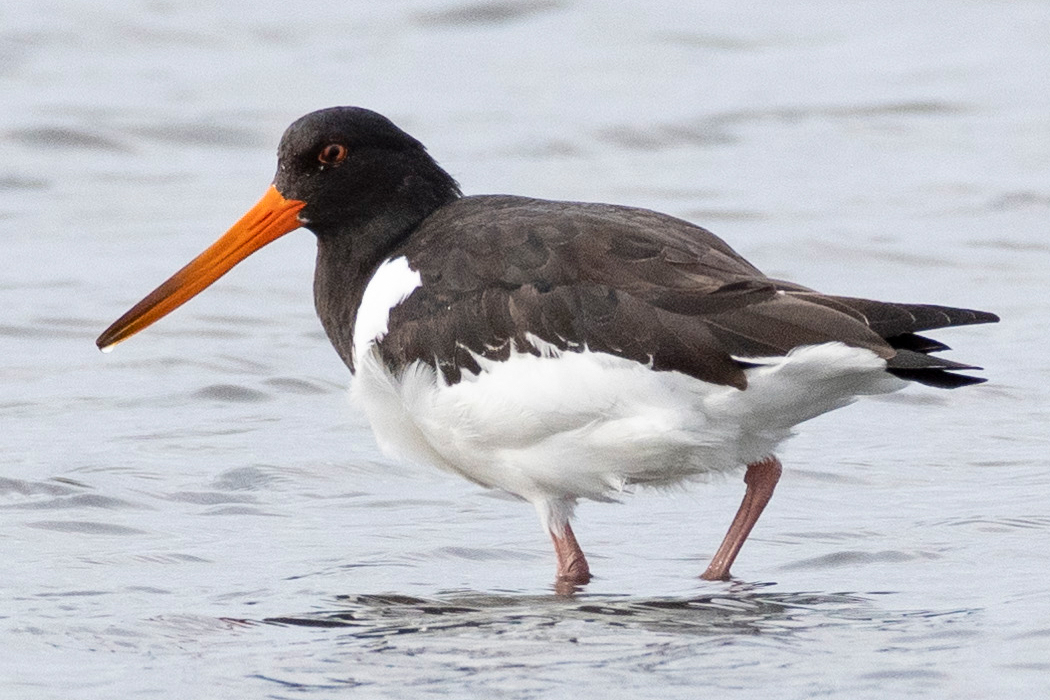
A migratory bird with a carrot-like bright orange beak. The head, chest, and back (rain cover) are black, and the belly is white. The iris is red. The legs are flesh colored.
Miyakodori from Kokin Wakashu
The name 'Miyakodori' has been used for a long time, such as appearing in Kokin Wakashu. However, it seems that black-headed gulls have long been known as 'miyakodori'.
Ecology
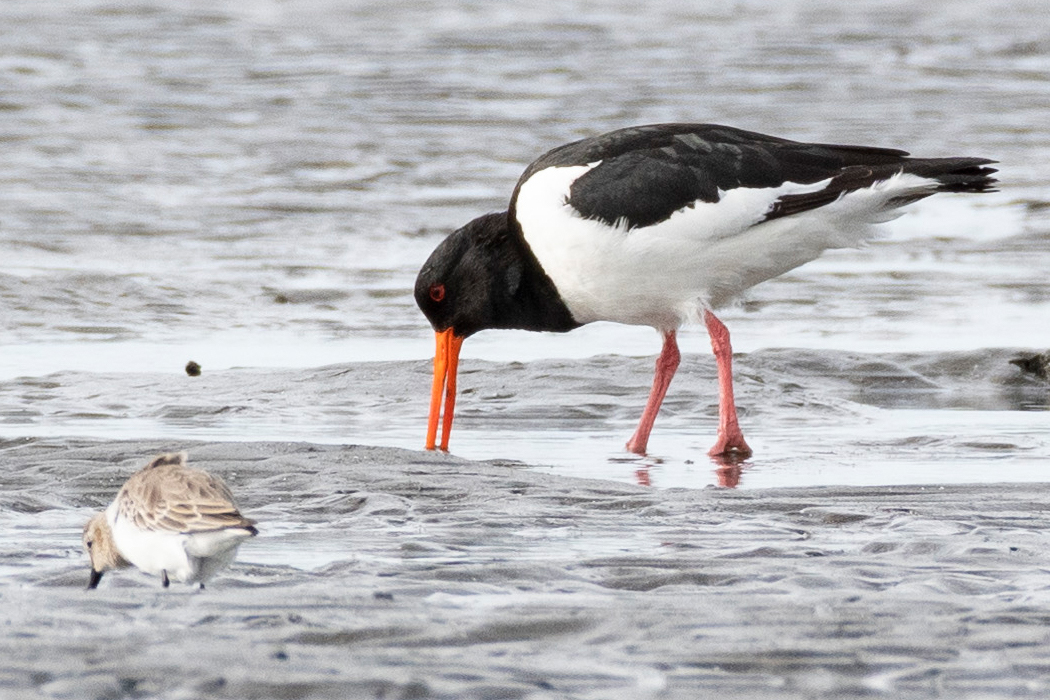
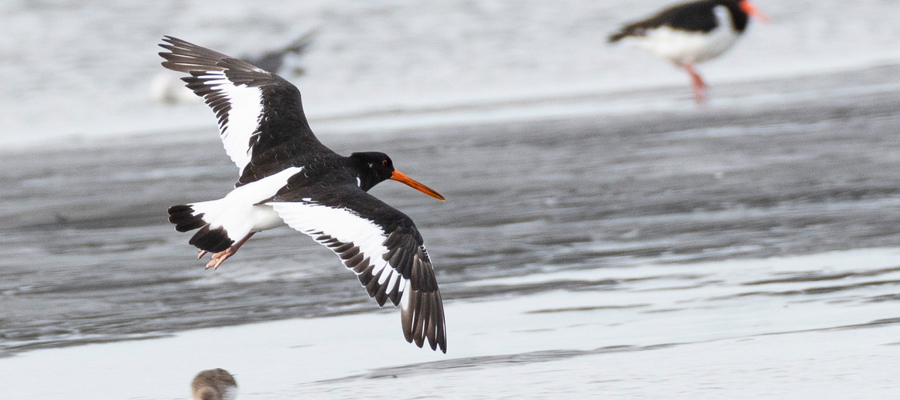
From autumn to winter, they come to coastal tidal flats and coasts as migratory birds and winter birds. They catch and eat small animals such as shellfish and crabs on the tidal flats. Form a group and act.
Habitat
Tokyo Bay Sanbanze
This photo was taken at Sanbanze on a spring tide morning in October. As far as I could see, dozens to hundreds of them were sparsely flocked. As the tide receded, they began to forage by roaming the tidal flats. They often traveled short distances.
Video
the video of the oystercatcher.
They were foraging in the tidal flats.
Pictures
Introducing a picture of Eurasian Oystercatcher.