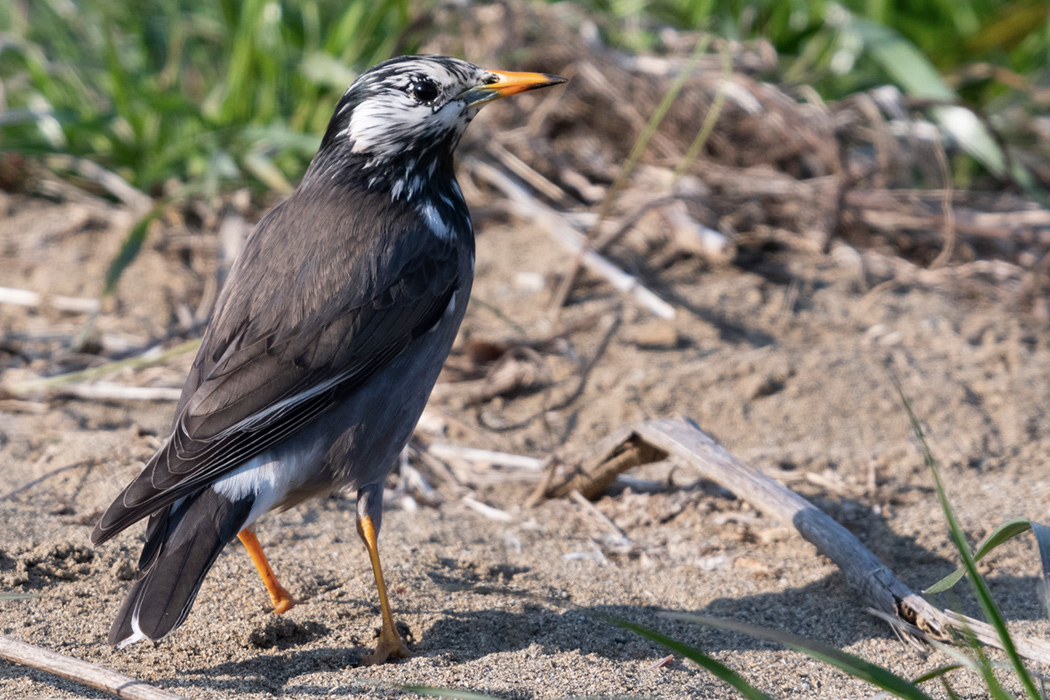
White-cheeked Starling
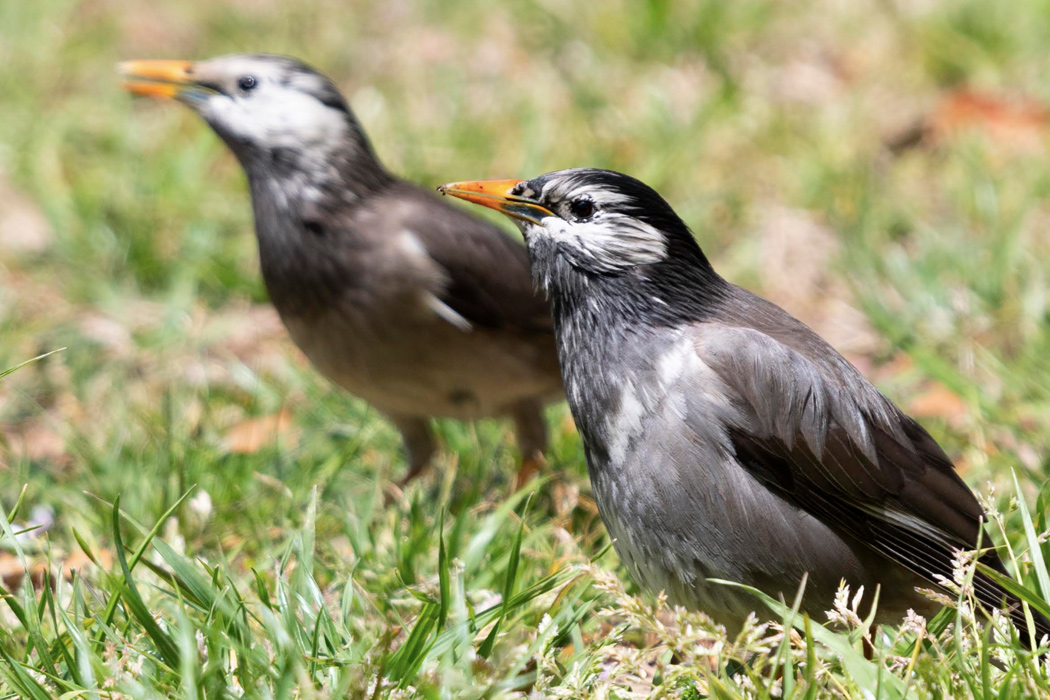
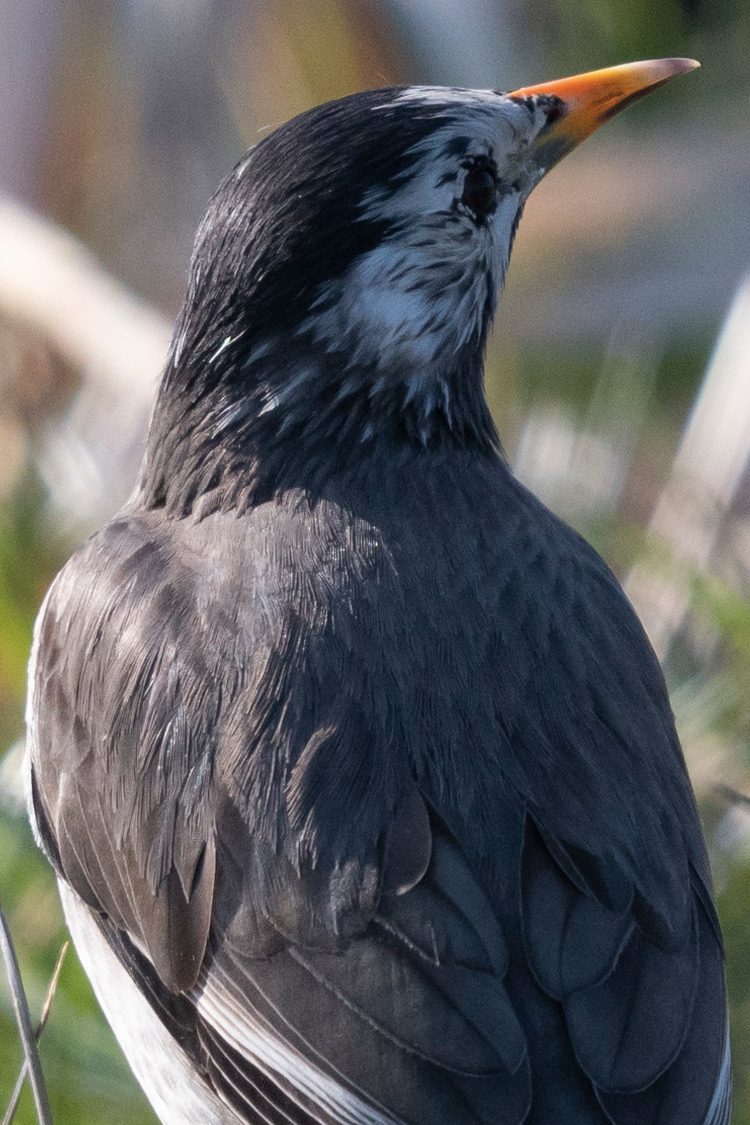
Features a slender orange beak.
| Scientific name | Sturnus cineraceus |
| English name | White-cheeked Starling |
| Japanese name | 椋鳥 |
| Class | Aves |
| Order | Passeriformes |
| Family | Sturnidae |
| Genus | Sturnus |
| Species | cineraceus |
| Full length | 24cm |
| Distribution | Widely distributed in the eastern part of the Eurasian continent. |
White-cheeked Starling Characteristics and Morphology
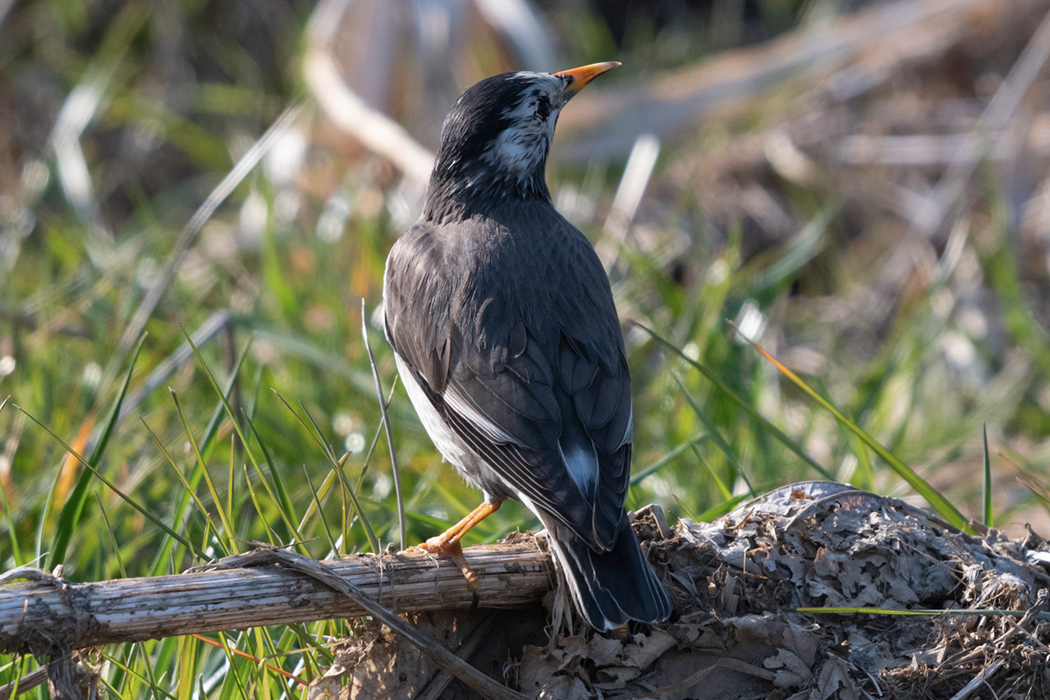
Size is between a sparrow and a pigeon. Both sexes are almost identical in color; the first impression is a grayish-brown to blackish-brown appearance with white patches here and there.
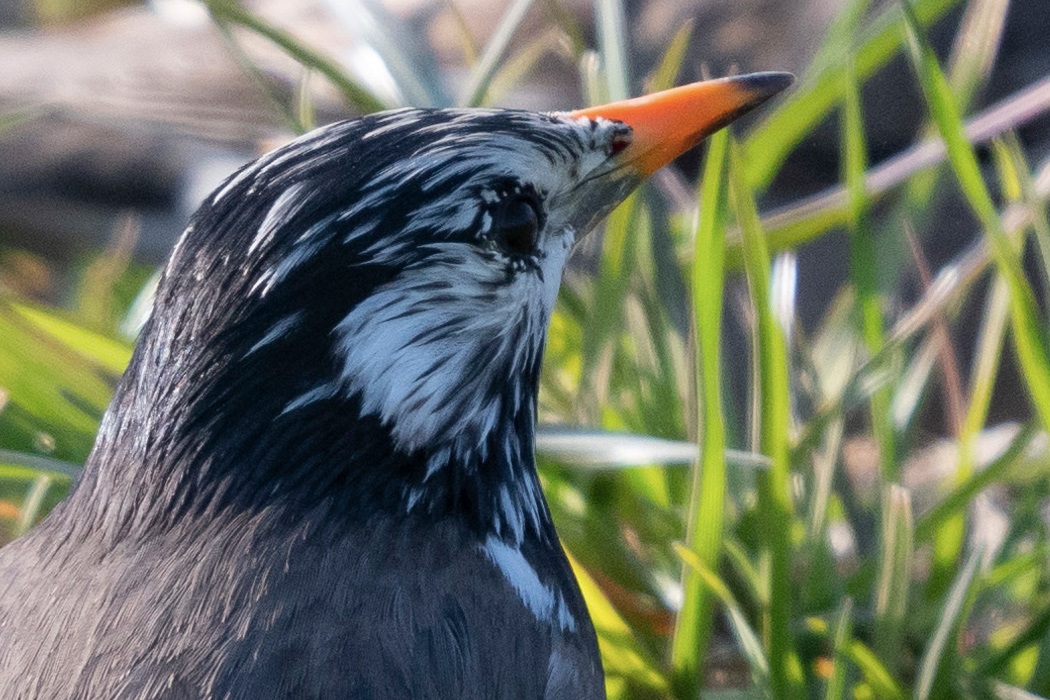
The crown is black, and the cheeks are white. The beak is orange and sharp. The iris is black.
The back is brown, and the primary feathers are close to blackish-brown. The belly is slightly lighter in color with some white feathers mixed in.
The tail is white, and the legs are orange, similar to the beak.
Male
Appears blacker compared to the female.
The blackness of the head is more prominent.
Female
The overall color feels slightly lighter/paler.
Juvenile
Considerably lighter brown compared to adults.
Song
Calls with a raspy voice described as "gyu-gyu" or "juru-juru." The sound of large starling flocks in the evening can be quite noisy. Their long, drawn-out calls can sometimes sound like the Azure-winged Magpie.
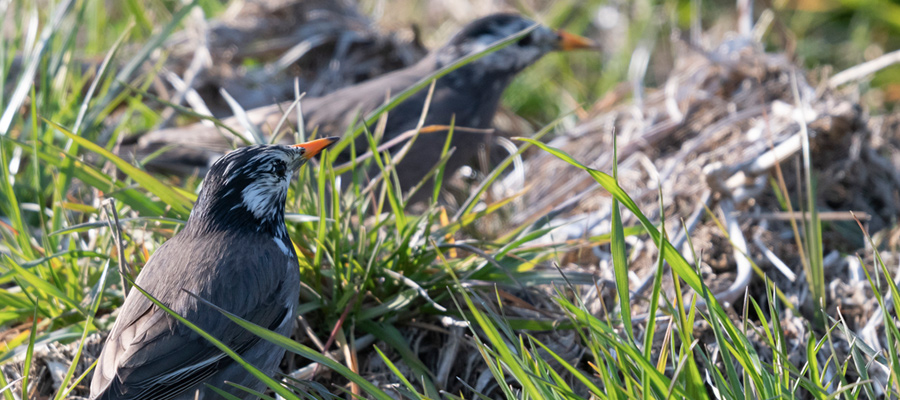
White-cheeked Starling Ecology
Habitat
Widely distributed from lowland farmlands to urban areas.
Food
Feeds on plant seeds and insects while walking on the ground in small groups.
Life Cycle
In the evening, they gather in large flocks and move to communal roosts. They lay 5 to 6 eggs.
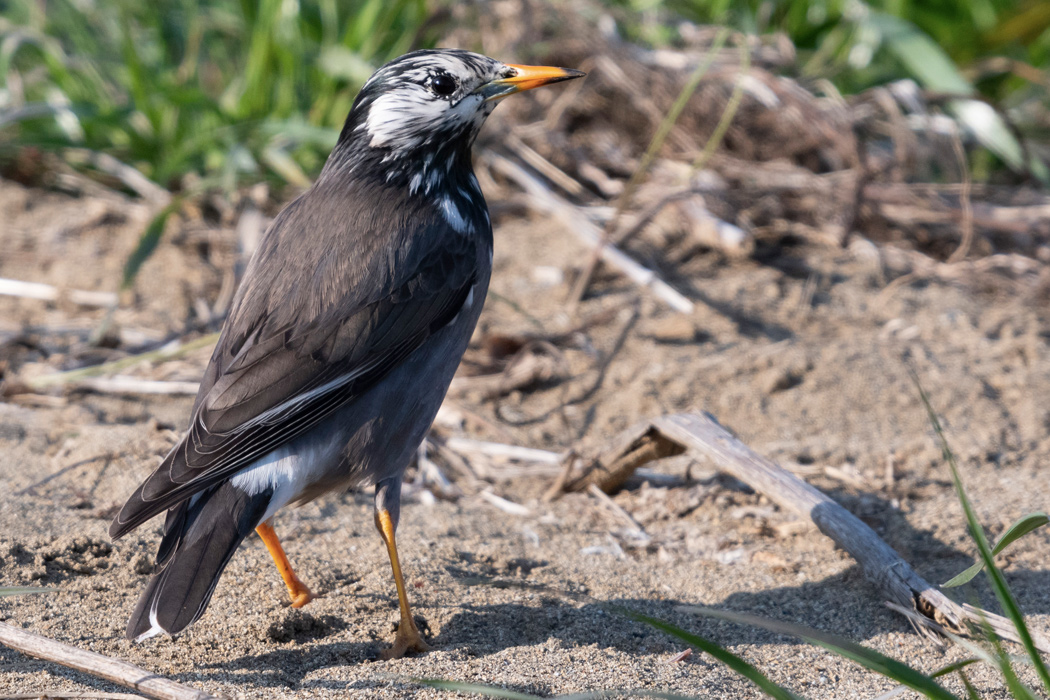
White-cheeked Starling Photos
White-cheeked Starling Photos are introduced.
Tap the photo to open the detail page.
White-cheeked Starling Information
Naming
The scientific name "cineraceus" means "ash-colored," referring to how the bird's entire body looks grayish and soot-covered.
Street trees in urban areas are often used as roosting sites, and in recent years, noise and pollution from droppings have become social issues.
White-cheeked Starling Found Locations
Riverbed of the Asakawa River, Hachioji City
I photographed a White-cheeked Starling walking and searching for food on the riverbed of the Asakawa River in Hachioji City. If you don't pay much attention to them, they forage leisurely, but if they become wary, they will call out in a very grumpy-sounding voice.
While they are common birds seen everywhere—in parks and on power lines—the sheer intensity of them gathering in massive flocks in front of train stations in the evening is incredible.
White-cheeked Starling Observation Log
These are the observation logs where we found White-cheeked Starling.
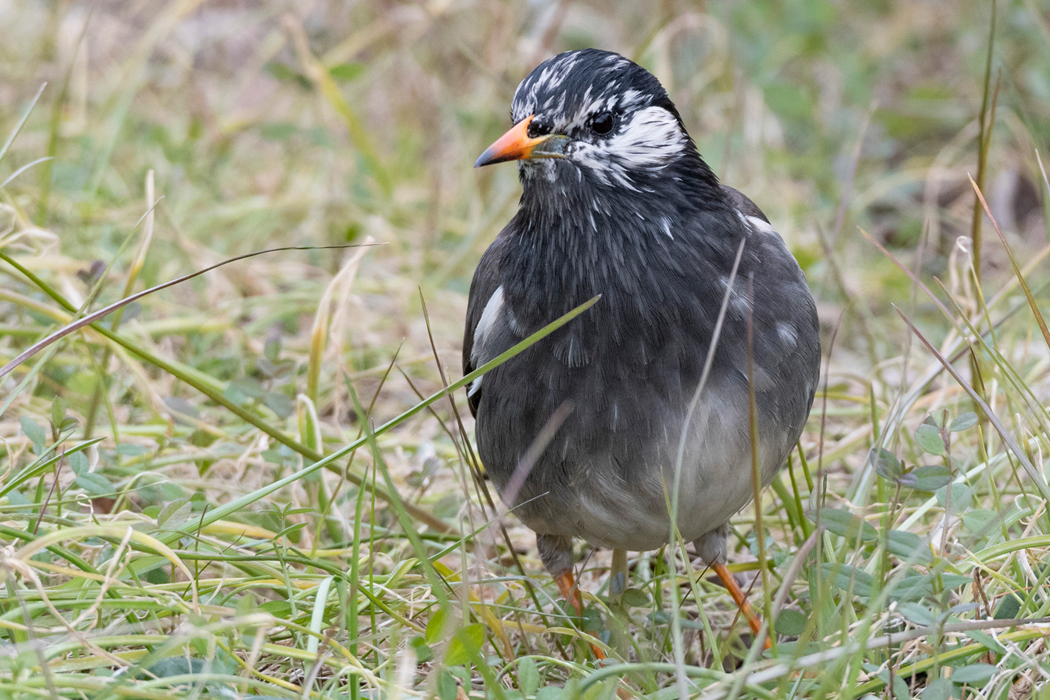
There were White-cheeked Starlings in the grassy area along the river.
Read more >
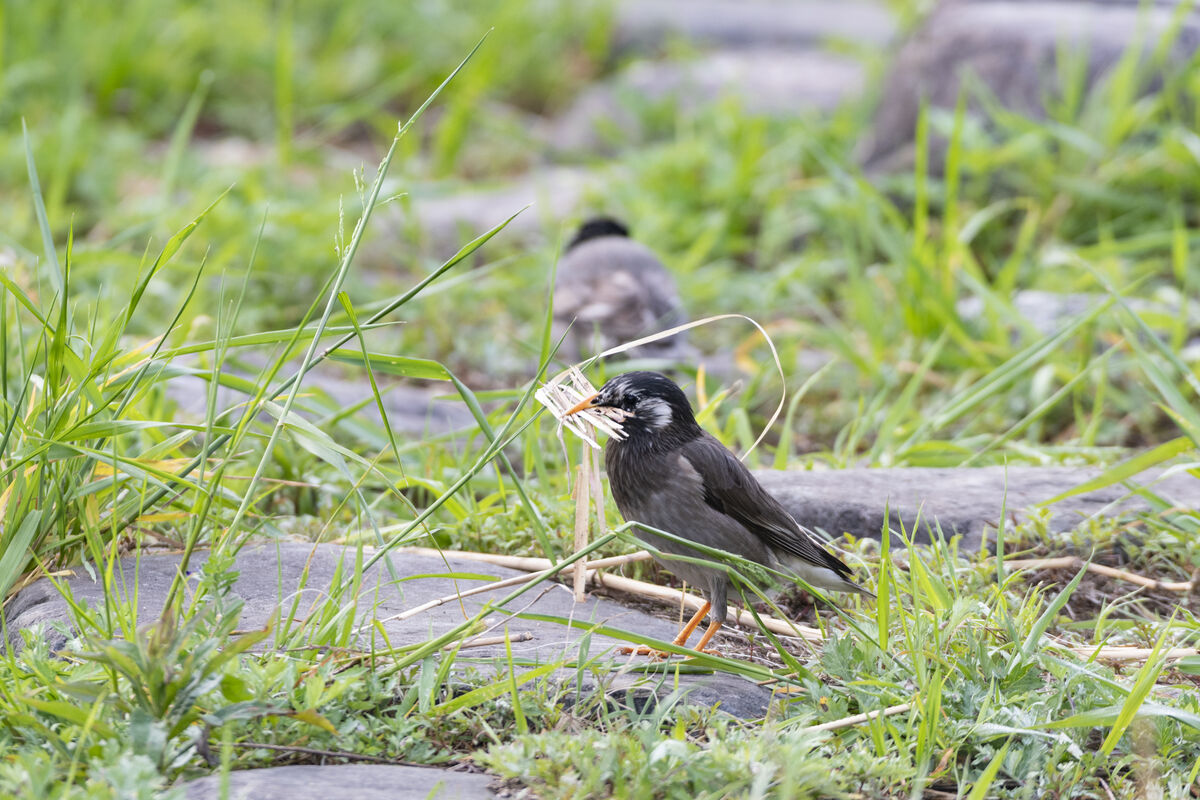
I headed to the Nikaryo Canal to photograph a juvenile Black-crowned Night Heron I had seen during my weekday commute. I didn't spot the heron, but I was able to photograph a European Starling collecting nesting material by the water.
Read more >
References
Picture book
A grey back paired with a yellow belly....... Read more

A small falcon inhabiting farmland....... Read more
Hensericho with a stylish white crest....... Read more

White lines run sparsely....... Read more
Dark brown body with white eyes....... Read more

Familiar butterfly with yellow wings....... Read more