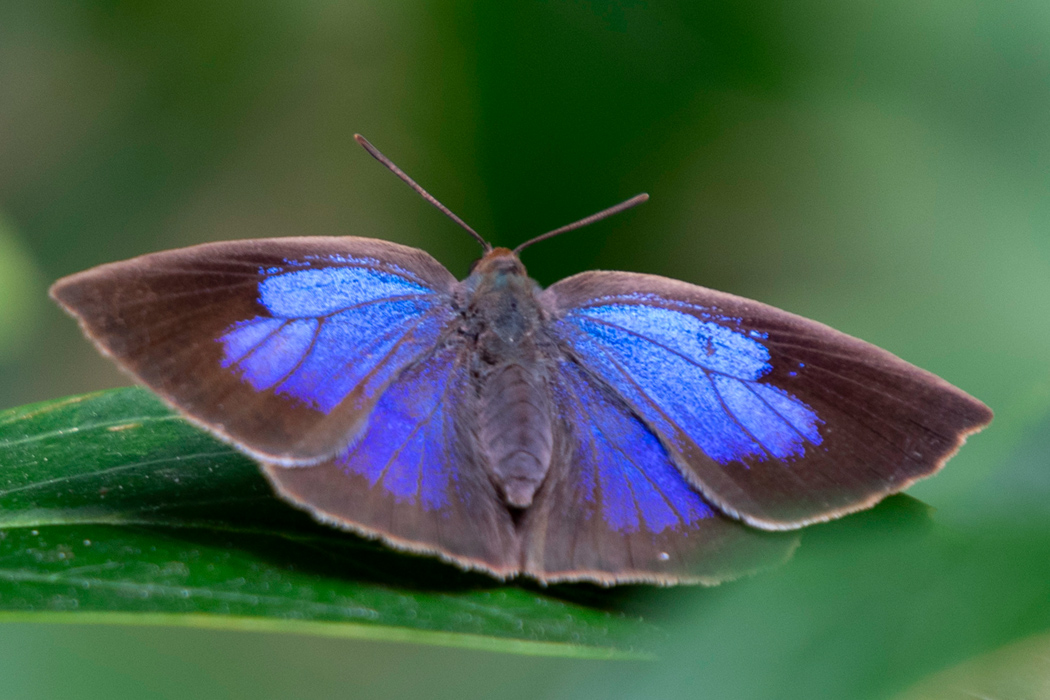
Japanese Oakblue
Beautiful bluish-purple gradation.
| Scientific name | Narathura japonica |
| English name | Japanese Oakblue |
| Japanese name | 紫小灰蝶 |
| Class | Insecta |
| Order | Lepidoptera |
| Family | Lycaenidae |
| Genus | Narathura |
| Species | japonica |
| Full length | 30-40mm |
| Distribution | South of Miyagi Prefecture |
Japanese Oakblue Characteristics and Morphology
A beautiful lycaenid butterfly with bluish-purple wings. Wingspan is approximately 4 cm. The color is almost the same in both sexes, but the distribution of colors on the wing surface differs.
The head is brown. Palpi are slightly protruding.
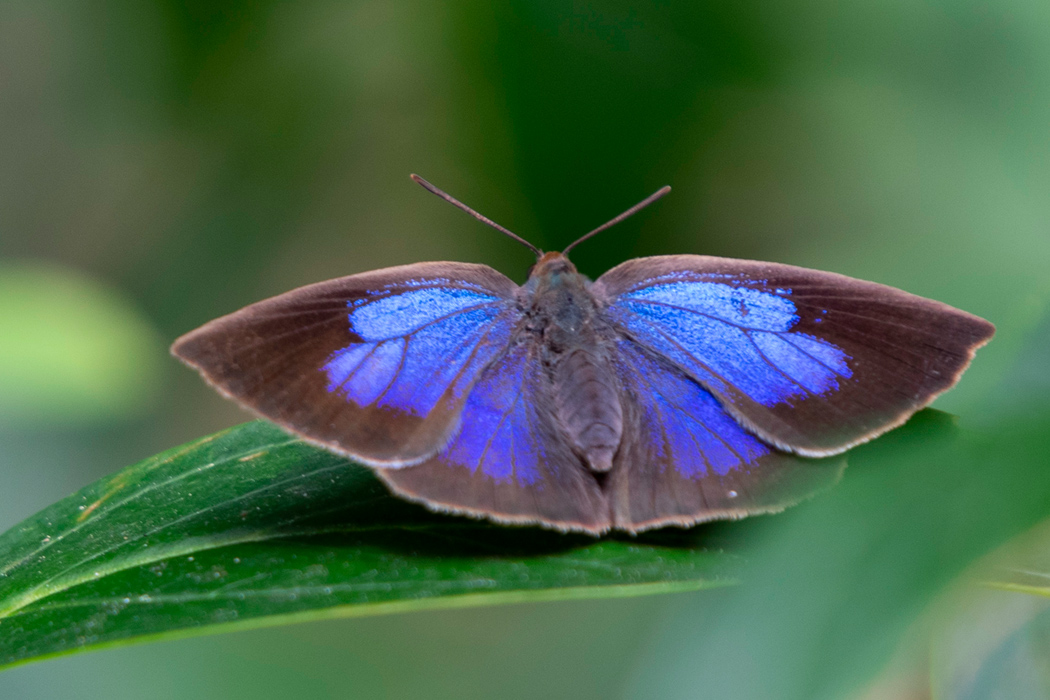
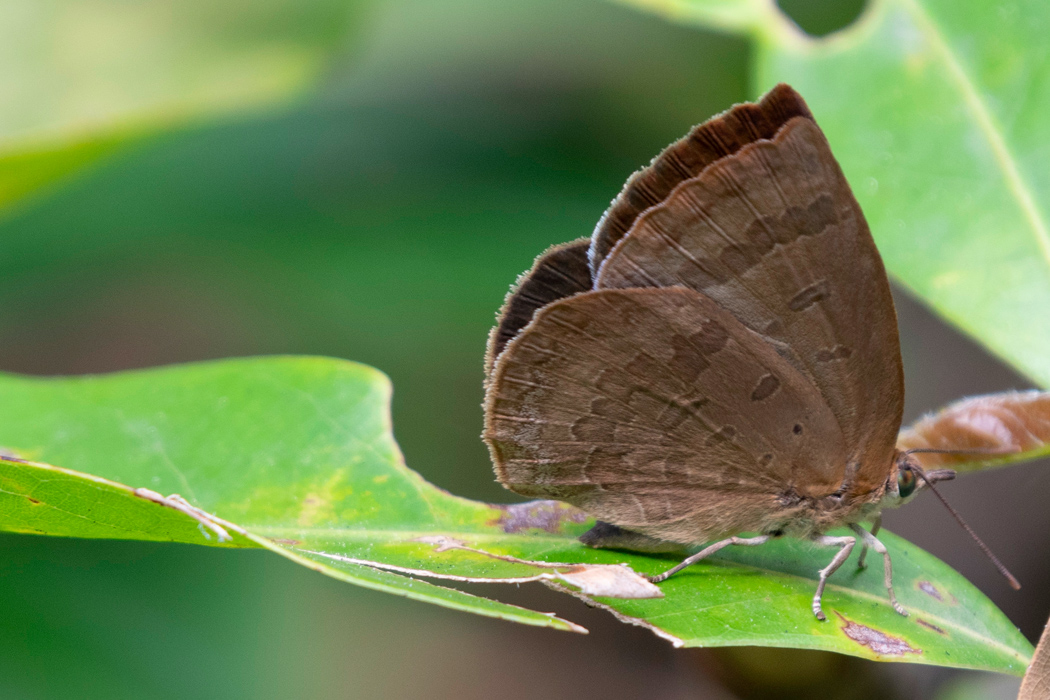
The body is brown to gray. The upper side of the wings is glossy bluish-purple on the inside, with the purple becoming darker from the head towards the abdomen. The edges are brownish, almost black. The underside of the wings is light brown with slightly darker brown markings like stains.
Male
The purple area on the upper side of the wings is larger. The brown part of the edge is thinner compared to the female.
Female
The brown part of the edge on the upper side of the wings is thicker compared to the male, and the purple part is smaller.
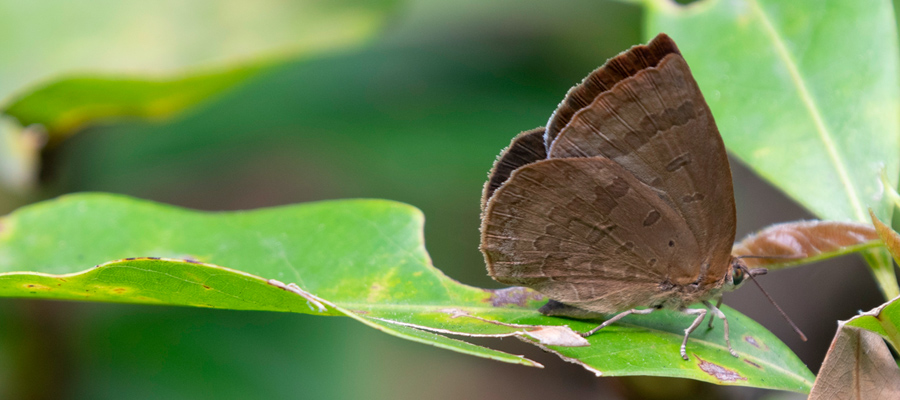
Japanese Oakblue Ecology
Habitat
Found in forests and parks.
Food
Rarely sips nectar from flowers, more often observed drinking water. The larvae feed on the leaves of evergreen trees of the beech family, such as *Castanopsis sieboldii* and *Quercus glauca*.
Life Cycle
Appears from spring to autumn. As they grow, they build nests using leaves. They hatch in fallen leaves on the ground.
Japanese Oakblue Photos
Japanese Oakblue Photos are introduced.
Tap the photo to open the detail page.
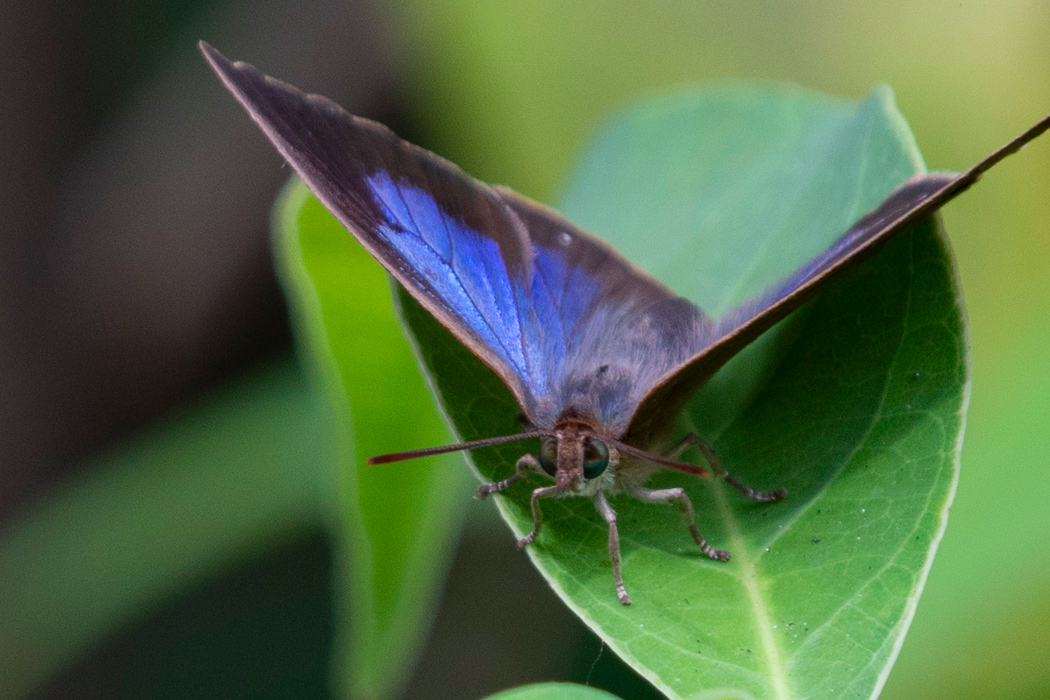
Japanese Oakblue Behavior
Perches on leaves and branches, or flies around trees. It does not usually fly very far.
Japanese Oakblue Information
The larvae secrete honeydew to attract Aphaenogaster ants, and by suppressing the activity of dopamine in the ant's brain, they manipulate their behavior, causing them to guard the larvae. This has been considered a 'mutualism' where each organism benefits, but according to research published in July 2015 by a joint research group from Kobe University Graduate School of Science, Project Assistant Professor Ken Hojo, the University of the Ryukyus, and Harvard University, it was suggested that the larvae of Narathura japonica may be intentionally controlling the Aphaenogaster ants.
Japanese Oakblue Found Locations
Tama Forest Science Garden
I found a *Narathura japonica* perching on a leaf in the Tama Forest Science Garden in Hachiōji. It flew around the shrubs and rested quietly when it stopped on a leaf. It did not appear to be sipping nectar from flowers. I was surprised by the difference between when it opened and closed its wings.
References
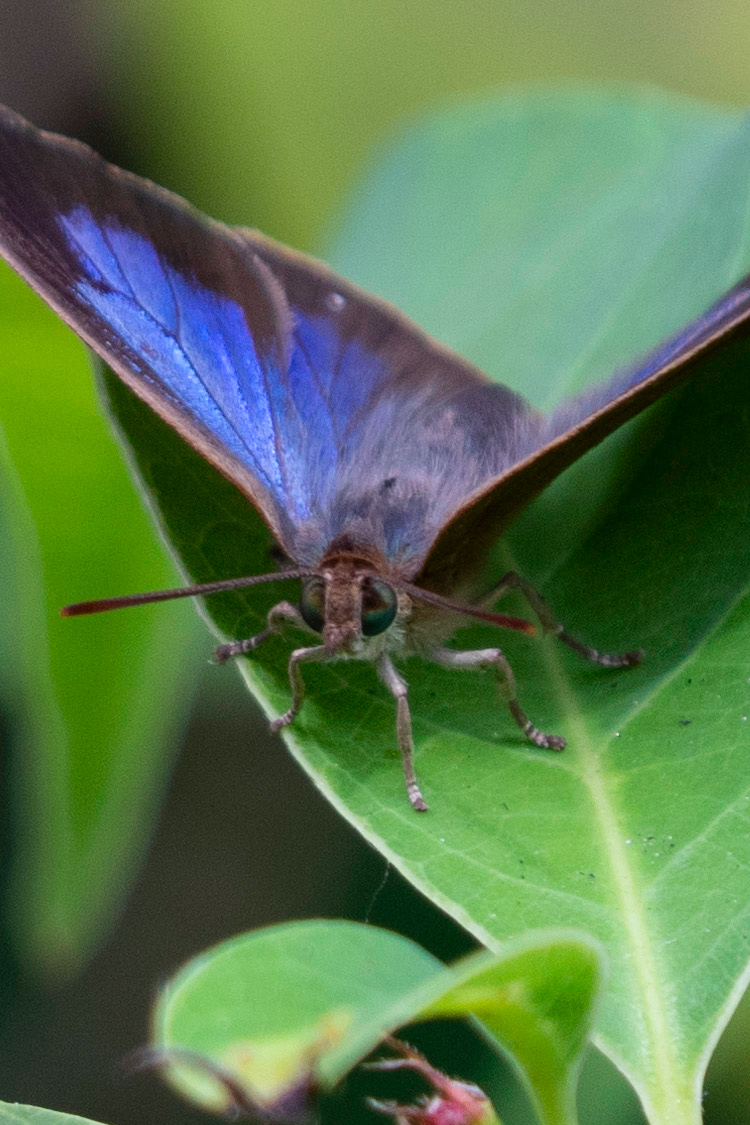
Picture book
Lace-like flowers bloom at night....... Read more
It has a leopard print that shines in the grassland....... Read more
Gray and orange head....... Read more

Familiar butterfly with yellow wings....... Read more
A rough-natured, solitary heron....... Read more
Characterized by streaked patterns resembling stone walls or rock faces....... Read more