Japanese crane
| Scientific name | Grus japonensis |
| English name | Japanese crane |
| Japanese name | 丹頂 |
| Class | Aves |
| Order | Gruiformes |
| Family | Gruidae |
| Genus | Grus |
| Species | japonensis |
| Subspecies | --- |
| Full length | 100-150cm |
| Distribution | Eastern Eurasia. Distributed in eastern Hokkaido in Japan. |
Characteristics
A bird with a total length of more than 1m that inhabits Hokkaido. It is designated as a special natural monument.
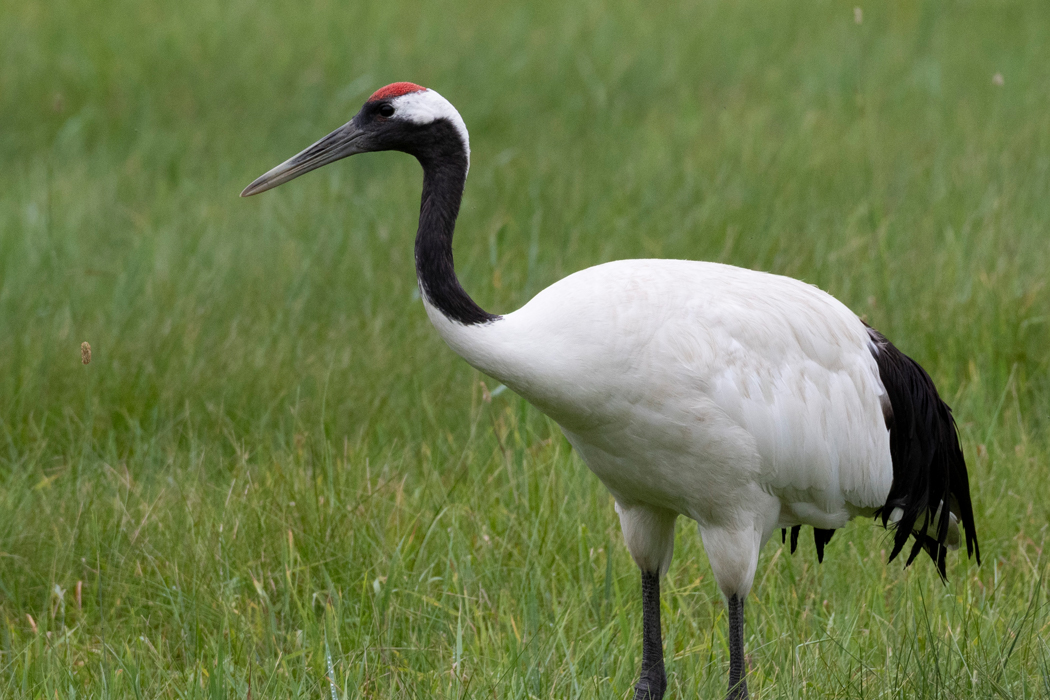
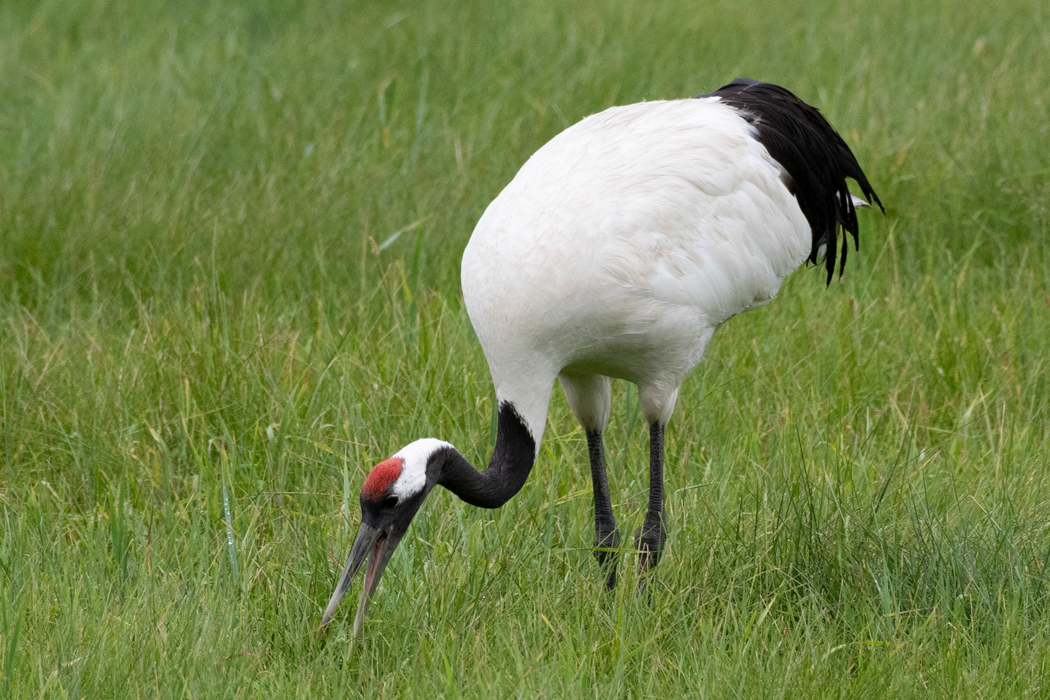
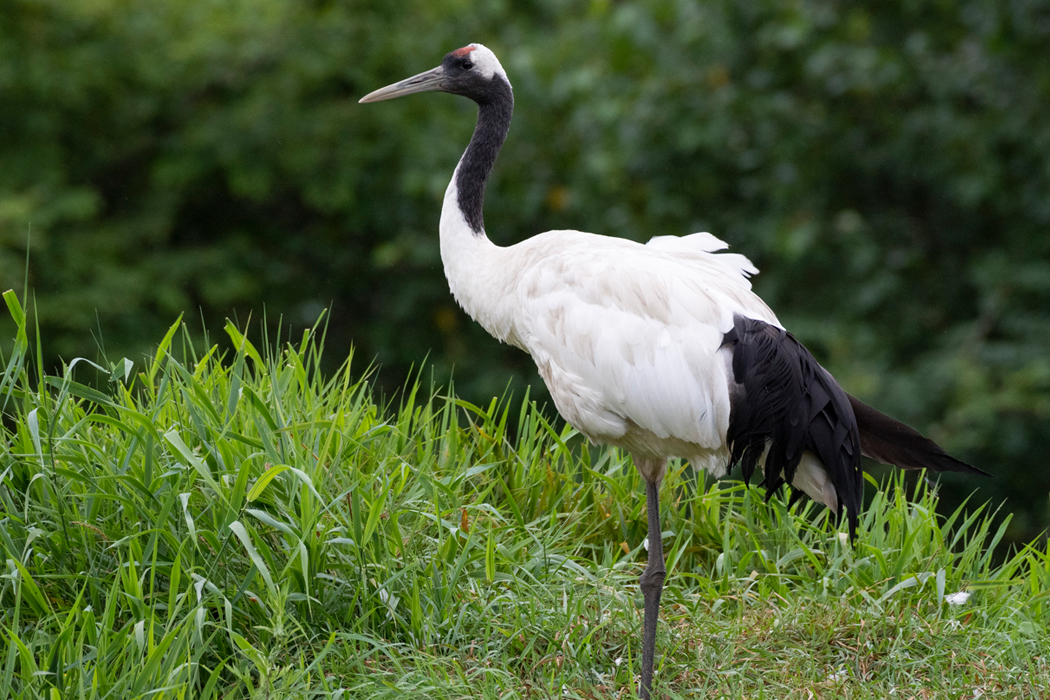
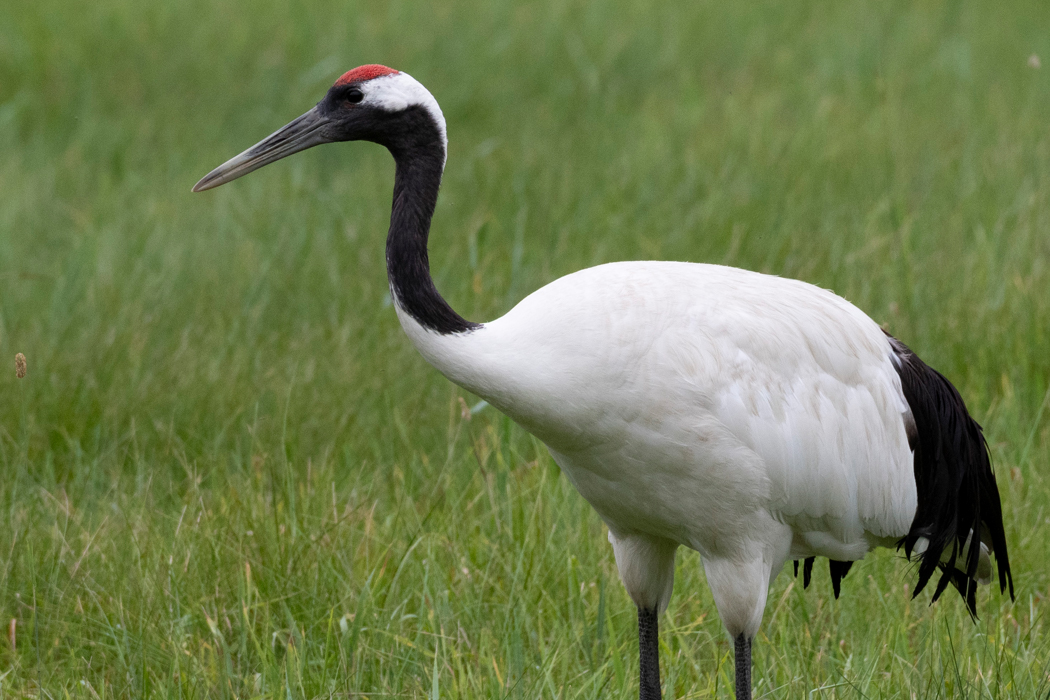
The throat and body are covered with white feathers, and the back of the neck and tail are black. The bright red skin is exposed on the top of the head, which is also the origin of the Japanese name. The beak is sharp and pointed. The legs are lead-colored and long.
Origin of name
Red-crowned crane is "tancho", "tan" means red, and "top" refers to the top of the head. It was so called because of its red head.
Ecology
Evenly distributed in Japan. Inhabits wetlands and rivers, and eats a wide variety of insects and fish. During the breeding season, pairs form territories and raise their young. In winter, multiple family groups may congregate. They migrate hundreds of kilometers during the winter and breeding season.
Habitat
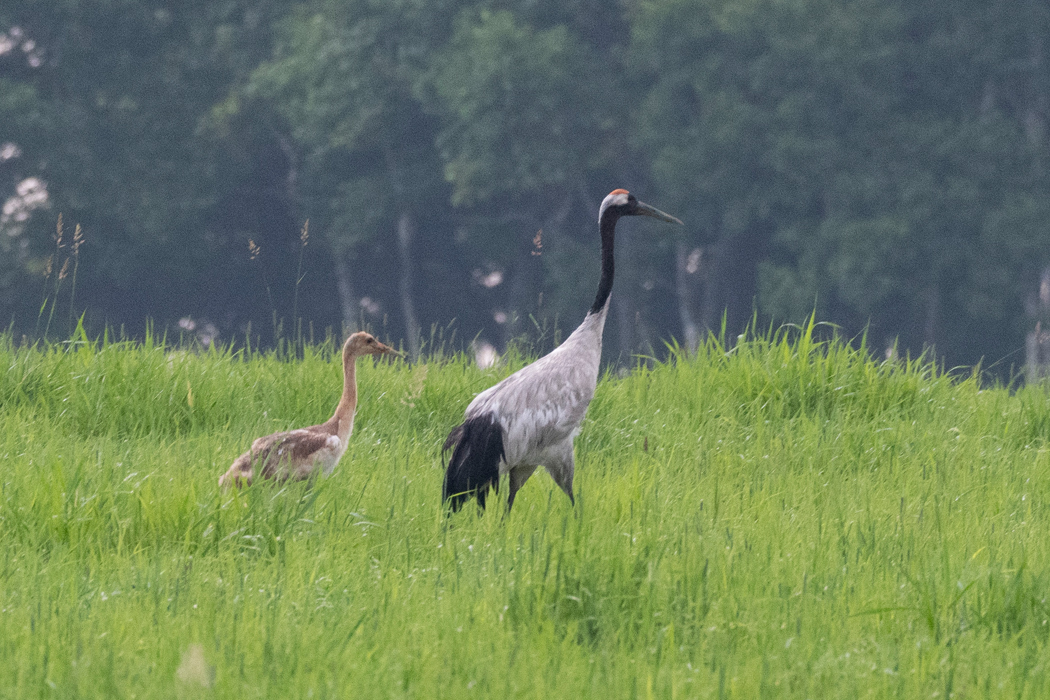
Farmland parent and child
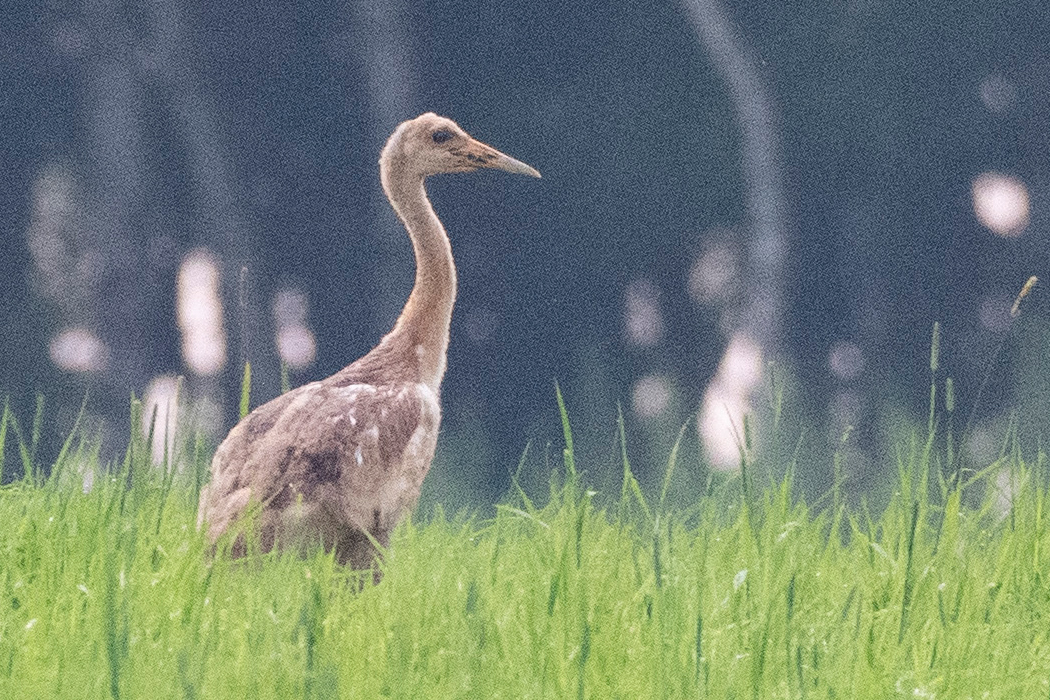
I found the family in the farmland on the way from Kushiro to Nemuro. The chicks were also foraging between the parent birds.
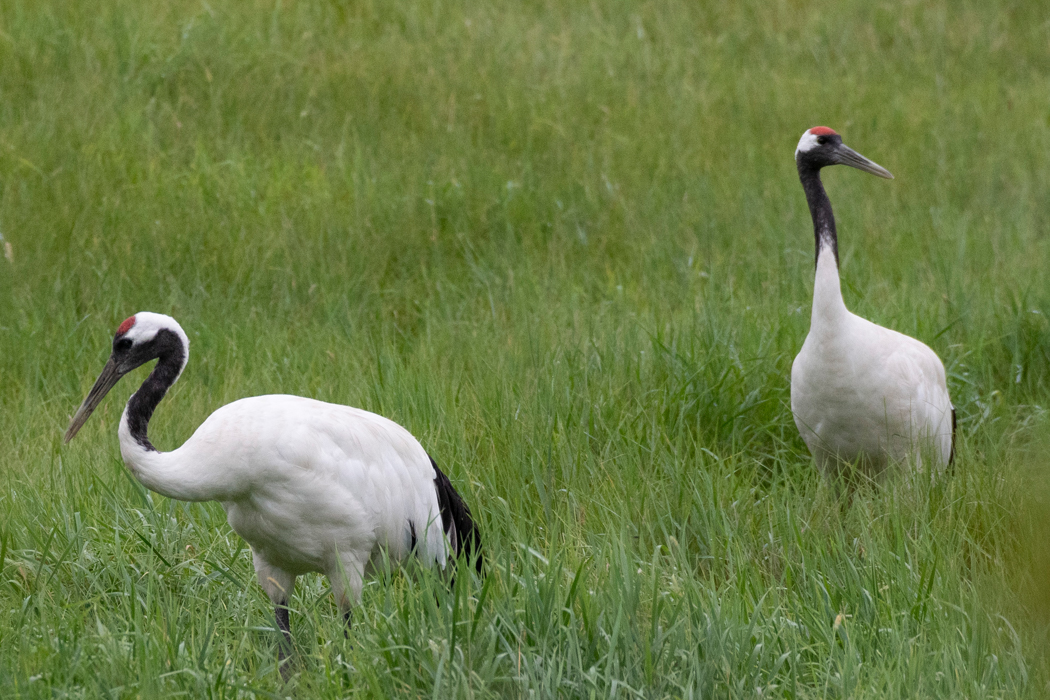
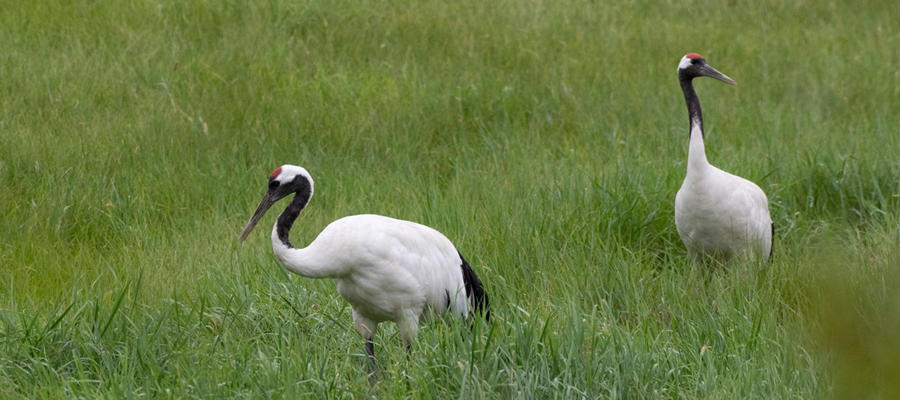
Pair
On another day, I found an individual foraging in pairs. It searched for food by poking the grassland with its long beak. His walking speed was slow and graceful.
Pictures
Introducing a picture of Japanese crane.