Black Kite
Calls with a high-pitched "pii-hyorororo" sound.
| Scientific name | Milvus migrans |
| English name | Black Kite |
| Japanese name | 鳶 |
| Class | Aves |
| Order | Accipitriformes |
| Family | Accipitridae |
| Genus | Milvus |
| Species | migrans |
| Full length | 60-65cm |
| Distribution | Distributed throughout Japan |
Black Kite Characteristics and Morphology
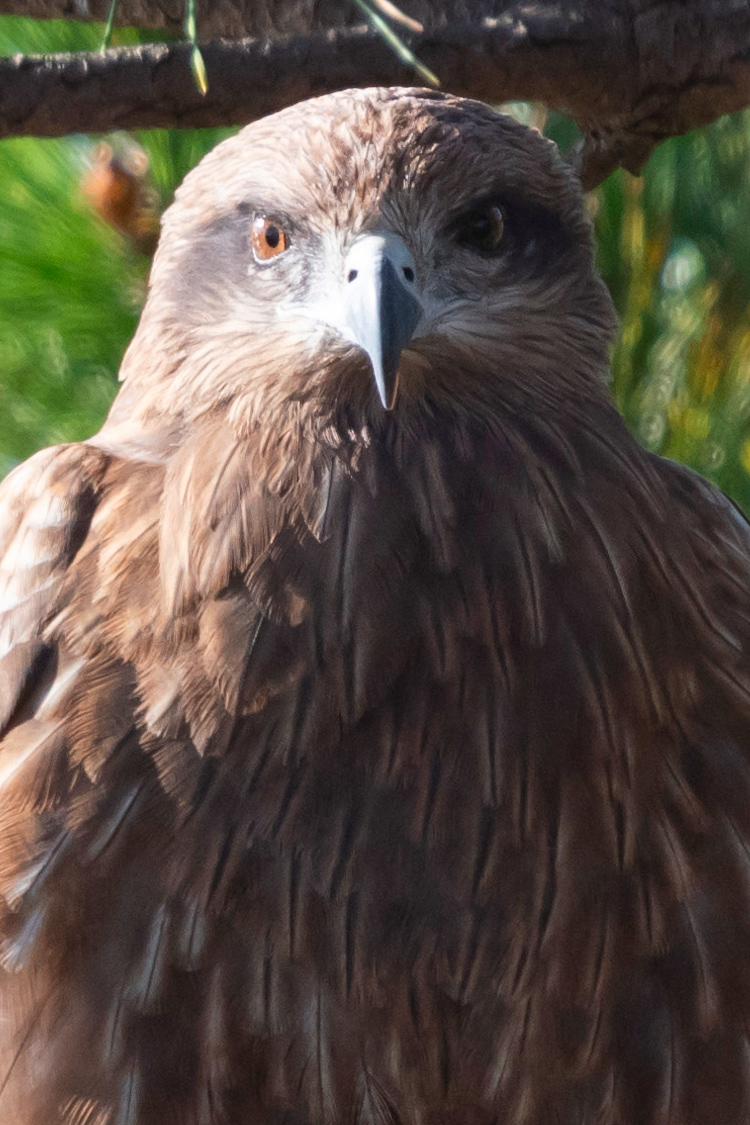
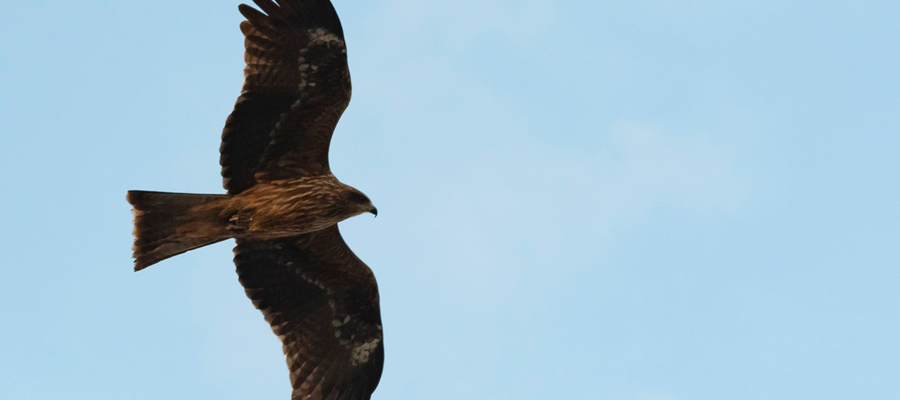
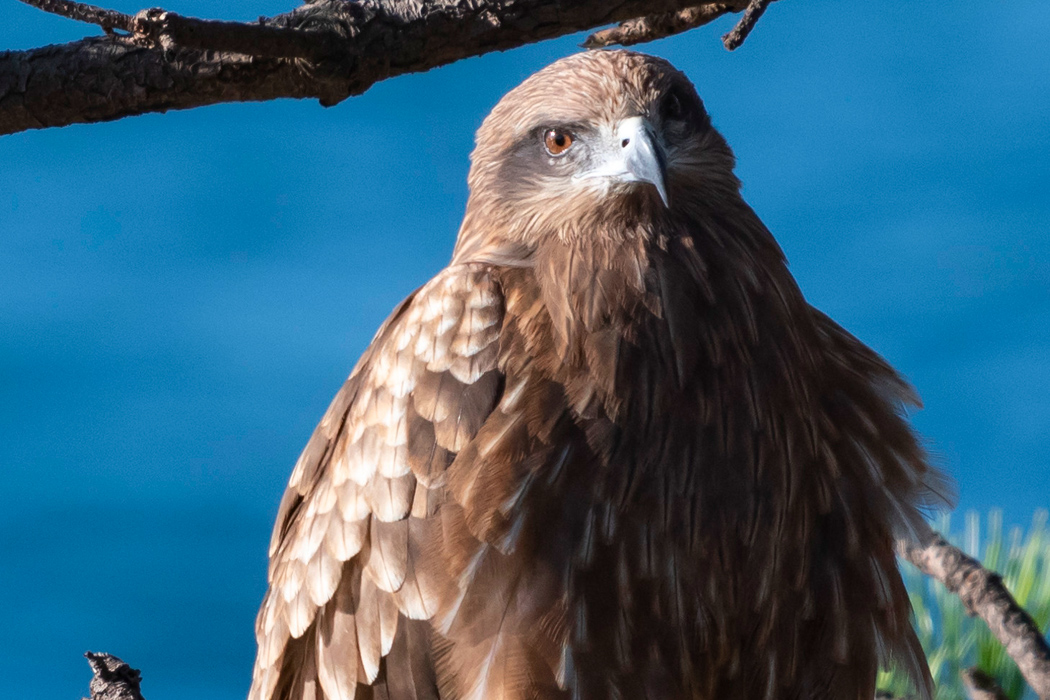
A large hawk, a size larger than a crow, with a wingspan reaching 160cm. The entire body is dark brown, and males and females look the same.
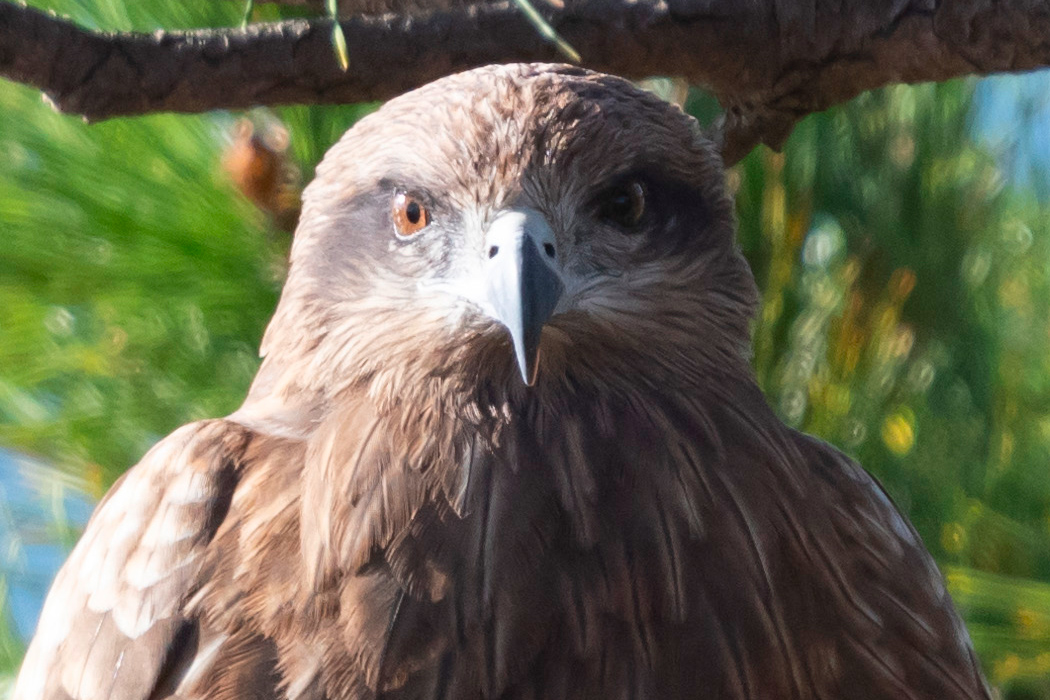
The bill is black and sharply hooked, typical of the hawk family. The iris is black, and the area around the eyes is also dark.
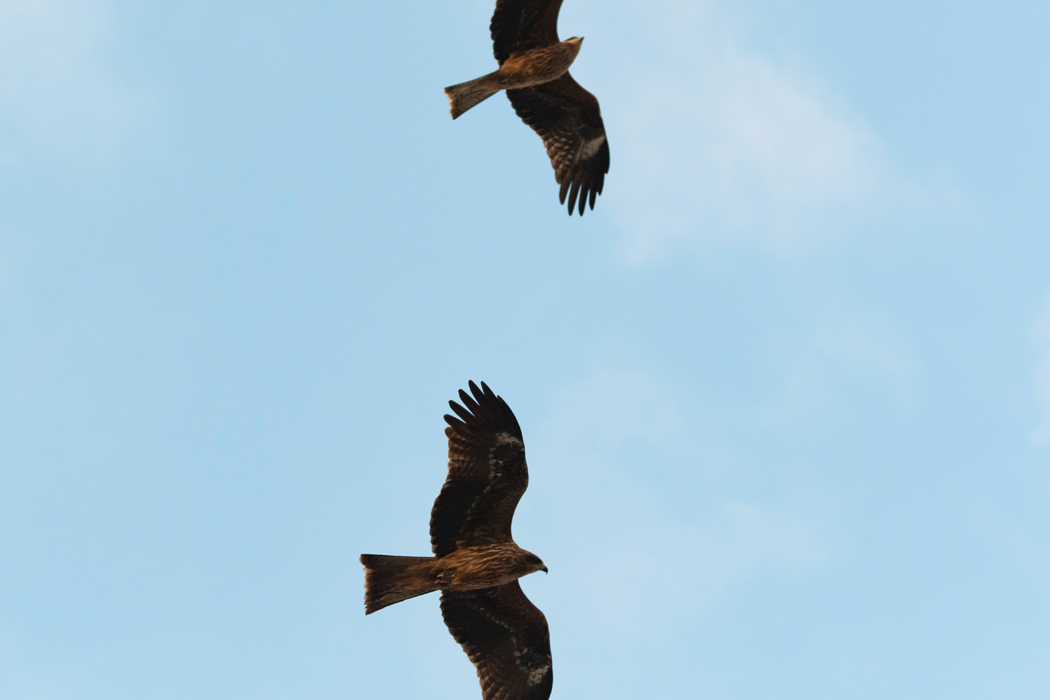
A white band runs along the inner side of the wings. The primary feathers spread out like an open human hand.
The tail feathers appear triangular when in flight.
Male
Males are smaller than females, measuring just under 60cm.
Female
Females are larger than males, measuring just under 70cm.
Song
The black kite's call is distinctive and very familiar to Japanese people. It emits a high-pitched "pii-hyorororo" sound, similar to a toy whistle.
Black Kite Ecology
Habitat
Primarily inhabits coastal areas, but can also be found near rivers.
Food
Omnivorous, feeding on animal carcasses and small animals like frogs and mice; individuals living near humans may also eat food scraps. I have also seen individuals at sea mimicking ospreys to catch flathead mullet.
Black Kite Photos
Black Kite Photos are introduced.
Tap the photo to open the detail page.
Black Kite Behavior
They have excellent eyesight and search for distant food while circling high in the sky. They use updrafts to soar and scan for prey from above with minimal flapping.
Black Kite Information
Naming
The scientific name "migrans" means "migrating," referring to the large-scale seasonal migrations performed by European populations.
Black Kites are Excellent Scavengers
Black kites are scavengers that eat animal carcasses and waste. Despite being raptors, they do not actively hunt live prey as much as they look for carcasses or scraps. This trait is shared with crows, which may be why they frequently get into scuffles with them.
Proverb about Black Kites
The Japanese proverb "To have one's fried tofu snatched by a kite" comes from the way kites that have lost their fear of humans will steal food. While they do not actively attack humans, kites accustomed to environments with many people and food scraps may dive toward food, just as the proverb describes. "A kite breeding a hawk" (meaning a common parent having a gifted child) suggests that kites were traditionally viewed as a "lower" class of hawk. This is likely because they were commonly seen near human settlements scavenging for scraps rather than hunting.
Black Kite Found Locations
Miura Peninsula
Although black kites are common, the photos on this page were taken on the coast of the Miura Peninsula. There were massive numbers of kites there, drifting leisurely on the sea breeze. They seemed to be observing me closely from afar, with dozens circling above me. They might have thought I had food.
Middle Reaches of the Tama River
They can be seen at inland rivers, though the population is not as high there. Certain individuals come out over the river in the early afternoon, fly for a while, and then return to the nearby forest.
They are very ordinary birds in the middle reaches of the Tama River. Sometimes they can be seen escaping half-heartedly when being mobbed by crows.