Barn Swallow
Arrives in the spring.
| Scientific name | Hirundo rustica |
| English name | Barn Swallow |
| Japanese name | 燕 |
| Class | Aves |
| Order | Passeriformes |
| Family | Hirundinidae |
| Genus | Hirundo |
| Species | rustica |
| Full length | 17cm |
| Distribution | Arrives in Japan nationwide as a summer bird. |
Barn Swallow Characteristics and Morphology
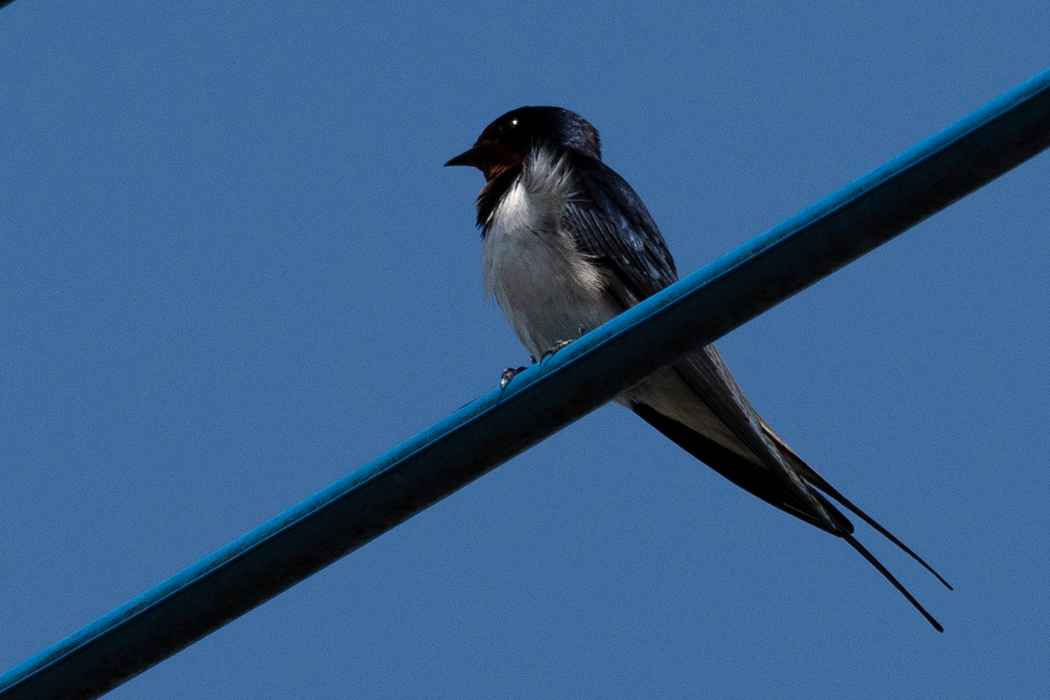
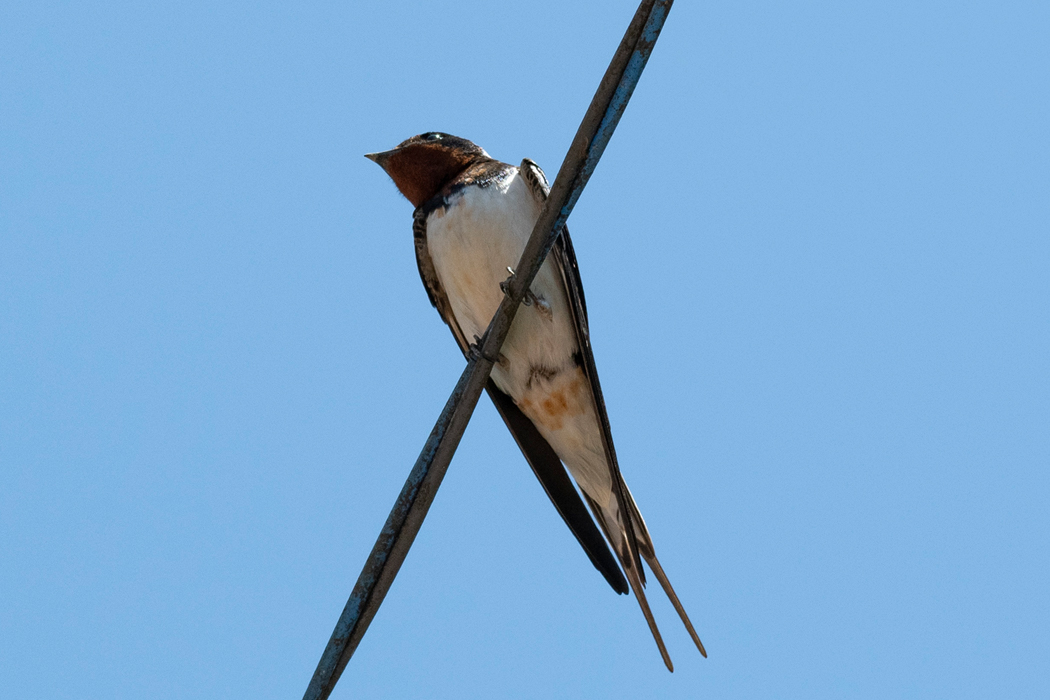
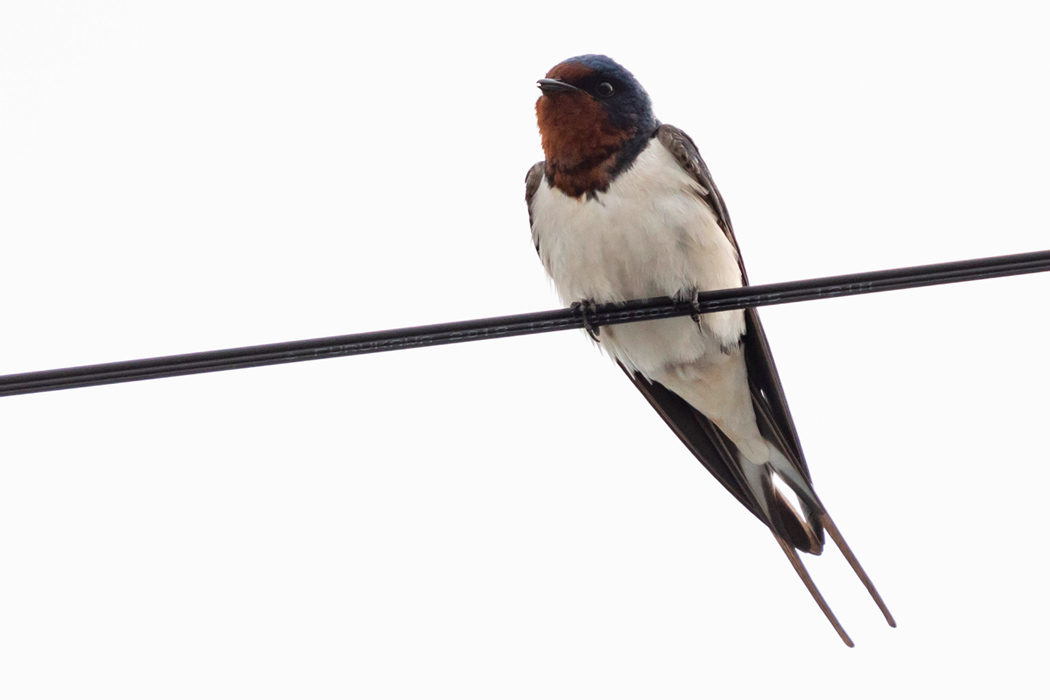
Characterized by a long tail. Sexes are similar in color, but tail length differs between males and females.
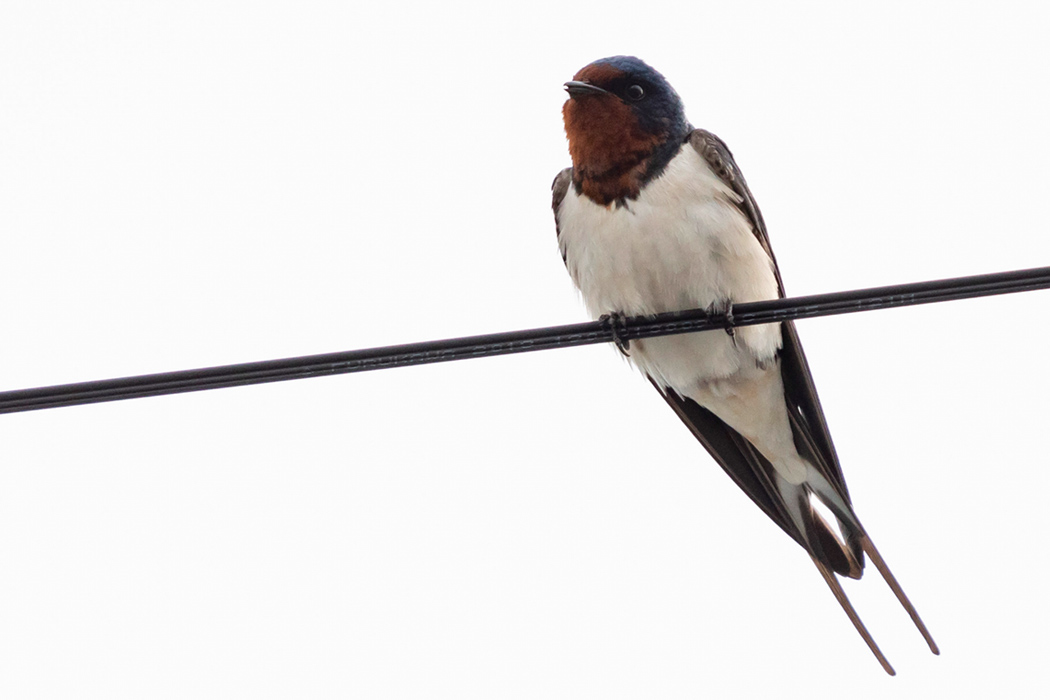
Small head. Deep red from the throat to the forehead. Dark navy-blue crown. The iris is brown to black, and the beak is black.
The back is dark navy-blue, sometimes appearing purple depending on the light. The navy-blue extends to the chest, and the belly is pure white.
The outermost tail feathers are elongated and protruding. The legs are lead-gray.
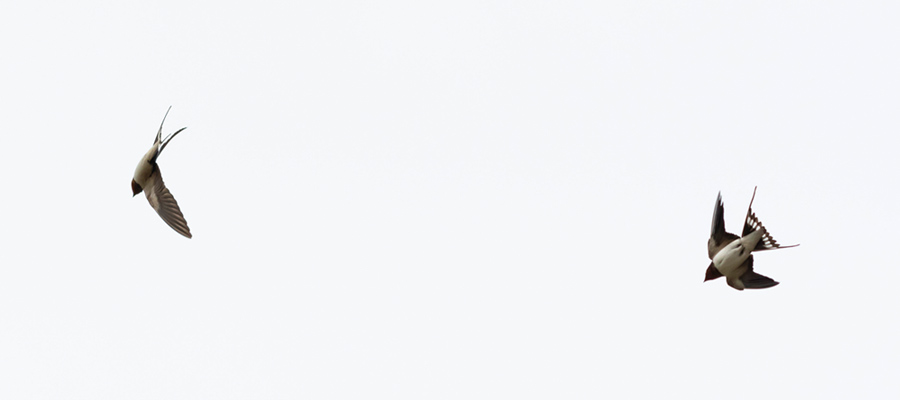
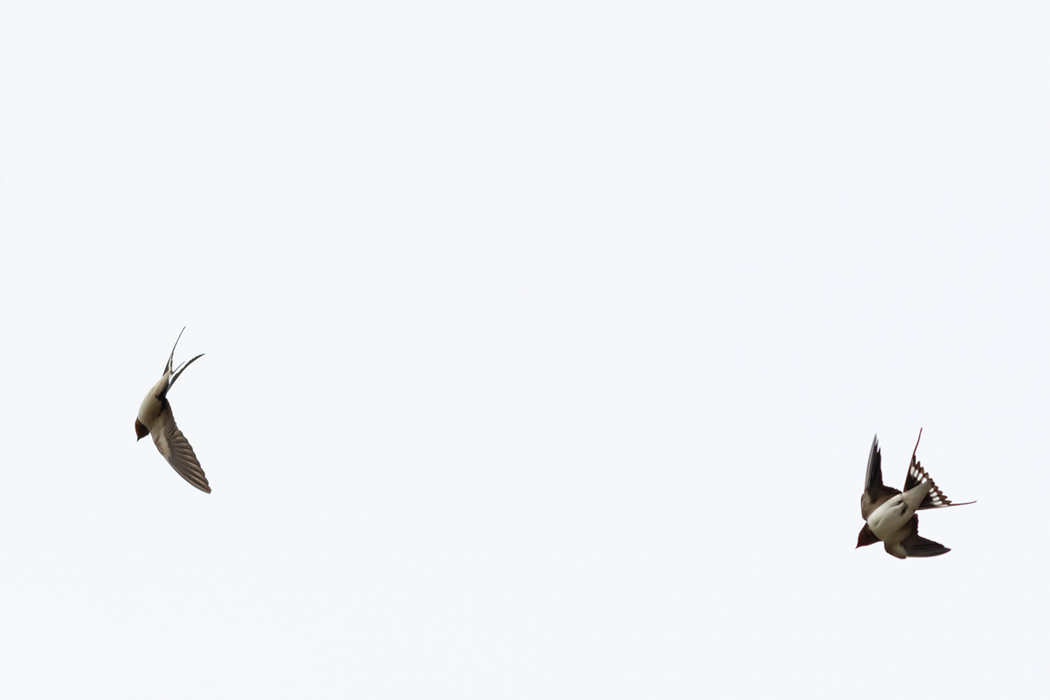
Can be distinguished from the Common House Martin and similar species by the elongated outermost tail feathers, which can be used to identify it from its silhouette in flight.
Male
Looks almost identical to the female.
Tail feathers are longer than those of the female.
Female
Looks almost identical to the male.
Tail feathers are not as long as those of the male.
Song
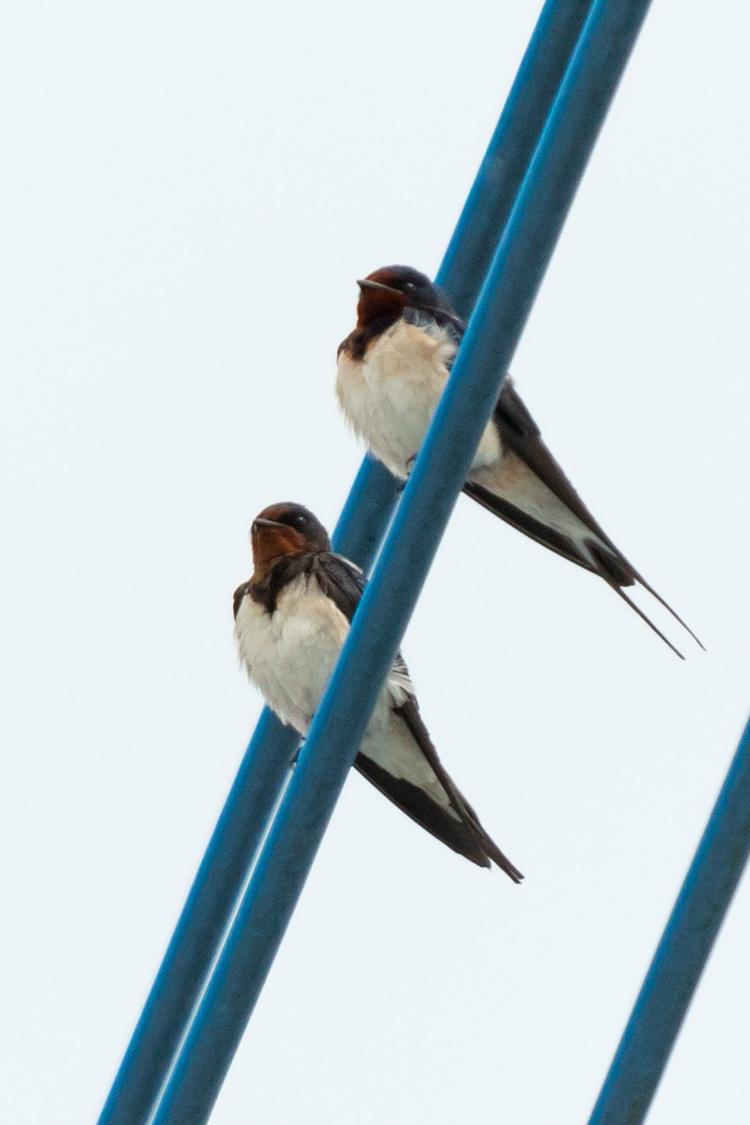
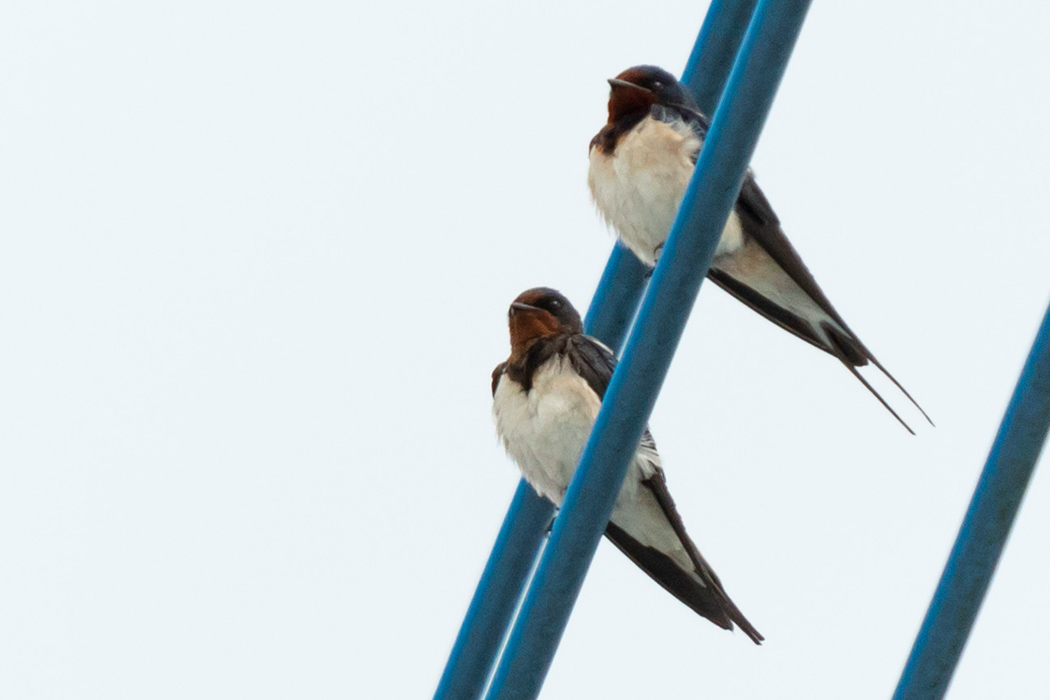
In spring, they fly around and perch on electric wires, chirping "Churuchuru" and "Chirichiri."
Barn Swallow Ecology
Habitat
Comes to Japan mainly for breeding from spring to autumn.
Food
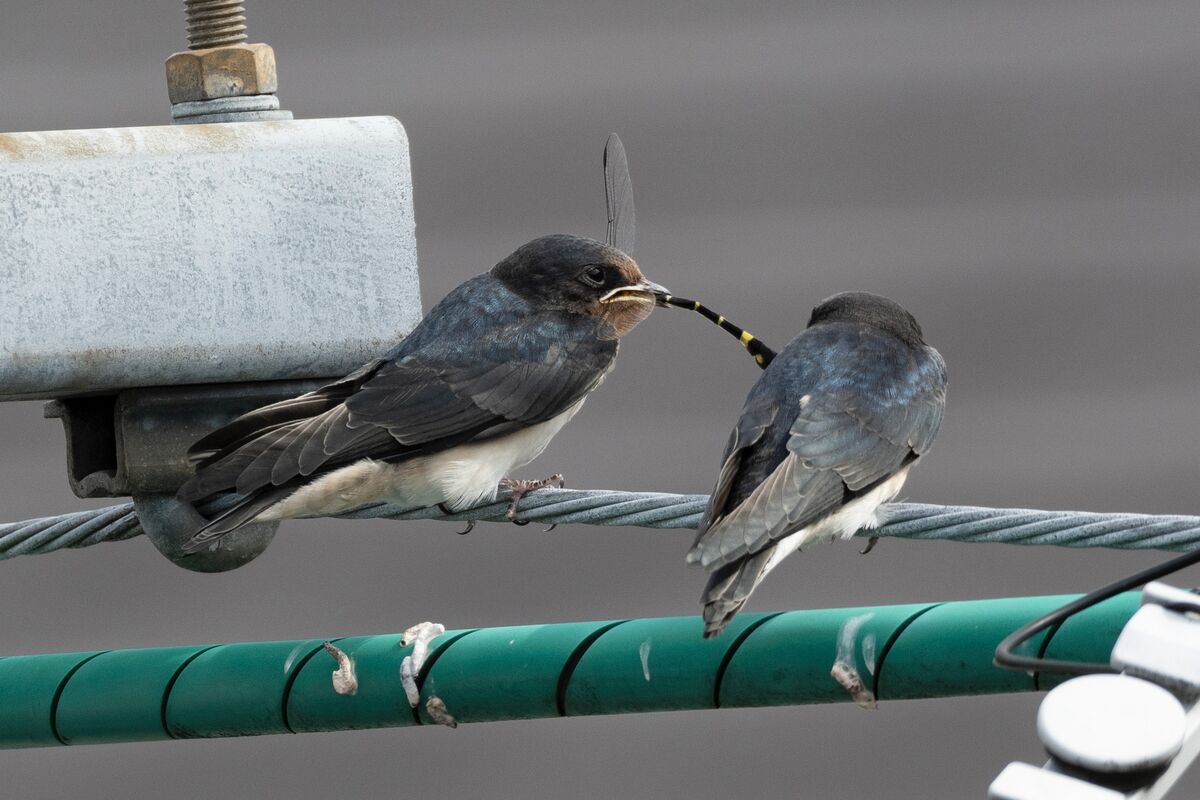
Catches flying insects in the air and eats them.
Life Cycle
Builds nests made of mud and saliva on artificial structures such as the eaves of houses to raise their young. They often act in pairs during the breeding season.
Barn Swallow Photos
Barn Swallow Photos are introduced.
Tap the photo to open the detail page.
Barn Swallow Behavior
Even when drinking water, they drink from the surface of the water while flying.
Barn Swallow Information
Naming
The scientific name "rustica" means "of the countryside," because they are often seen in farmland and build nests under the eaves of farmhouses.
Swallows as Beneficial Birds
Swallows have long been familiar to people and have been valued in farming villages as beneficial birds that eat harmful insects. Swallow nests built in houses are also regarded as a sign of business prosperity and safety.
First sighting date of swallows
Because they visit every year with the arrival of spring, the Japan Meteorological Agency uses the "first sighting date of swallows" for phenological observations.
Barn Swallow Found Locations
Asakawa, Hachiōji
Discovered near Asakawa, Hachiōji. They were chirping above the river and on the electric wires. They had built a nest inside the market and were constantly going in and out. Common House Martins also nest along the Asakawa River, and at first glance, it was difficult to distinguish them because they were in similar locations. I was finally able to tell the difference after paying attention to the size of the flock and the tail feathers. Also, Common House Martins seem to be concentrated near the Ōwada Bridge.
Barn Swallow Video
Barn Swallow is introduced by video.
Chatting on the electric wire.
Barn Swallow Observation Log
These are the observation logs where we found Barn Swallow.