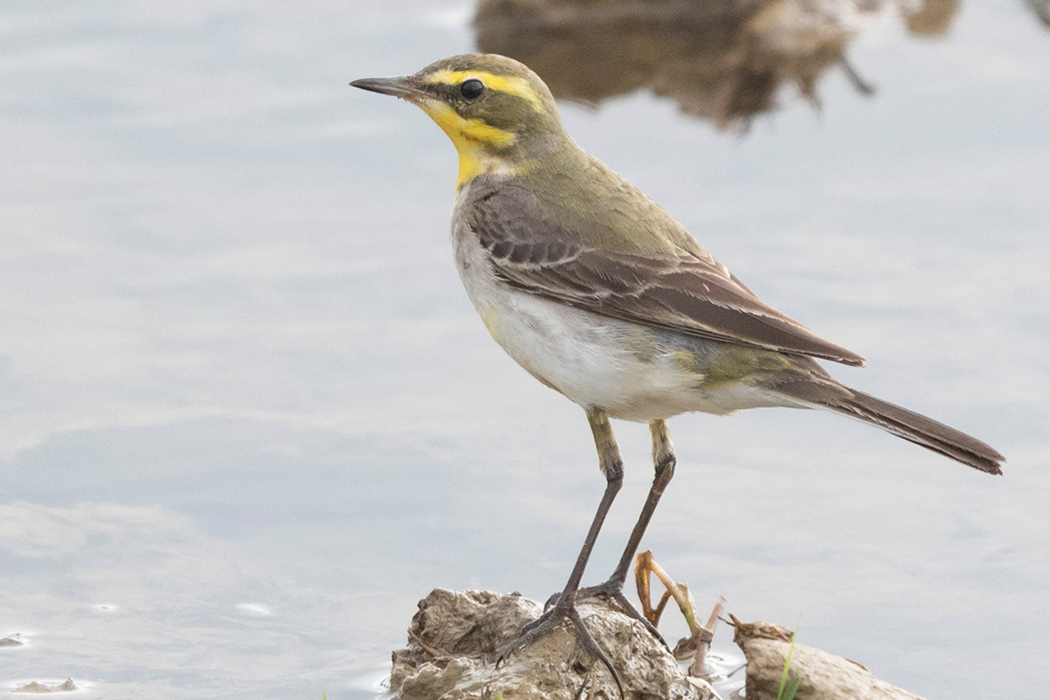
Yellow wagtail
| Scientific name | Motacilla flava |
| English name | Yellow wagtail |
| Japanese name | 爪長鶺鴒 |
| Class | Aves |
| Order | Passeriformes |
| Family | Motacillidae |
| Genus | Motacilla |
| Species | flava |
| Subspecies | --- |
| Full length | 16.5cm |
| Distribution | Distributed from the Eurasian continent to the African continent and Alaska |
Characteristics
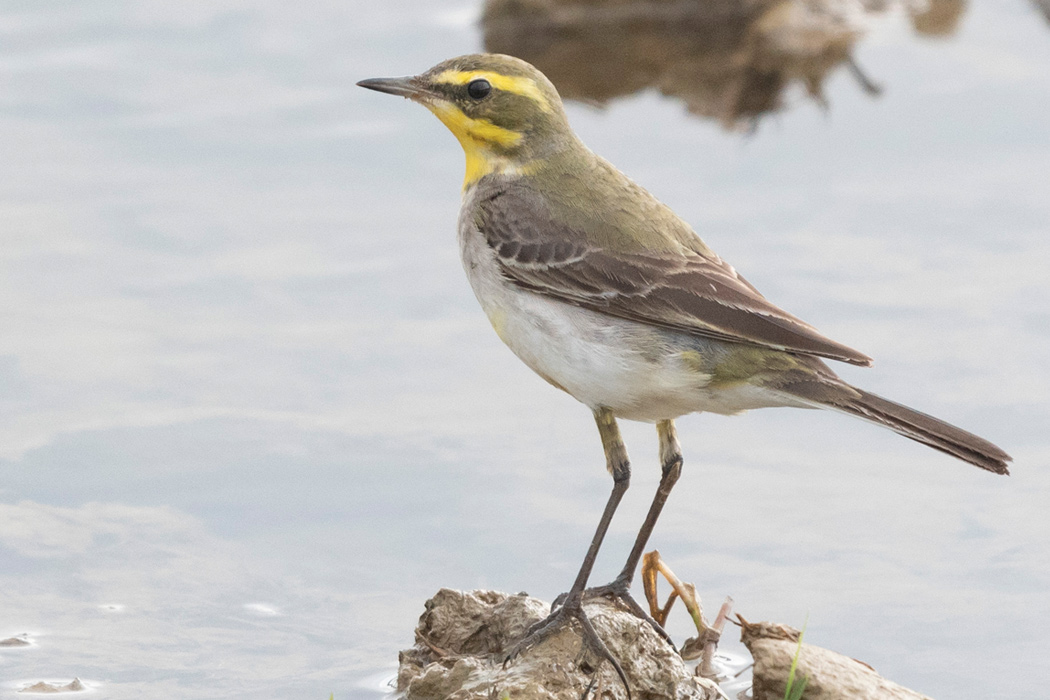
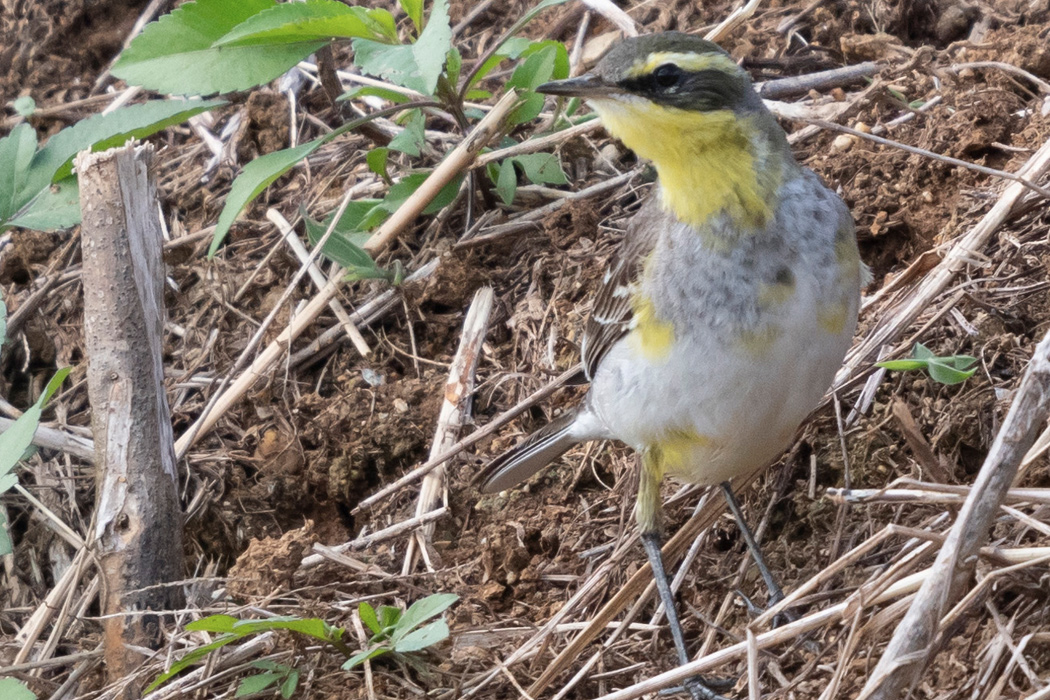
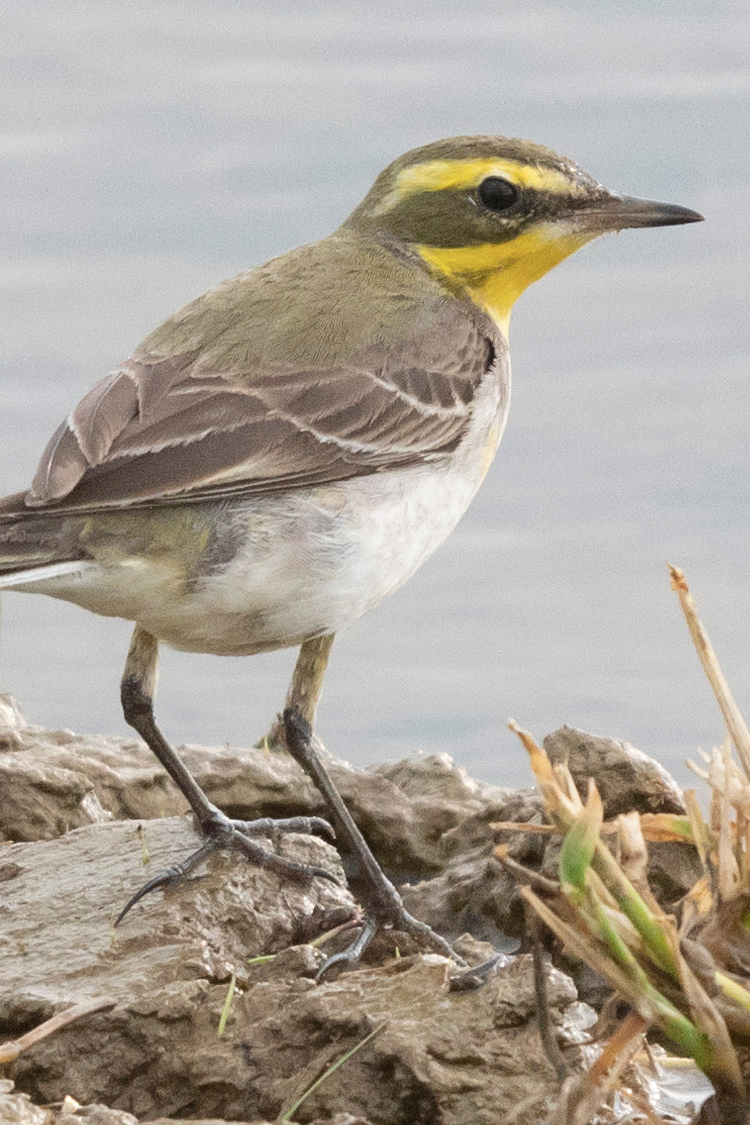
The wagtail is characterized by its yellow color from its face to its belly. The eyebrows are bright yellow, and the eye line is brown with a little green. The upper surface of the body is yellowish green. In winter, the yellow belly becomes pale and whitish. The photo above seems to be of winter plumage. The tail feathers are dark brown and the legs are lead colored.
Juvenile birds are pale brown.
Differences between Long-nosed Wagtails and Gray Wagtails
The long-nosed wagtail is a migratory bird and is not often seen, but there are areas such as Okinawa where both species are found. Both are similar in that they are yellow wagtails. The distinguishing point is that the head including the eyebrows is yellow in the long-nosed wagtail, while the head is grayish in the gray wagtail. Also, looking at the color of the legs, gray wagtails have pink legs, but the long-tailed wagtail has lead.
Calls
The rumbling of the ground is muddy and "Ji, ji".
Ecology
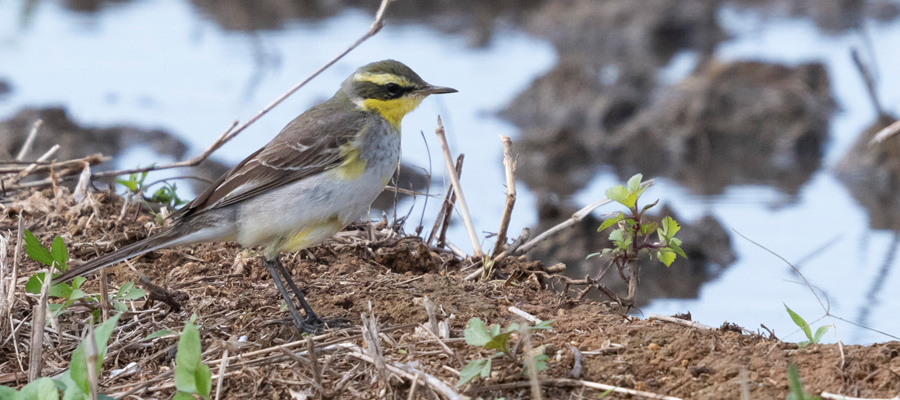
Moves in small groups in meadows and farmlands. It catches and eats insects on the ground. From around May, it builds a nest on a plate on the ground and breeds.
Habitat
Moves in small groups in meadows and farmlands. It catches and eats insects on the ground. From around May, it builds a nest on a plate on the ground and breeds.
Pictures
Introducing a picture of Yellow wagtail.