Long tailed blue
| Scientific name | Lampides boeticus |
| English name | Long tailed blue |
| Japanese name | 裏波小灰蝶 |
| Class | Insecta |
| Order | Lepidoptera |
| Family | Lycaenidae |
| Genus | Lampides |
| Species | boeticus |
| Subspecies | --- |
| Full length | 15-20mm |
| Distribution | southern Hokkaido and south |
Characteristics
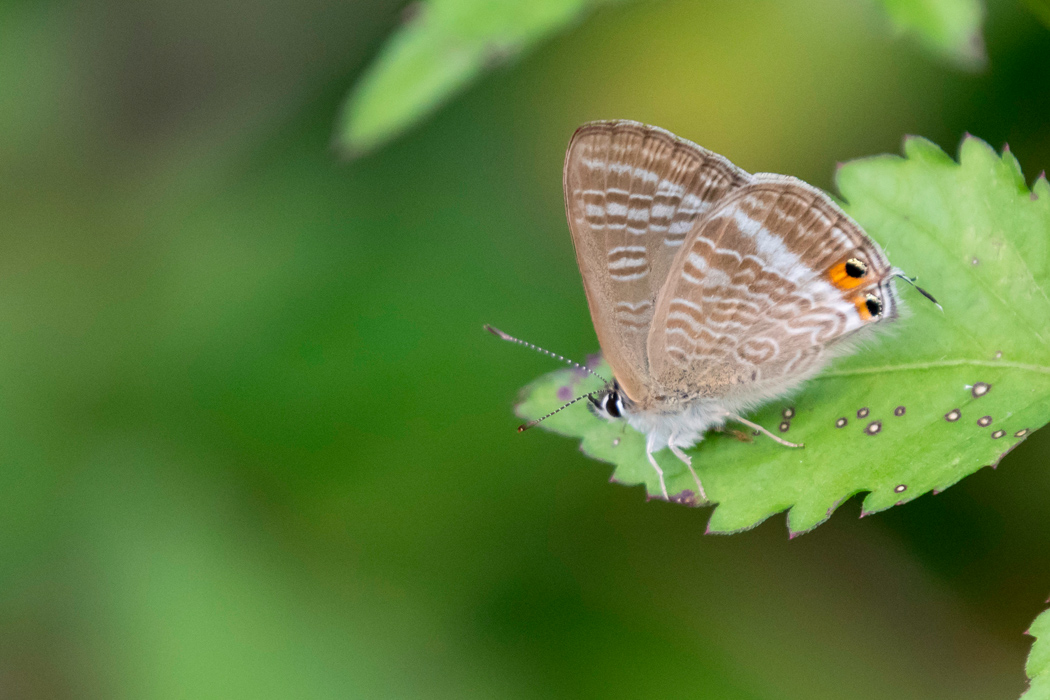
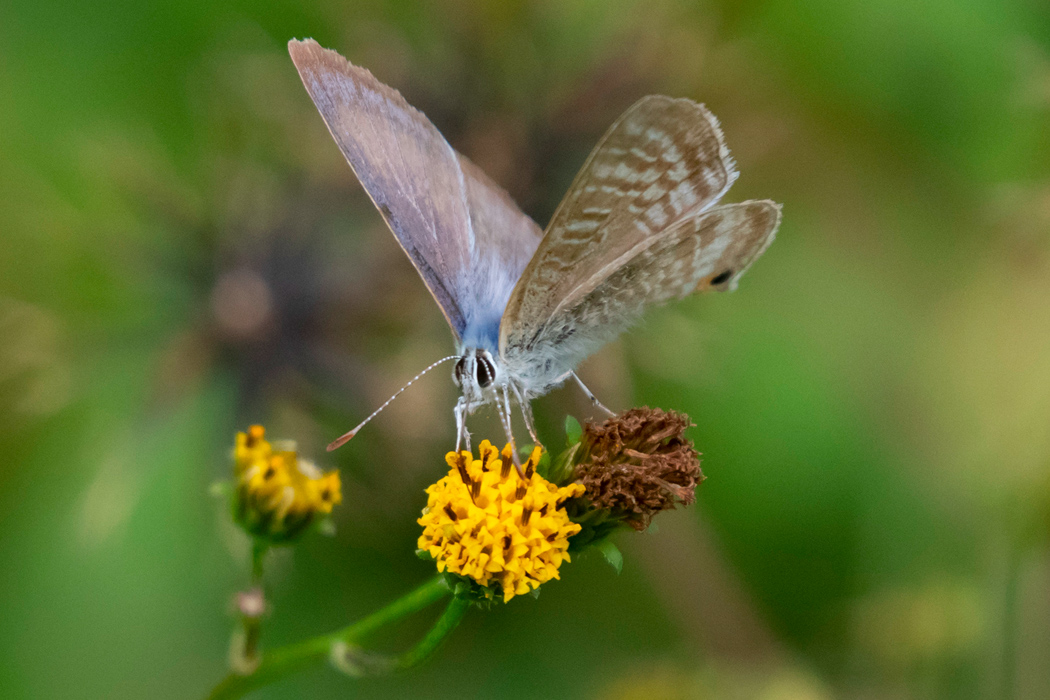
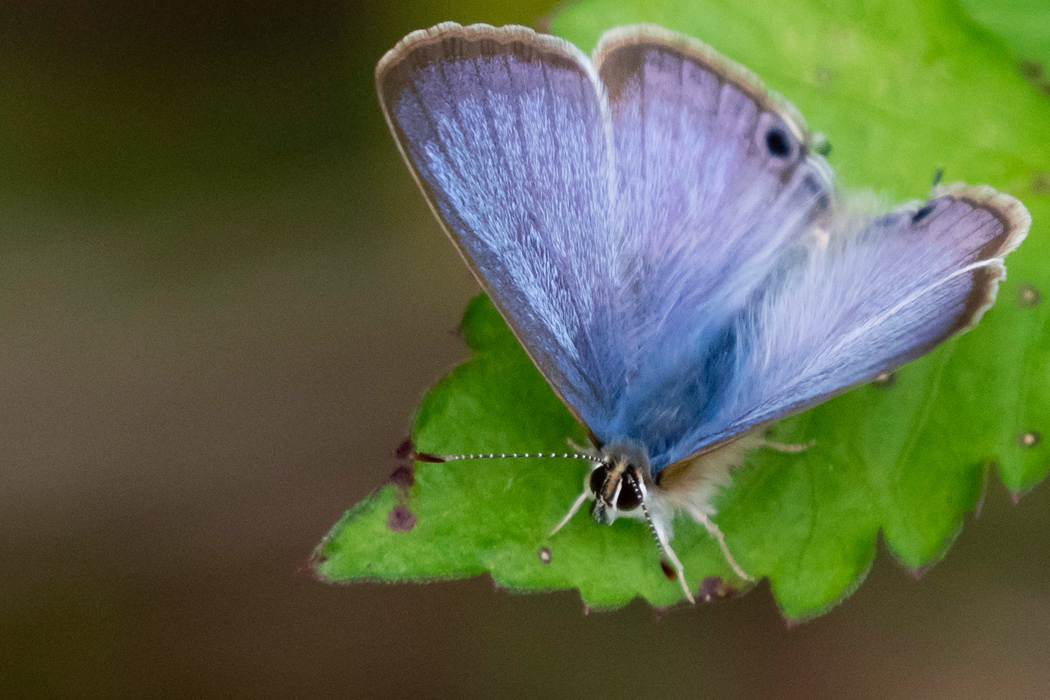
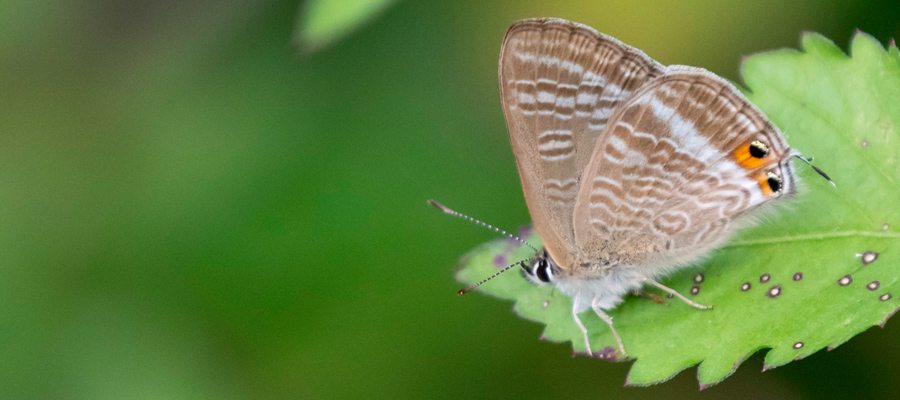
A lycaenid butterfly with a characteristic striped wave pattern on the underside of its wings. White wavy pattern on brown ground. The edge of the hindwing has an orange pattern and a tail that protrudes from the wing. It is believed that this is done to deceive predators by mimicking compound eyes and antennae.
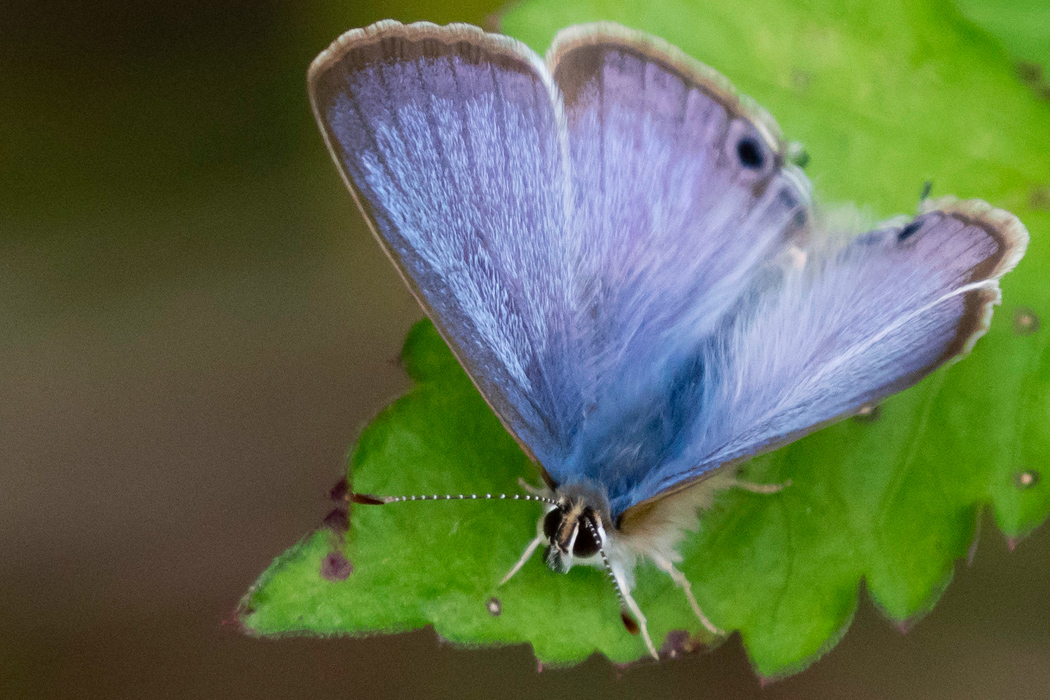
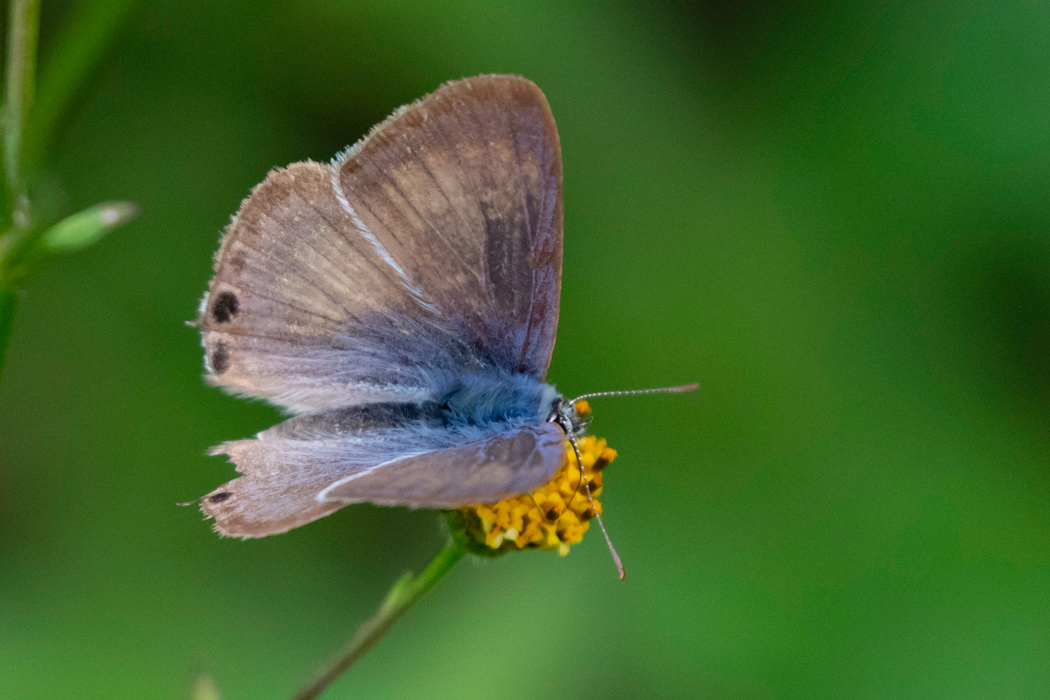
The front side has a sparkling bluish-purple color. This coloration is more pronounced in males, and females are darker. Wings have fluffy hairs on the surface.
Ecology
Inhabit grasslands. Larvae feed on leguminous plants such as peas and adzuki beans. They can be seen from spring, but most are seen from summer to autumn. The color of the wings is very similar to that of the corbicula, but the corbicula flies faster.
Habitat
I found it in the grassland near Hiraigawa, Hinodecho. It flew among other lycaenid butterflies such as Corbicula japonicus and landed on the flower of the red fir tree. Many individuals have ragged hind wings, and it was well understood that the caudate process is for deceiving natural enemies.
The color of the glossy wings was beautiful.
Pictures
Introducing a picture of Long tailed blue.