
Striped shore crab
| Scientific name | Pachygrapsus crassipes |
| English name | Striped shore crab |
| Japanese name | 岩蟹 |
| Class | Crustacea |
| Order | Decapoda |
| Family | Grapsidae |
| Genus | Pachygrapsus |
| Species | crassipes |
| Subspecies | --- |
| Full length | 3.5cm |
| Distribution | Widely distributed south of Hokkaido. |
Characteristics
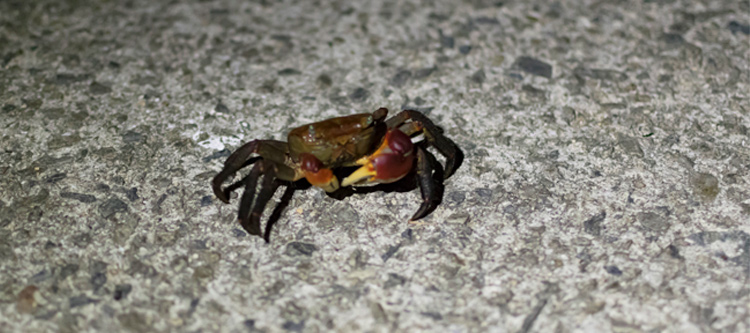
They normally roam rocky shores, and when humans approach them, they flee to the shade of the rocks. You can also catch it with your hands if you are careful not to get caught. On moonlit nights, they can also be found on roads a little farther from the beach. Generally, it is not eaten, but it is delicious when eaten with miso soup.
Ecology
It has a crustacean about 3.5 cm long and preys on sea lice, small fish, and dead seafood. When it senses danger, it hides in crevices between rocks and tidal pools. I don't go into the sea very often.
Use as fishing bait
It is sometimes used as bait for catching black sea bream and sea bream. There is a method called 'shirikake', in which a needle is inserted into the belly of a rock crab so that it can roam the ocean floor. You can buy it at a fishing tackle shop, but you can also procure it locally at a rocky place or near a tetrapod.
Habitat
Found near Himegahama, Nakajima, Ehime Prefecture. When I went to see the moonlit sea with a friend, many rock crabs appeared along the coastal road.
The small rock crab ran away as soon as we approached it, but it was alone on the embankment.
Pictures
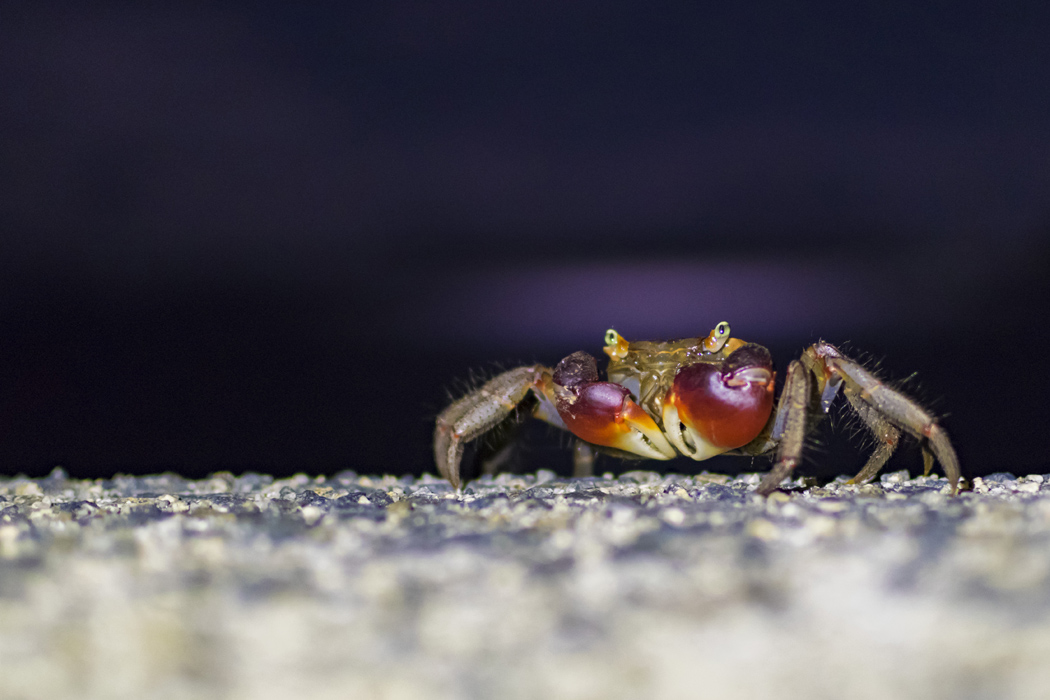
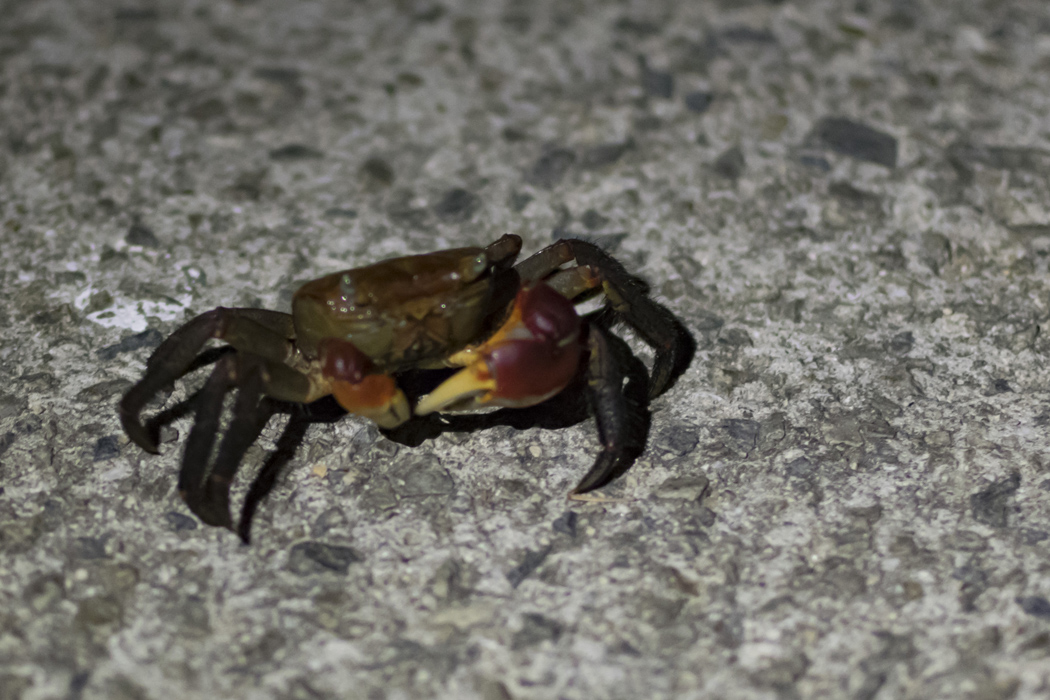
Introducing a picture of Striped shore crab.

Picture book
Grey-faced buzzard
It has white eyebrows....... Read more
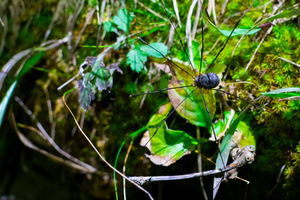
Nelima genufusca
Has wire-like legs and is nicknamed "Uncle Long Legs" in the United States....... Read more
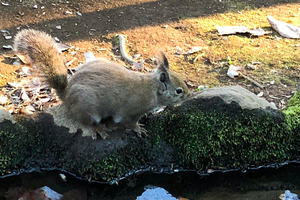
Japanese squirrel
Only trees such as acorns are buried in the ground and "stored"....... Read more
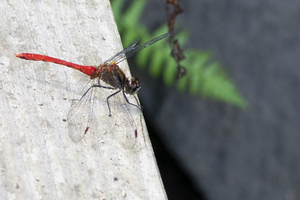
---
There are black spots like eyebrows on the face....... Read more