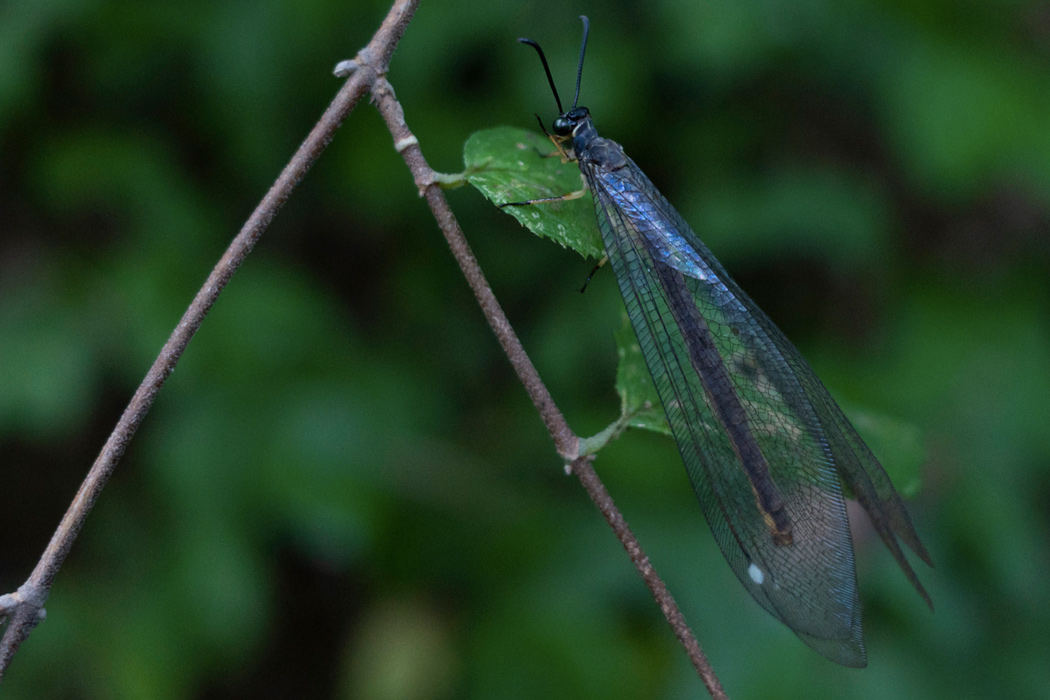
Hagenomyia micans
The larva is an antlion. Its translucent wings are beautiful.
| Scientific name | Hagenomyia micans |
| English name | Hagenomyia micans |
| Japanese name | 薄翅蜉蝣 |
| Class | Insecta |
| Order | Neuroptera |
| Family | Myrmeleontidae |
| Genus | Hagenomyia |
| Species | micans |
| Full length | Approx. 4cm |
| Distribution | Distributed throughout Japan |
Hagenomyia micans Characteristics and Morphology
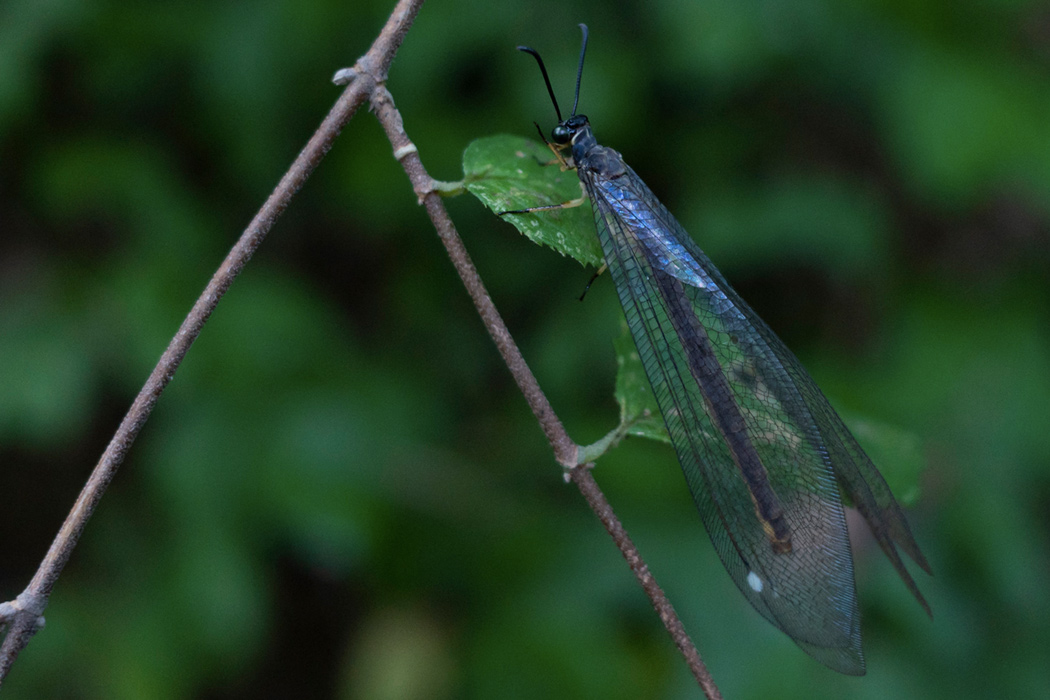
An insect characterized by its transparent wings, as indicated by its Japanese name. The body color is generally black or brown. Males and females look the same.
The antennae are prominent on the head. The eyes are black.
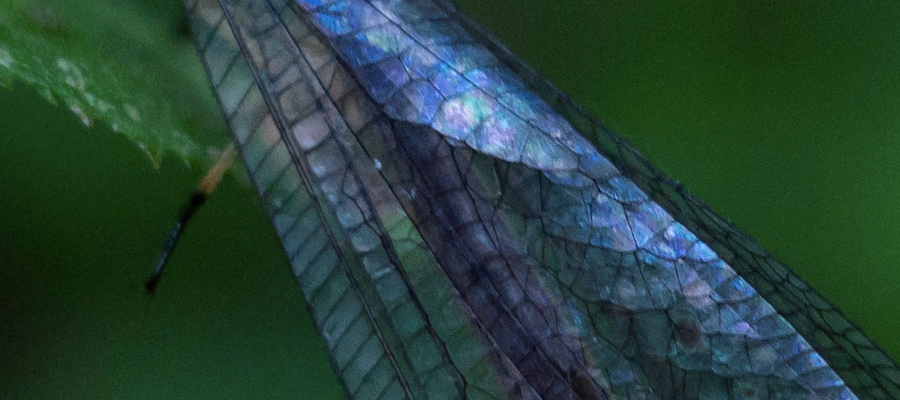
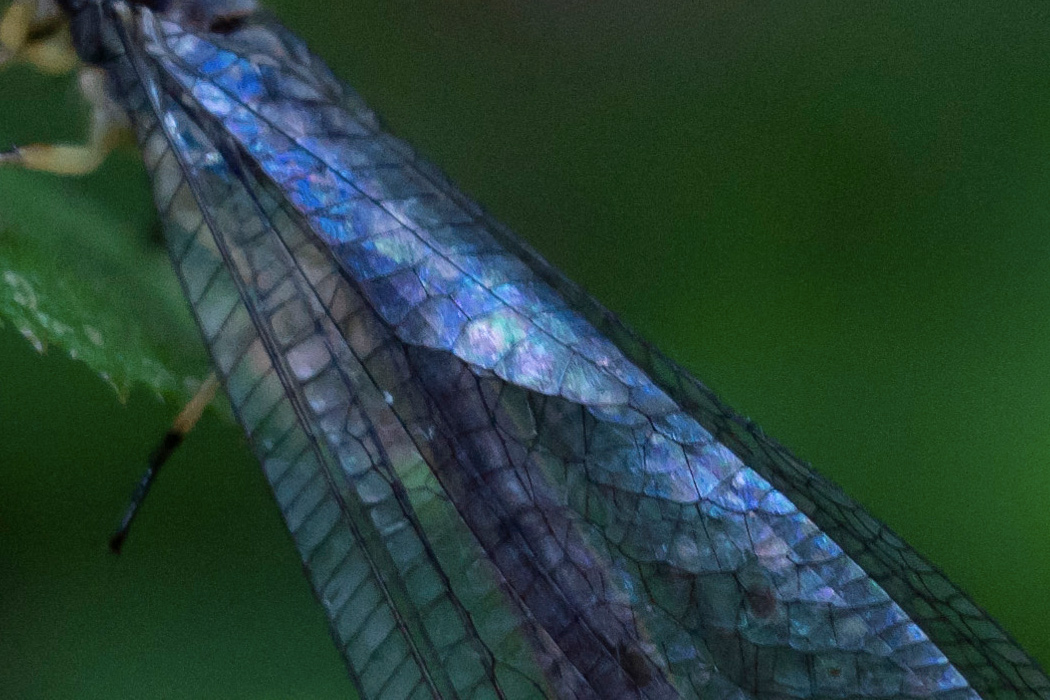
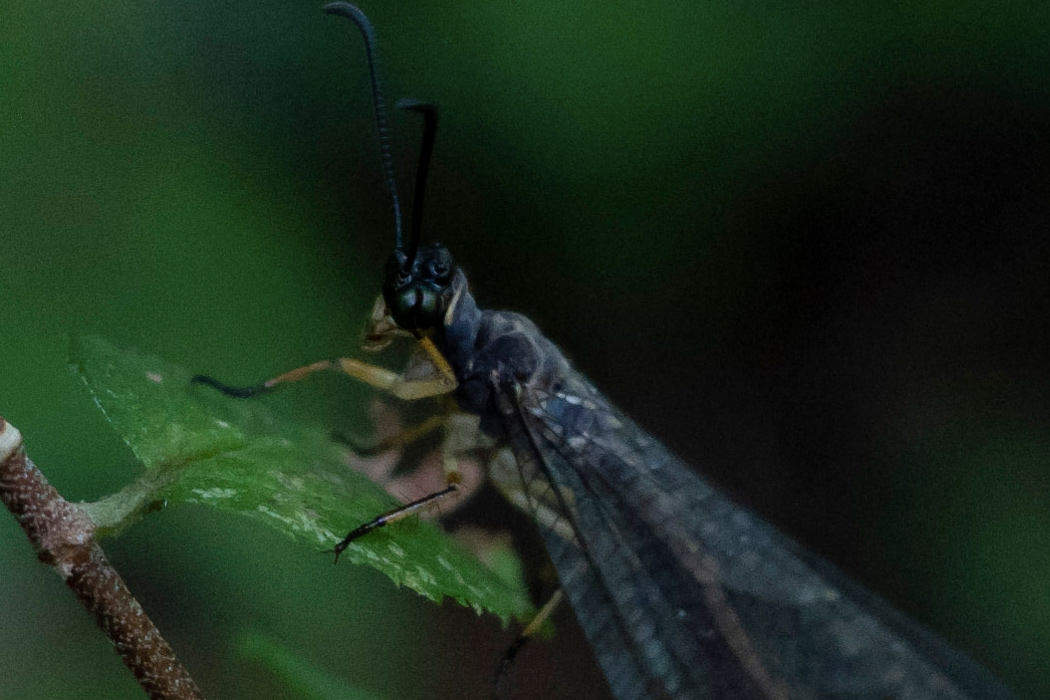
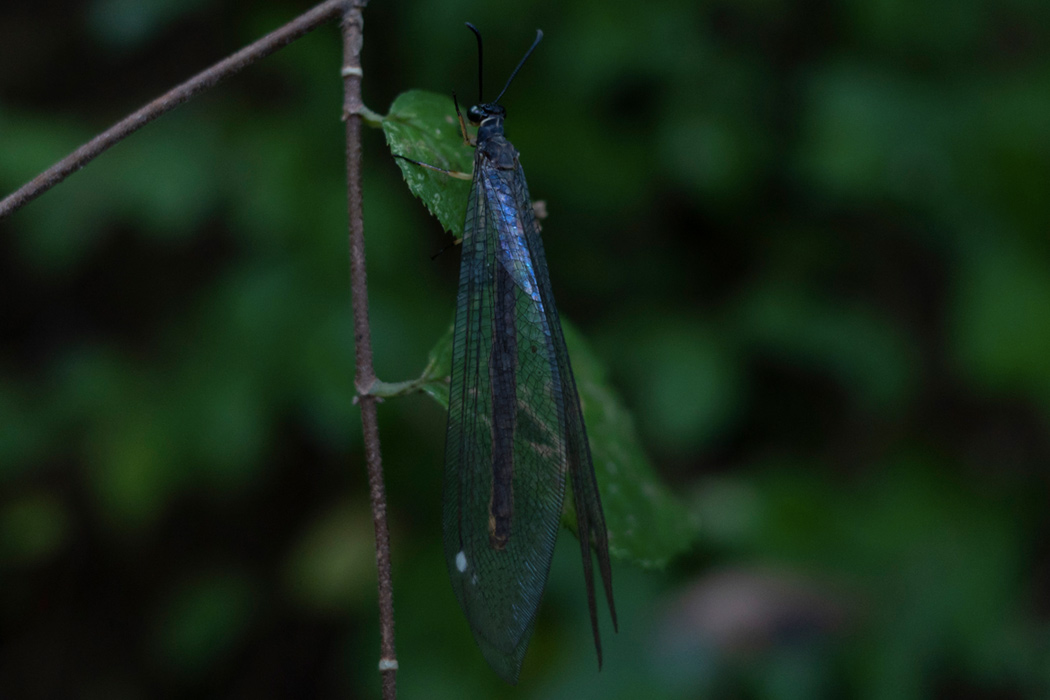
The thin wings, which are the origin of its name, feature black wing veins and a pattern that looks like it is filled with irregular polygons. The color of the wings is not completely transparent; they reflect light in shades of blue and purple, giving them a glass-like appearance. There are white spots on the edges of the wings.
The abdomen is slender and dark brownish-black.
At first glance, it looks like a dragonfly, but the antennae extending from the head are its distinguishing feature.
Hagenomyia micans Ecology
Habitat
Found in forests and grasslands from plains to mountainous areas. The larvae live in dry, sandy soil protected from rain.
Food
Predatory, feeding on other insects.
Life Cycle
Adult antlions live for several weeks.
Hagenomyia micans Photos
Hagenomyia micans Photos are introduced.
Tap the photo to open the detail page.
Hagenomyia micans Behavior
When flying, it flaps its long wings in a way that makes it look like the letter "X." Its flight speed is not fast, giving a somewhat unsteady or wobbly impression.
Hagenomyia micans Information
Naming
The scientific name "micans" means "shining" or "emitting light," which is thought to refer to the beautiful wings of the adult. The Japanese name (Usubakagero), as it suggests, refers to the thinness of the wings.
Larva "Antlion"
The larva of the Hagenomyia micans is famous as an "antlion" (Ari-jigoku). It digs funnel-shaped pits in dry ground and captures insects that pass nearby to eat them. While it was long believed that antlions do not excrete waste, an elementary school student in Sodegaura City, Chiba Prefecture, discovered in 2010 that they do indeed urinate.
Hagenomyia micans Found Locations
Forest in Minamiasakawa-machi, Hachioji City
I found one flying unsteadily in a forest in Minamiasakawa-machi, Hachioji City. I photographed it once it perched on a leaf. It did not fly away even when I approached, so I was able to capture the wings reflecting blue and purple light.
Base of a tree at home
There was an antlion pit at the base of a tree at my home, and I used to dig them out to observe them when I was a child. When placed on the ground, they don't move at all, making them appear weak at first glance. However, if you wait patiently, they start to move with "twitching" leaps. Contrary to their appearance, the abdomen is quite soft, which I remember surprising me when I first touched one.
References
Picture book
A swallowtail butterfly with translucent wings....... Read more
changes sex from female to male....... Read more
A beautiful blue like neon....... Read more

It has a metallic green color....... Read more
red body with five horizontal stripes....... Read more
It looks a lot like seaweed....... Read more