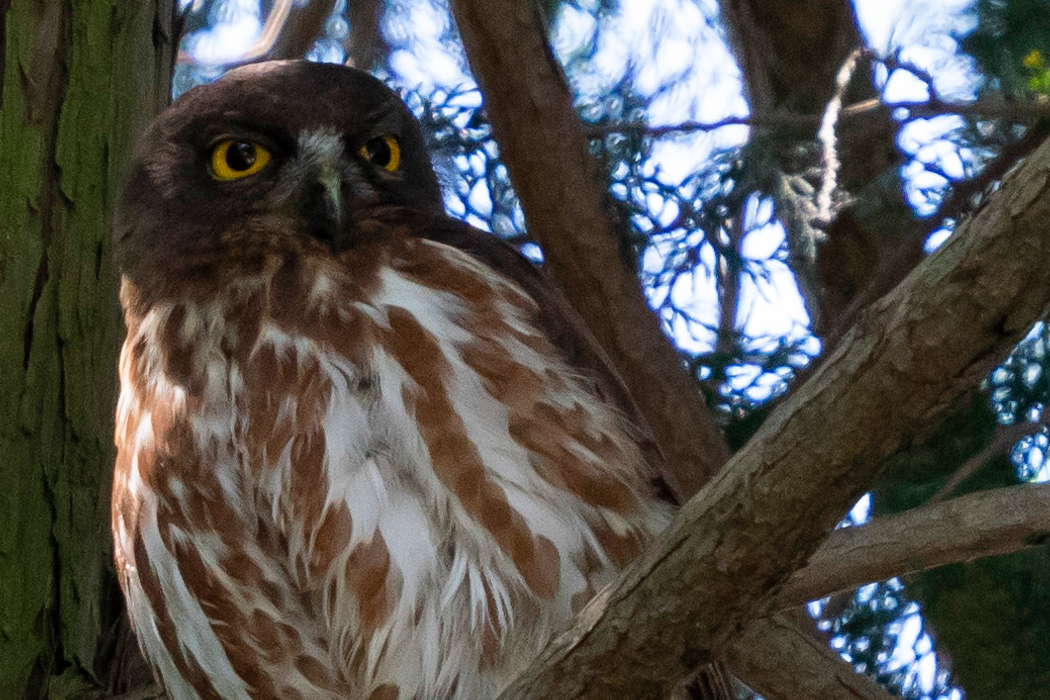
Brown Hawk-Owl
| Scientific name | Ninox scutulata |
| English name | Brown Hawk-Owl |
| Japanese name | 青葉木菟 |
| Class | Aves |
| Order | Strigiformes |
| Family | Strigidae |
| Genus | Ninox |
| Species | scutulata |
| Subspecies | --- |
| Full length | 29cm |
| Distribution | From India to southeastern Russia. |
Characteristics
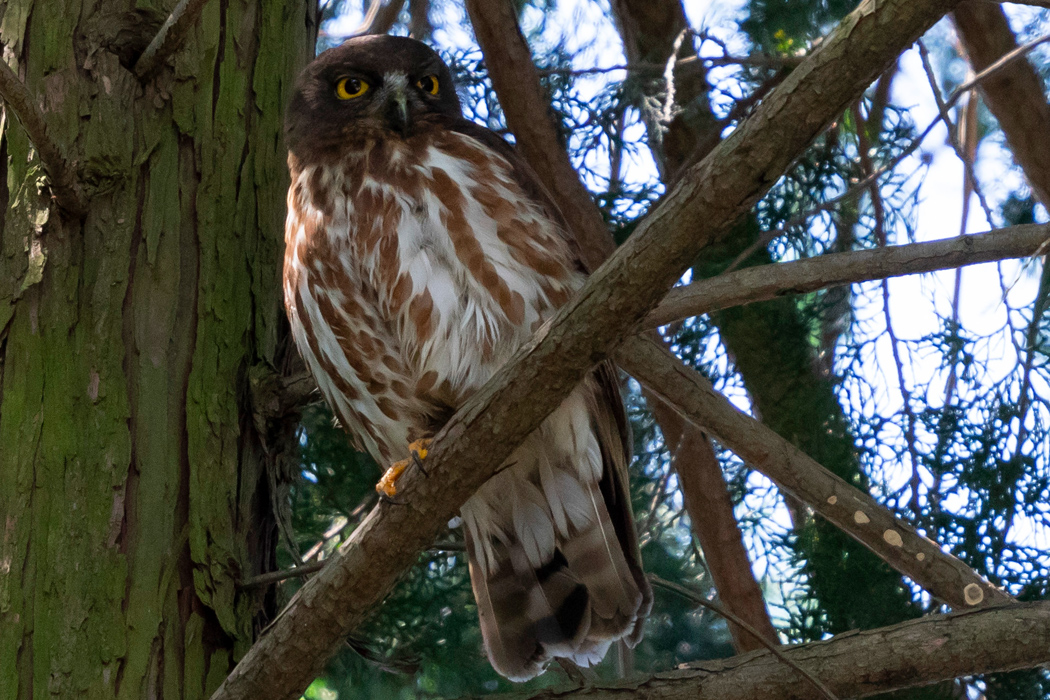
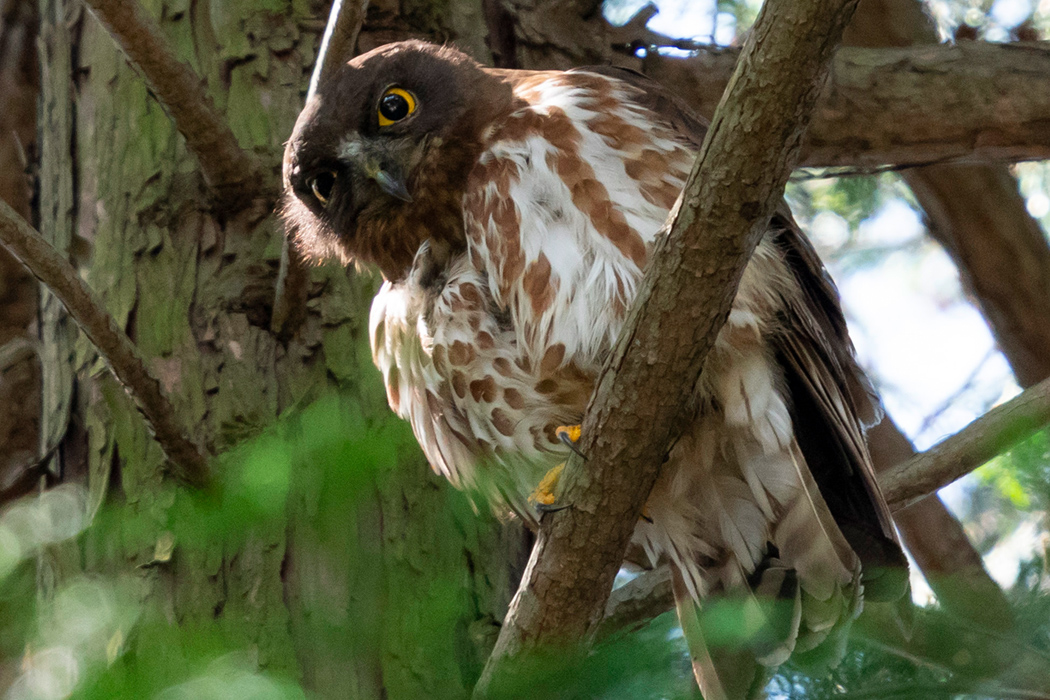
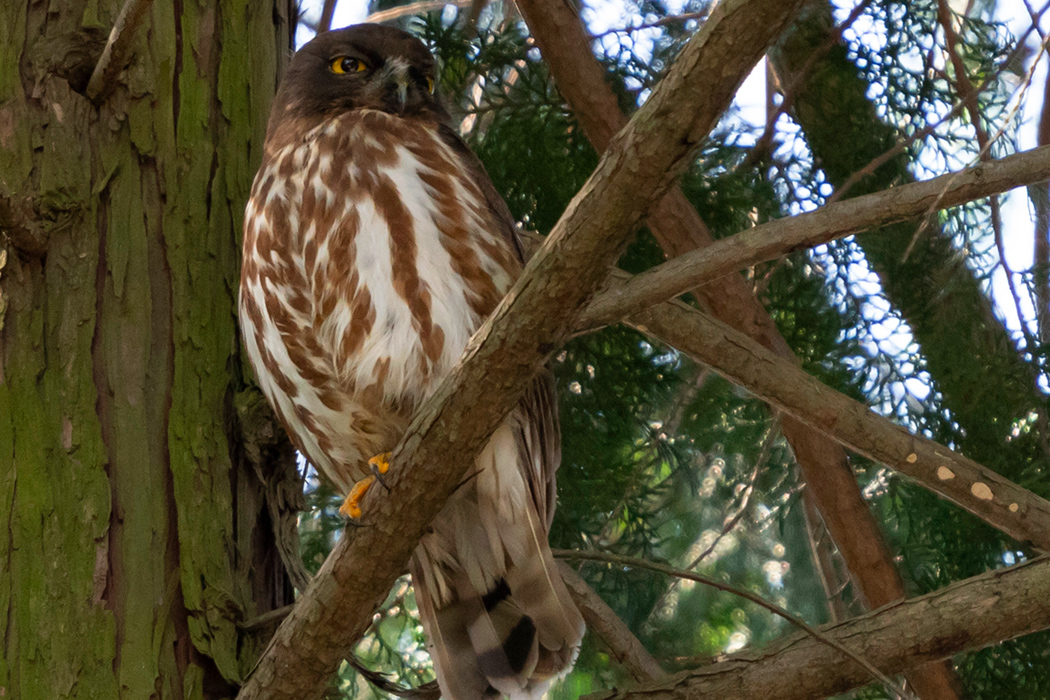
An owl with large yellow eyes. It has a dark brown color overall, and its belly is whitish with vertical crests. The silhouette of the head and body is round. The legs are orange and have sharp claws. It is also a feature that the neck turns well.
It has been popular with humans for a long time by living in the back of big trees in shrines and temples, but in some areas the nesting trees have been cut down and the number of inhabitants has decreased.
Calls
It comes to Japan during the breeding season, and at night it screams "hohohoho" twice. The bark is a little high and resonates well.
Ecology
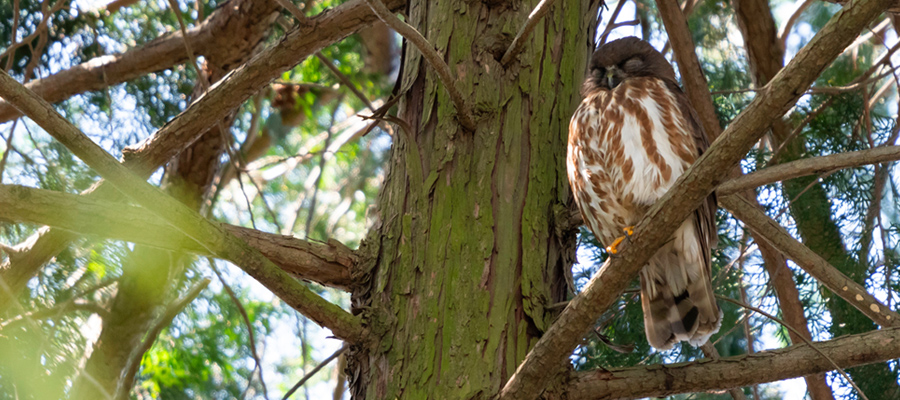
Since May, they have come to Japan for breeding and live in flatland and mountain forests. In the evening, it begins its activity and preys on insects, small birds and bats. Carcasses such as beetles falling in broad-leaved forests may be the pits of the northern boobook. Build a nest in a tree hollow and mate to raise children. A male is out of the nest and watching.
Habitat
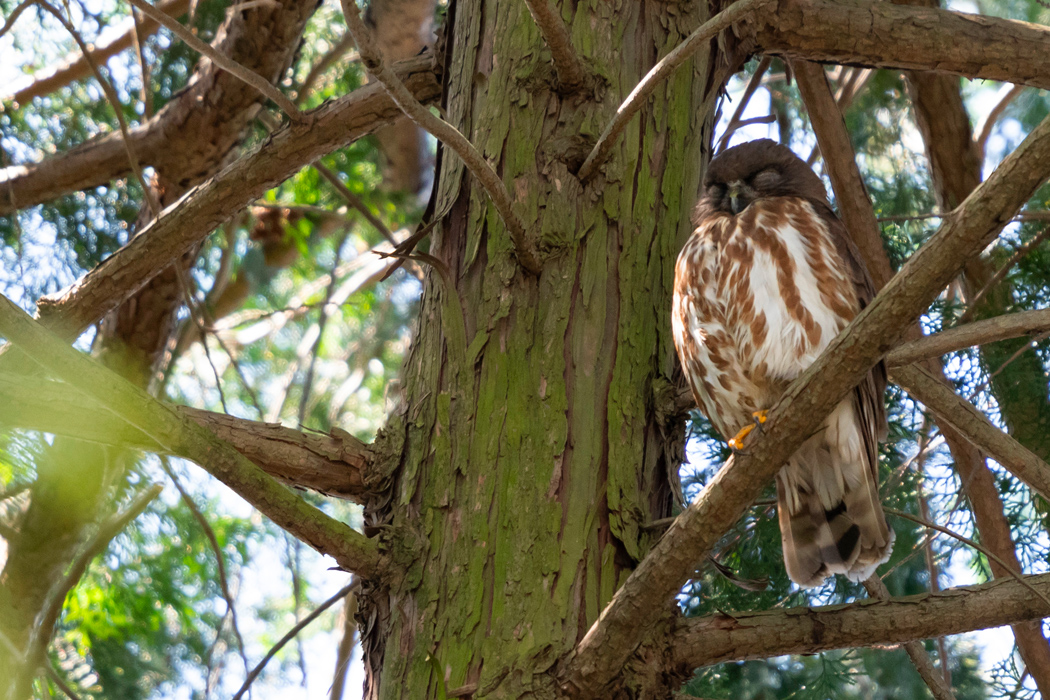
I observed a place perched on a tall trunk of a cedar tree in Hachioji, Tokyo. It woke up during the day and was grooming. The large, eyelid eyes looked expressive. It didn't seem to care for the human beings underneath, and sometimes it was laid back and relaxed.
Pictures
Introducing a picture of Brown Hawk-Owl.

Picture book
Japanese Paradise Flycatcher
The long tail feathers of a male are three times as large as the body...... Read more
Whitesaddle goatfish
Swimming in small groups near the bottom of the water....... Read more

Field madder
small flowers bloom on roadsides....... Read more
Yellow wagtail
Distinctive yellow eyebrows....... Read more