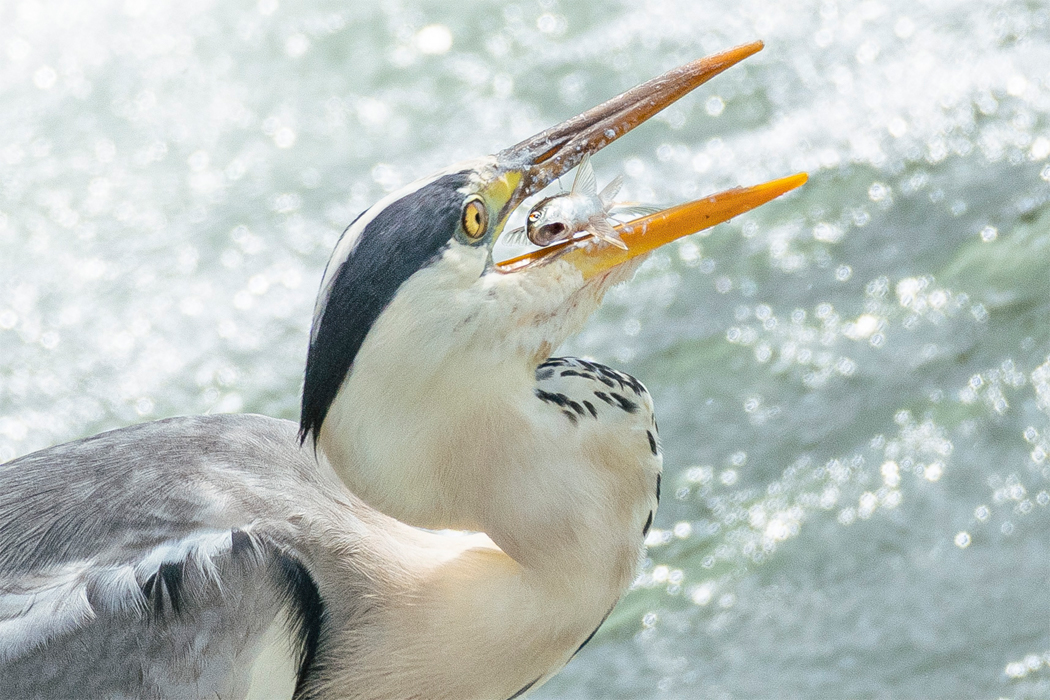
Grey Heron
The scientific name refers to the "gray heron."
| Scientific name | Ardea cinerea |
| English name | Grey Heron |
| Japanese name | 蒼鷺 |
| Class | Aves |
| Order | Pelcaniformes |
| Family | Ardeidae |
| Genus | Ardea |
| Species | cinerea |
| Full length | 88-98cm |
| Distribution | Widely distributed across Eurasia and Africa. |
Grey Heron Characteristics and Morphology
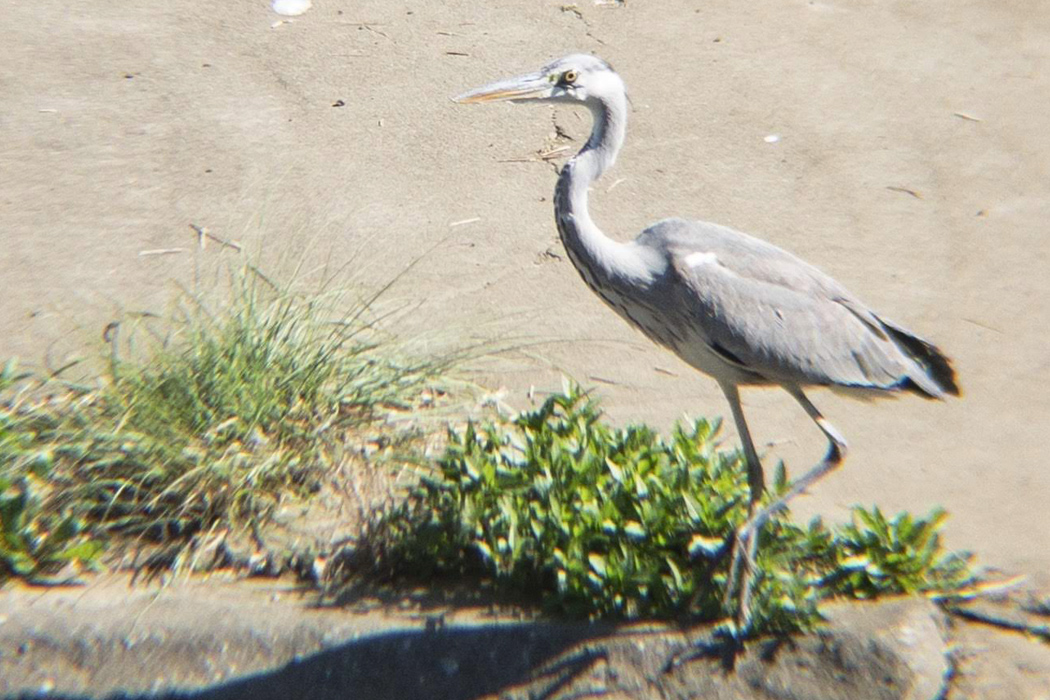
The largest heron that breeds in Japan, reaching about 1m in height. Its body is grey, which is the origin of its name. Males and females look almost identical.
The head is slightly larger than the neck, with a silhouette characterized by a sharp, pointed bill. The crown is white, and the sides of the head are black to deep navy blue. Adults have well-developed crest feathers. The bill is yellow, turning red or pink during the breeding season. The iris is yellow.
The long neck is white and curves into an S-shape. The back is grey, and dark blue lines run from the shoulders down to the legs. The breast feathers grow long and appear shaggy.
The tail feathers are short relative to the body length. The legs are long and brown, taking on a reddish tint during the breeding season.
Male
Appearance is almost identical to the female.
Crest feathers become more developed during the breeding season.
Female
Crest feathers are less developed compared to the male.
Juvenile
The entire body has a greyish-brown appearance.
The black parts of the head are not as prominent as in adults. Crest feathers are not developed.
Song
Calls with a "gua" or "guan" sound from evening until dawn. It may also cry out when taking flight.
Grey Heron Ecology
Habitat
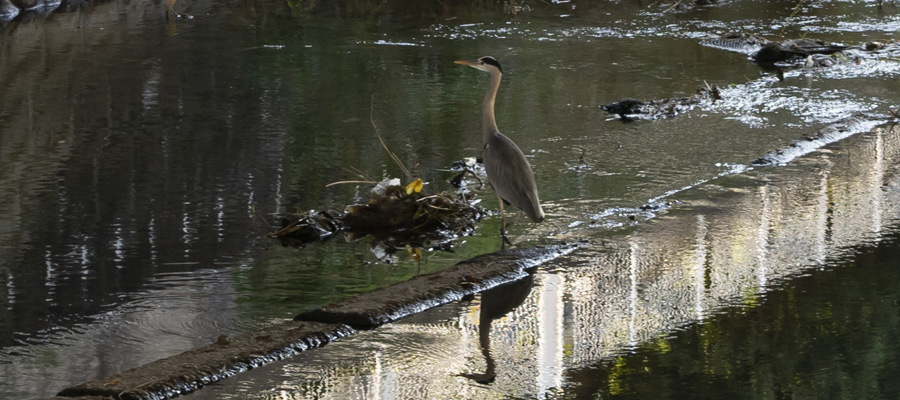
Inhabits watersides such as rivers and lakes.
Food
Forages in shallows until evening. Consumes fish, amphibians, and reptiles. It uses its sharp bill to pinch or spear prey.
Life Cycle
Builds plate-shaped nests made of branches high up in trees. It is not uncommon for nesting sites to be located far from foraging grounds.
Grey Heron Photos
Grey Heron Photos are introduced.
Tap the photo to open the detail page.

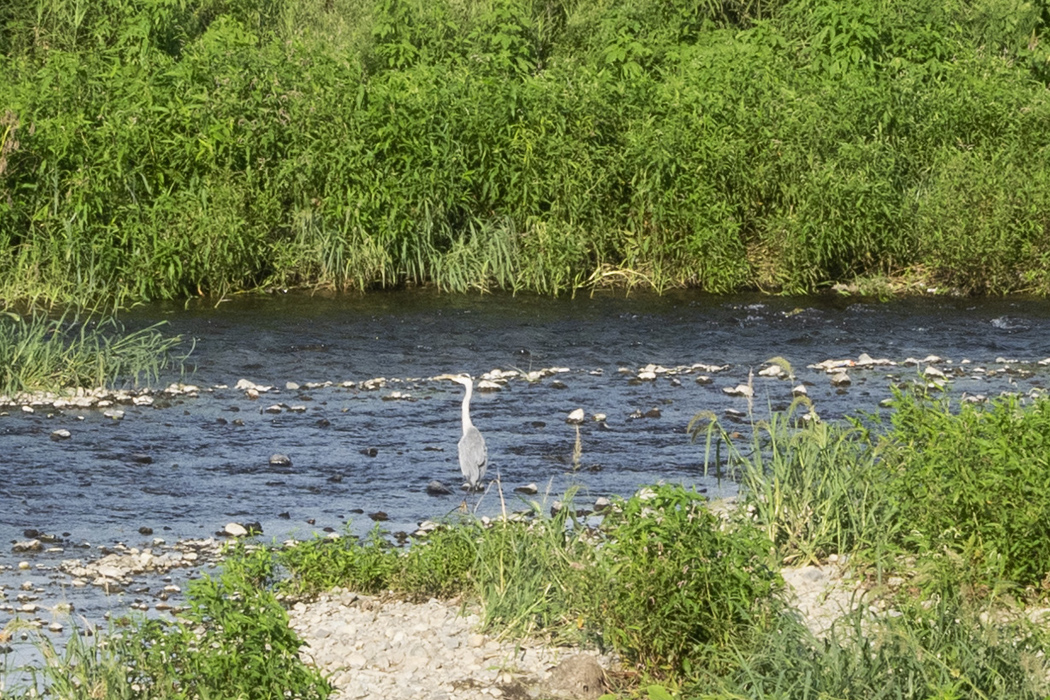

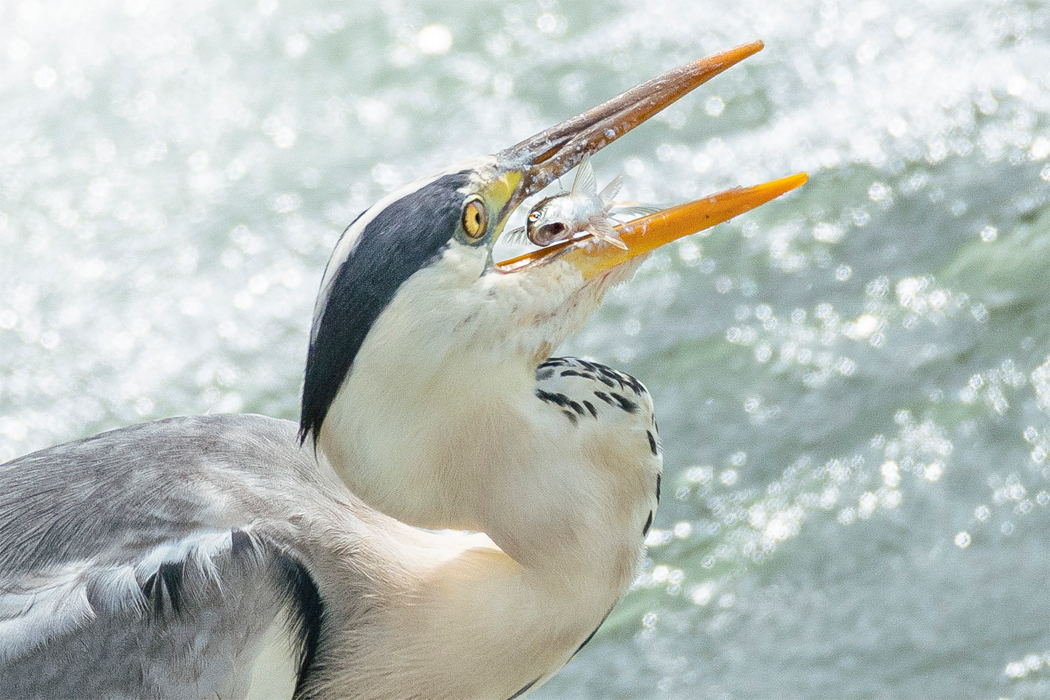
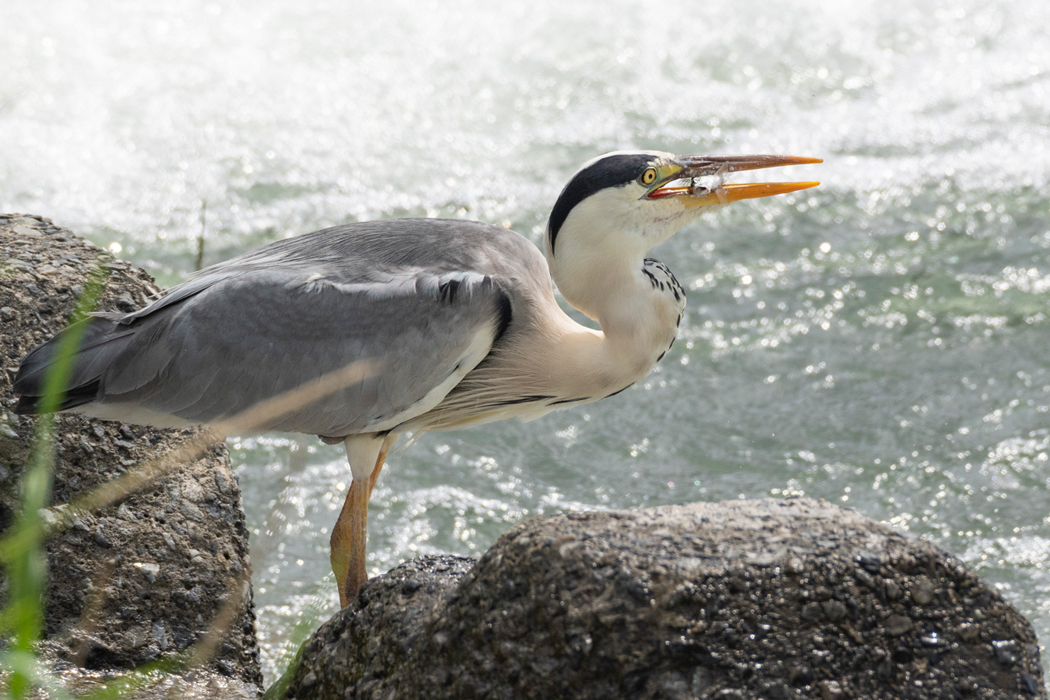
Grey Heron Behavior
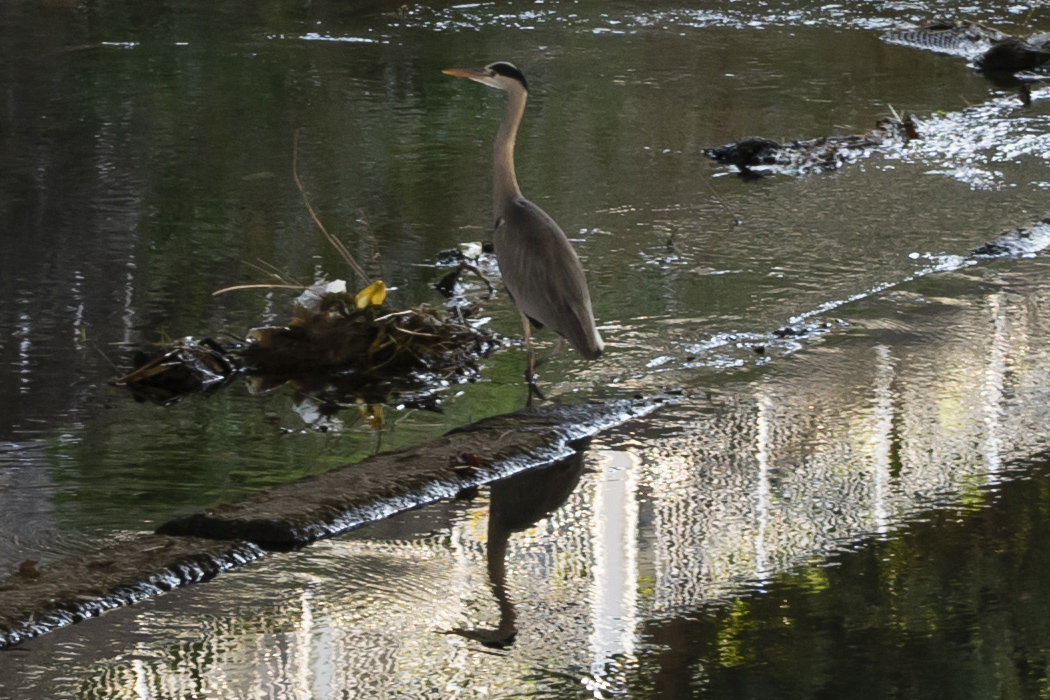
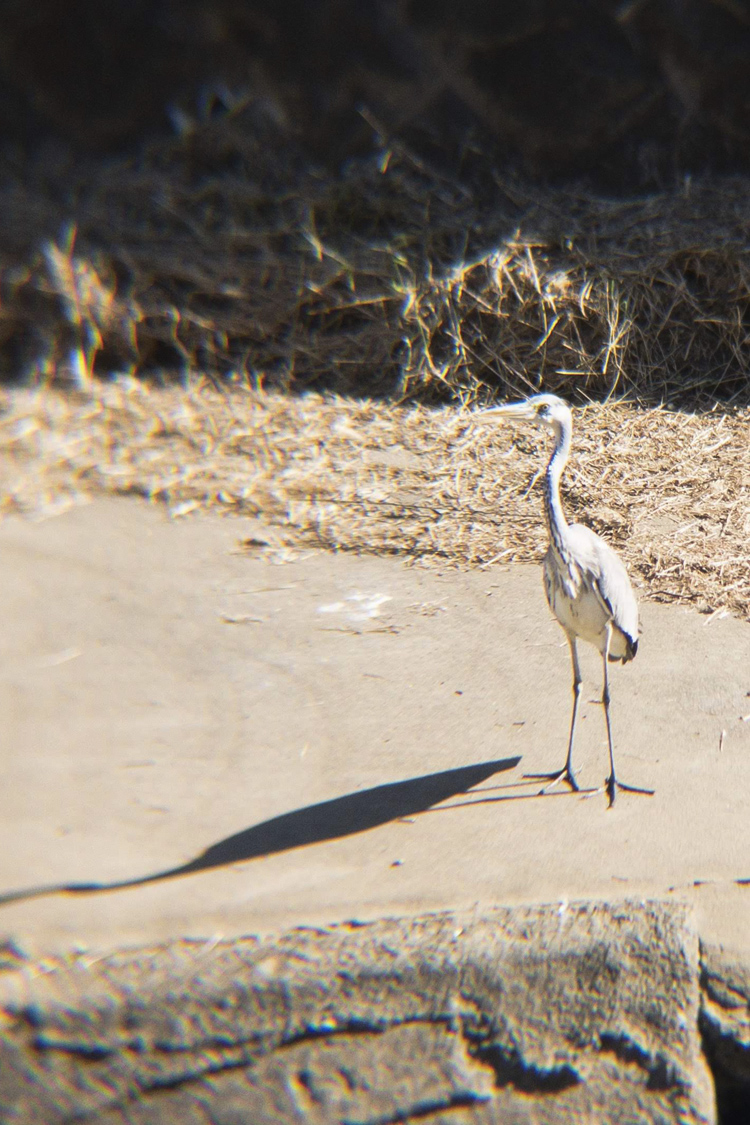
While flying, it folds its long neck into an S-shape. On sunny days, it can be seen standing still on stones along the river to sunbathe.
Foraging Using Weirs
I have often observed them waiting at weirs for fish attempting to jump upstream. They skillfully catch and eat the fish that leap out of the water.
Grey Heron Information
Naming
The scientific name "cinerea" means "ash-colored," derived from the species' color. The English name follows the same logic. The Japanese name "Ao" does not simply mean blue; it carries the nuance of a "pale, blueish-grey."
Grey Heron Found Locations
Asa River, Hachioji City
I discovered one eating small fish along the Asa River. It was standing alone, slightly apart from a group of Great Egrets. It is wary and tends to fly away if approached within 15 meters. This particular individual seems to have recognized my face and is quite cautious around me. Sometimes, it stays quiet under bridges with heavy traffic.
Grey Heron Video
Grey Heron is introduced by video.
Capturing and eating small fish leaping from the water.
Grey Heron Observation Log
These are the observation logs where we found Grey Heron.
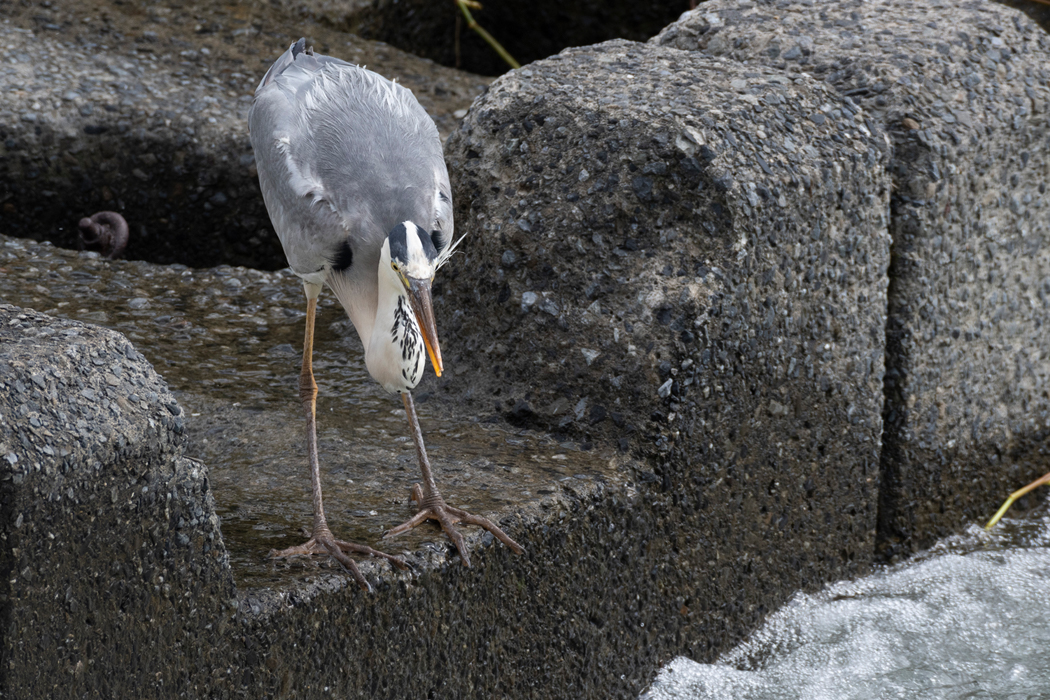
I saw Grey Herons and Great Egrets foraging around where the Hachiko Line crosses the Asakawa River. They were catching small fish using the steps.
Read more >
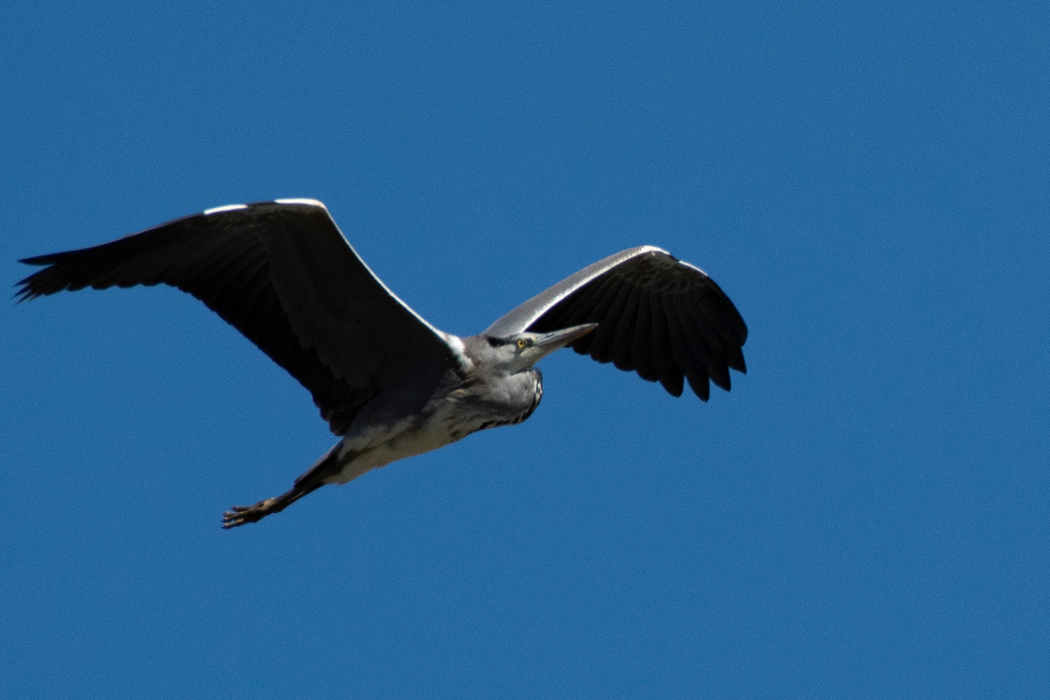
A Grey Heron was flying.
Read more >
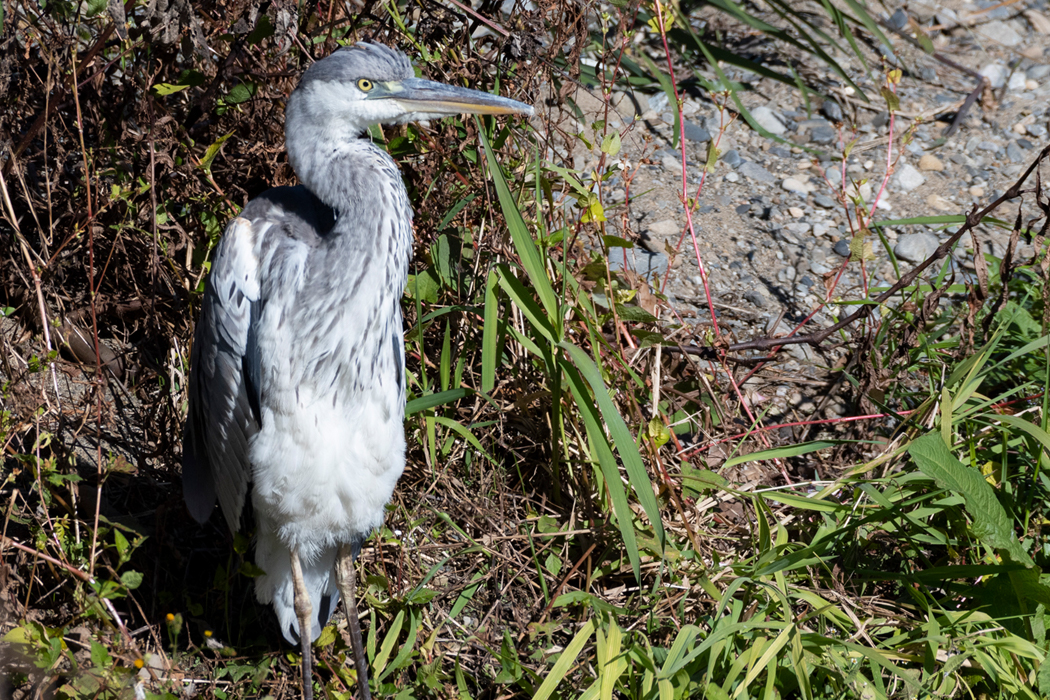
A young grey heron was hunting for food on the riverbank.
Read more >
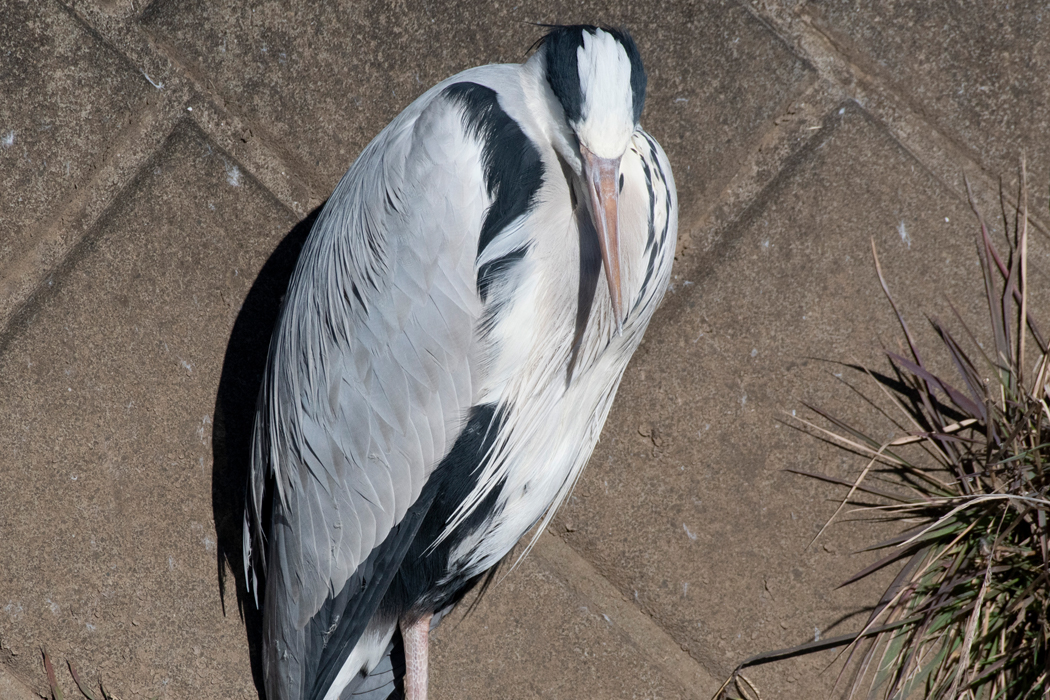
A Grey Heron was taking a nap.
Read more >
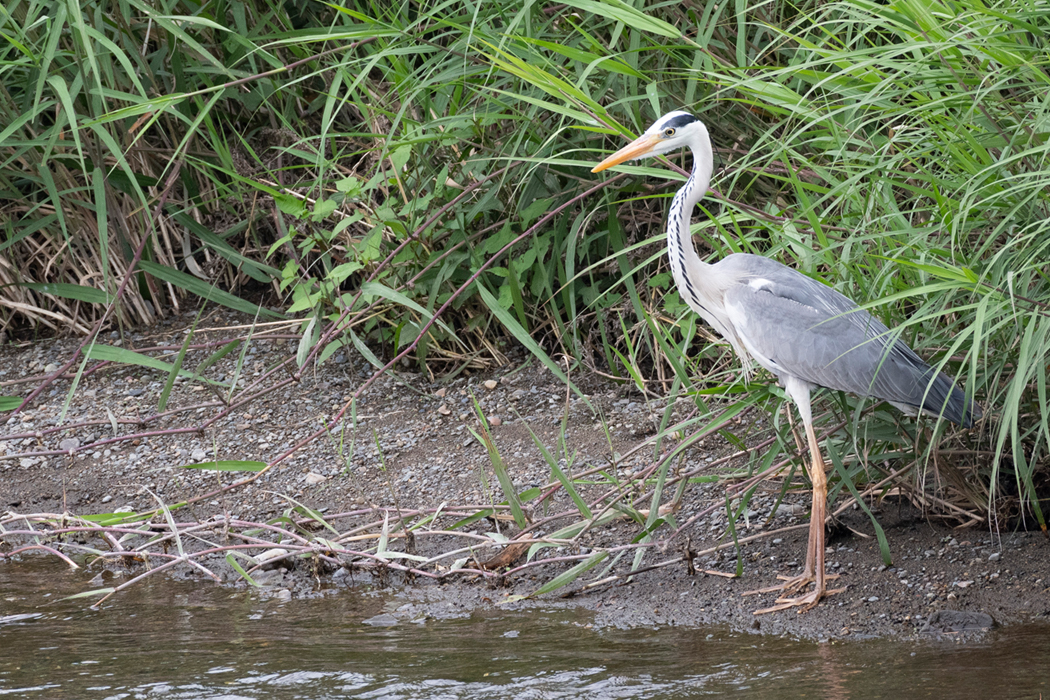
A Grey Heron was hunting for food on the riverbank.
Read more >
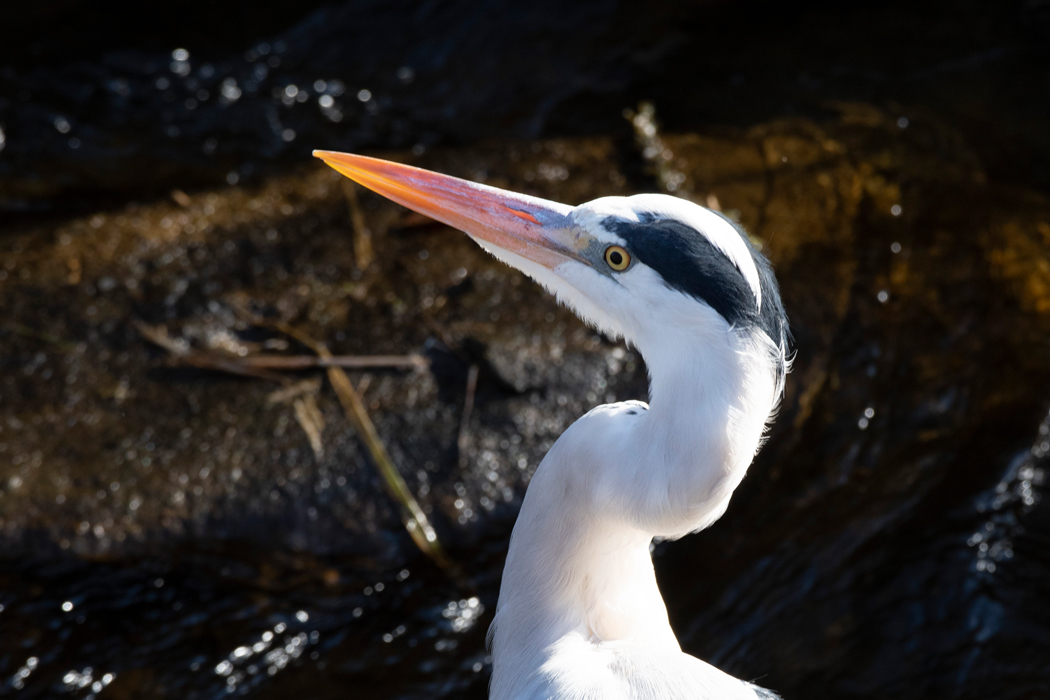
A grey heron was leisurely foraging.
Read more >
Picture book
Flings opponents with immense strength and a large horn....... Read more
White body with red irises....... Read more
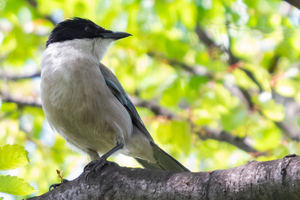
Characterized by a distinctive "gyui-gyui" call....... Read more

Familiar butterfly with yellow wings....... Read more
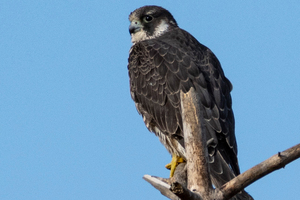
Swoop to catch prey....... Read more
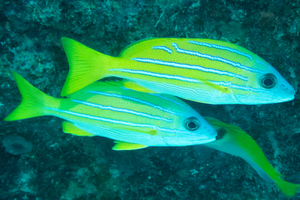
yellow body with 4 pale lines running...... Read more