Peregrine Falcon
| Scientific name | Falco peregrinus |
| English name | Peregrine Falcon |
| Japanese name | 隼 |
| Class | Aves |
| Order | Falconiformes |
| Family | Falconidae |
| Genus | Falco |
| Species | peregrinus |
| Subspecies | --- |
| Full length | 38-50cm |
| Distribution | distribution on the earth. |
Characteristics
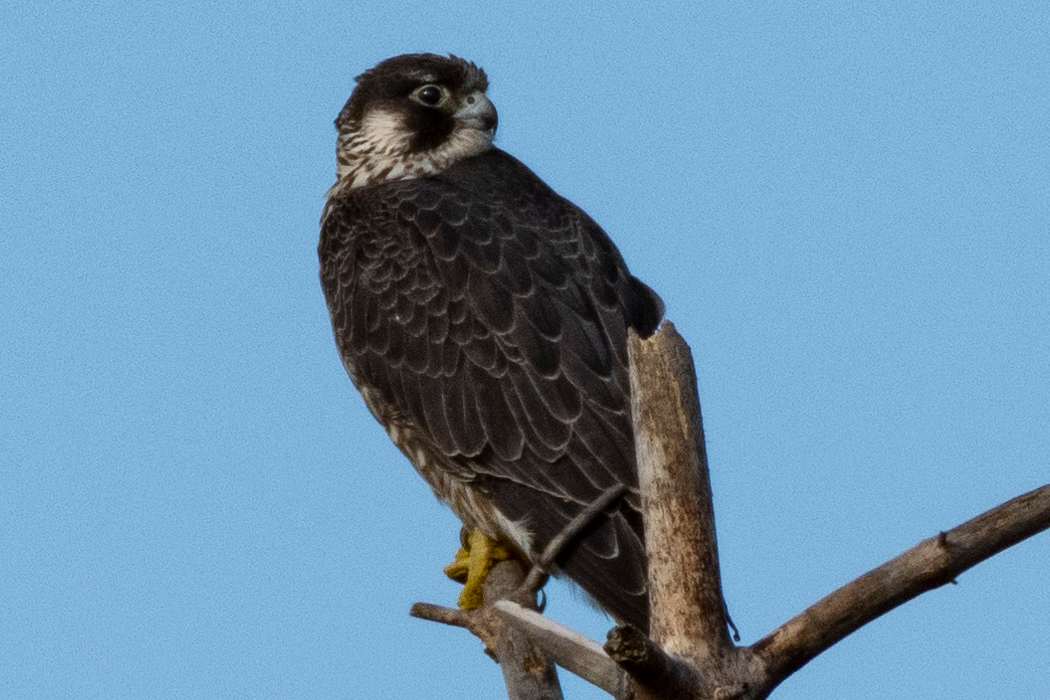
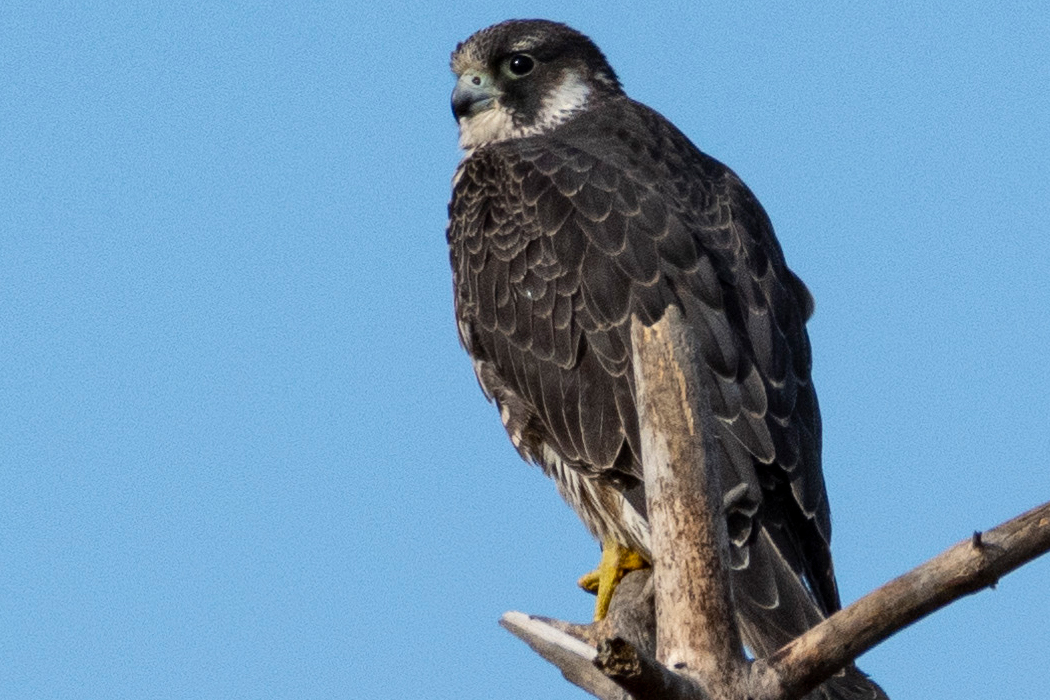
Dark brown from head to back, white from collar to throat. The legs are yellow and strong. The thorns are dark brown and light brown mottled.
The iris is black to dark brown with a nictitating membrane. The beak is lead-colored, darkening toward the tip, and is thick and short.
Males and females differ in size, with females being larger.
Ecology
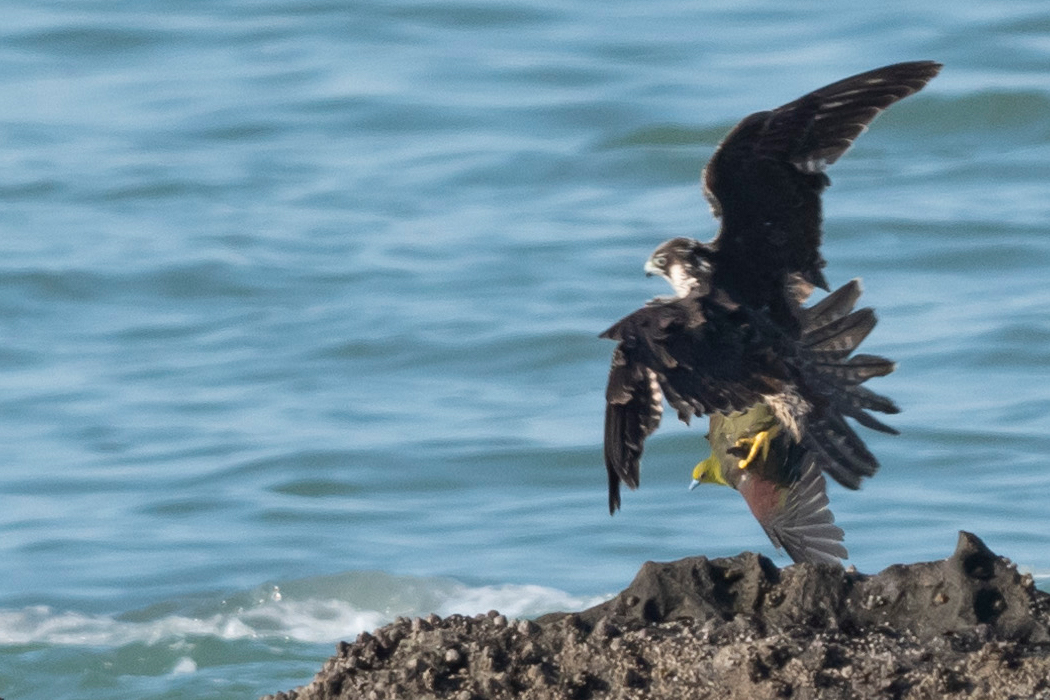
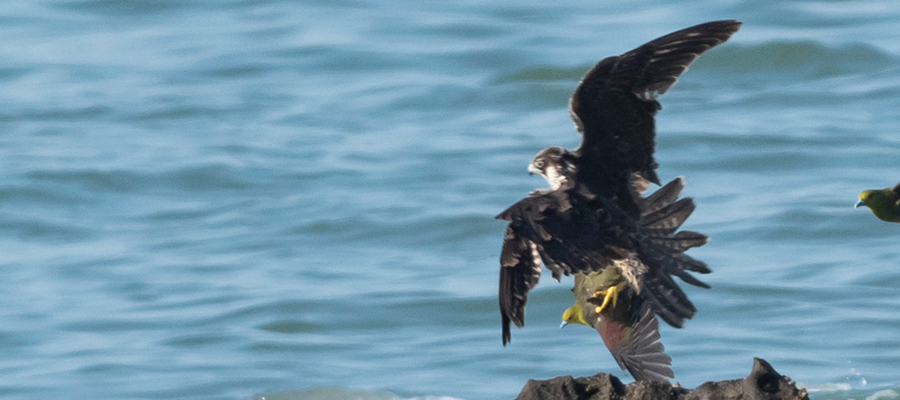
Found near coasts and rivers. They catch and eat small birds such as pigeons and sparrows. It swoops down from the air, approaches its prey, kicks it and catches it in an instant. The flight speed is said to reach 100km/h.
Habitat
Yoshida Beach, Miyagi Prefecture
I took a picture of it perched on a treetop along Yoshida Beach. He was preening his feathers, looking quite relaxed. It was like my favorite treetop.
Terugasaki Coast, Kanagawa Prefecture
When I was observing green pigeons on a rocky beach in September, a peregrine falcon rushed in from behind. Aiming at one bird and kicking it in the air, the next moment it caught it and flew far away.
Video
The video of Peregrine Falcon.
It was preening.
Pictures
Introducing a picture of Peregrine Falcon.