Azure-winged Magpie
Characterized by a distinctive "gyui-gyui" call.
| Scientific name | Cyanopica cyanus |
| English name | Azure-winged Magpie |
| Japanese name | 尾長 |
| Class | Aves |
| Order | Passeriformes |
| Family | Corvidae |
| Genus | Cyanopica |
| Species | cyanus |
| Subspecies | --- |
| Full length | 37cm |
| Distribution | East Asia and the Iberian Peninsula. |
Azure-winged Magpie Characteristics and Morphology
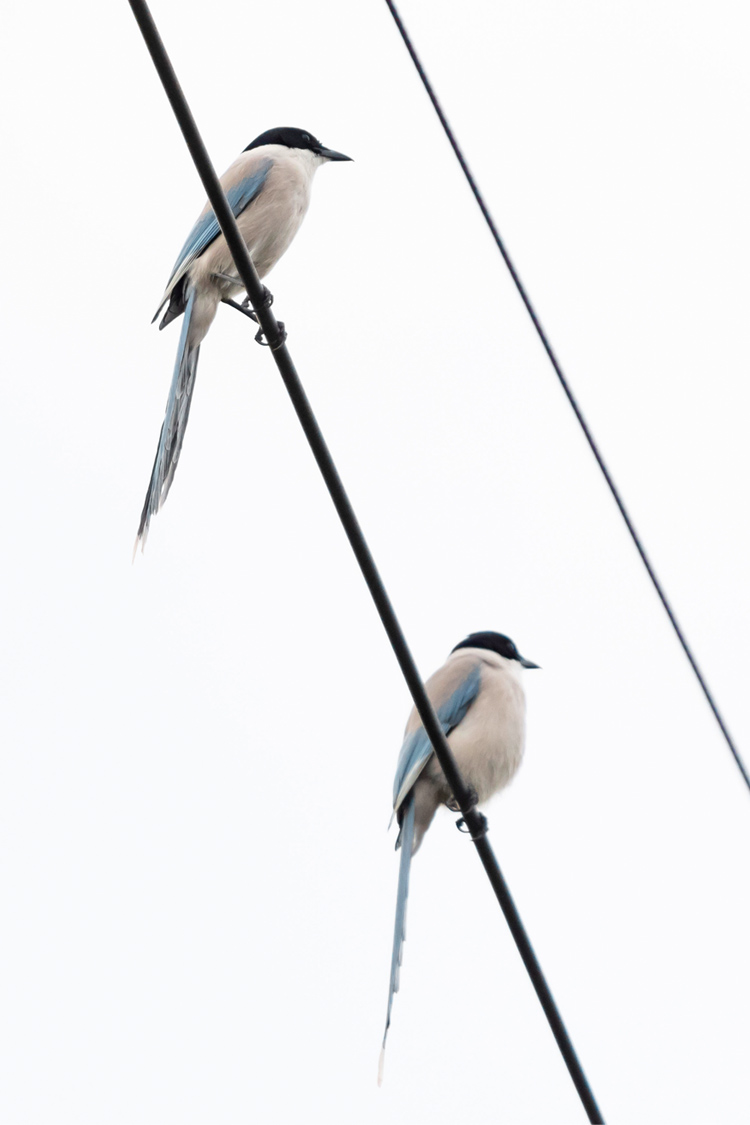
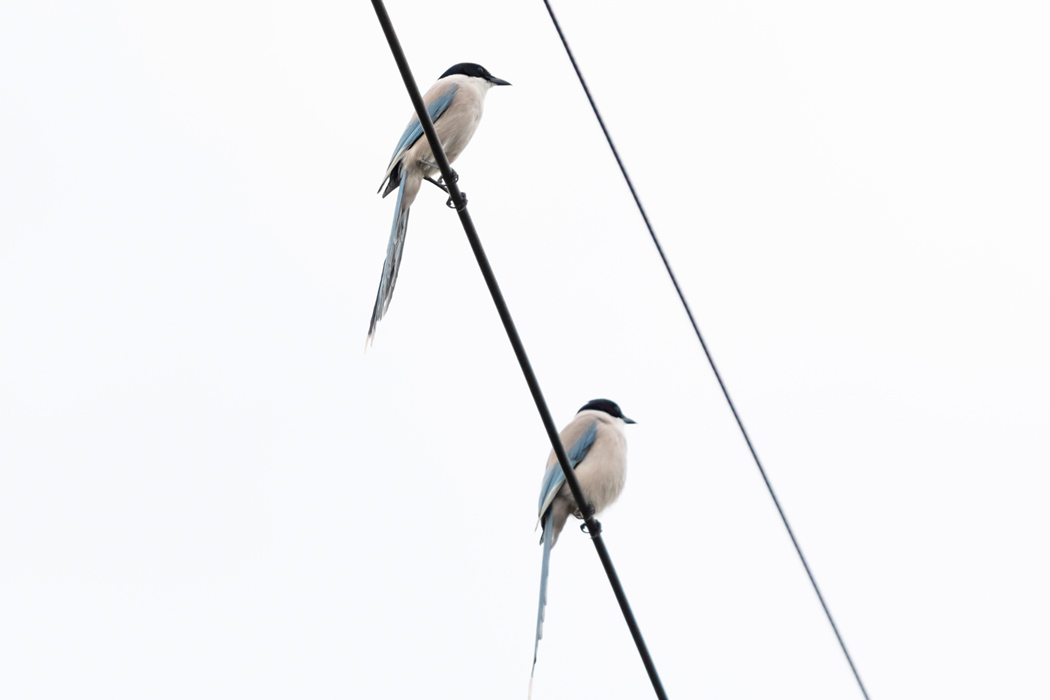
A silhouette characterized by a long tail on a body about the size of a starling. Males and females look the same.
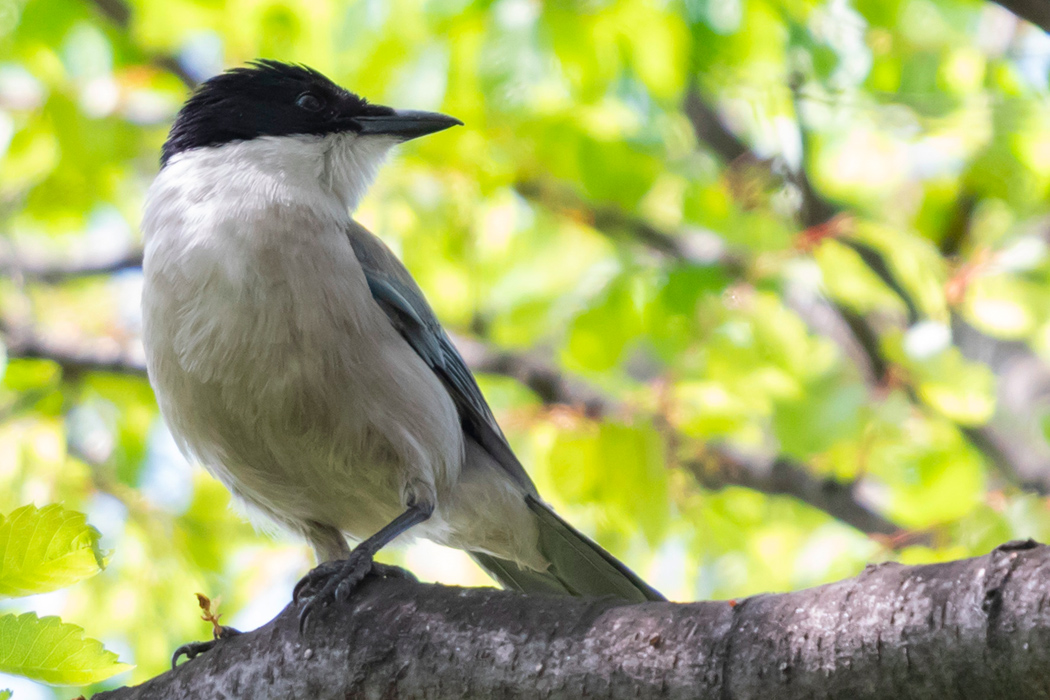
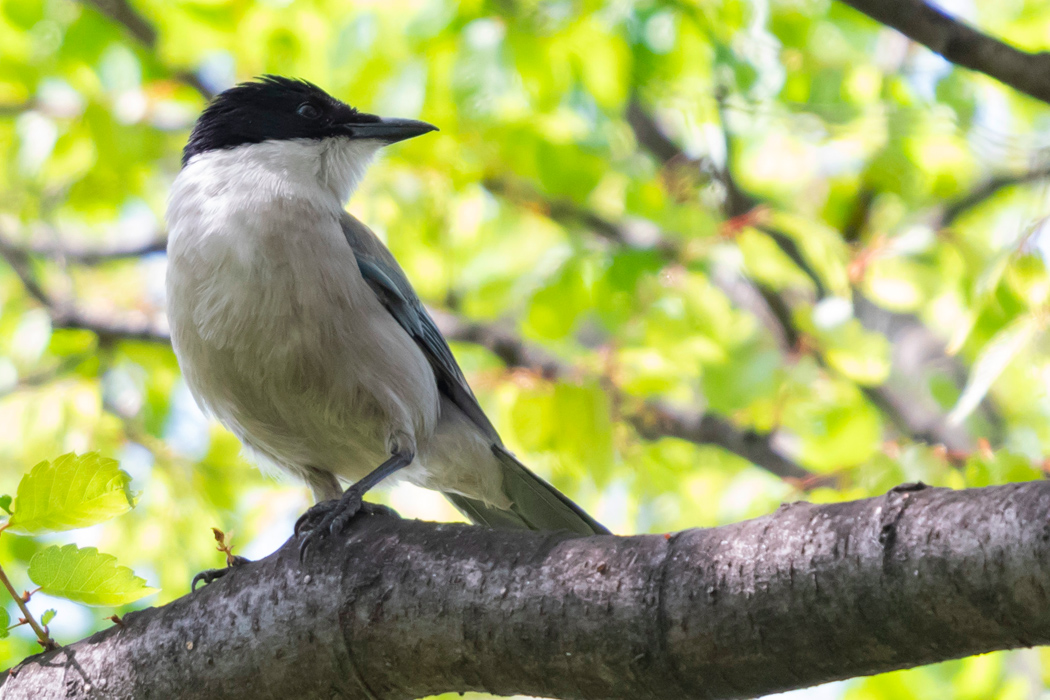
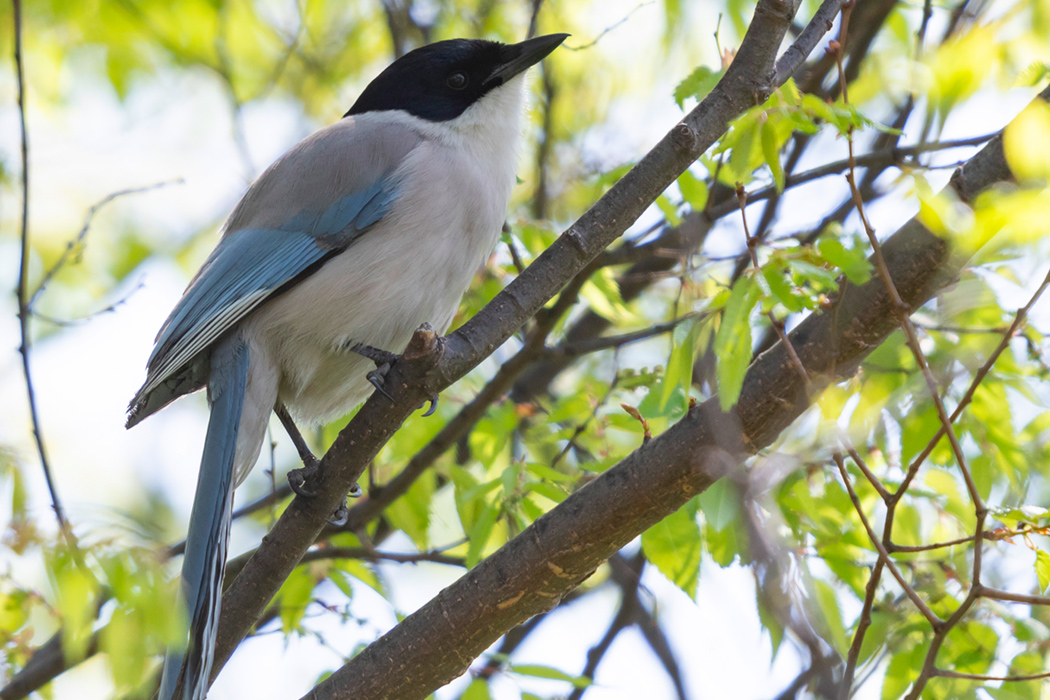
The head is round and black, looking as if it is wearing a helmet. The black part extends to just below the eyes, while the area from the cheeks down is white. The bill and iris are black.
The back is gray, and the tips of the wings are blue-gray. The belly is rounded and white.
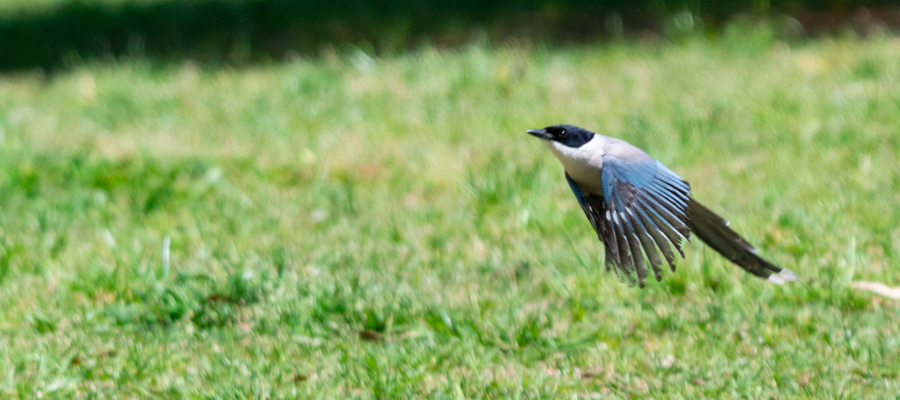
As the Japanese name "Onaga" (long tail) suggests, the tail feathers are long, sky-blue, and tipped with white. The legs are lead-colored.
Song
They call with a distinctive loud "gyui, gyui-gyui-gyui" sound. This harsh call is usually an alarm; when they do not feel threatened, they may make a softer "chupi-chupi" sound.
Azure-winged Magpie Ecology
Habitat
Resident birds that live in flocks in urban areas and groves near forests.
Food
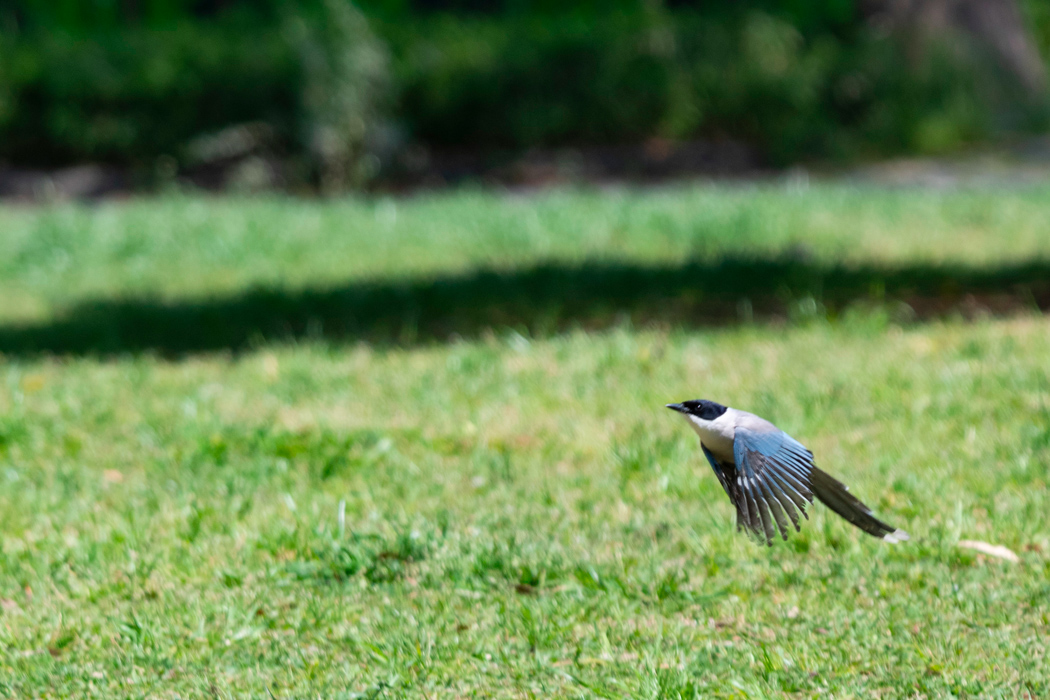
They search for insects and nuts while patrolling their living area. They look for food by moving back and forth between the ground and treetops.
Life Cycle
They act in flocks and practice communal breeding. Young males in the flock often act as helpers to assist other individuals in raising their young.
Azure-winged Magpie Photos
Azure-winged Magpie Photos are introduced.
Tap the photo to open the detail page.
Azure-winged Magpie Behavior
They search for food by moving between the ground and trees. The way they hop on the ground or call while moving is similar to crows. They stay alert to their surroundings and communicate with calls to fly up to high treetops when danger is sensed.
Azure-winged Magpie Information
Naming
The scientific name "cyanus" means "blue" or "cyan," referring to the bird's vivid sky-blue color. The English name "Azure-winged Magpie" refers to its sky-blue wings and its relationship to the crow family. The Japanese name "Onaga" literally translates to "Long Tail."
Azure-winged Magpie Found Locations
Sarue Onshi Park, Koto Ward
A flock was flying around Sarue Onshi Park in Koto Ward. While remaining wary of people, they descended to the ground to forage alongside starlings and thrushes. As the park became crowded around noon, the flock moved to another location while calling noisily. They perched in well-sighted trees like cherry and pine to observe the area, which made them easy to observe.
Azure-winged Magpie Observation Log
These are the observation logs where we found Azure-winged Magpie.
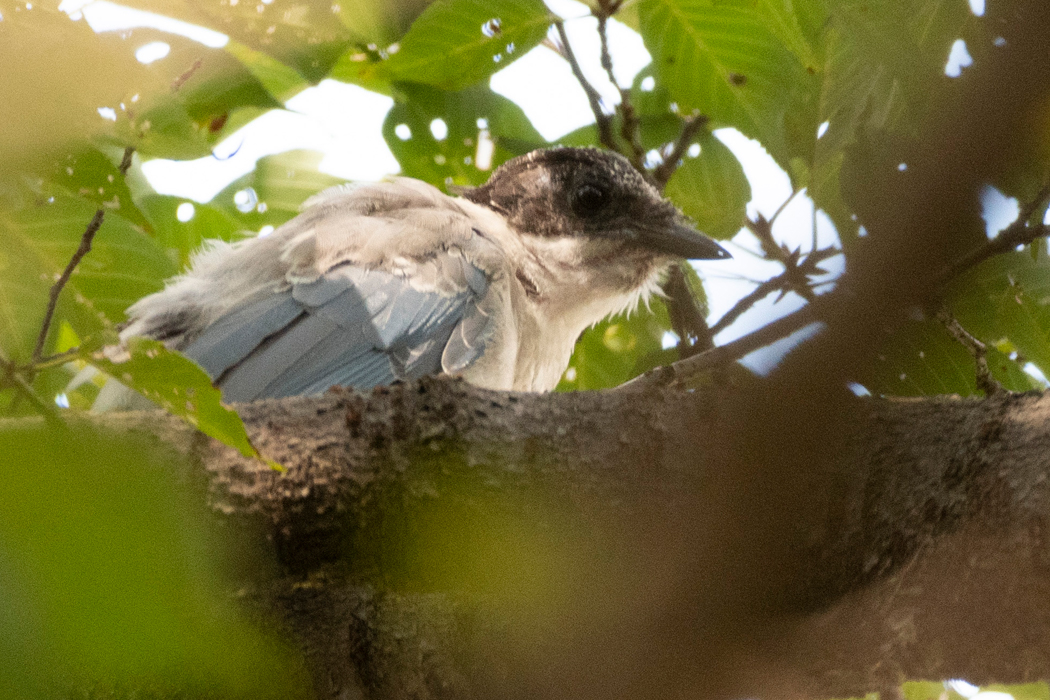
There was a small flock of Eurasian magpies at the edge of Katabira Castle Ruins Park. A juvenile with white feathers mixed in its head was catching and eating insects.
Read more >
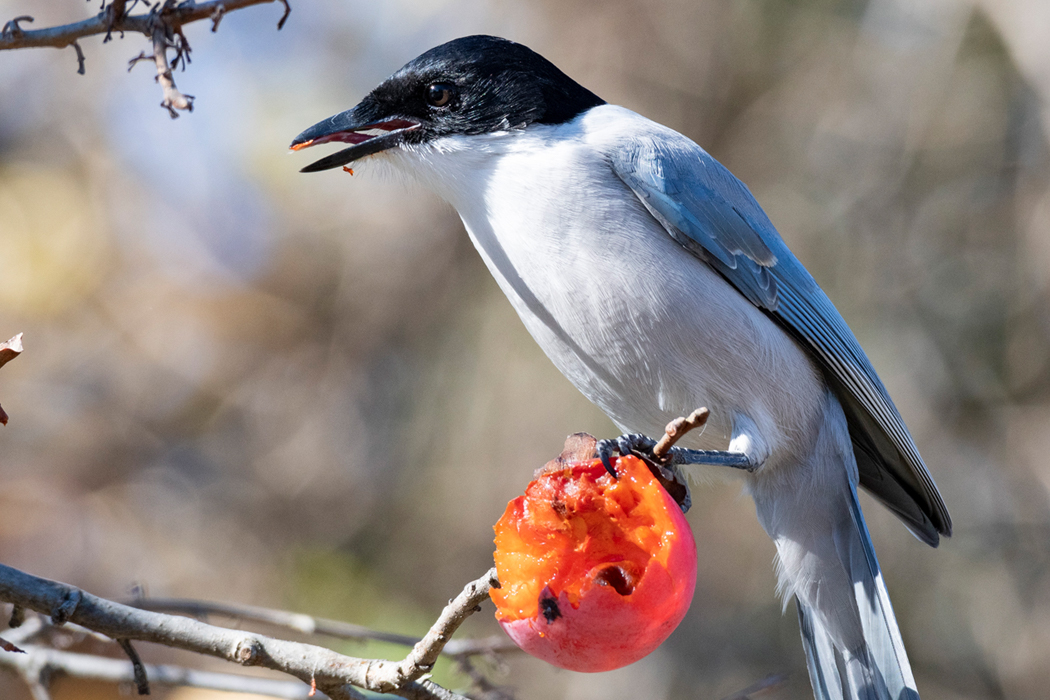
At the intersection after coming down from the park, there was a flock of nearly 20 Eurasian Magpies.
Read more >
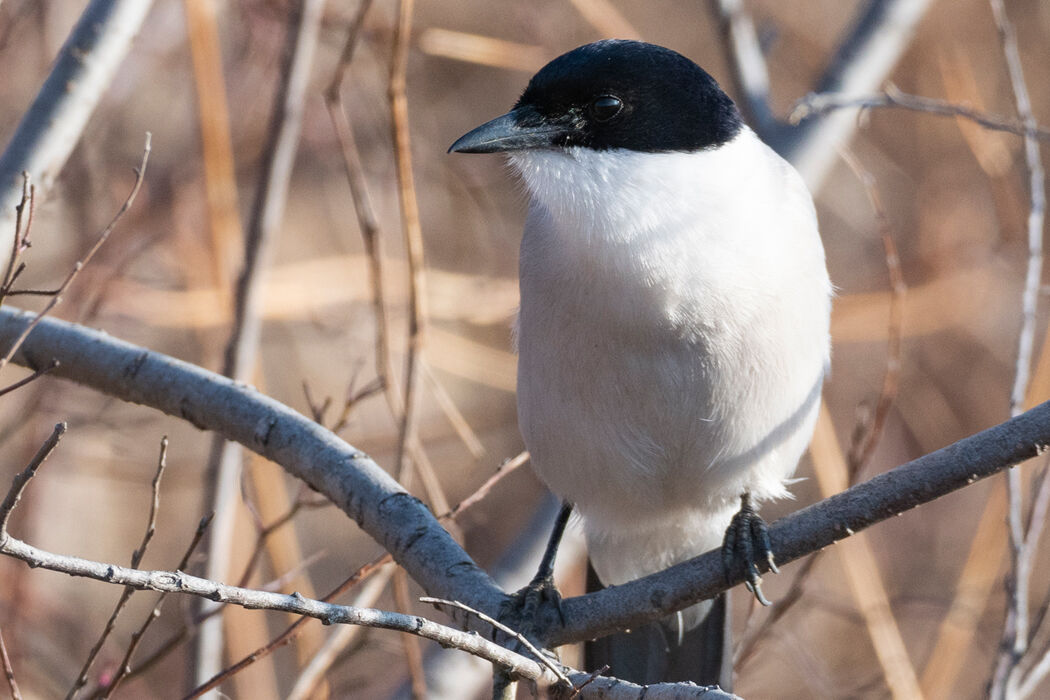
A flock of Eurasian Magpies was making a lot of noise.
Read more >