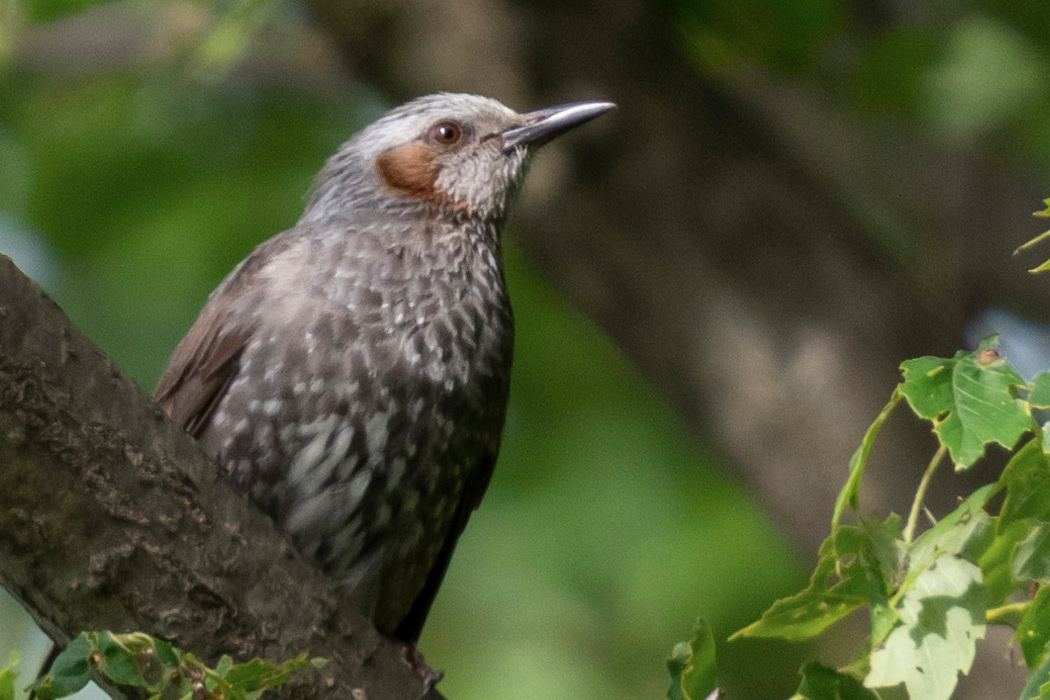
Brown-eared Bulbul
Calls with a "hiiyo-hiiyo" sound.
| Scientific name | Hypsipetes amaurotis |
| English name | Brown-eared Bulbul |
| Japanese name | 鵯 |
| Class | Aves |
| Order | Passeriformes |
| Family | Pycnonotidae |
| Genus | Hypsipetes |
| Species | amaurotis |
| Full length | 27-29cm |
| Distribution | From Sakhalin to the northern Philippines. Distributed throughout Japan as a resident bird. |
Brown-eared Bulbul Characteristics and Morphology
Larger than a starling, with a wingspan of about 40cm. The entire body ranges from gray to brown.
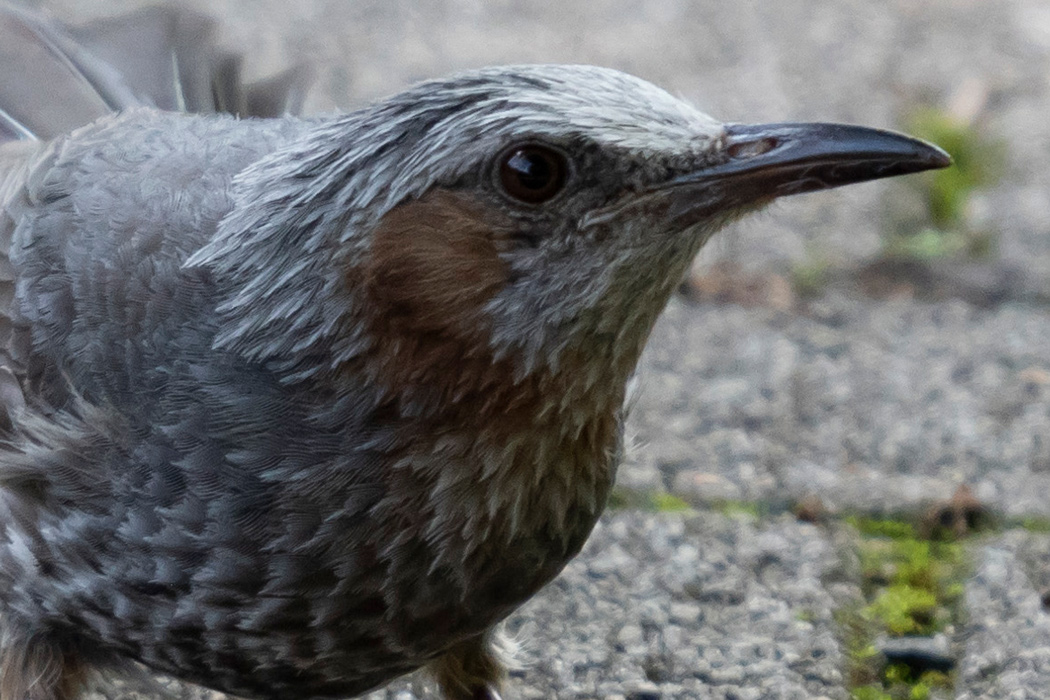
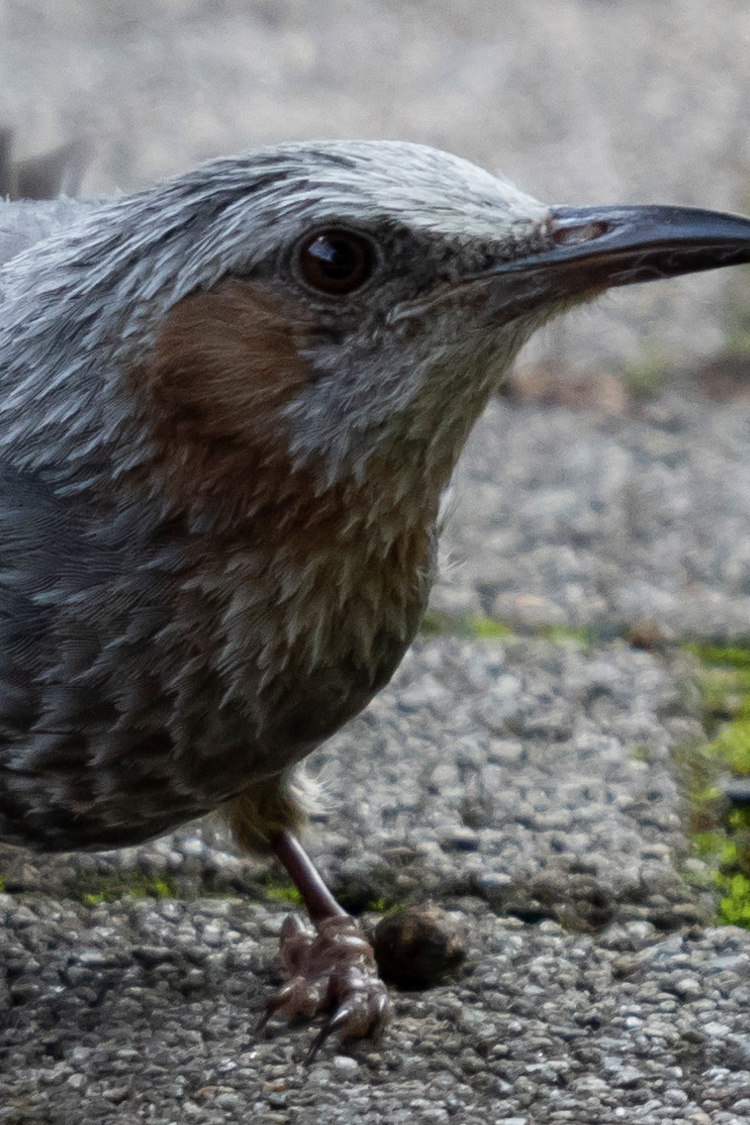
The feathers on the head are slightly jagged and upright. From the crown to the neck and throat is gray, while the cheek area is a reddish-brown. The bill is black, slender, and pointed.
The wings and shoulders are a darker gray than the head, becoming browner toward the tips of the wings.
The tail feathers are somewhat long, prominent, and dark brown. The belly is whitish. The legs are dark brown.
Juvenile
Overall color is closer to brown than gray.
The bill is close to a flesh color.
Song
As the Japanese name suggests, they call with a "hiiyo-hiiyo" voice. Besides this call, they make various sounds such as "pippiri" and "pippi-pippi."

Brown-eared Bulbul Ecology
Habitat
Commonly seen in urban areas and parks in Japan.
Food
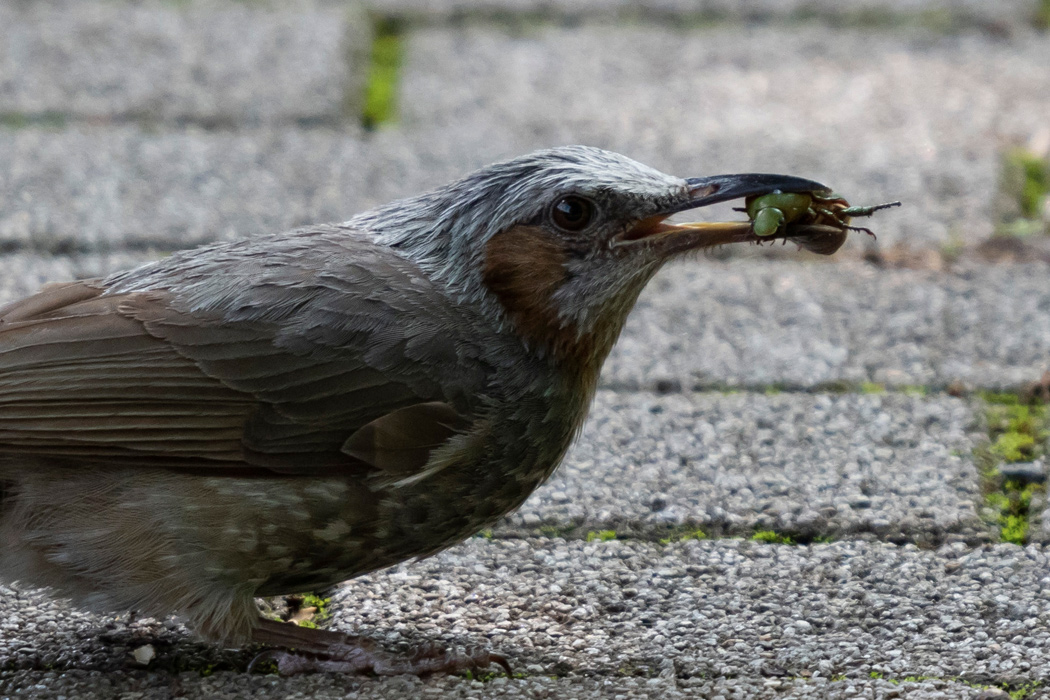
They prefer sweet things and eat flower nectar and fruit, but also commonly eat insects. In spring, they may consume large amounts of cherry blossom nectar.
Life Cycle
Monogamous, breeding from May until the end of summer. They migrate in groups in autumn. In some places, they can form large flocks of over 1,000 birds.
Brown-eared Bulbul Photos
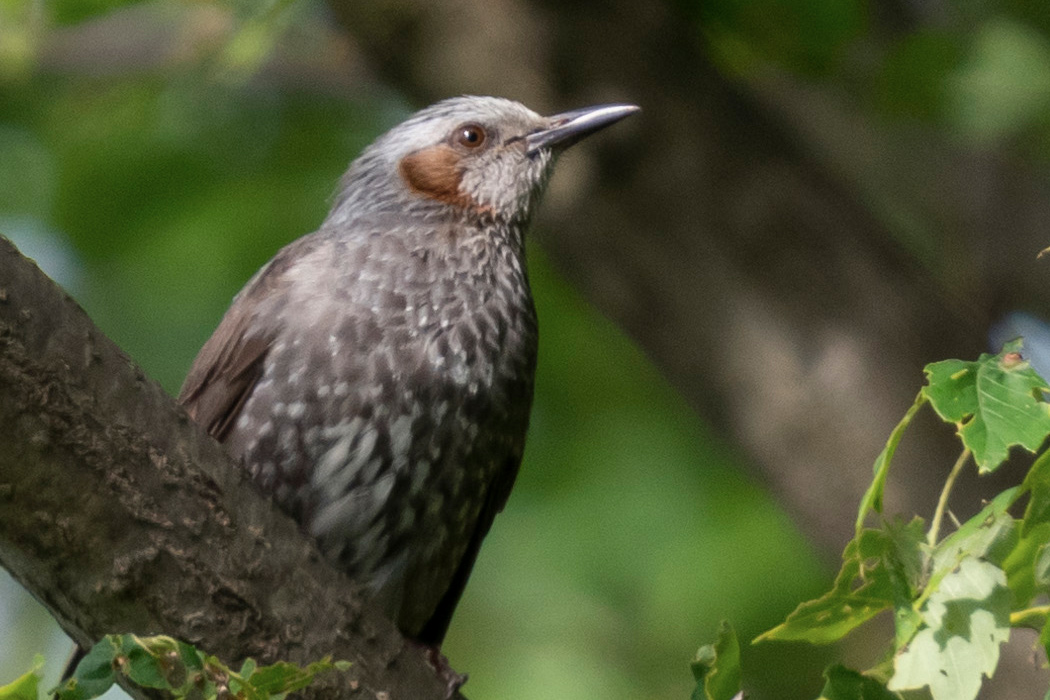
Brown-eared Bulbul Photos are introduced.
Tap the photo to open the detail page.
Brown-eared Bulbul Behavior
They have a characteristic flight pattern, repeating flapping and gliding to draw an undulating trajectory like a wagtail. When perched on a tree branch, their silhouette stands straight up, which differs from the slightly forward-leaning posture of a thrush. They act in small groups and can sometimes be seen chasing each other around in the woods in territorial disputes.
Brown-eared Bulbul Information
Naming
The scientific name "amaurotis" means "dark-colored ear," referring to the feathers from the cheek to the ear area being darker than the gray of the head. The Japanese name is thought to be related to its call "hii-hiyo." The English name "Brown-eared" also focuses on the feathers around the ears, similar to the scientific name.
Brown-eared Bulbul Found Locations
Hachioji City Komiya Park
Photographed on the outer path of Komiya Park in Hachioji City. It was preoccupied with a drone beetle on the ground. It skillfully used its slender bill to catch and swallow it whole.
While it is a bird seen so commonly it is overlooked, it is interesting to observe. They chase each other through the forest in fights, or fly off in groups in the morning from their roosting trees as if "commuting."
References
Picture book
Makes a "zee" sound....... Read more

Has a mesh-like pattern on its back....... Read more
The Japanese name comes from its bluish-gray color....... Read more

bright goldfish-like color....... Read more
Blue and yellow lines run....... Read more

Japanese endemic species living in mountain streams...... Read more