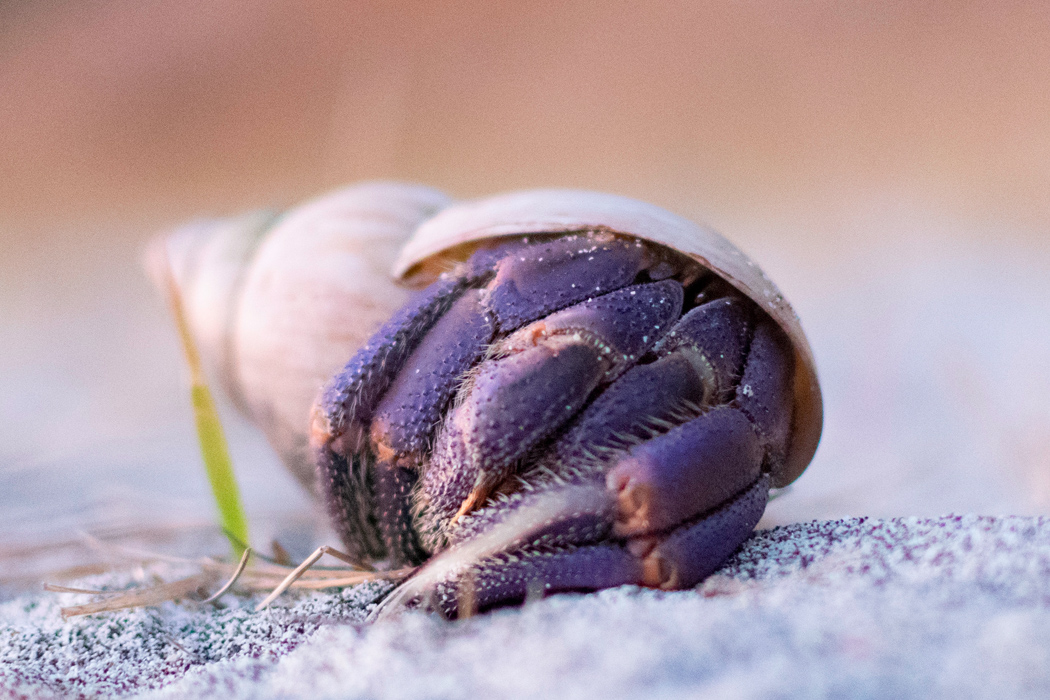
Coenobita purpureus
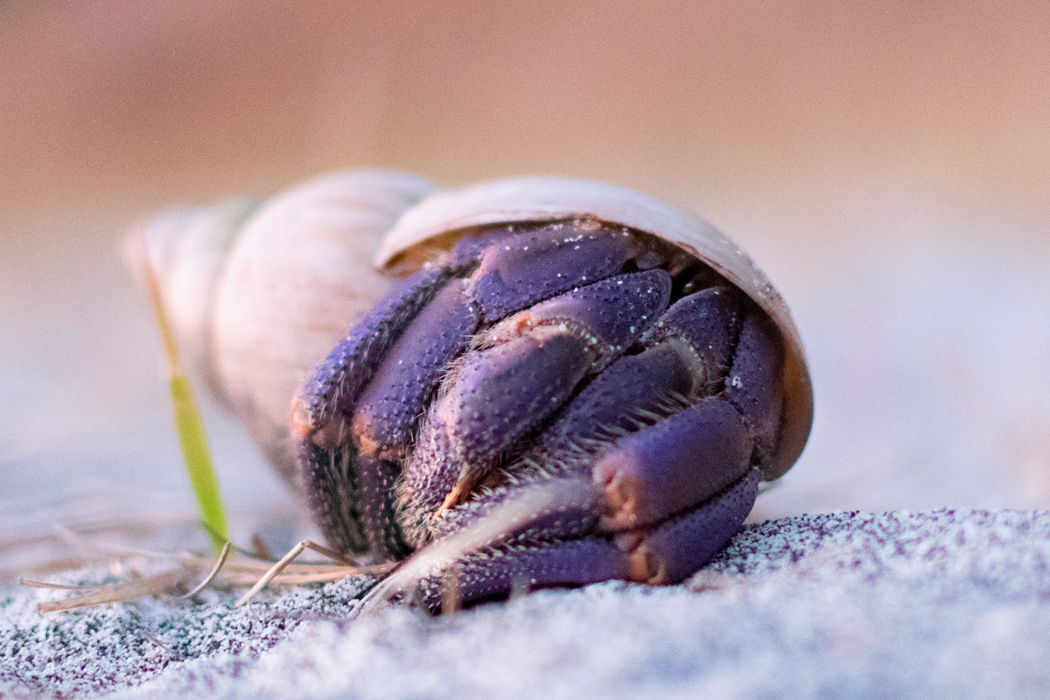
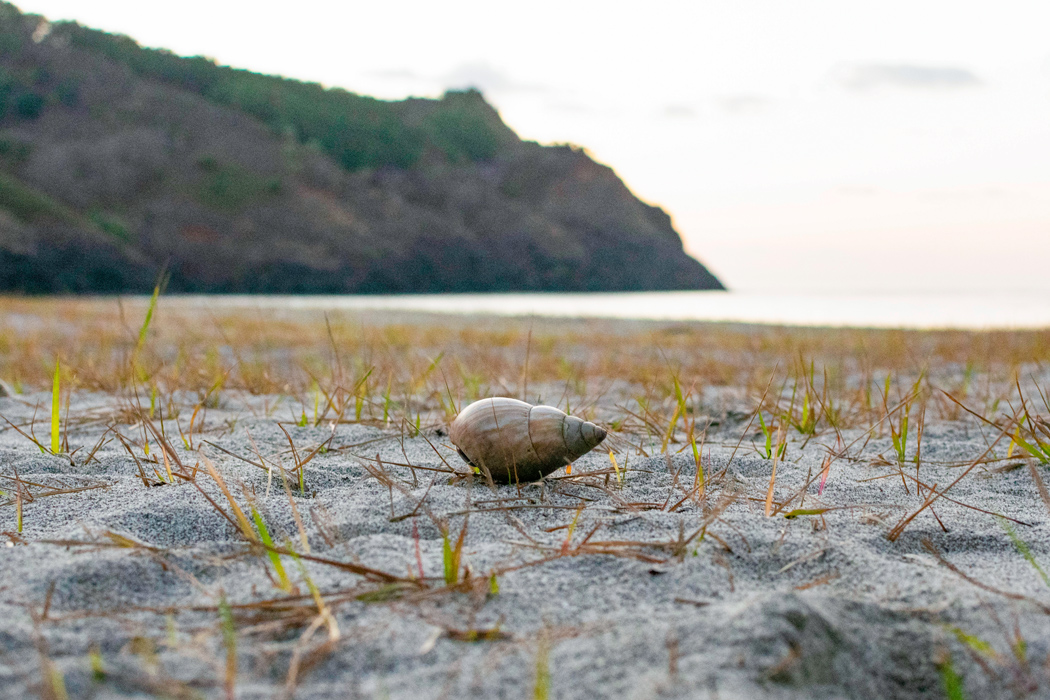
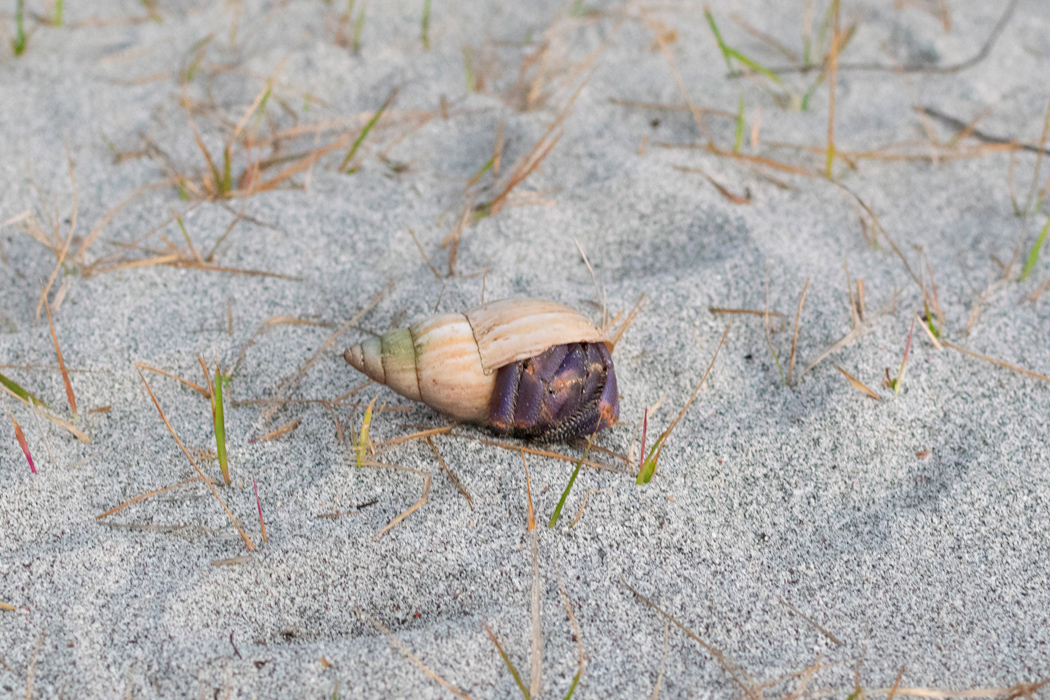
When alarmed, it tightly closes its purple legs.
| Scientific name | Coenobita purpureus |
| English name | Coenobita purpureus |
| Japanese name | 紫陸宿借 |
| Class | Malacostraca |
| Order | Decapoda |
| Family | Coenobitidae |
| Genus | Coenobita |
| Species | purpureus |
| Full length | Approximately 10cm |
| Distribution | Ogasawara Islands, south of Kagoshima. |
Coenobita purpureus Characteristics and Morphology
The body color is purple, and it mainly uses shells such as gastropods as its dwelling.
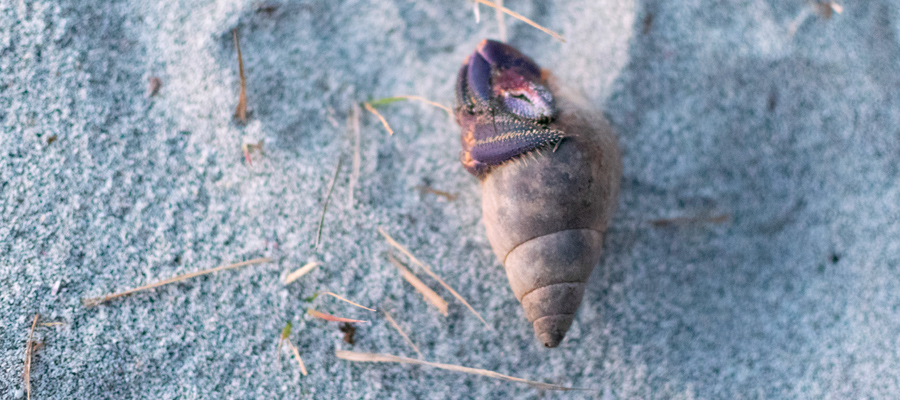
Coenobita purpureus Ecology
Habitat
Inhabits tropical coasts and forests near the sea.
Food
Eats anything, including seafood and plants.
Life Cycle
The breeding season is from May to August, and they lay eggs on the water's edge. The larvae spend their lives as plankton in the sea before finding a gastropod shell and coming ashore. They grow larger by molting repeatedly and are thought to have a lifespan of over 25 years.
Coenobita purpureus Photos
Coenobita purpureus Photos are introduced.
Tap the photo to open the detail page.
Coenobita purpureus Behavior
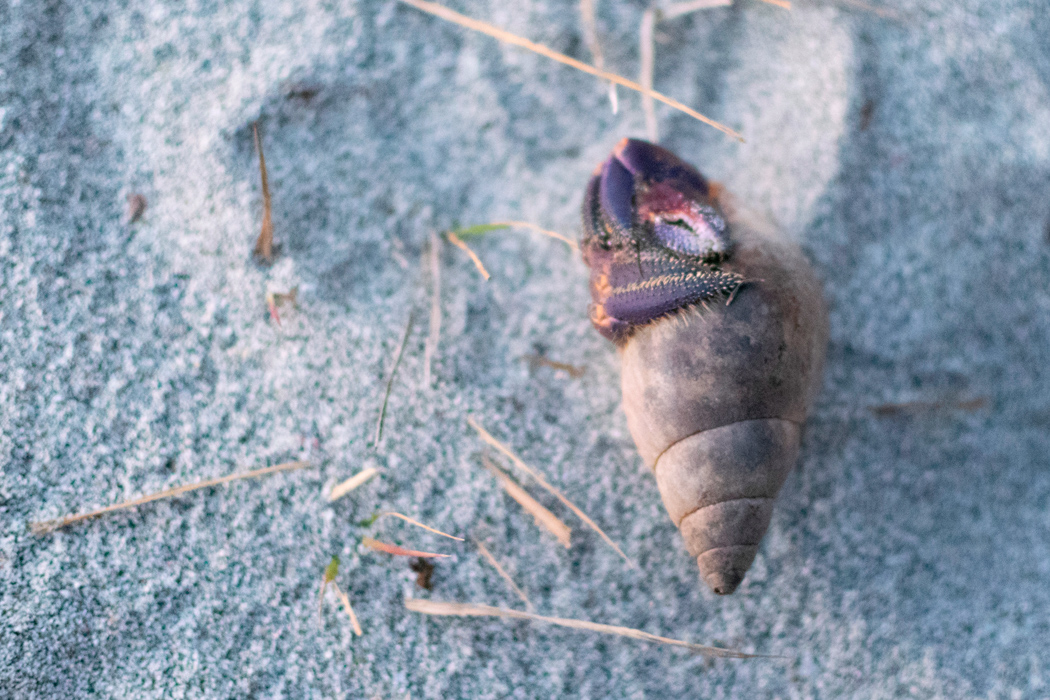
They store water in their shells to prevent drying out and live near the coast to replenish moisture. They are also good at climbing trees. When they feel threatened, they retreat into their shells and close their legs tightly, or they scratch their shells with their legs, making a creaking sound to intimidate.
Coenobita purpureus Information
A species of land hermit crab designated as a natural monument.
Coenobita purpureus Found Locations
Chichijima, Ogasawara Islands
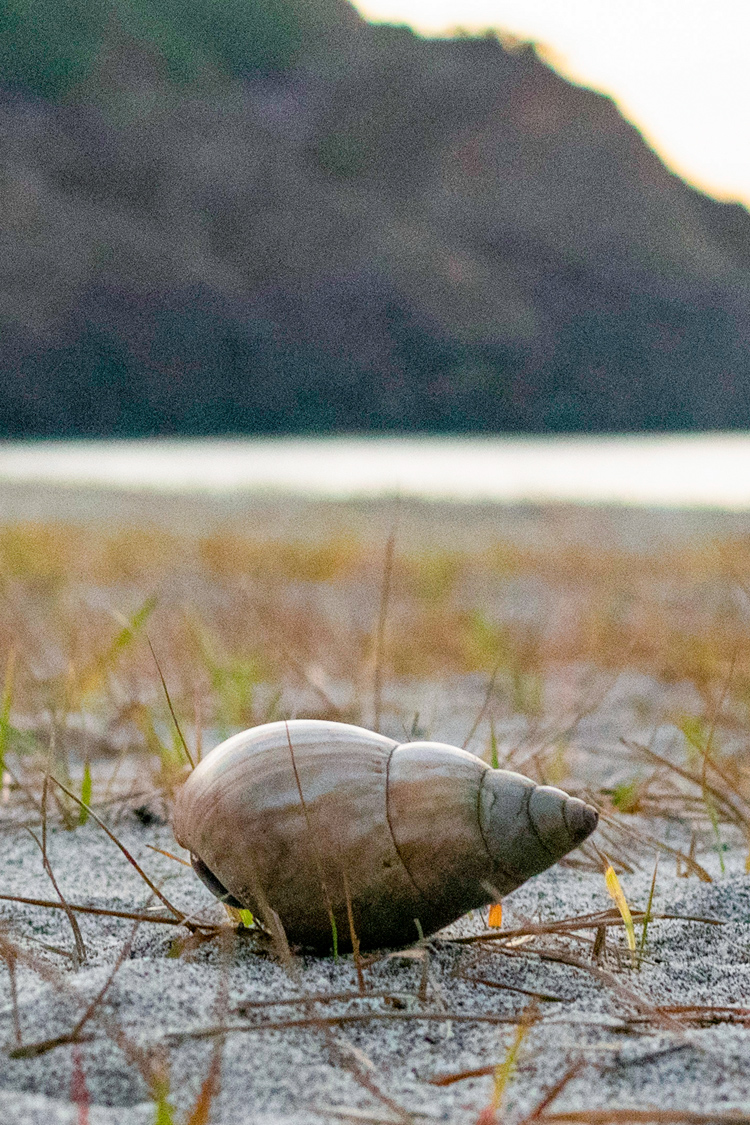
Discovered at Kominato Coast on Chichijima, Ogasawara Islands. While searching in the forest leading to the coast after hearing a rustling sound, I found a Coenobita violascens walking. I chased it to the beach to observe it closely, but it became wary and retreated into its shell. After about 10 minutes of silence, it opened its closed legs just a little.
There seem to be a certain number of land hermit crabs in the forest near the coast, and if you are quiet, you can hear the sound of them crawling on the ground.
Picture book
Reddish brown dotted line between the black lines....... Read more
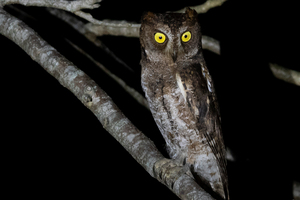
Insect-eaten patterns blending in with the trees....... Read more
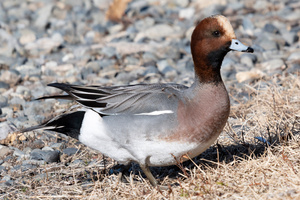
Cries with a whistle-like voice....... Read more
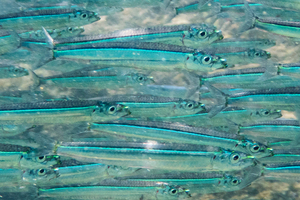
big-eyed sardines....... Read more
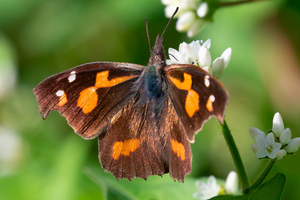
Characterized by a snout-like projection on its face, resembling a tengu (a long-nosed Japanese goblin)....... Read more
Known for its sharp calls from within thickets....... Read more