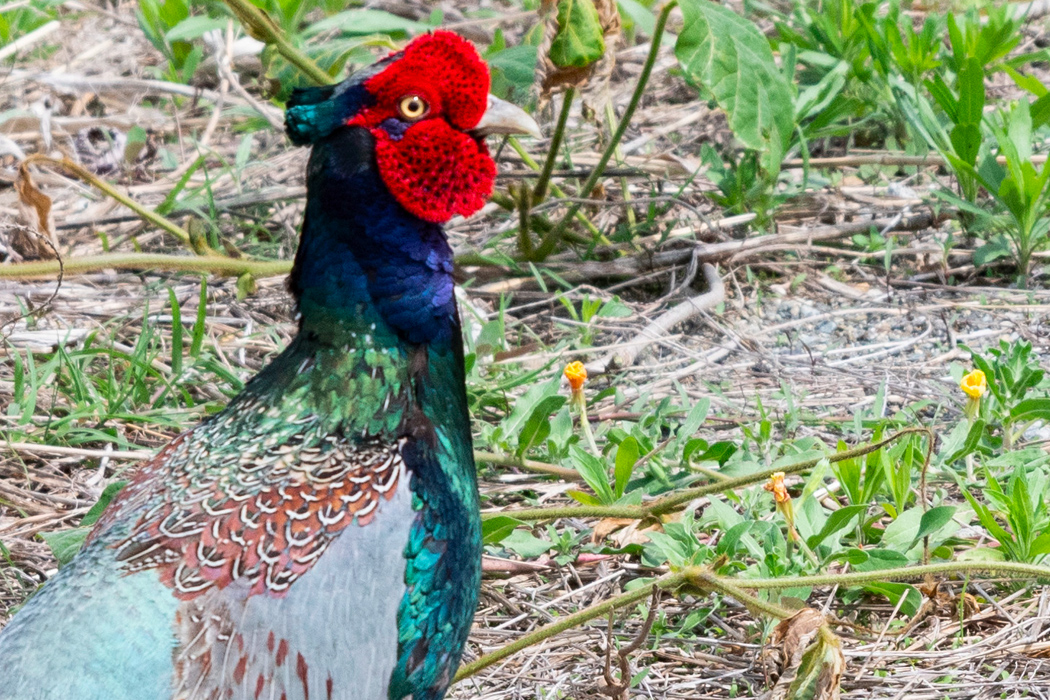
Common Pheasant
The national bird of Japan, also known from the tale of Momotaro.
| Scientific name | Phasianus versicolor |
| English name | Common Pheasant |
| Japanese name | 雉 |
| Class | Aves |
| Order | Galliformes |
| Family | Phasianidae |
| Genus | Phasianus |
| Species | versicolor |
| Full length | 58-81cm |
| Distribution | Honshu, Shikoku, Kyushu |
Common Pheasant Characteristics and Morphology
Males and females differ greatly in size and appearance. They have round, large bodies and long tails.
Male
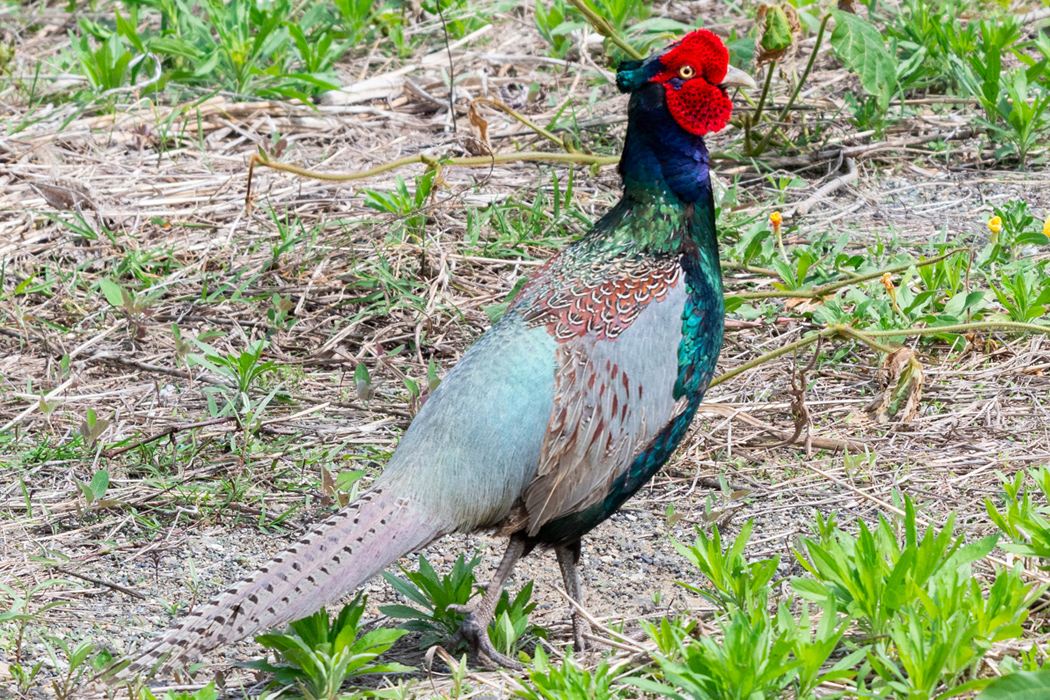
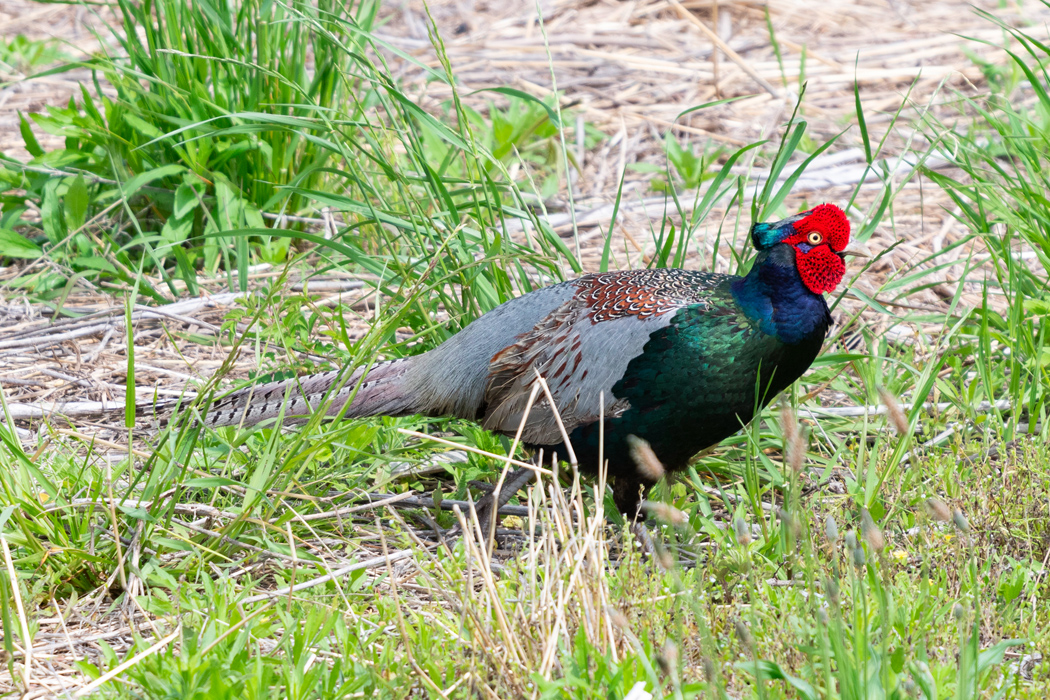
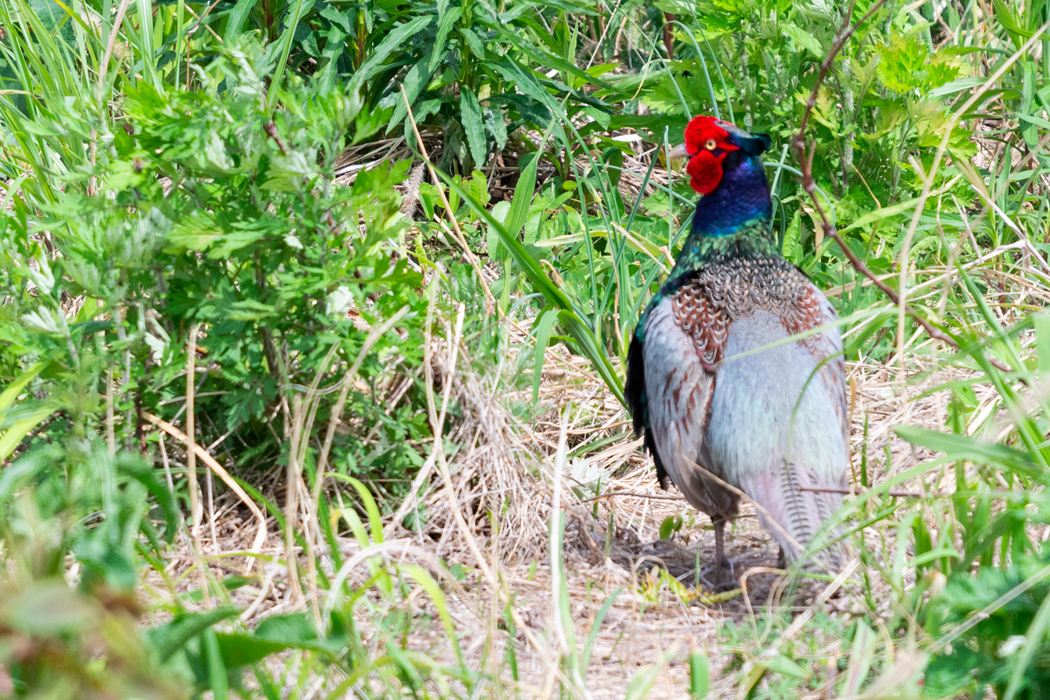
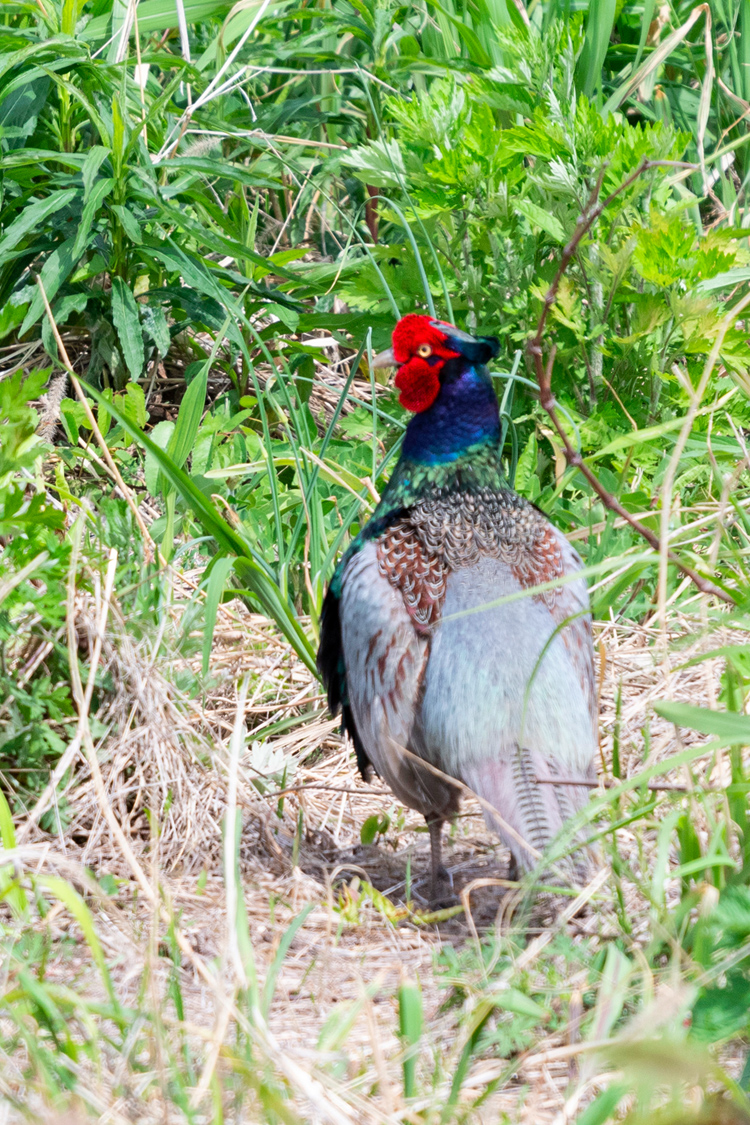
Males can reach a total length of about 80cm. Their entire body is colorful and beautiful.
The head appears red, but this is due to the wattles around the eyes. The color of the underlying feathers is blue-green. The iris is yellow. The beak is light brown, short, and sharp.
The throat is dark blue, and the body is green. Both colors are glossy. The wings are brown. The flight feathers have rows of white spots.
The tail feathers are long, with light brown ground and brown lines. The legs are gray, thick, and strong.
Female
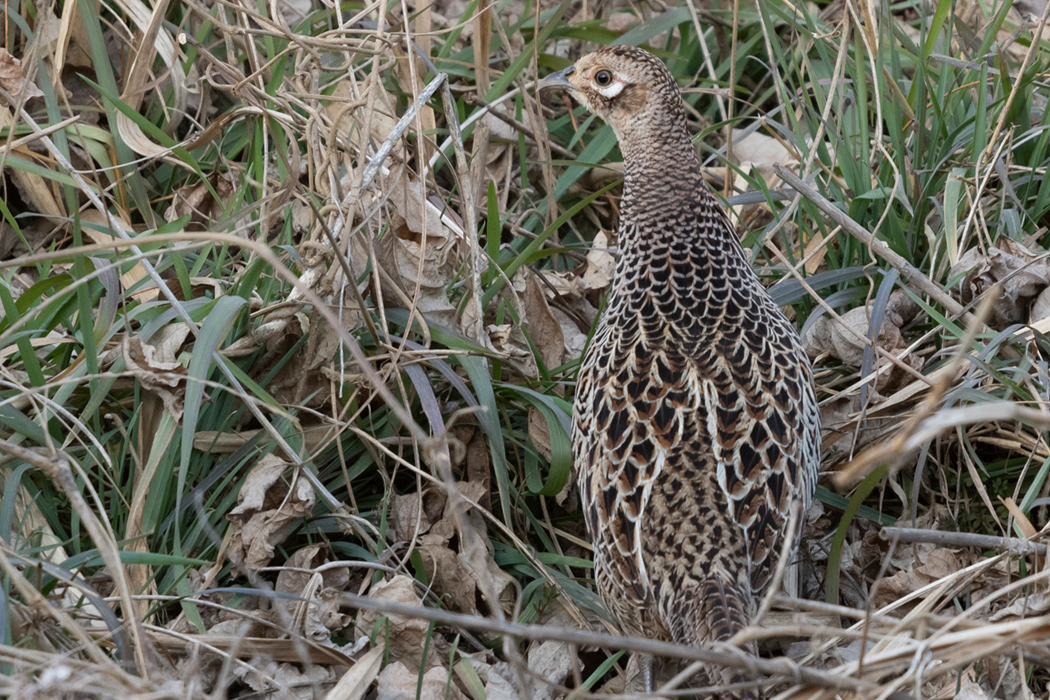
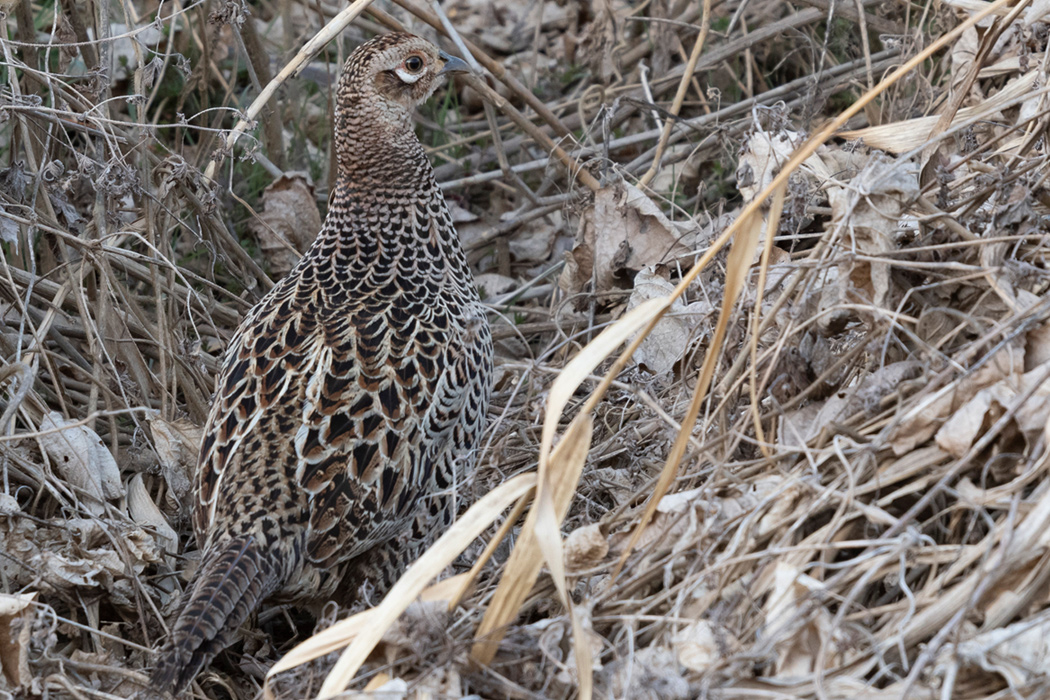
Females are smaller than males and are entirely brown.
The area around the eyes is bordered with light brown.
From the neck to the chest and back, brown feathers are arranged like scales.
The tail feathers are shorter compared to males.
Song
Their distinctive call is "kēēn kēēn," and this call is known as "horouchi."
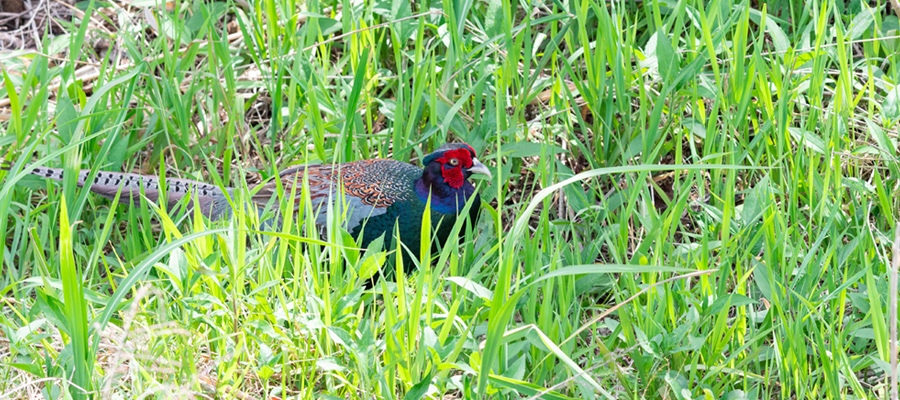
Common Pheasant Ecology
Habitat
They inhabit open areas such as forests, riverbeds, and agricultural land.
Food
They eat plants such as grass seeds and insects.
Life Cycle
During the breeding season, they mainly act in pairs, with the female raising the young. Polygyny may also occur.
Common Pheasant Photos
Common Pheasant Photos are introduced.
Tap the photo to open the detail page.

Common Pheasant Behavior
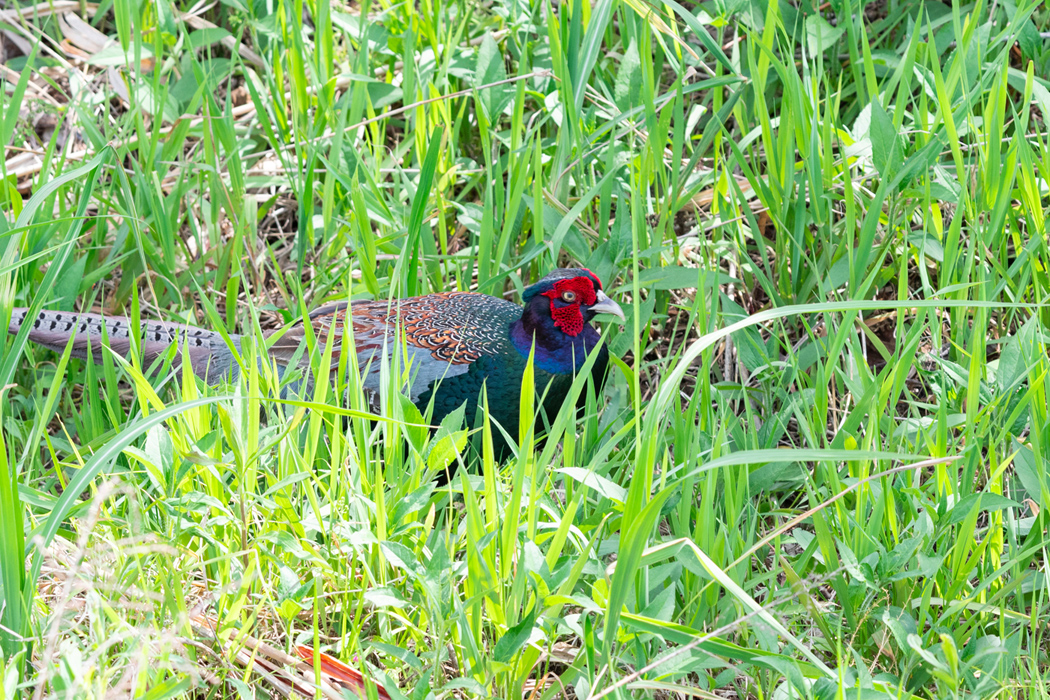
They occasionally cry out loudly with a "kēēn" sound to mark their territory. They are also known for an action called "horouchi," in which they strike their wings against their body to make a flapping sound. They usually move by walking, and run away when they feel danger.
Common Pheasant Information
Naming
The scientific name "versicolor" means "changing in color" and is derived from the appearance of the male, which has diverse colors.
It is a bird that has been familiar in Japan since ancient times and is designated as the national bird. It is also a game bird and is released every year. Released pheasants have leg bands.
Common Pheasant Found Locations
Asakawa, Hachiōji
I found it in the open riverbed of Asakawa. Since it is a relatively conspicuous bird, you can find it while riding a bicycle. It was searching for food while walking on the ground and occasionally calling out loudly. The male's territories did not seem to overlap, and they were spaced at equal intervals along the river. Even if you approach within about 10m, it does not immediately run away, but it runs into the bushes when it notices people.
Picture book
A brown line enters the eye vertically....... Read more
Black head behind the eyes....... Read more
Calls with a whistle-like voice....... Read more
The markings have a variety of patterns....... Read more

It peeks out of a hole in the reef....... Read more

Porcupinefish with short spines....... Read more