Asian ladybird beetle
| Scientific name | Harmonia axyridis |
| English name | Asian ladybird beetle |
| Japanese name | 並天道 |
| Class | Insecta |
| Order | Coleoptera |
| Family | Coccinellidae |
| Genus | Harmonia |
| Species | axyridis |
| Subspecies | -- |
| Full length | 5-8mm. |
| Distribution | It can be found throughout Japan. |
Characteristics
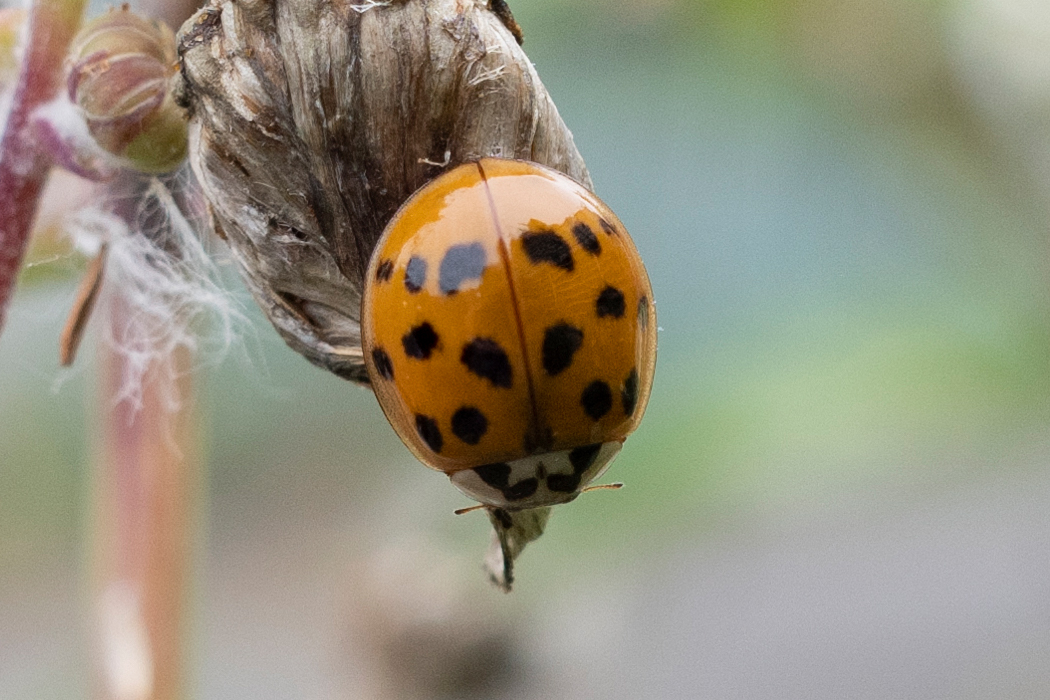
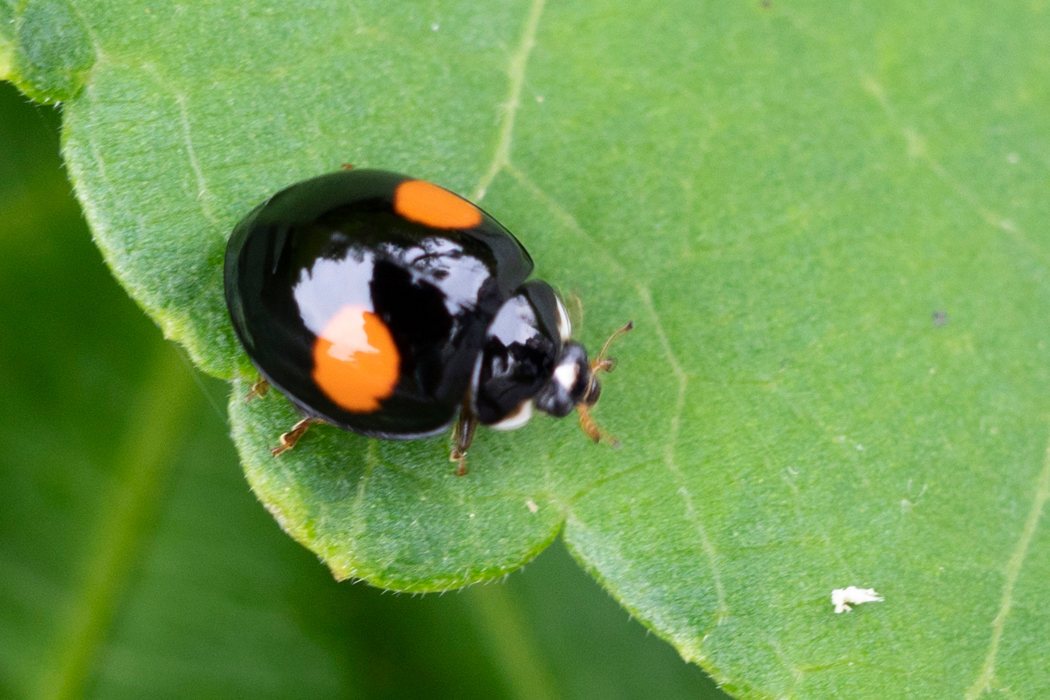
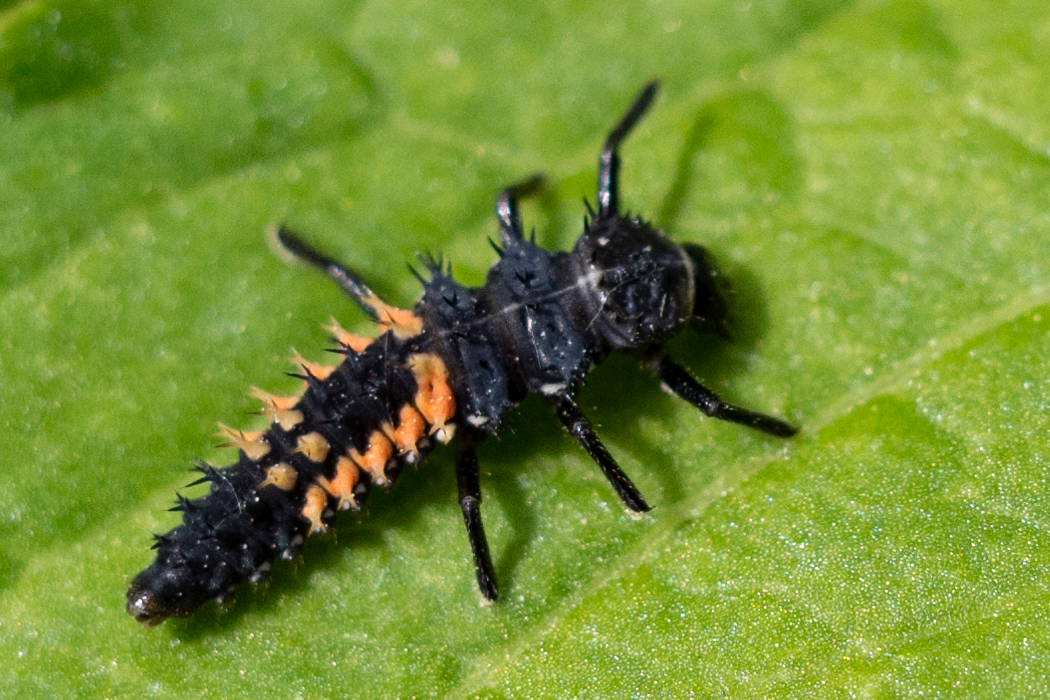
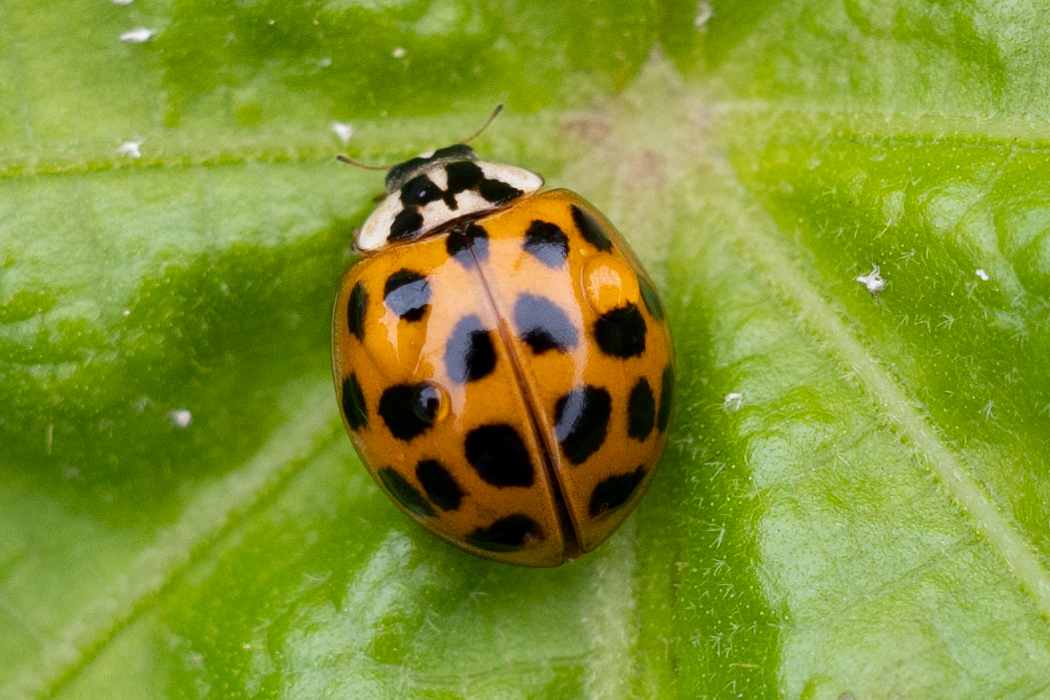
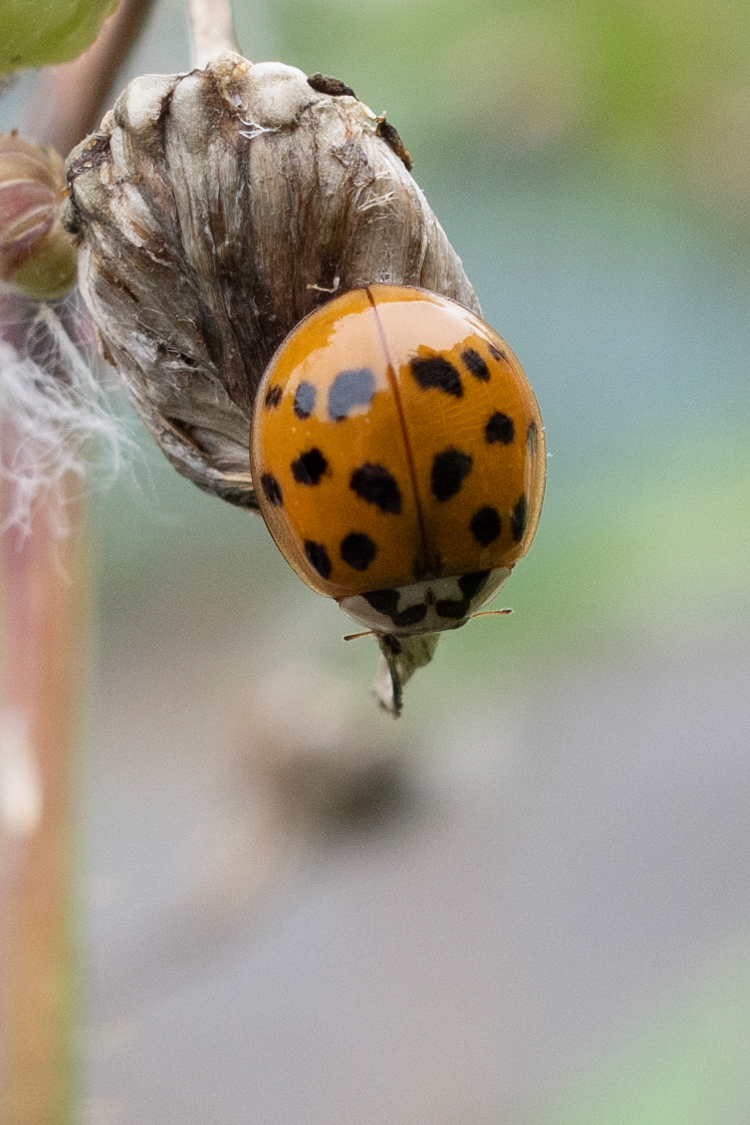
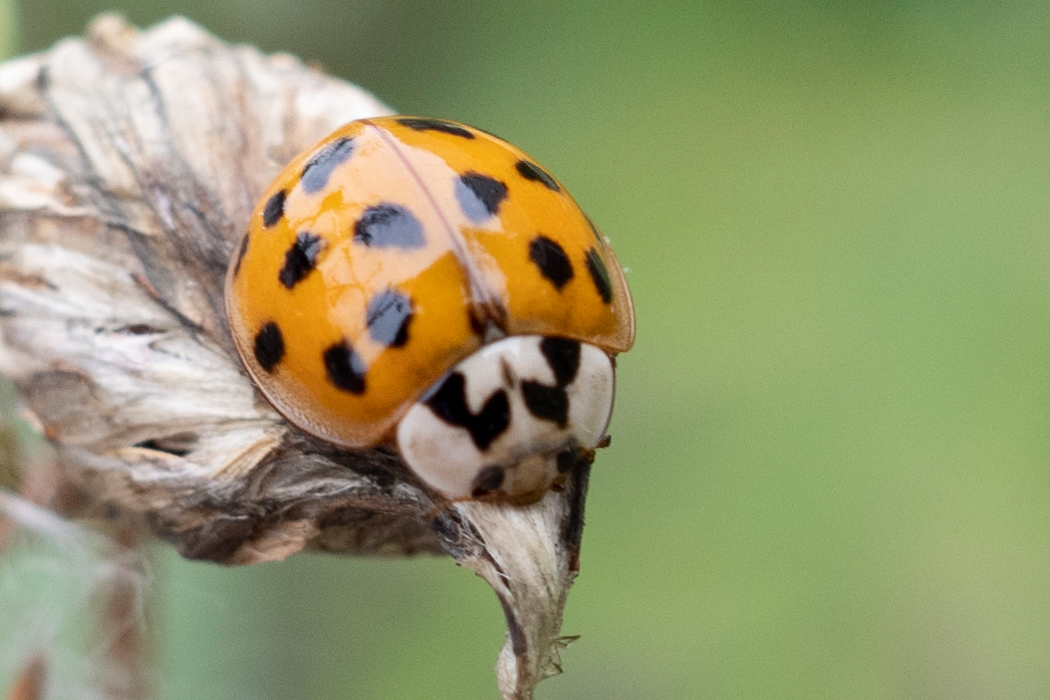
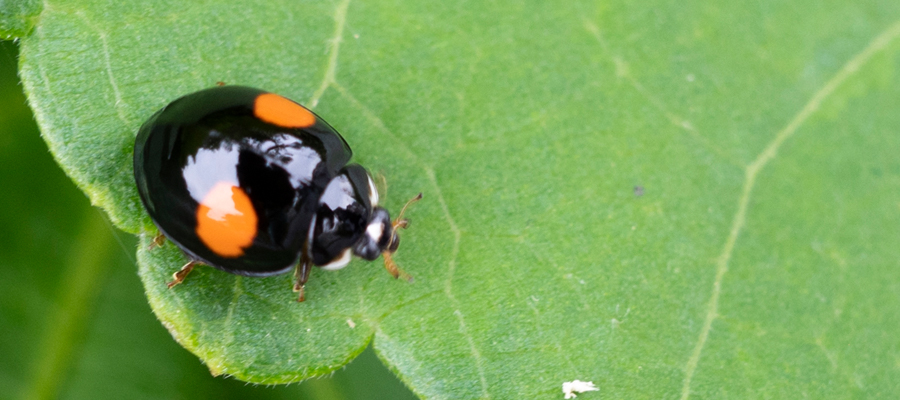
This ladybird has various marking patterns. There are many types, such as the red type, which has many black markings on an orange body, and the two-spotted type, which has two red markings on a black body. The size of the adult is almost the same as that of the seven-spotted ladybird, and they are seen in similar places. The larvae are black and become slightly thinner towards the tip of the abdomen. The difference between the larvae of the seven-spotted ladybird and the seven-spotted ladybird is that the pattern on the orange part is connected.
Ecology
Adults can be seen all over Japan from early spring. Both larvae and adults prey on aphids. They are often seen on the leaves of plants with aphids. In winter, the adults hibernate in groups.
Habitat
Grass along the Nambu Line
While walking along the Nambu Line, I came across a leaf with a red type and a two-spotted type on it, so I took a picture of it. The area was dominated by Sachiko Ladybirds rather than Seven-spotted Ladybirds. The Bingata individuals looked slightly orange.
Pictures
Introducing a picture of Asian ladybird beetle.