Japanese Green Woodpecker
Calls with a whistle-like voice.
| Scientific name | Picus awokera |
| English name | Japanese Green Woodpecker |
| Japanese name | 緑啄木鳥 |
| Class | Aves |
| Order | Piciformes |
| Family | Picidae |
| Genus | Picus |
| Species | awokera |
| Full length | 29cm |
| Distribution | Honshu, Kyushu, Shikoku |
Japanese Green Woodpecker Characteristics and Morphology
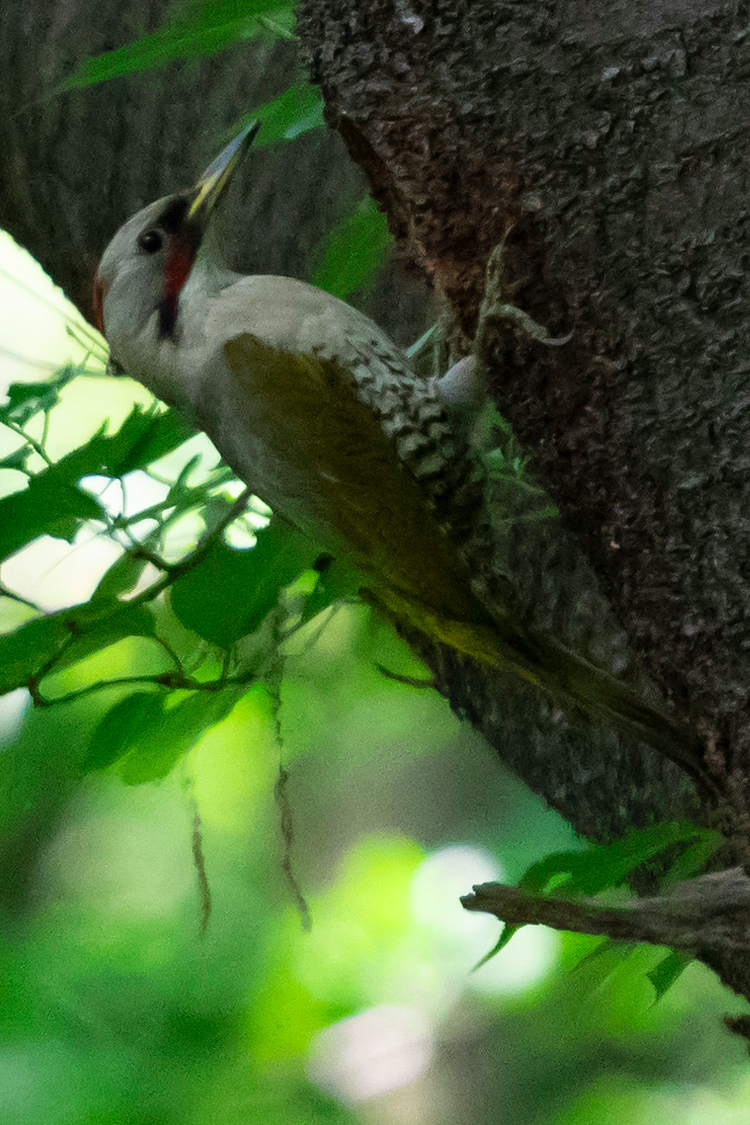
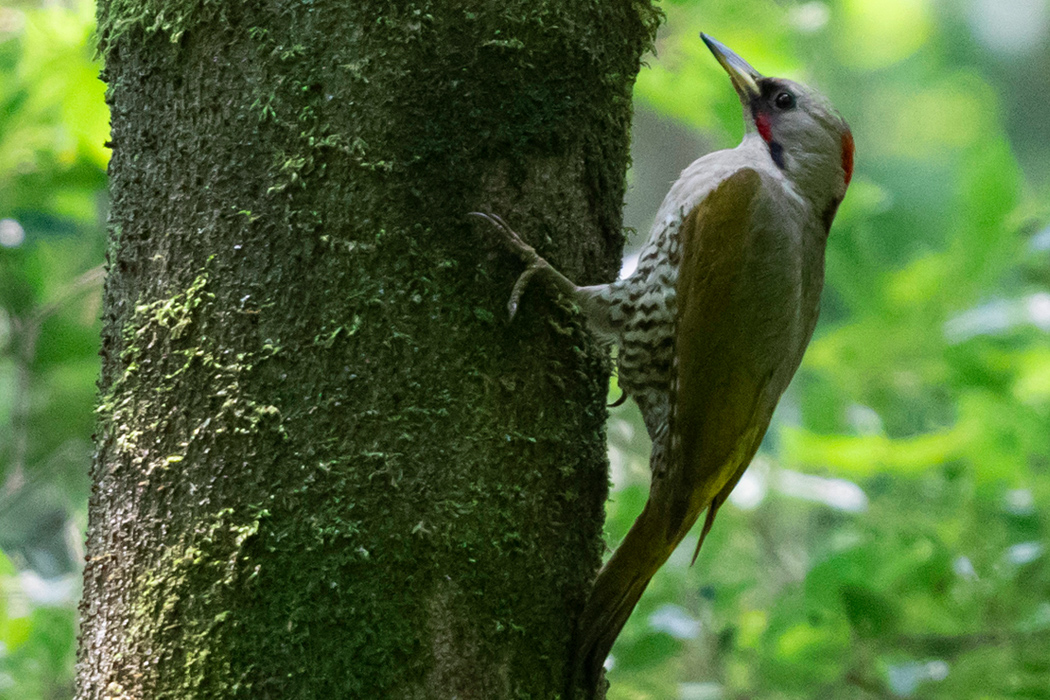
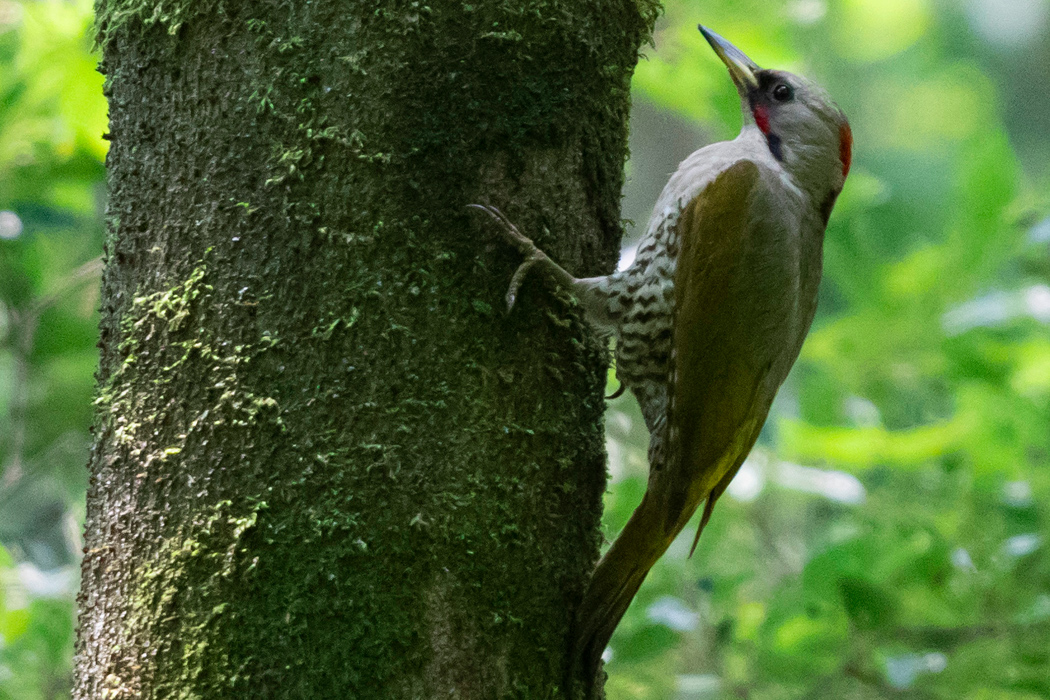
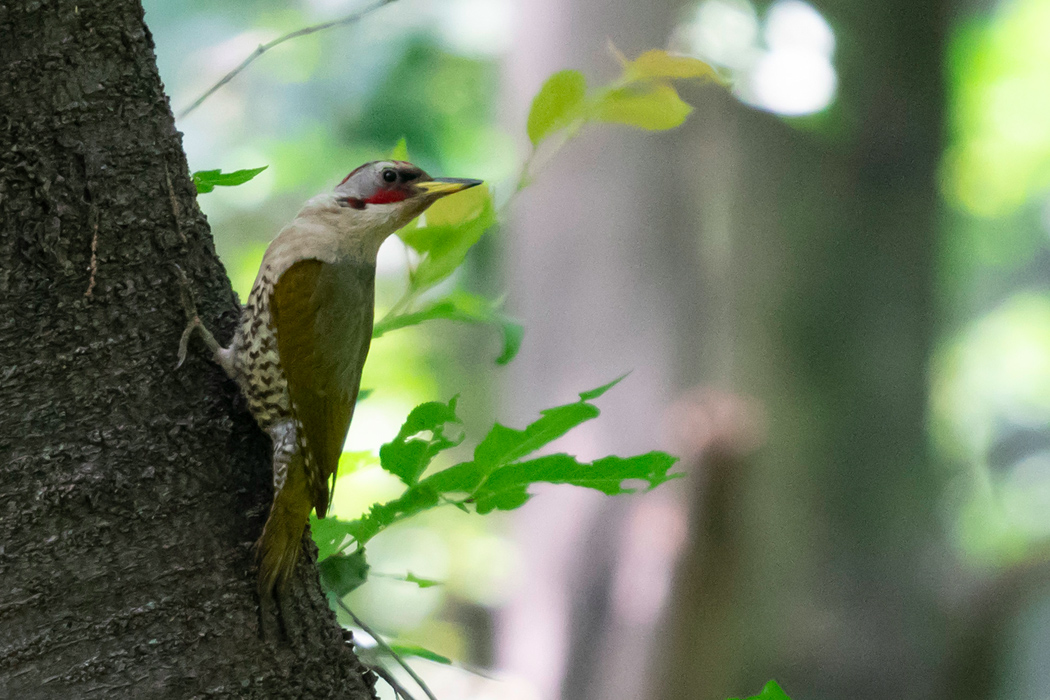
Length is about 30cm. A dull green woodpecker endemic to Japan. Including the colors on its head, it is a surprisingly colorful bird.
The head is gray, with red on the crown and part of the malar stripe. The size of this red area differs between males and females. The beak also features some yellow. The irises are black.
The ventral side is white with brown markings.
It is also characterized by long toes for clinging to tree trunks.
Male
Appearance is almost identical to the female.
It has an elongated red patch from the forehead to the nape. The red part of the malar stripe is also slightly larger.
Female
Appearance is almost identical to the male.
Red is present only on the nape, and the area is smaller.
Song
The call is distinctive. It makes a "pyo-pyu" sound, like a high-pitched whistle, or a "ke-ke" sound, like a short whistle when taking flight.
Japanese Green Woodpecker Ecology
Habitat
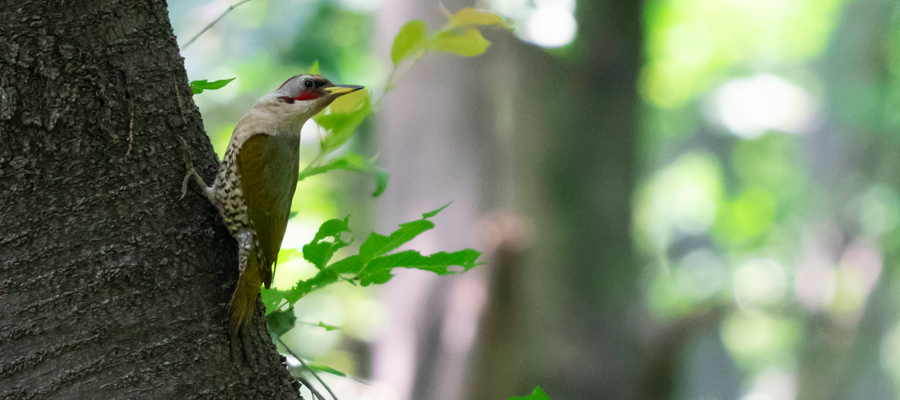
Primarily inhabits broadleaf forests year-round.
Food
It flies from tree to tree, pecking at insects and spiders to eat. It occasionally descends to the ground to forage for food.
Life Cycle
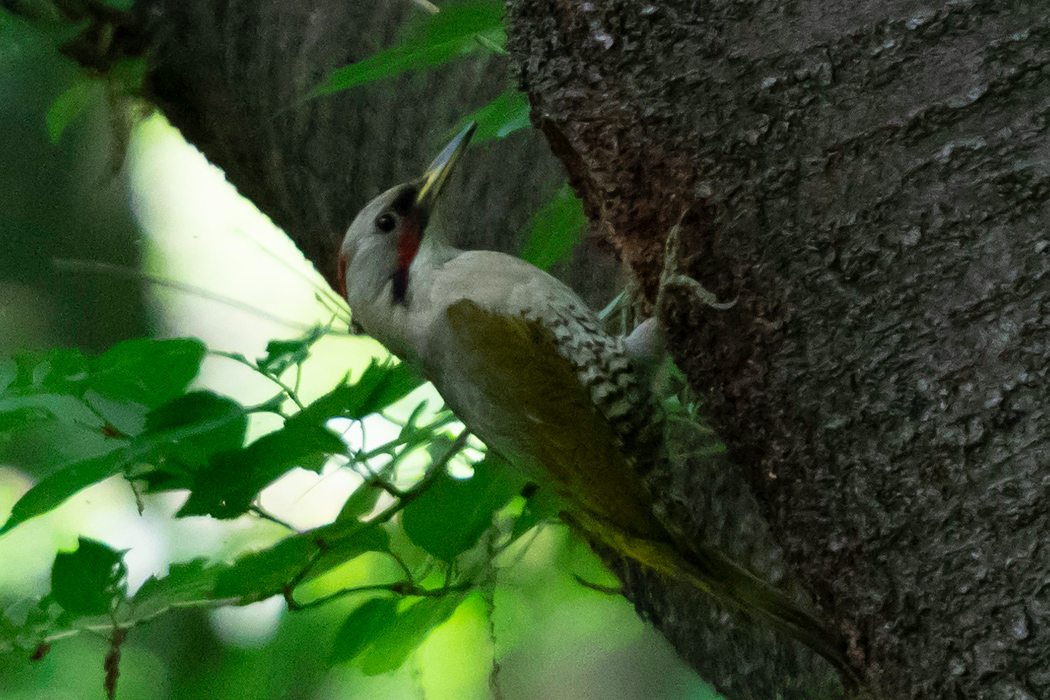
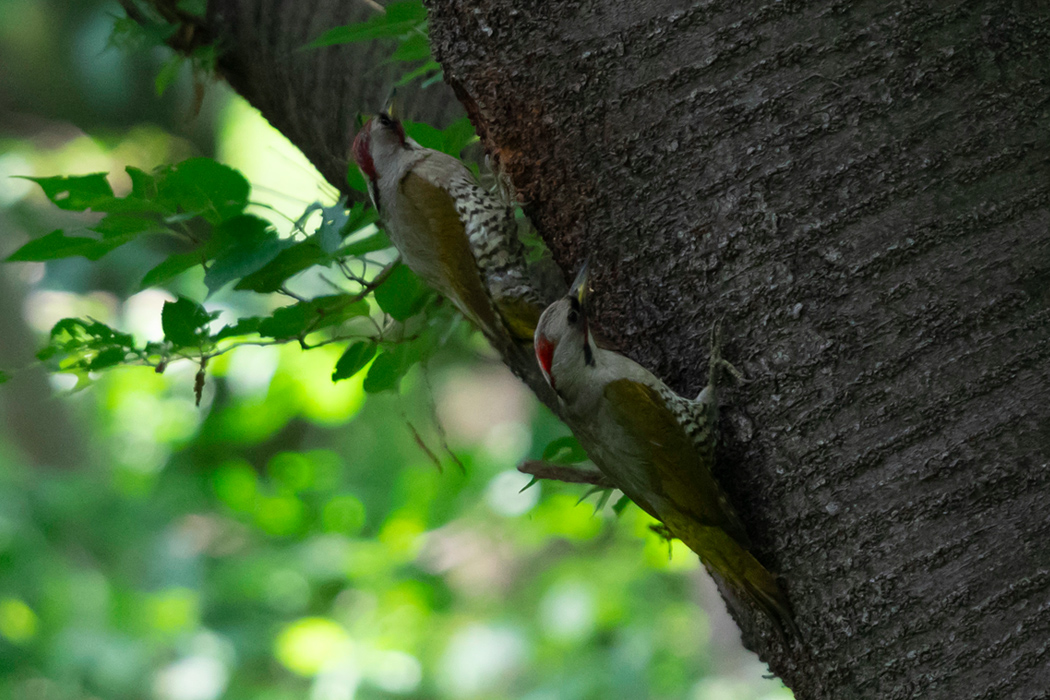
It creates nests by excavating holes in living trees. During the breeding season, they act in pairs and take turns raising their young.
Japanese Green Woodpecker Photos
Japanese Green Woodpecker Photos are introduced.
Tap the photo to open the detail page.
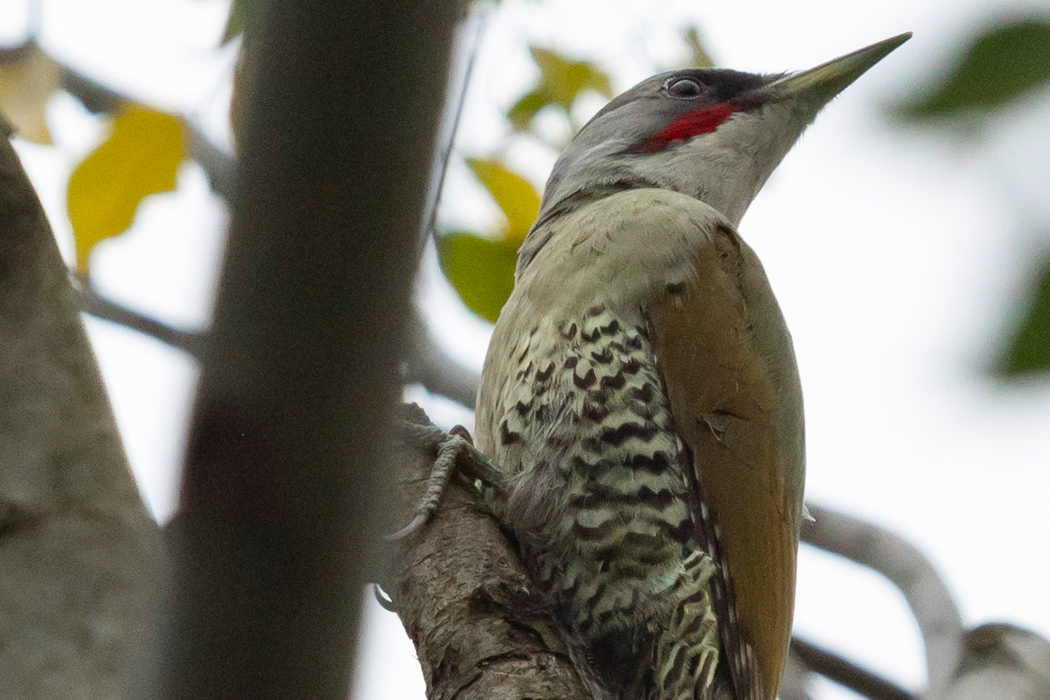
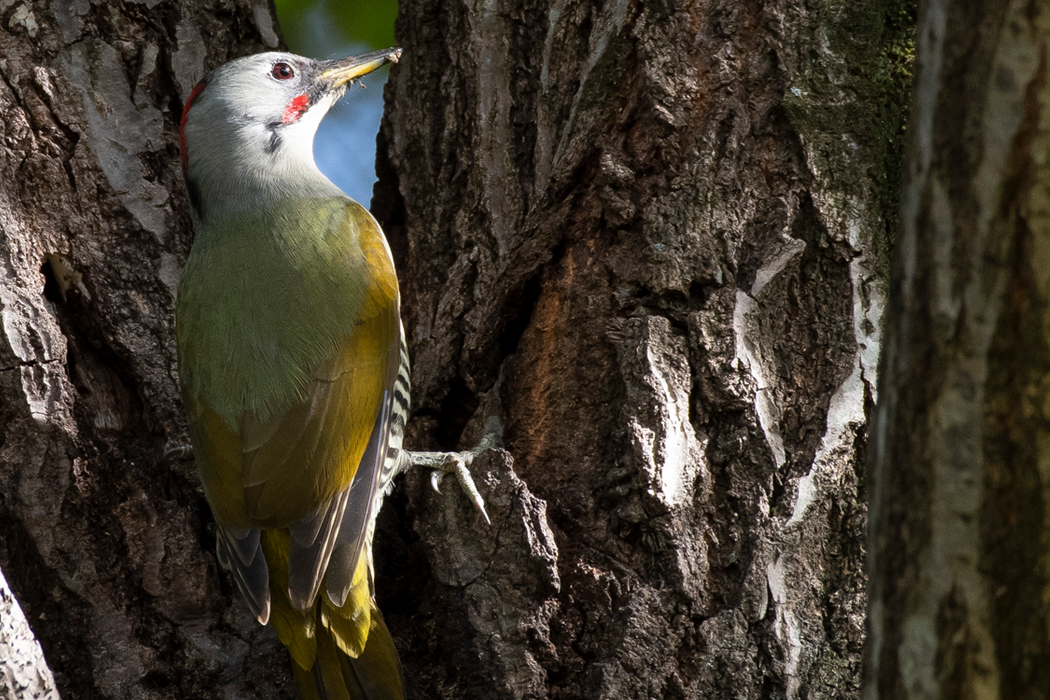
Japanese Green Woodpecker Behavior
Its drumming is louder and more powerful than that of the Japanese Pygmy Woodpecker. Since it is somewhat difficult to distinguish them by drumming alone, it is better to rely on their characteristic calls.
Japanese Green Woodpecker Information
Naming
The scientific name "awokera" is derived directly from the Japanese name. Regarding the Japanese name, while "ao" might suggest blue, it is because green was historically referred to as "ao" in Japan.
Japanese Green Woodpecker Found Locations
Komiya Park, Hachioji City
Discovered at Komiya Park in Hachioji City. While walking on the park's boardwalk, I could hear the calls of the Japanese Woodpecker but had trouble spotting it. Near where the loud calls were heard, I observed from a distance and saw it emerge from behind a tree. They seemed to be acting as a pair and were building a nest in a cherry tree with a hole slightly smaller in diameter than a golf ball.
Katakura Castle Ruins Park, Hachioji City
Japanese Woodpeckers also live in the woods of Katakura Castle Ruins Park. While strolling through the forest, I encounter them about once a day. The individuals here give the impression of being less wary of humans.
Japanese Green Woodpecker Video
Japanese Green Woodpecker is introduced by video.
It was foraging for food while pecking at a tree.
Japanese Green Woodpecker Observation Log
These are the observation logs where we found Japanese Green Woodpecker.
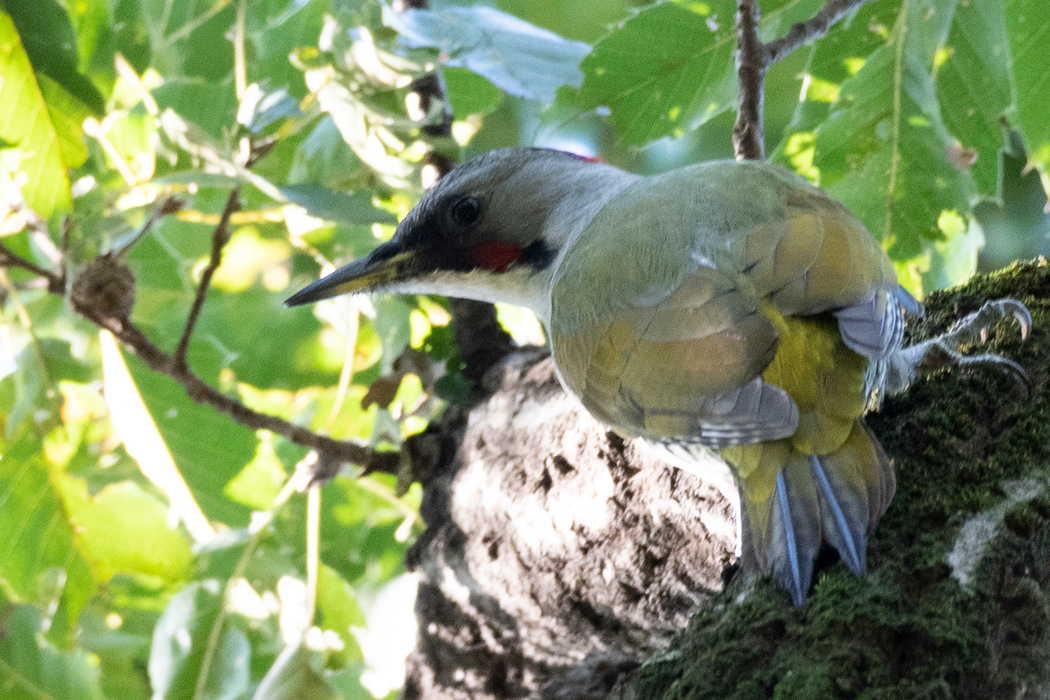
I found a Japanese Green Woodpecker in the forest of Tsudoi-no-Mori Park.
Read more >
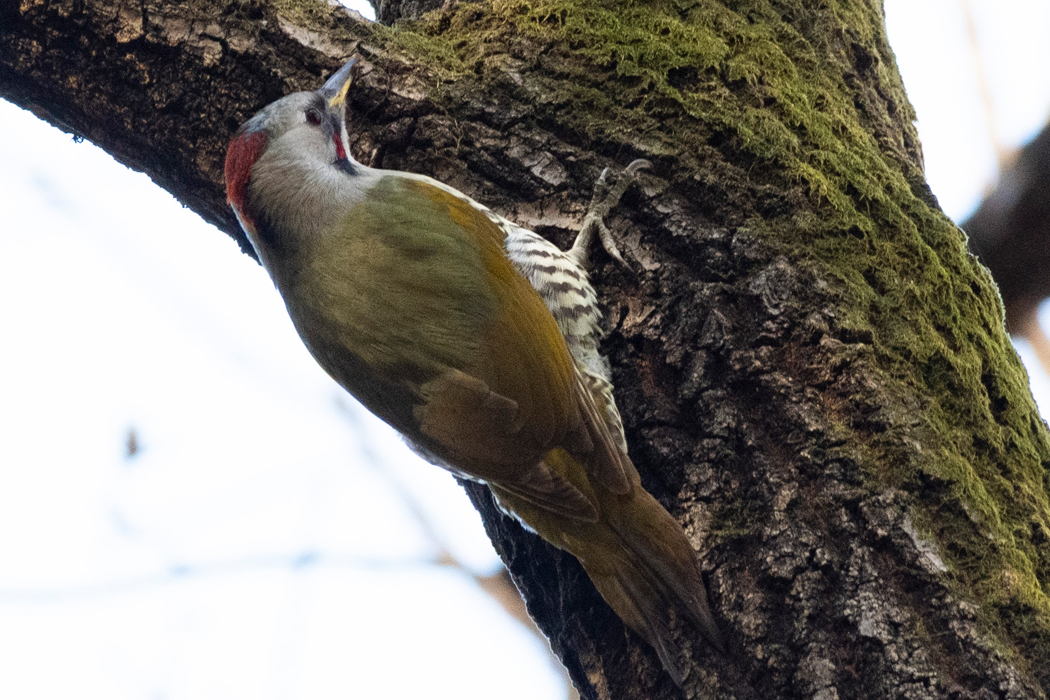
I heard a 'kiki' sound above the wooden path. There was a pair of Japanese Green Woodpeckers and one Great Spotted Woodpecker.
Read more >
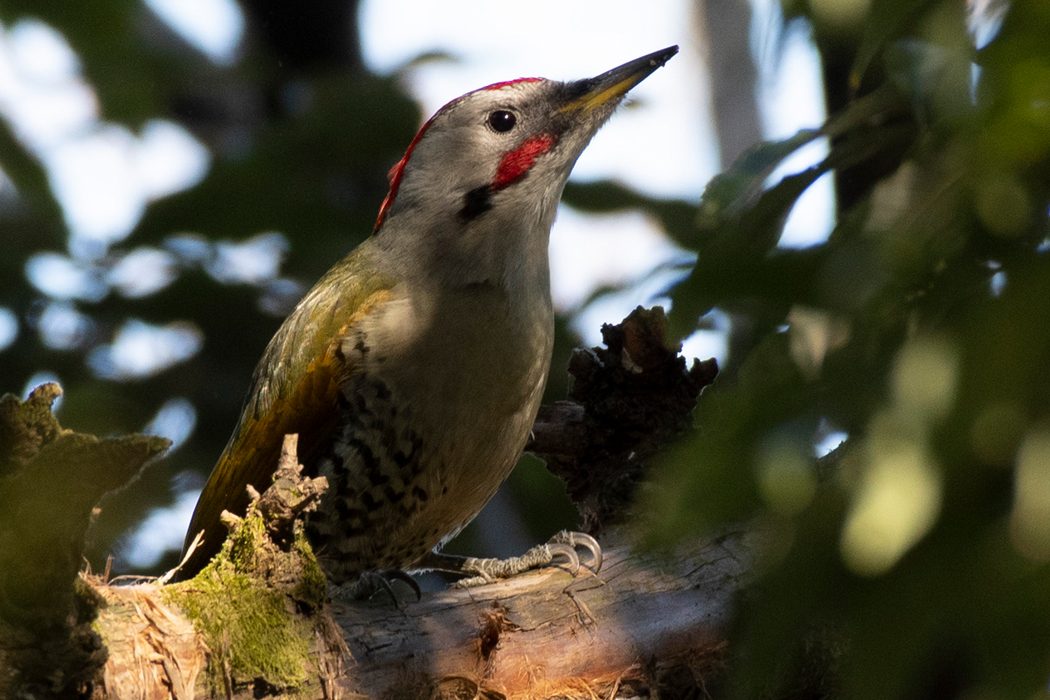
A Japanese Green Woodpecker perched on a branch in the back. It was truly a day with many birds.
Read more >
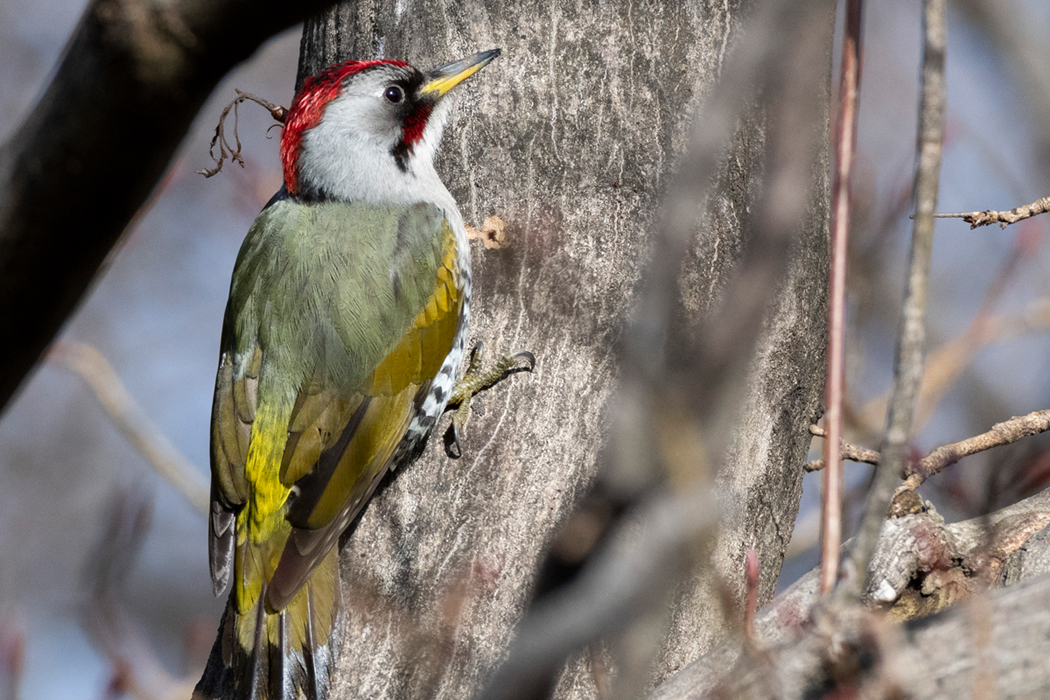
A Japanese Green Woodpecker landed on the Hawfinch tree.
Read more >
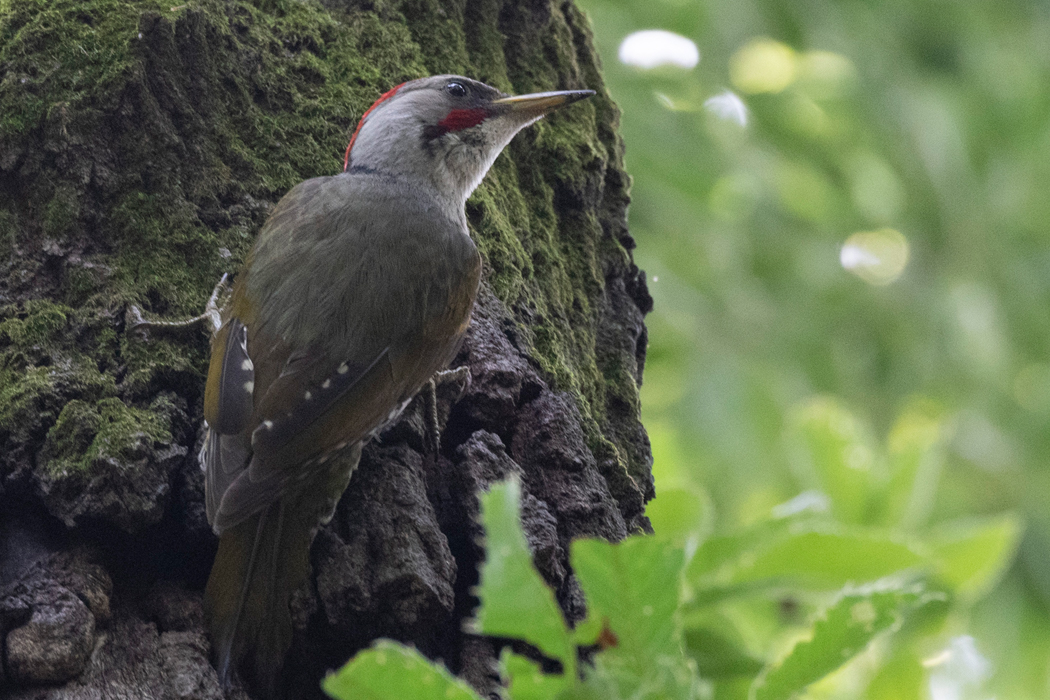
I heard the drumming of a Japanese Green Woodpecker at the rest area.
Read more >
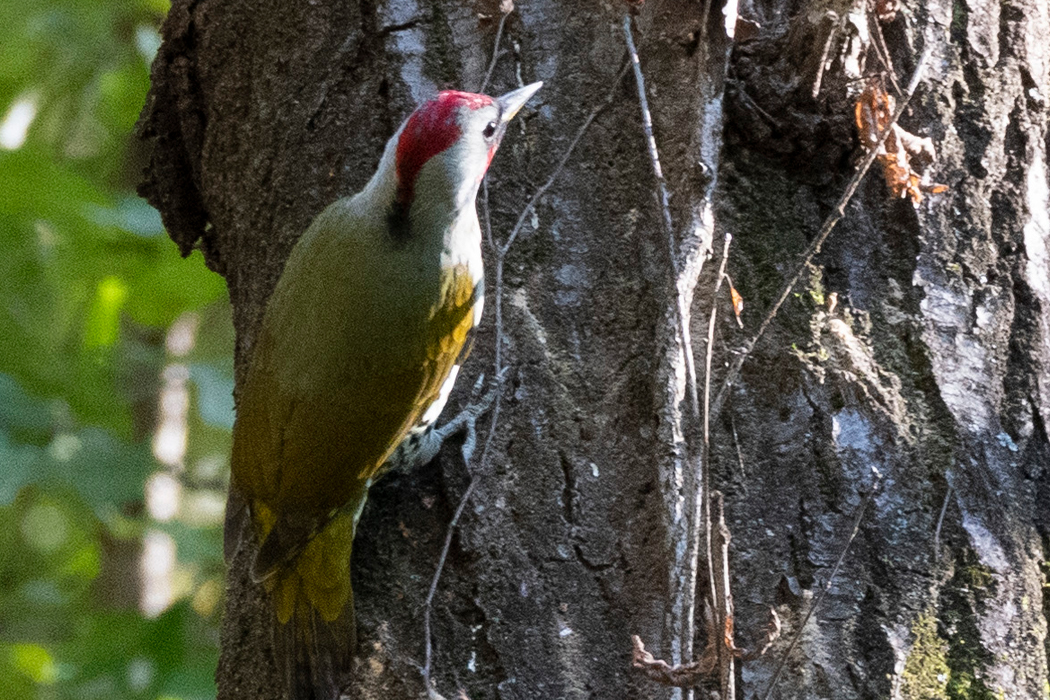
A Japanese Green Woodpecker was a little far away.
Read more >
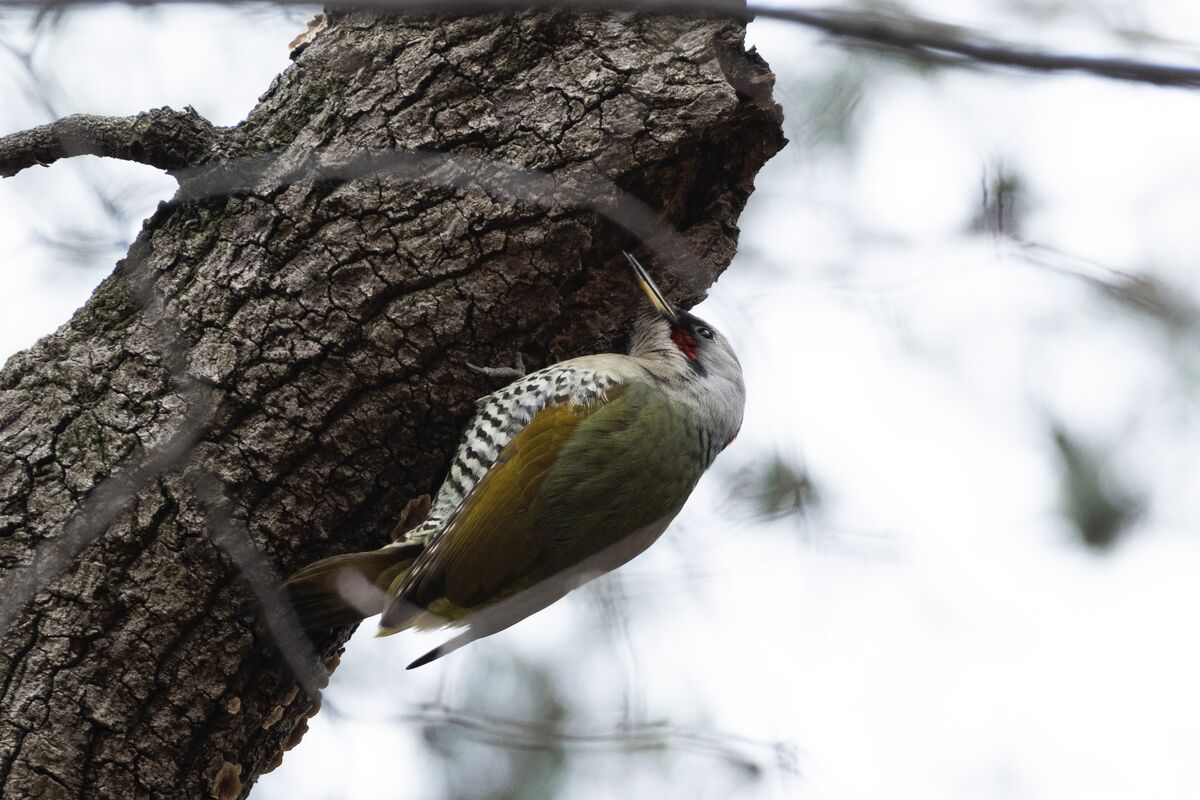
I heard the voice of a Japanese Green Woodpecker and when I looked for it, it had its head stuck in a hole.
Read more >