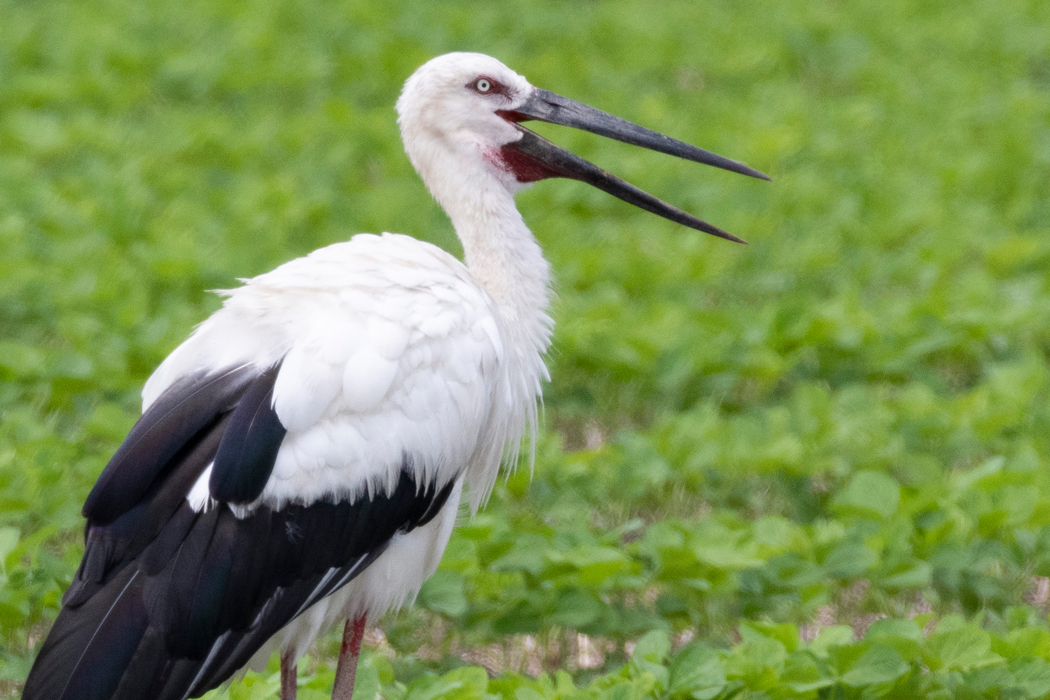
Japanese white stork
A large bird with a long, sharp beak.
| Scientific name | Ciconia boyciana |
| English name | Japanese white stork |
| Japanese name | 鸛 |
| Class | Aves |
| Order | Ciconiiformes |
| Family | Ciconiidae |
| Genus | Ciconia |
| Species | boyciana |
| Full length | Approx. 110cm |
| Distribution | From East Asia to Southeastern Russia. In Japan, they visit as passage migrants or winter visitors. |
Japanese white stork Characteristics and Morphology
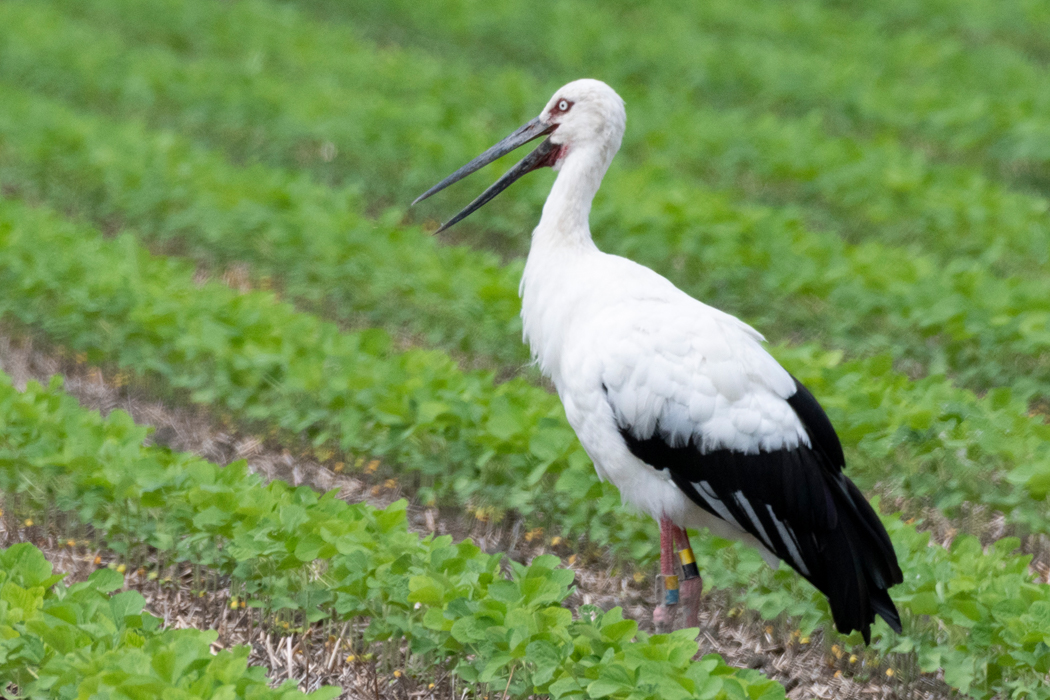
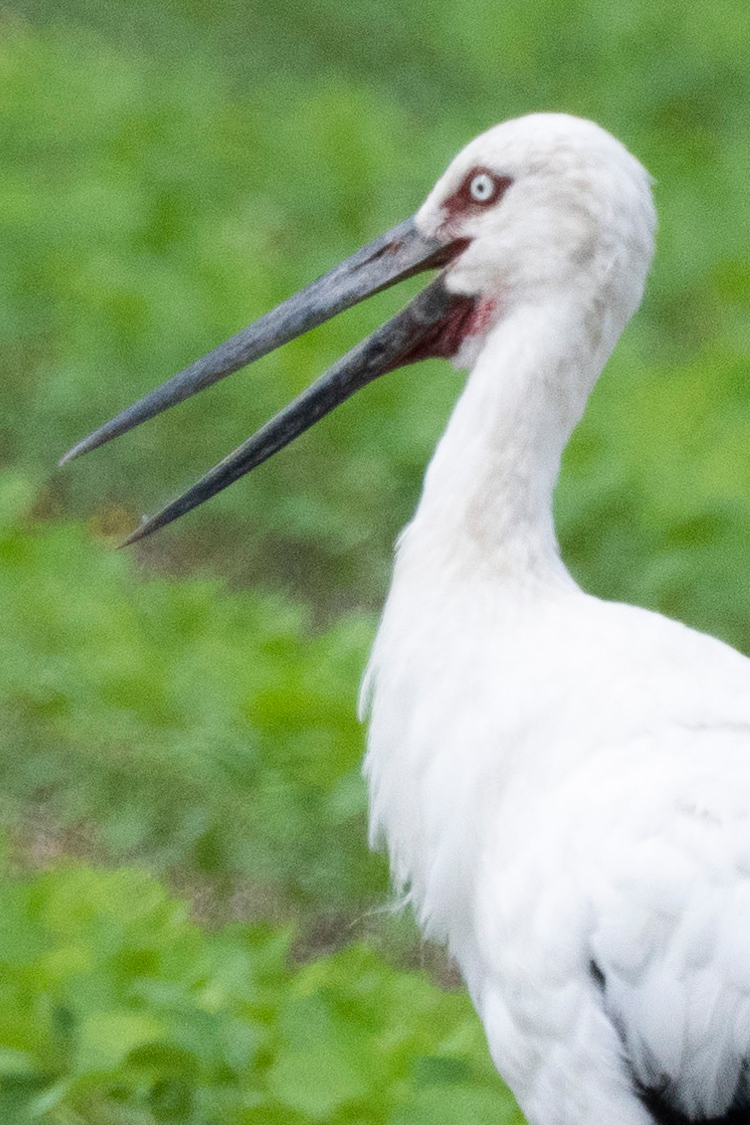
A large bird reaching a total length of 110 cm. It is more than a size larger than the Grey Heron. Its body is covered in white feathers, and its long beak is characteristic.
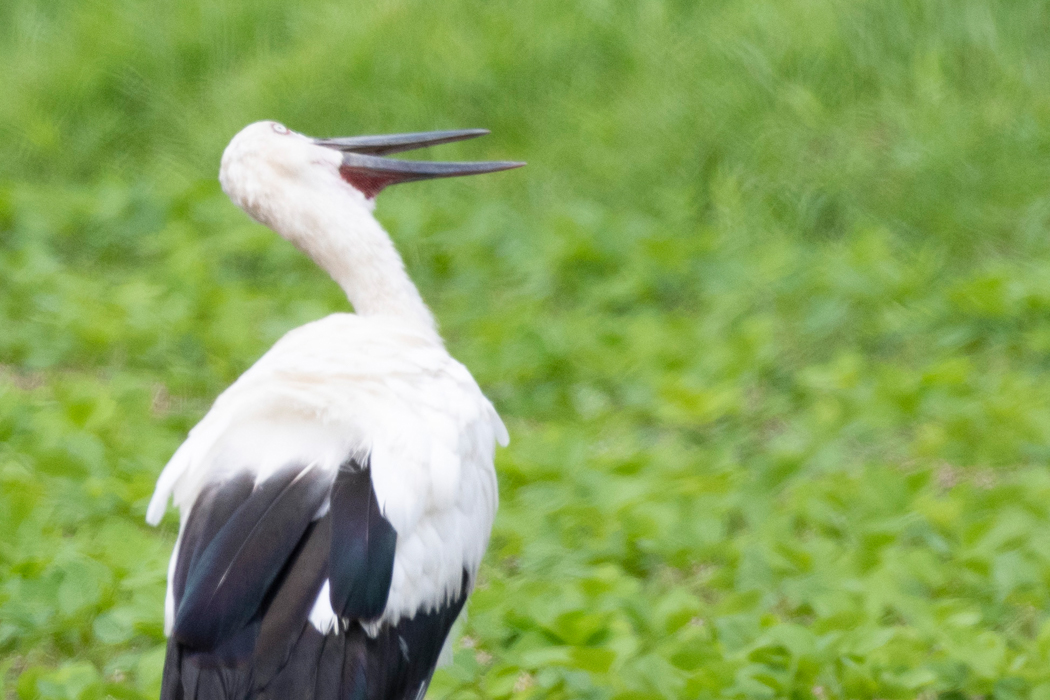
The head has a slightly larger silhouette than a heron and is overall white. The beak can be over 25 cm long and is sharply pointed. It is black, with only the base appearing reddish. The iris is white, and the area around the eyes is red. Like herons, it has an expressionless quality.
Covered in white feathers from the neck to the shoulders. The primary feathers are black, making the wings look quite black when spread.
The tail feathers are not particularly long. The legs are powerful and flesh-colored.
Song
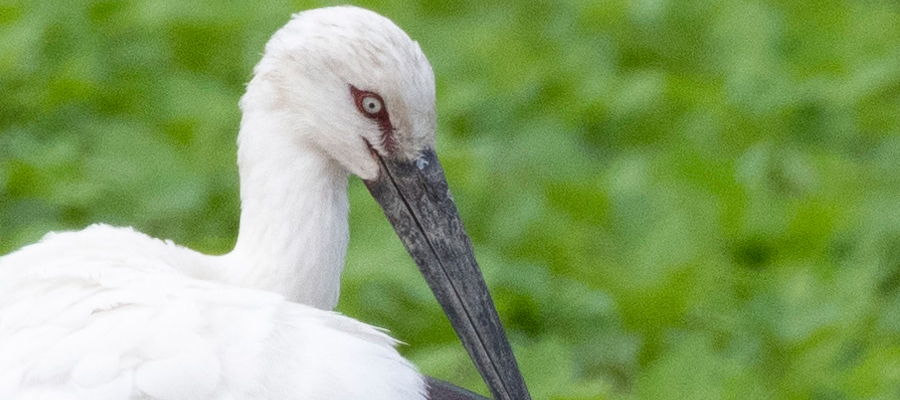
Japanese white stork Ecology
Habitat
Inhabits rivers and wetlands. They also visit rice paddies.
Food
Feeds on fish, frogs, and other small animals. They may also prey on mammals like mice or large fish like catfish.
Life Cycle
They build nests in trees to breed. It takes about three months from egg-laying to fledging.
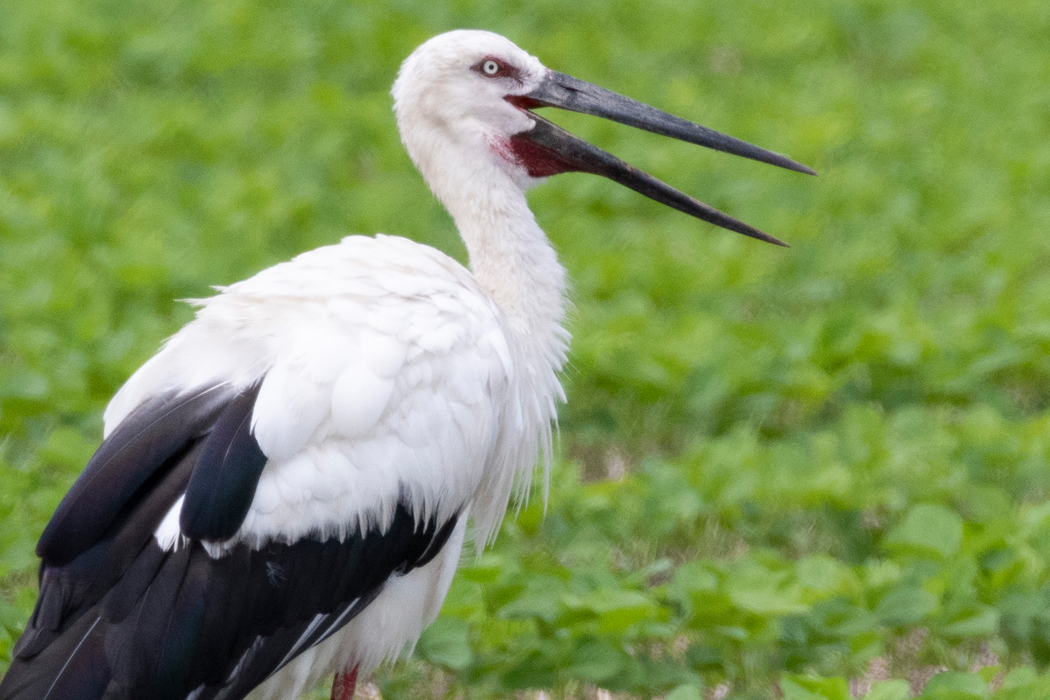
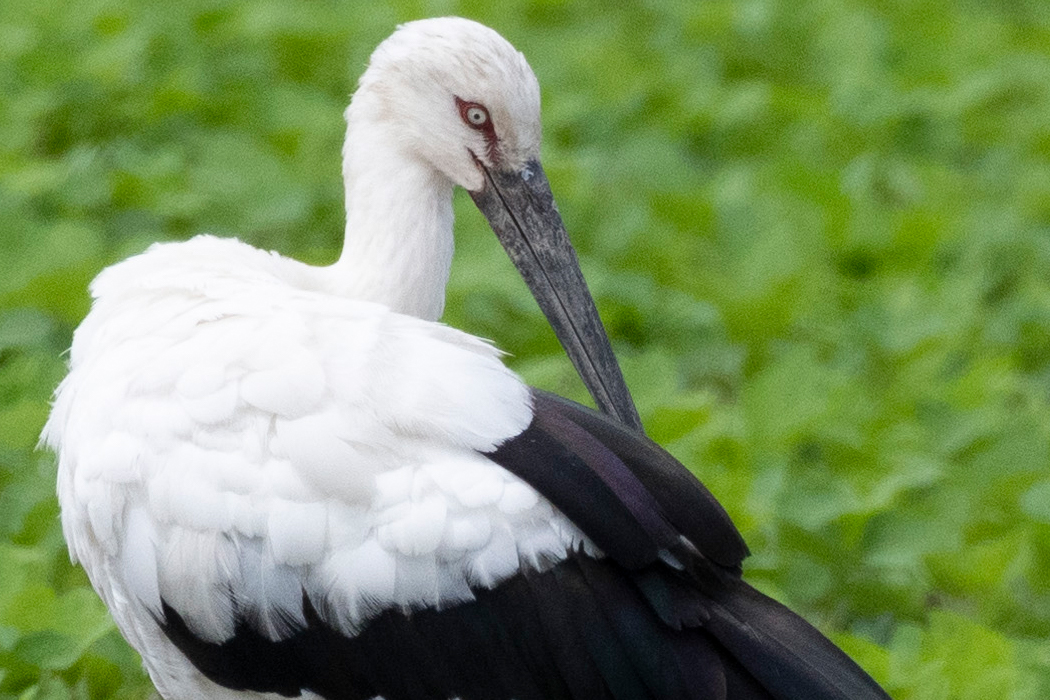
Japanese white stork Photos
Japanese white stork Photos are introduced.
Tap the photo to open the detail page.
Japanese white stork Information
Naming
The scientific name "boyciana" is a dedication to Robert Henry Boyce, who provided the specimen for this bird.
Bringing Babies
The story that "the stork brings babies" is famous, but it does not actually refer to this species. It is a legend regarding the White Stork (Ciconia ciconia), which belongs to the same family.
Population Decline and Protection
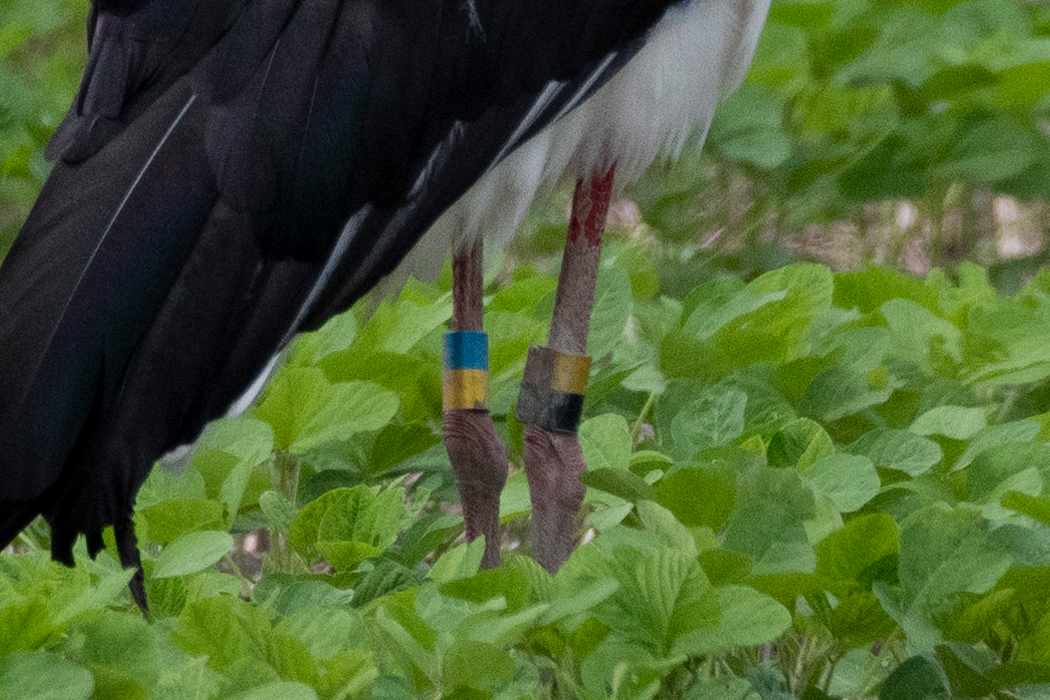
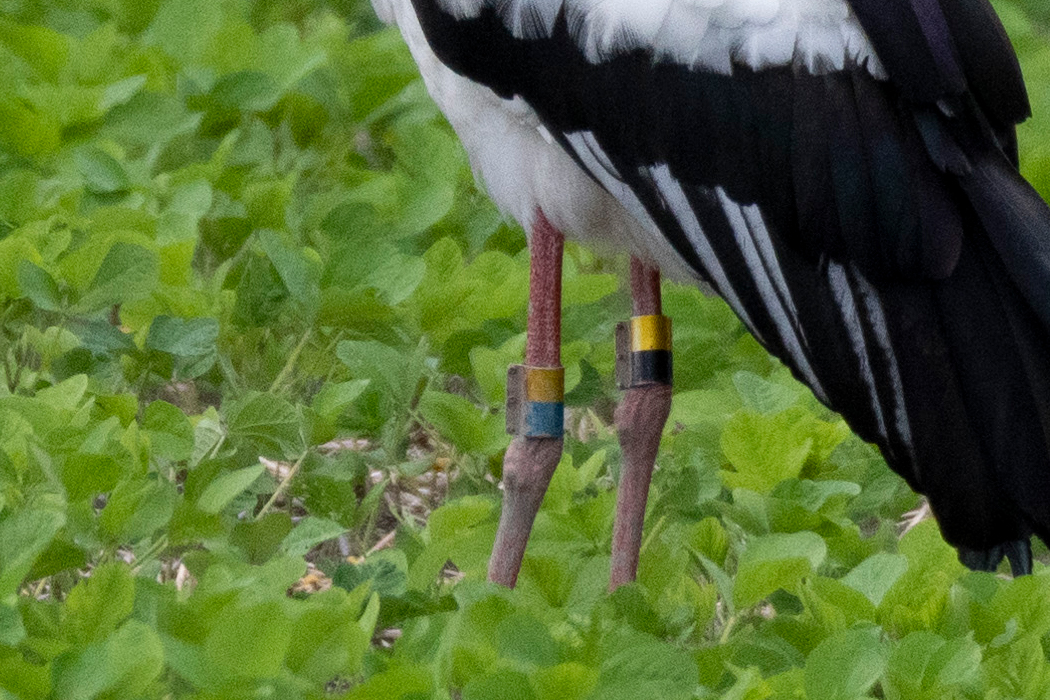
In the Edo period, Oriental Storks were seen even in rivers flowing through towns, but their numbers plummeted due to overhunting in the Meiji era, river pollution, and a decrease in nesting sites. Reintroduction efforts centered in Toyooka City, Hyogo Prefecture, have led to a recovery in population. Released individuals are fitted with identification leg bands, allowing researchers to track their date of birth, fledge site, and sex. For the individuals photographed here, identification was possible using materials on the "Hyogo Prefectural Homeland for the Oriental White Stork" website.
Japanese white stork Found Locations
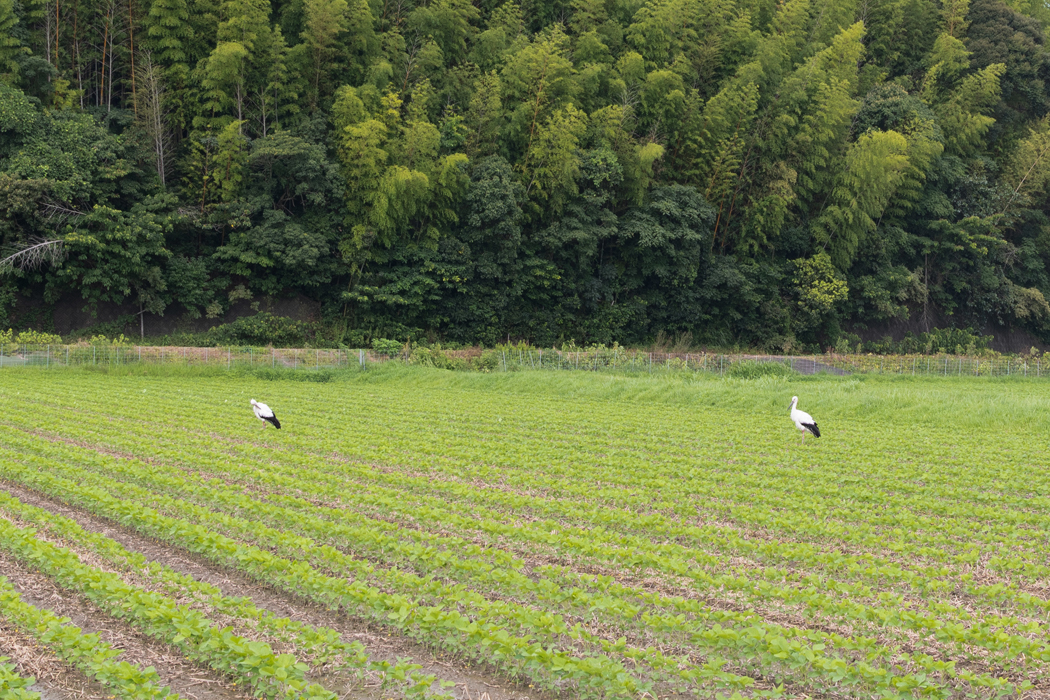
Rice paddies in Omuta City, Fukuoka Prefecture
I discovered a pair in a rice paddy in Omuta City, Fukuoka Prefecture. It was a chance encounter, not planned, so I was surprised. I didn't have a telephoto lens with me, so I hurried back to get it and take the photos.
They appeared to be foraging slowly in the field. Since I was able to photograph the leg bands, I identified the individuals based on the aforementioned leg band catalog.
JO133 Female
Left leg: Yellow - Blue
Right leg: Yellow - Black
A female born on April 25, 2016. Fledged from the Izu nesting tower in Toyooka City, Hyogo Prefecture.
JO141 Male
Left leg: Blue - Yellow
Right leg: Yellow - Black
A male born on March 21, 2017. Fledged from a utility pole nest in Bando, Naruto City, Tokushima Prefecture.
I was moved by the fact that individual identification can be done so thoroughly.
References
Picture book
Two lines running above the eye....... Read more
The beak is upturned....... Read more
Eating ants on rotting wood....... Read more
It features a bright head called "Akapoppo"....... Read more
A familiar small woodpecker you can easily encounter....... Read more
a locust whose wings are longer than its legs....... Read more