Japanese Pygmy Woodpecker
A familiar small woodpecker you can easily encounter.
| Scientific name | Yungipicus kizuki |
| English name | Japanese Pygmy Woodpecker |
| Japanese name | 小啄木鳥 |
| Class | Aves |
| Order | Piciformes |
| Family | Picidae |
| Genus | Yungipicus |
| Species | kizuki |
| Full length | 15cm |
| Distribution | Distributed from all over Japan to East Asia. |
Japanese Pygmy Woodpecker Characteristics and Morphology
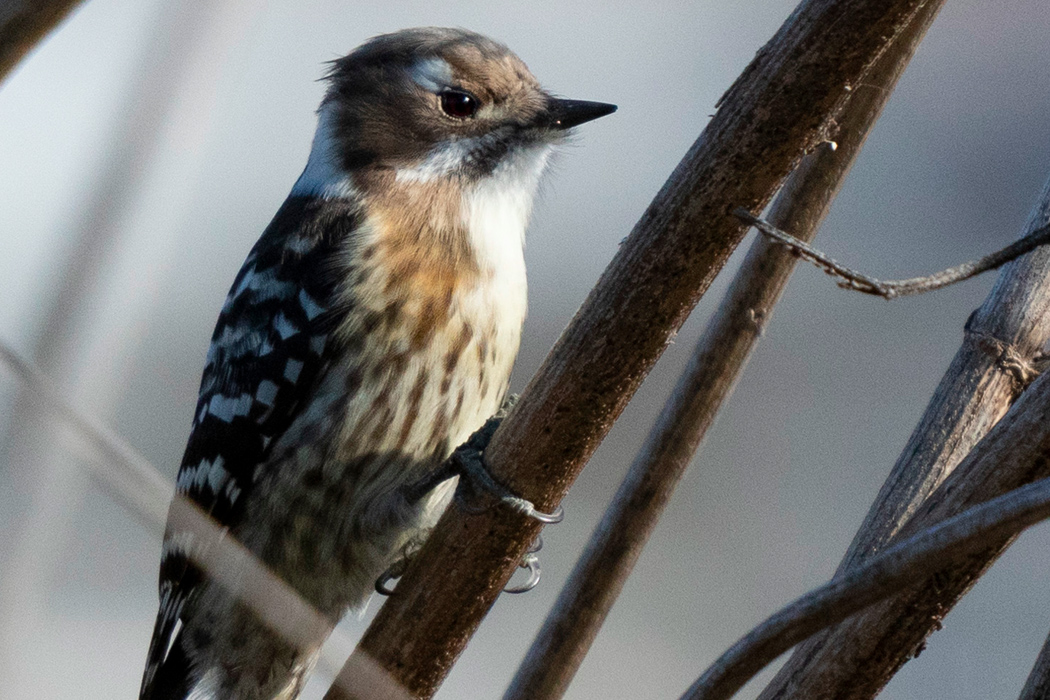
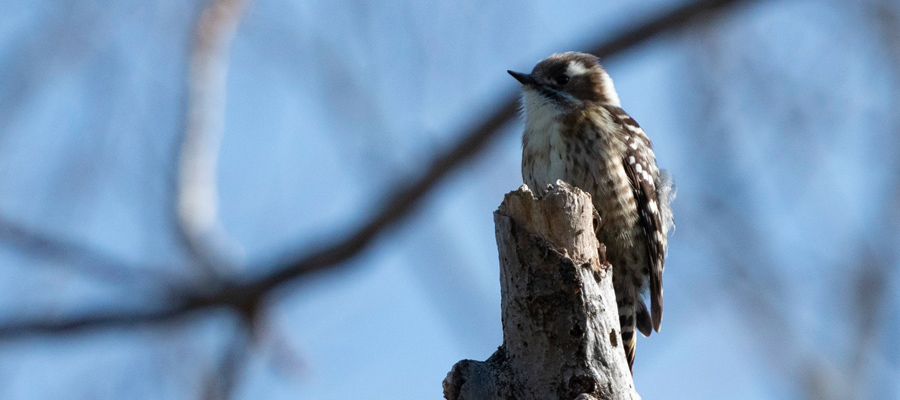
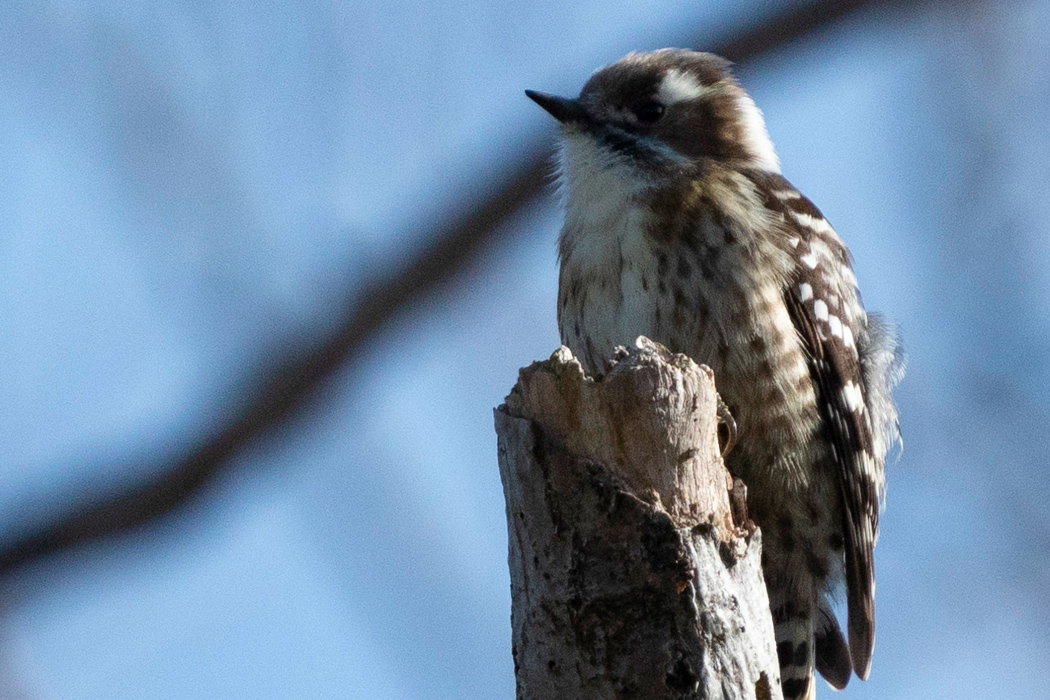
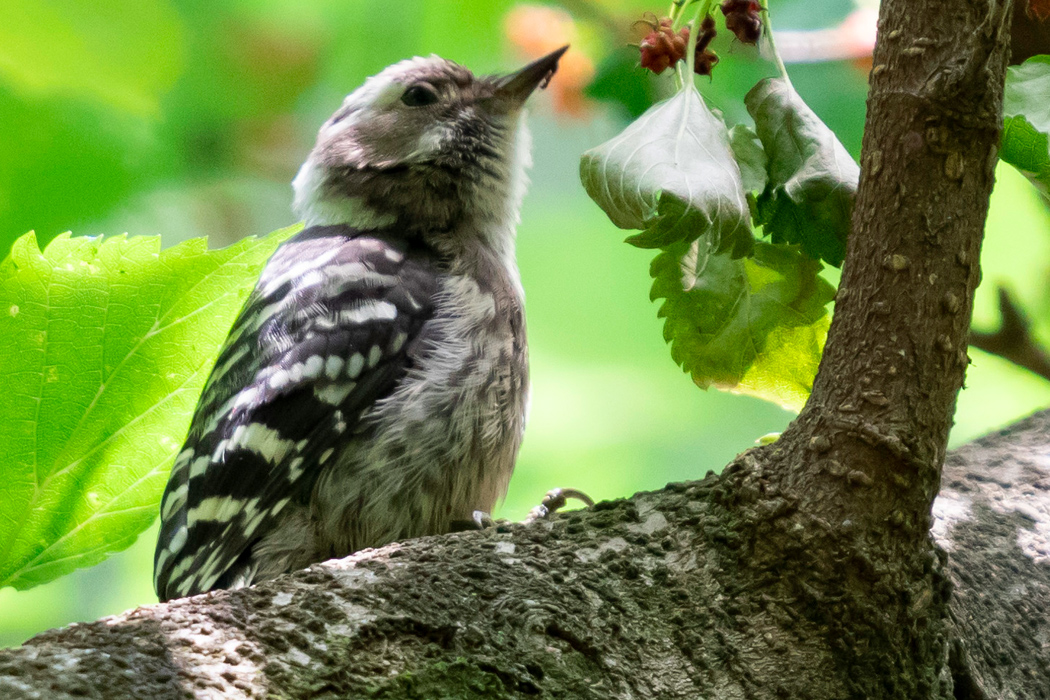
A familiar sparrow-sized woodpecker. Black and white two-tone coloration. Males and females look almost identical.
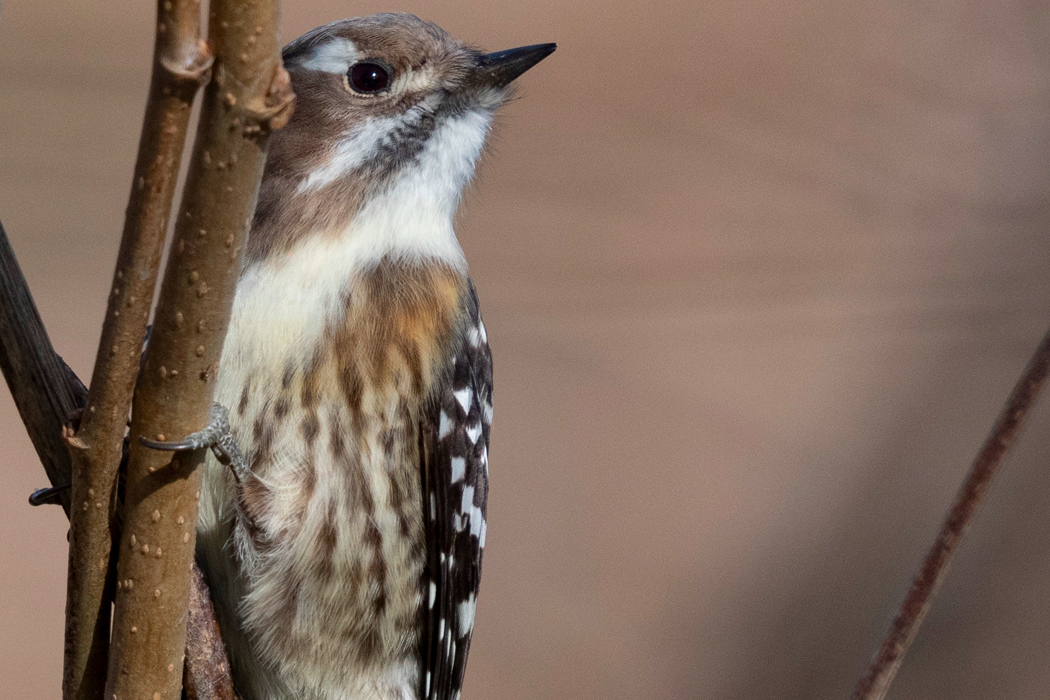
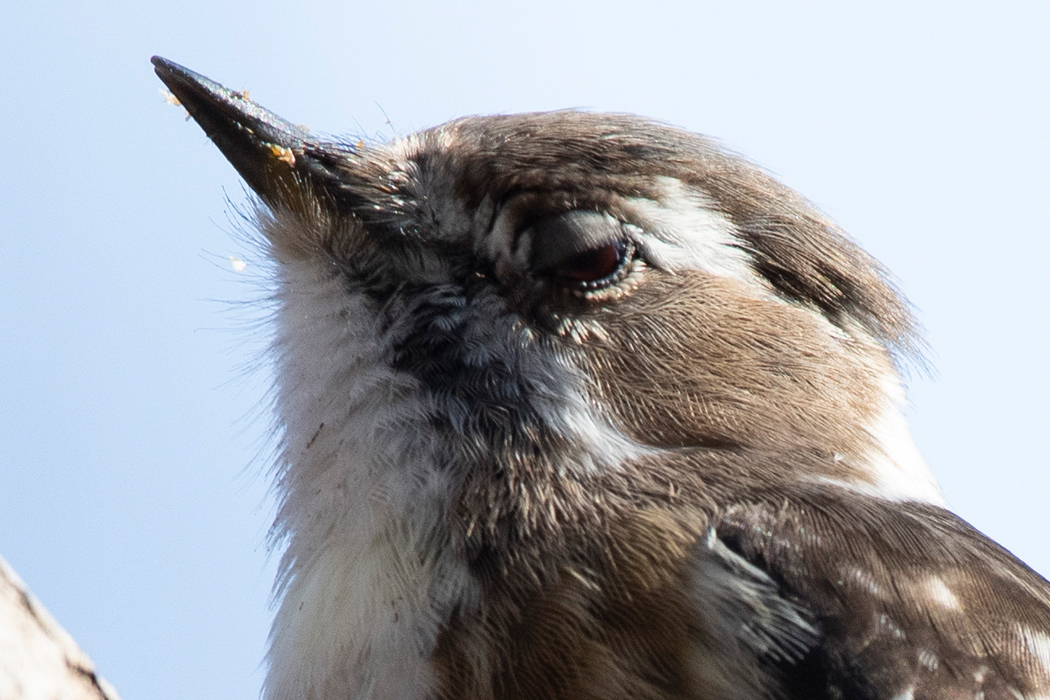
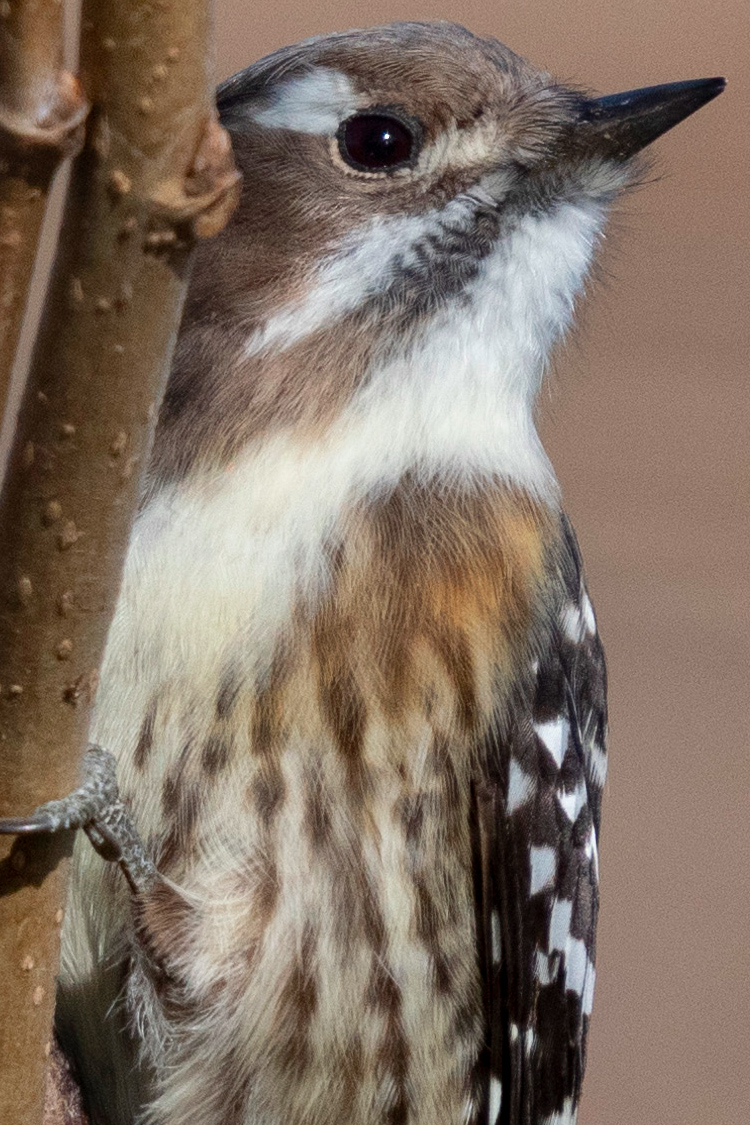
The head is a faded brown. The supercilium (eyebrow stripe) is small and white. The beak is not long, but the tip is thin and sharp. The irises are black. Sometimes it looks as if the bird is rolling its eyes showing the white part; this is actually the "nictitating membrane," a protective film for the eye.
The back features a black and white border-like pattern. The belly is white with brown streaks and markings.
The toes are zygodactyl (split into two pointing forward and two pointing backward) and are sharply pointed for clinging to tree trunks.
Male
Features a small patch of red feathers on the back of the head.
Female
Does not have red feathers on the back of the head.
Song
The call (scolding/contact call) of the Japanese Pygmy Woodpecker is distinctive and easy to recognize. It makes a jagged "gii-gii" sound. Personally, I find the calls of the Varied Tit and the Japanese Pygmy Woodpecker to be somewhat similar. The Pygmy Woodpecker sounds like "gii-gii," whereas the Varied Tit sounds like "jii-jii." During the breeding season, they also emit a "ki-ki" sound.
Japanese Pygmy Woodpecker Ecology
Habitat
Widely inhabits areas with trees, from mountain forests to urban parks. Breeding has also been confirmed in city parks and roadside trees.
Food
Eats insects and berries. They search for food while moving along tree trunks and catch insects with their long tongues.
Life Cycle
They build nests by excavating holes in dead branches.
Japanese Pygmy Woodpecker Photos
Japanese Pygmy Woodpecker Photos are introduced.
Tap the photo to open the detail page.

Japanese Pygmy Woodpecker Behavior
They move in pairs or small family groups. They search for food while traveling along tree trunks. They are sometimes seen flying alongside flocks of other small birds like the Great Tit.
Japanese Pygmy Woodpecker Information
Naming
The scientific name "kizuki" comes from "Kizuki" (tree-pecker), an old Japanese name for the bird.
The "nictitating membrane" is thought to protect the eyes from wood chips that fly off during drumming.
Japanese Pygmy Woodpecker Found Locations
Asakawa River, Hachioji City
I photographed this individual as it hopped down from a tree onto reeds at the Asakawa riverbed in Hachioji City. It seems that the Pygmy Woodpeckers at the riverbed descend to relatively low heights.
The Japanese Pygmy Woodpecker is one of the birds most familiar to me. When I was little, I was always happy to hear their drumming coming from the woods behind my house. Since I started bird photography, I have struggled to capture them because their drumming movements are so intense. Even people who have no interest in wild birds are usually delighted to find out that this little bird is actually a woodpecker.
As an aside, as mentioned above, I think there are commonalities between the Japanese Pygmy Woodpecker and the Varied Tit. While they look different, both reside in nearby forests, have somewhat similar calls, and share the behavior of tapping on wood with their beaks.
Japanese Pygmy Woodpecker Video
Japanese Pygmy Woodpecker is introduced by video.
It was drumming.
Picture book

Japan's largest egret...... Read more
Its long, slender body helps it camouflage itself with the surrounding leaves....... Read more

lead-colored tough-looking carapace...... Read more
The top and bottom of the beak are different colors....... Read more
Characterized by a distinctive "gyui-gyui" call....... Read more
has transparent wings without scales....... Read more