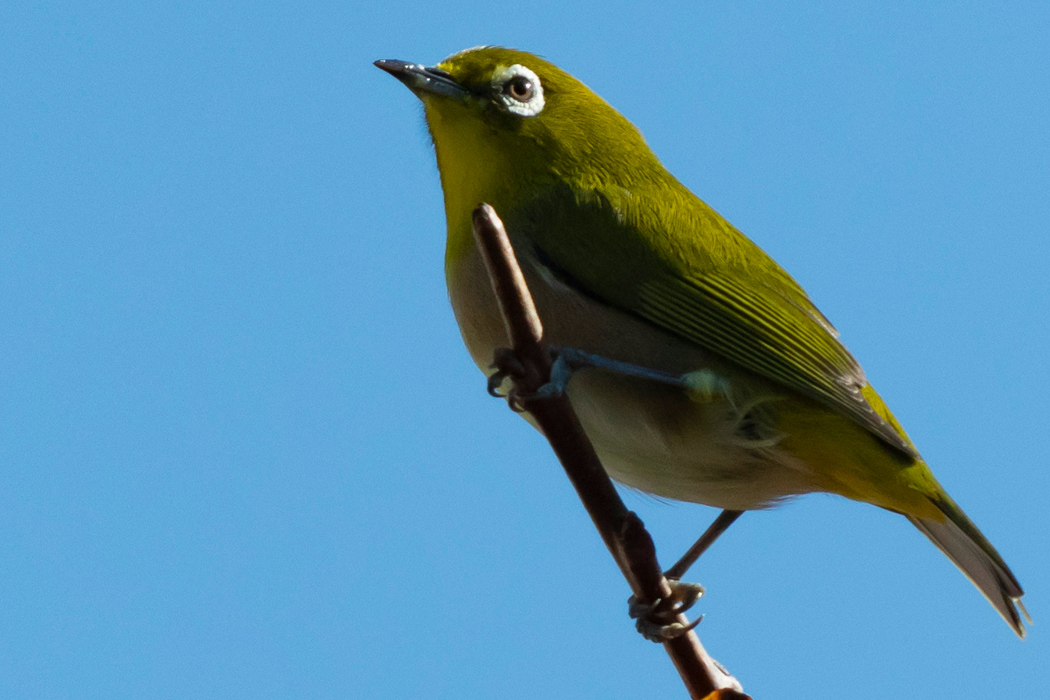
Japanese White-eye
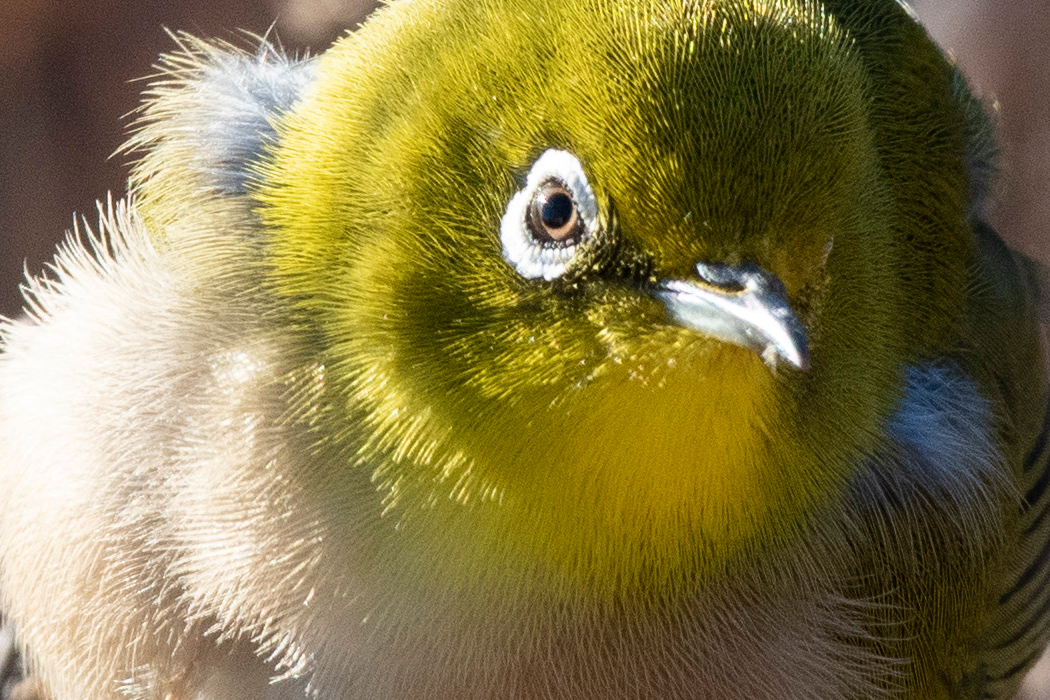
Characterized by its distinct, pure white eye-ring.
| Scientific name | Zosterops japonicus |
| English name | Japanese White-eye |
| Japanese name | 目白 |
| Class | Aves |
| Order | Passeriformes |
| Family | Zosteropidae |
| Genus | Zosterops |
| Species | japonicus |
| Full length | 12cm |
| Distribution | Widely distributed throughout East and Southeast Asia. |
Japanese White-eye Characteristics and Morphology
A small bird about 12cm long, smaller than a sparrow. Generally green, with males and females looking alike.
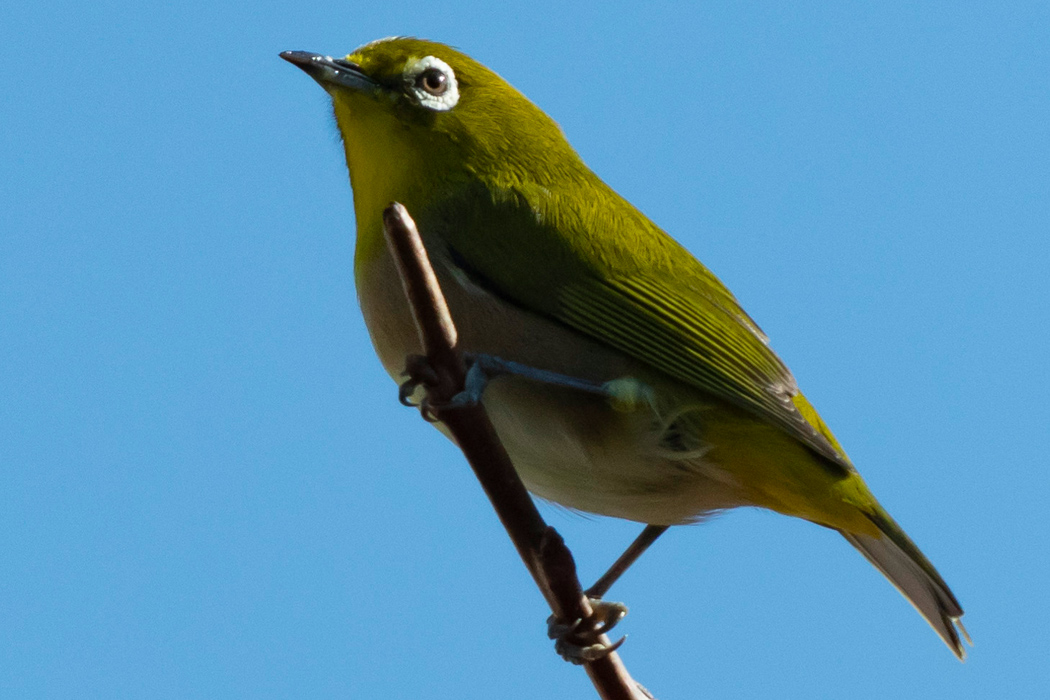
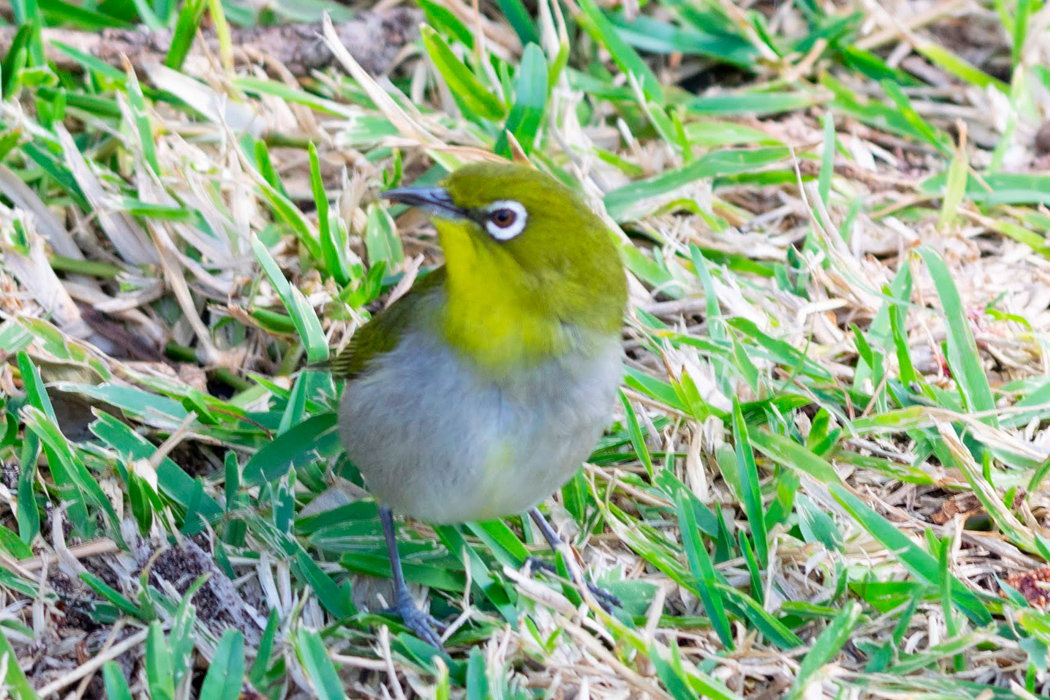
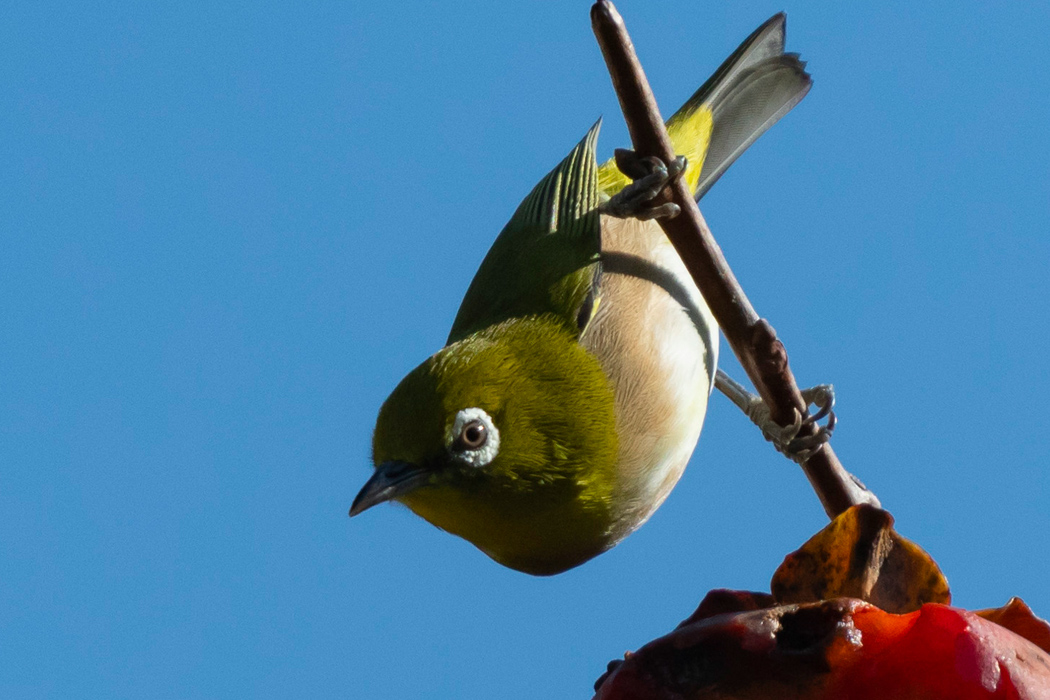
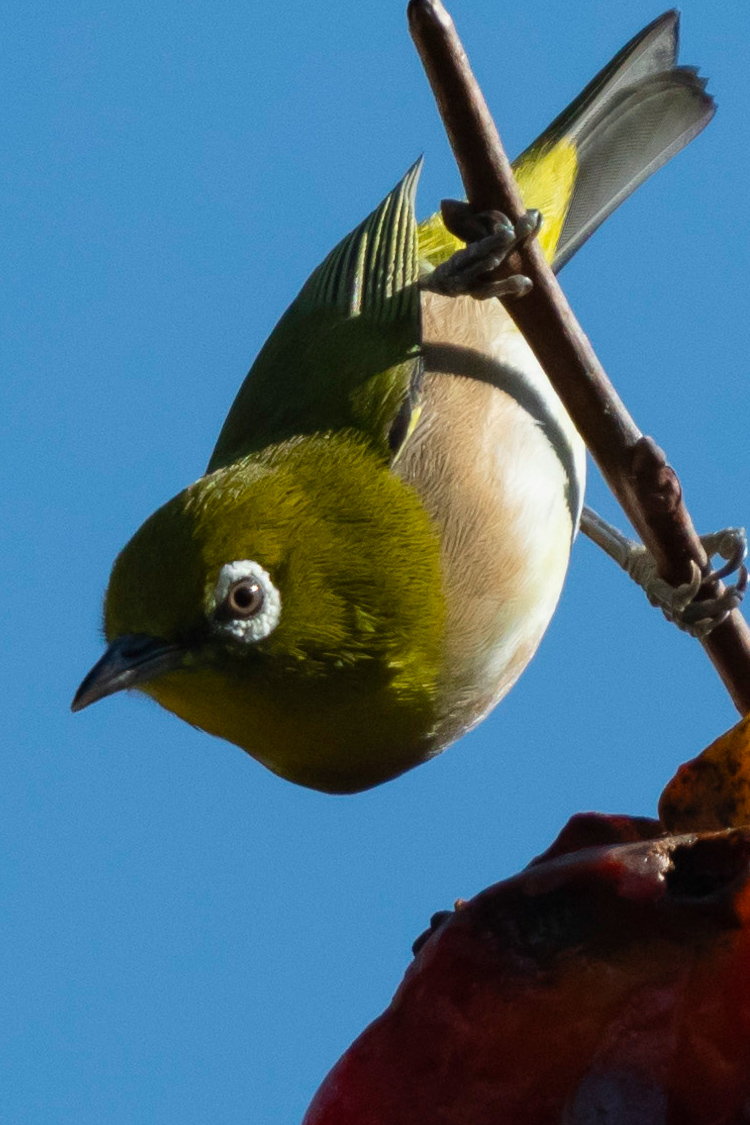
The head is generally green, featuring a characteristic, distinct white eye-ring. The bill is black and pointed. The iris is dark brown.
The belly is rounded, appearing even rounder when the feathers are fluffed. The back is green, but rather than a vivid green, it can appear as a muted color mixed with brown or gray. The flight feathers become darker toward the tips. The belly is white with some pale brown or gray mixed in.
The tail feathers are relatively short and the same color as the back. The legs are lead-colored.
Song
They call with a thin "chee-chee" sound. It can sometimes feel similar to the call of an Oriental Greenfinch, but the white-eye's voice is thinner and smaller. They often call from within branches even when they cannot be seen.
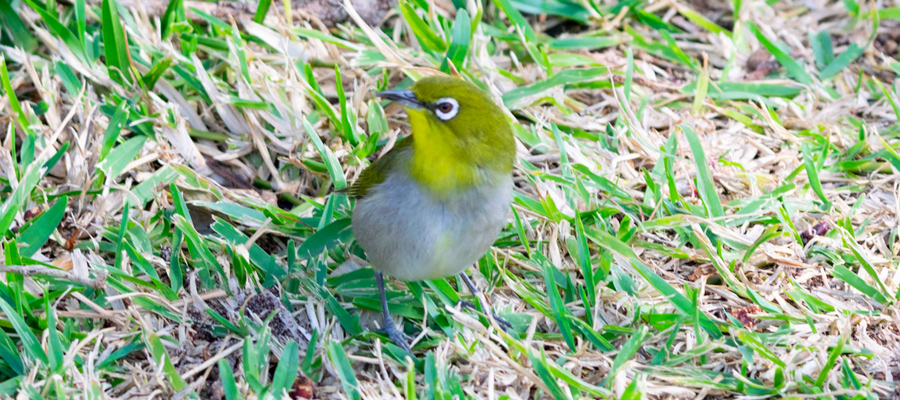
Japanese White-eye Ecology
Habitat
Lives in broad-leaved forests from mountains to plains, but is also seen in parks and residential areas.
Food
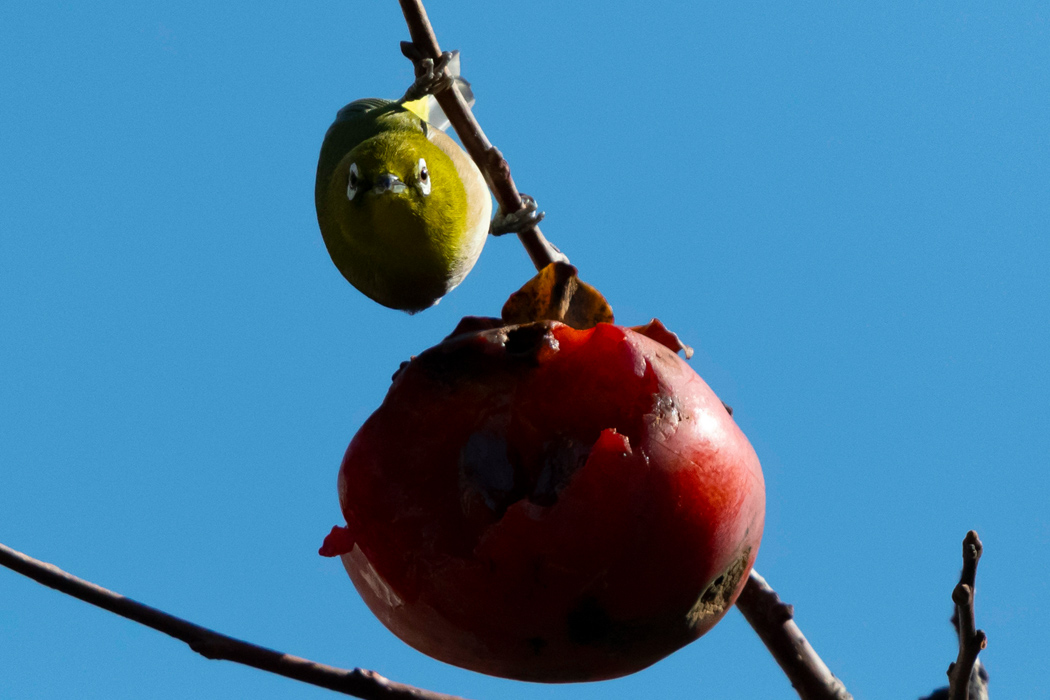
Omnivorous, eating fruits and nectar. In spring, they arrive in search of nectar from freshly blooming flowers.
Life Cycle
They stay in pairs year-round and move through the trees together.
Japanese White-eye Photos
Japanese White-eye Photos are introduced.
Tap the photo to open the detail page.
Japanese White-eye Behavior
They live mostly in trees, though the white-eyes on the Ogasawara Islands seemed to descend to the ground relatively easily.
Japanese White-eye Information
Naming
The genus name "Zosterops" means "girdled eye," focusing on the eye-ring. It is called "White-eye" in English and "Xiuyanniao" (meaning beautiful embroidered-eye bird) in Chinese, following a similar naming convention.
Japanese White-eye Found Locations
Persimmon Tree
I photographed a white-eye pecking at persimmons in a park in Hachioji. They arrived as a pair and ate plenty of the ripe fruit. Toward winter, as tree branches become sparse, it becomes easier to observe them. When I was a child, I used to look forward to white-eyes visiting after I impaled mandarin oranges on garden branches in the winter.
Foraging in a Small Group
Several birds gathered to eat fruit from a tree in a park in Hachioji. They were a bit noisy as they competed for the fruit.
Japanese White-eye Video
Japanese White-eye is introduced by video.
They were having a bit of a squabble.
Picture book
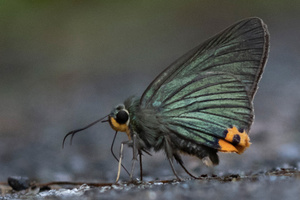
Hind wings orange color is one point....... Read more
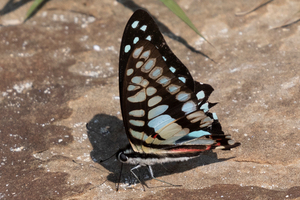
With a light blue band....... Read more
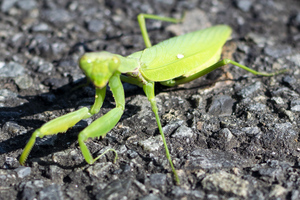
Can be seen until late autumn. It is characterized by the white stripes on the forewings....... Read more
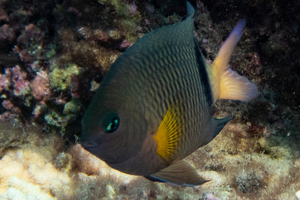
There is a black spot in front of the caudal fin....... Read more
There is a hump at the base of the beak....... Read more
The pattern of the male is impressive....... Read more