Water Rail

Water Rail

A wary 'walking bird'

Water Rail Characteristics and Morphology

Larger than a starling, but smaller than an Oriental turtle dove. The silhouette is characterized by strong legs and a rounded body, typical of the Rallidae family. The entire body is dark brown, and the sexes are similar in color.
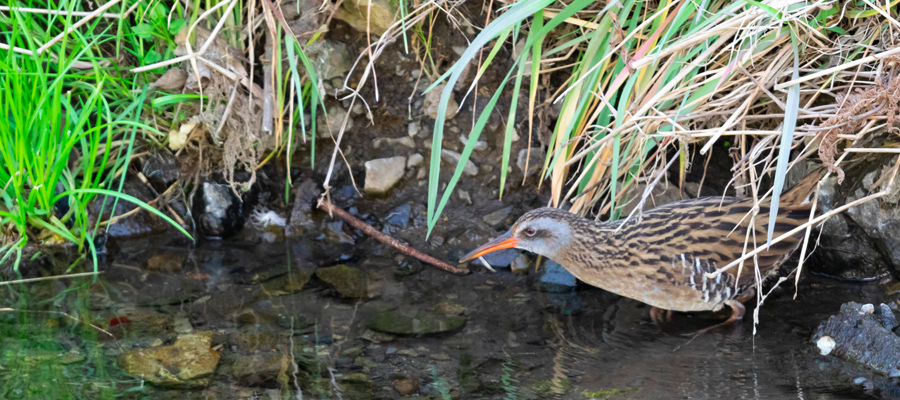
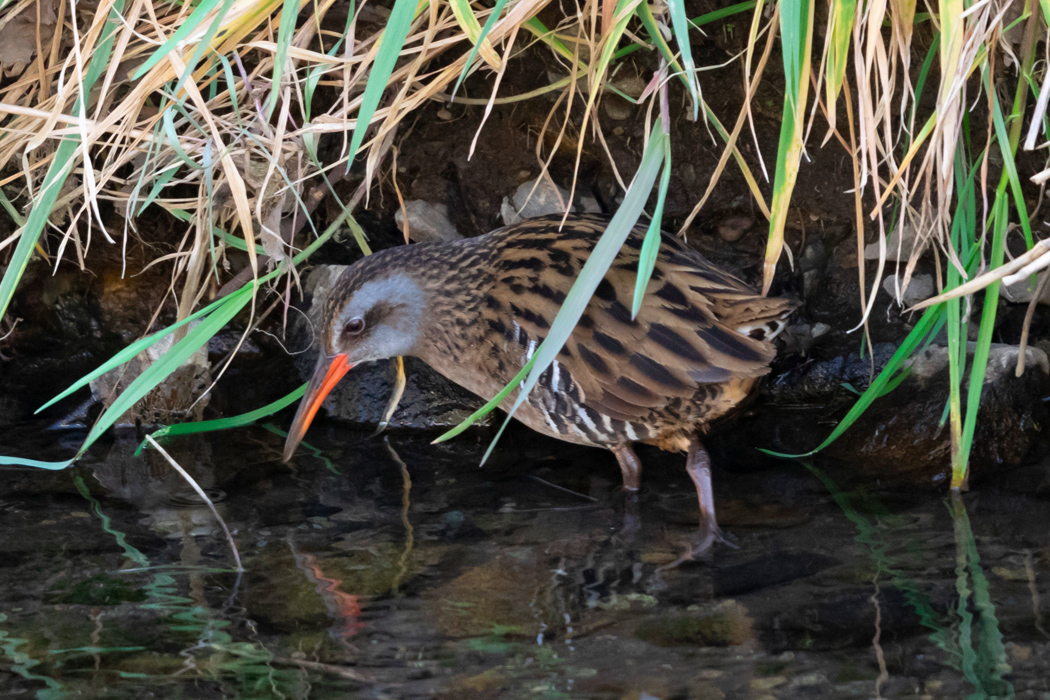
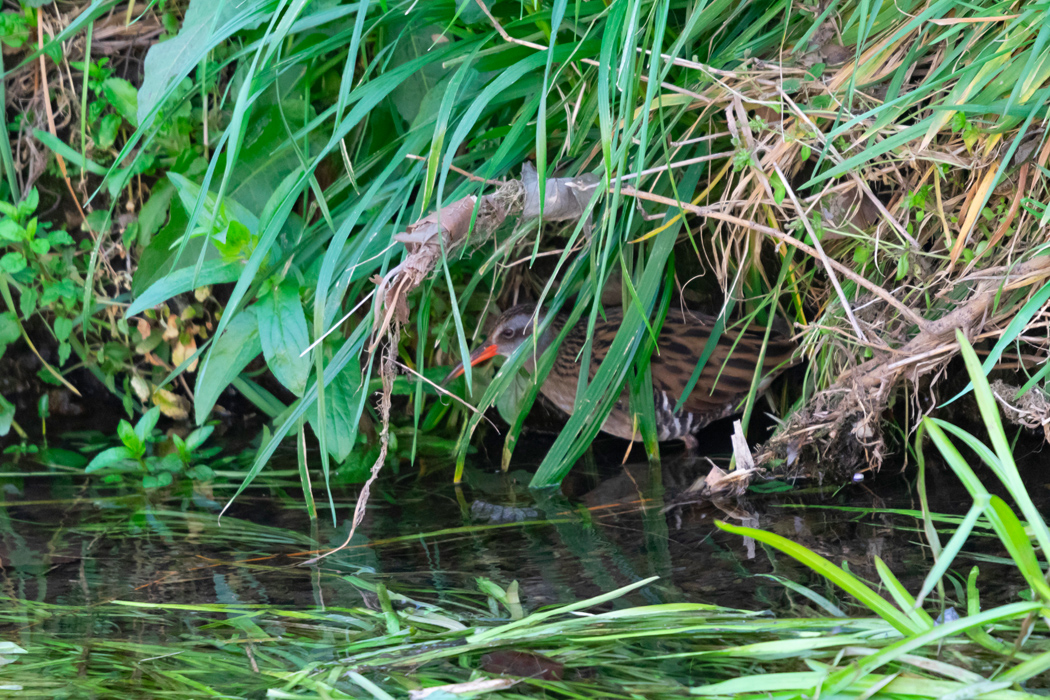
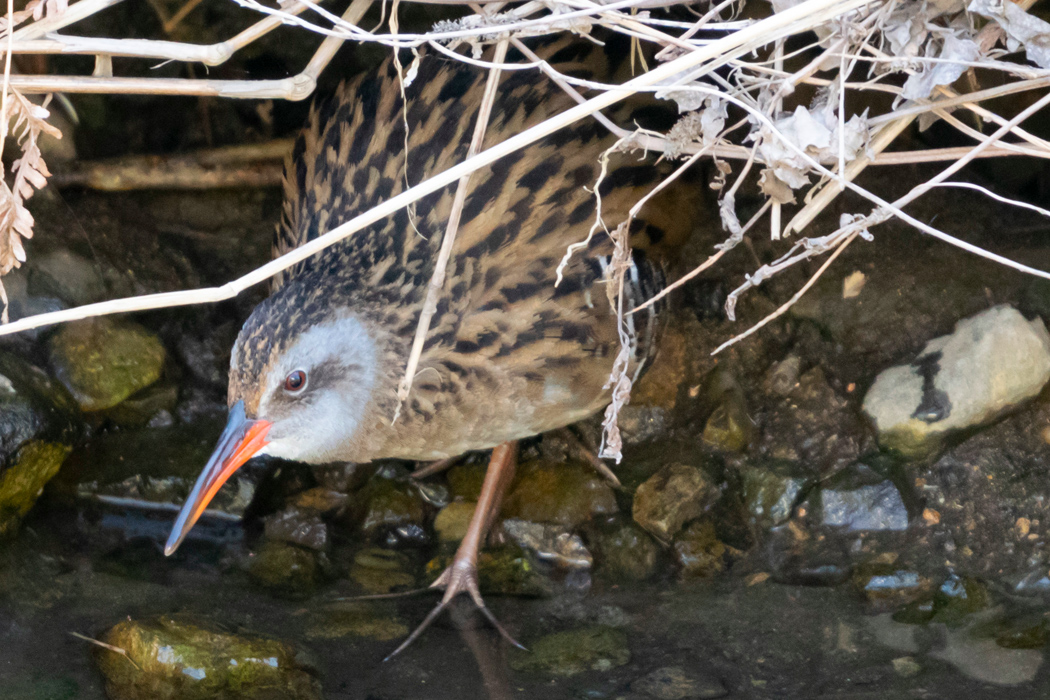
The bill is long, longer than the head. The head is patterned with alternating blackish-brown and gray. The base of the bill is red, while the tip and upper part are black. The iris is red. The body is rounded. The brownish back has black vertical stripes. The belly is grayer than the back. There are black and white stripes on the flanks. The tail feathers are short and sometimes held erect. From behind, they appear black and white. The legs are thick and strong.

Song

Emits a high-pitched, short phrase of 'kii-kii' or 'kek-ketsu'.

Water Rail

Water Rail Ecology

Habitat

Inhabits wetlands and watersides such as streams.

Food

Eats insects and crustaceans.

Life Cycle

Nests and breeds in reed beds. The male may court the female by offering food.

Water Rail Photos

Water Rail Photos are introduced.
Tap the photo to open the detail page.

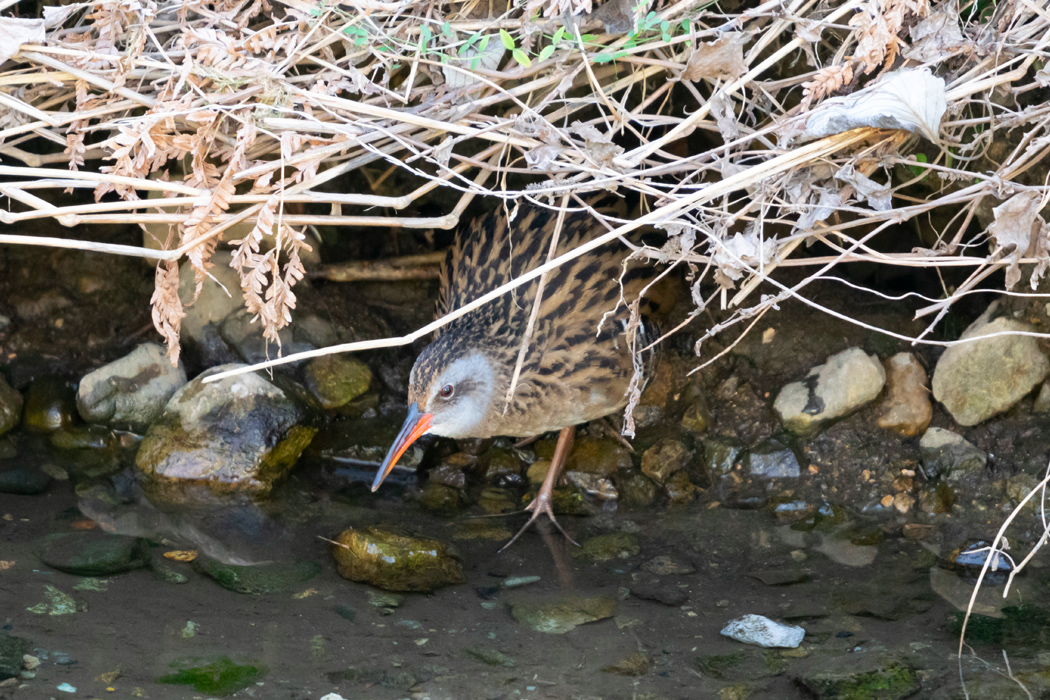
Looking at us from the shade of the grass at the water's edge.
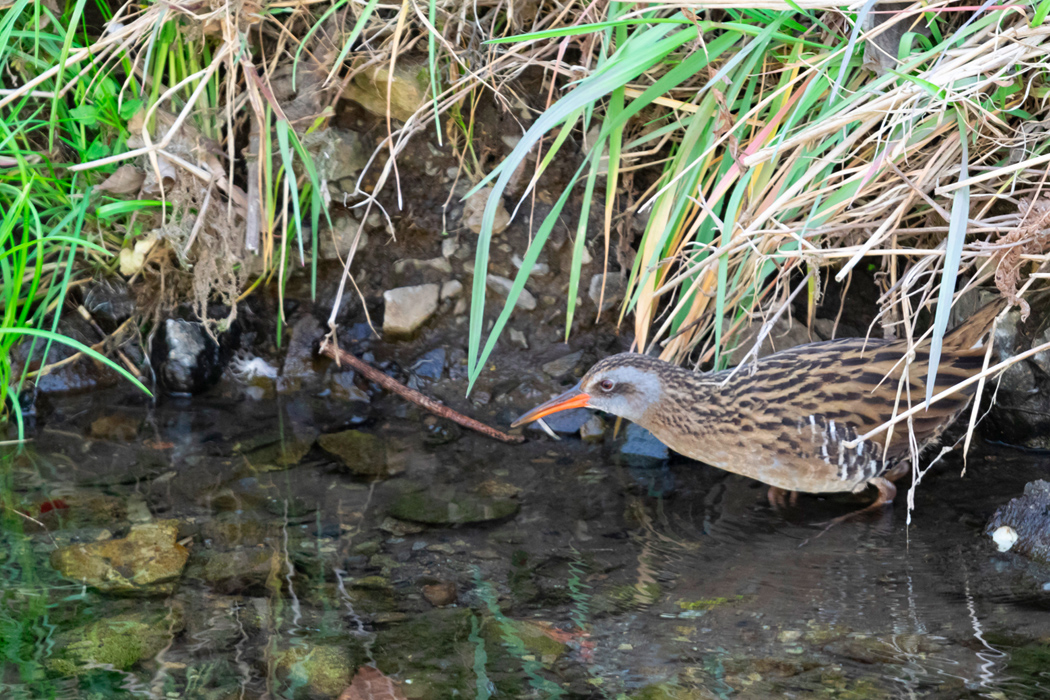
Walking along the shore without making a sound.
There are black vertical stripes on the back.
Hiding in the grass.
The bill is orange.
The bill is orange.

Water Rail Behavior

It is wary and hides in the waterside grasses. It rarely flies, moving by walking. It is mainly active at night and often hides in the grass during the day. When there is no danger around, it may come out into the sun even during the day.

Water Rail Information

Naming

The scientific name means 'of India'. In kanji, it is written as '水鶏' (waterfowl).

It has been a familiar bird in Japan since ancient times and appears in classical literature.

Water Rail Found Locations

Ochiaigawa River, Higashi-Kurume

I found it at Ochiaigawa River in Higashi-Kurume. Many wild birds visited the riverside during the day, and when I looked at the less crowded waterside, a Water Rail was coming out of the bushes. When it noticed me, it hid in the shade of the grass, but after checking its surroundings with only its head out, it slowly started walking along the shore.

Midstream of the Tama River

It is also relatively common to see in the waterside of the midstream of the Tama River. Forages in shallow waters. It carefully looks around from the bushes and wanders around places where it can hide immediately if something happens. In the evening, I see them walking more boldly. The location seems to be the same as that of the Red-legged Crake, but I feel that it is less wary than the Red-legged Crake.

Water Rail Video

Water Rail is introduced by video.

Foraging in the waterside of the Tama River.

Water Rail Images

Picture book

Its Japanese name comes from the white markings on its cheeks....... Read more

Short crest and pointed head....... Read more

The male's crimson color is reflected on the riverbed....... Read more

They come to the tidal flats in large numbers....... Read more

It is characterized by thin black wings and a red patch on the hind wings....... Read more

The fragrant yellow fruit is a winter tradition....... Read more