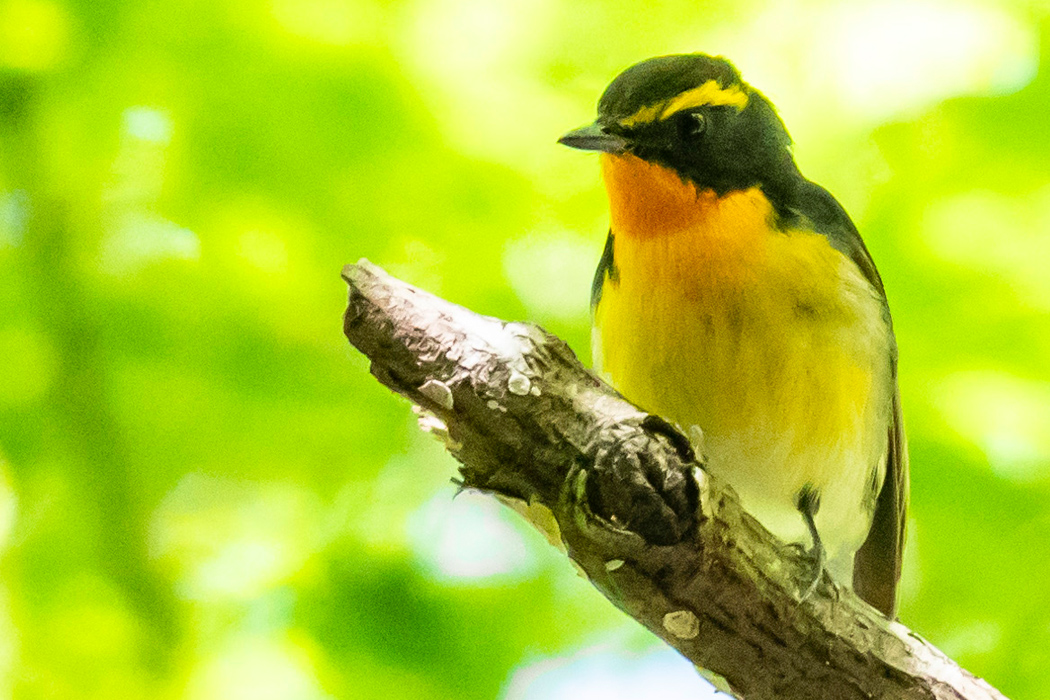
Narcissus Flycatcher
Comes to bright forests when the weather warms.
| Scientific name | Ficedula narcissina |
| English name | Narcissus Flycatcher |
| Japanese name | 黄鶲 |
| Class | Aves |
| Order | Passeriformes |
| Family | Muscicapidae |
| Genus | Ficedula |
| Species | narcissina |
| Full length | 14cm |
| Distribution | Distributed throughout Japan as a summer bird. |
Narcissus Flycatcher Characteristics and Morphology
The silhouette is about the size of a sparrow or slightly smaller than a sparrow.
The beak is short and lead-colored. The iris is black.
The tail feathers appear to be horned or very shallowly concave. The legs are lead-colored.
Male
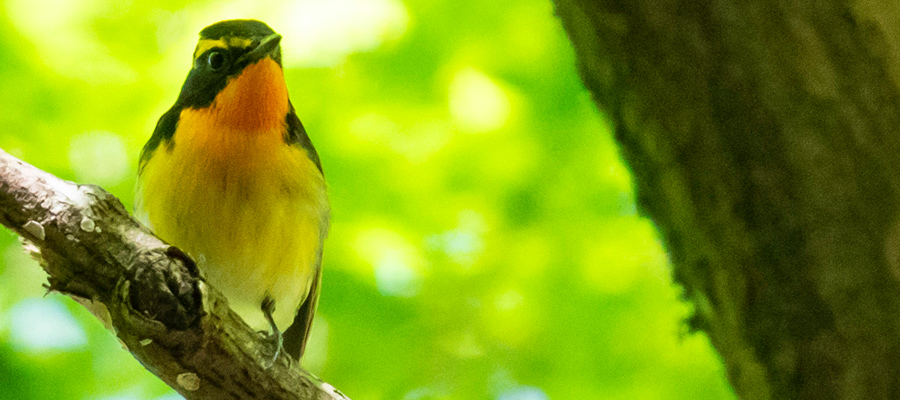
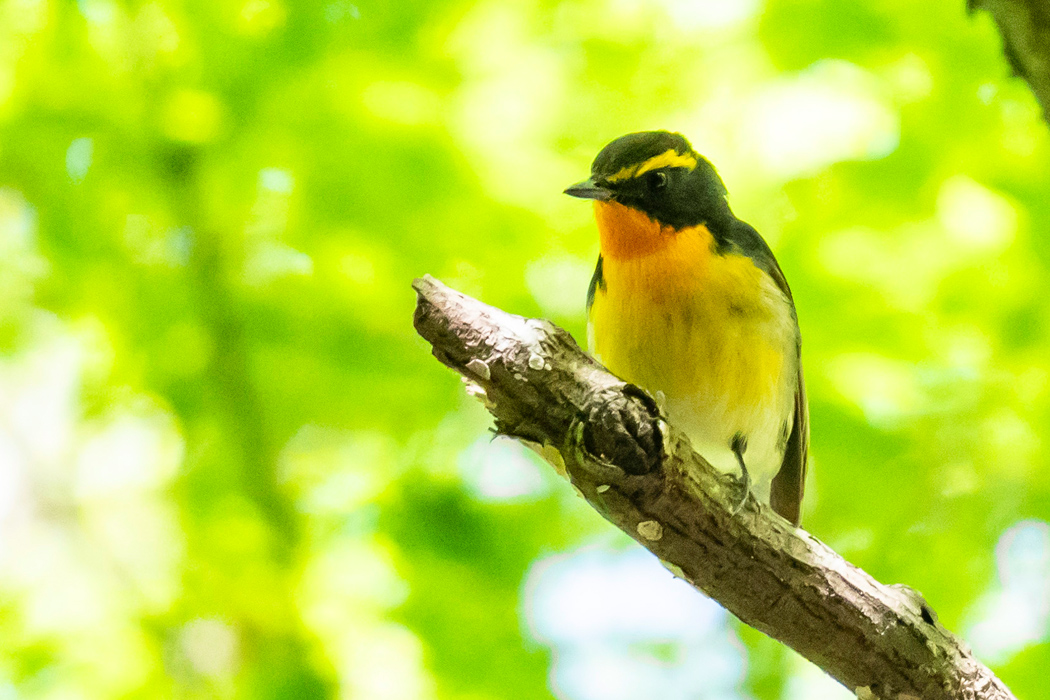
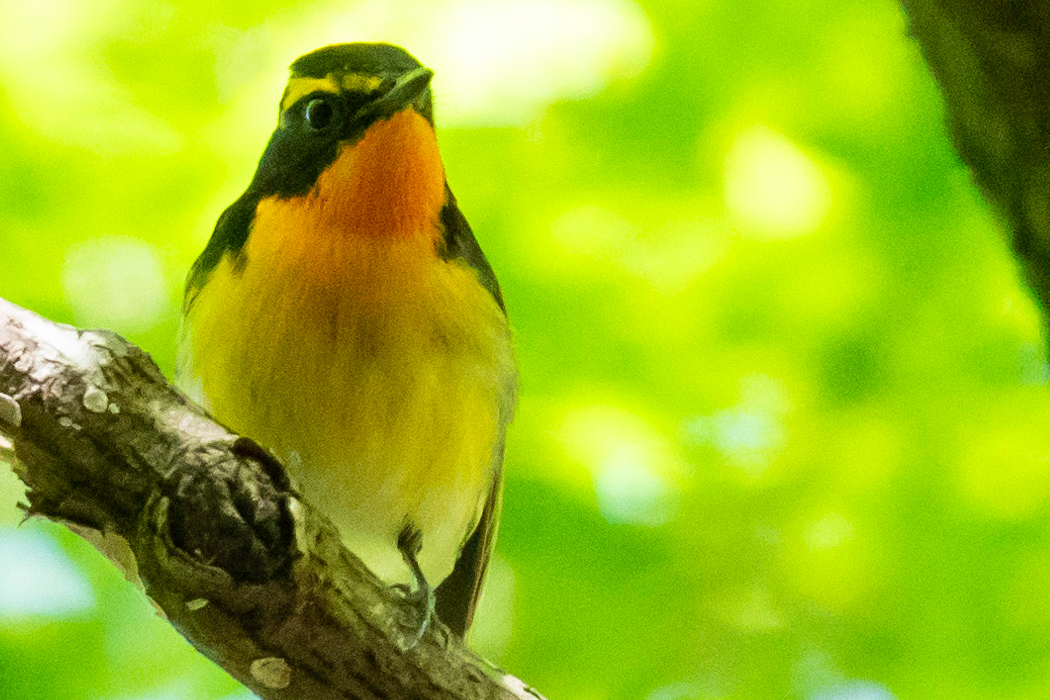
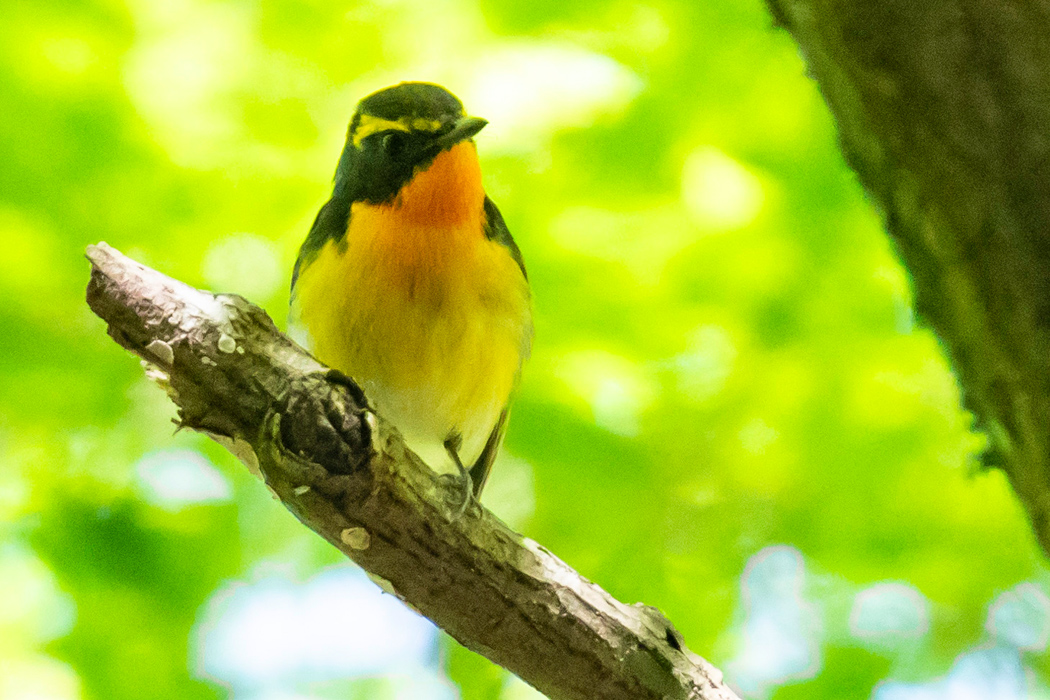
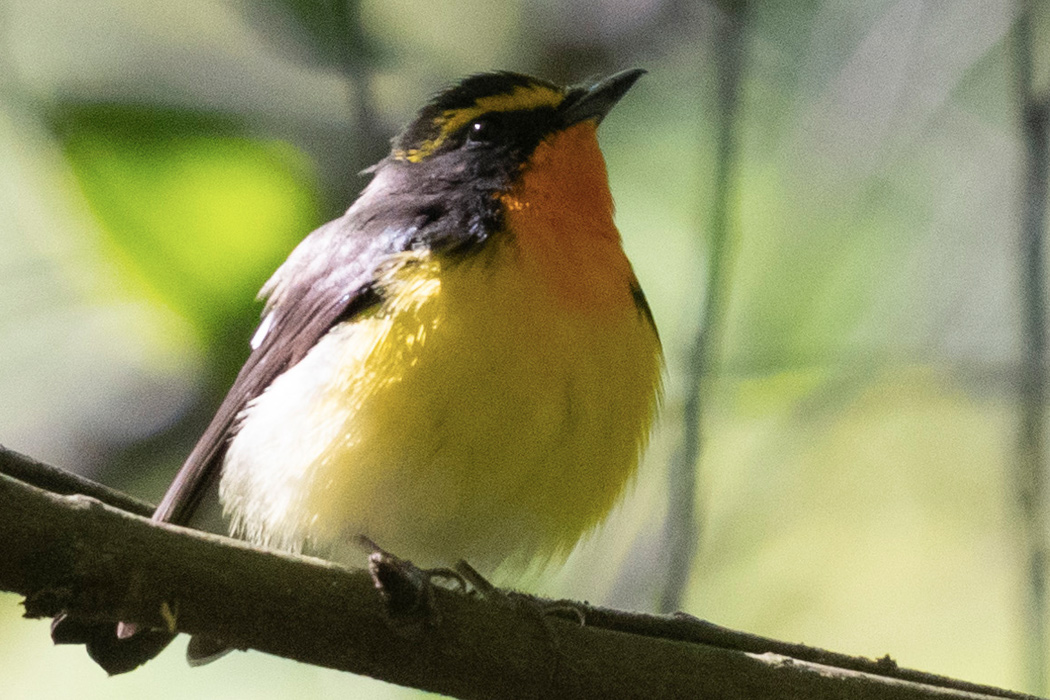
Two-tone black and yellow. It often appears black in the forest.
The top of the head is black, and the brows and throat are bright yellow. The brows extend to the back of the head. The throat is so yellow that it appears orange.
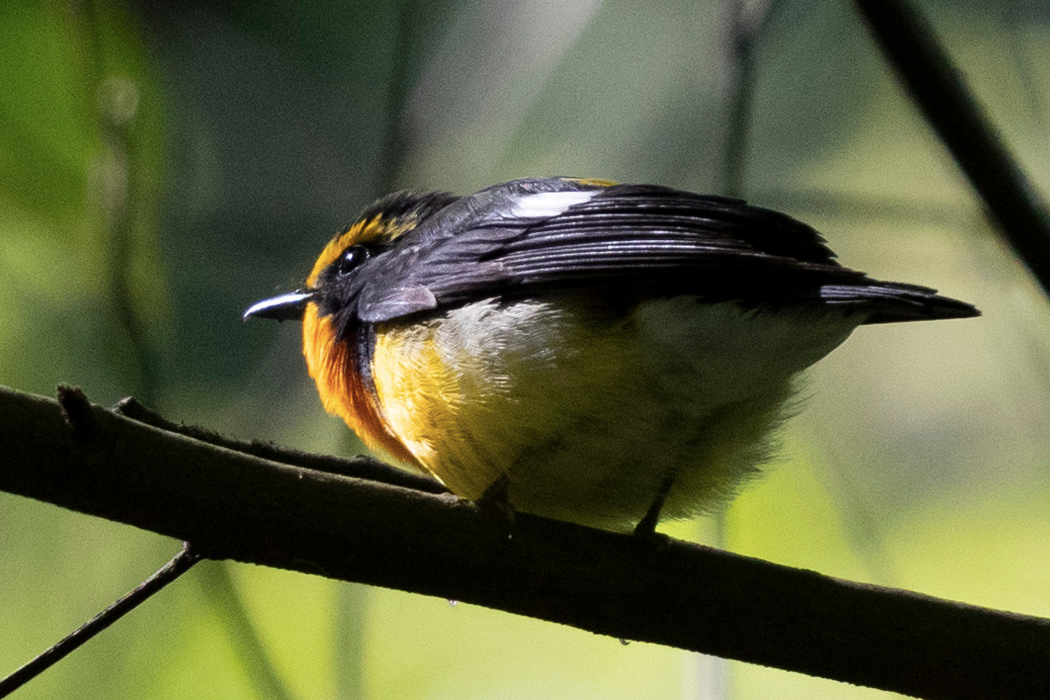
The wings are black, with white patches around the shoulders. The belly changes from yellow to white.
The tail feathers are slightly brown.
Female
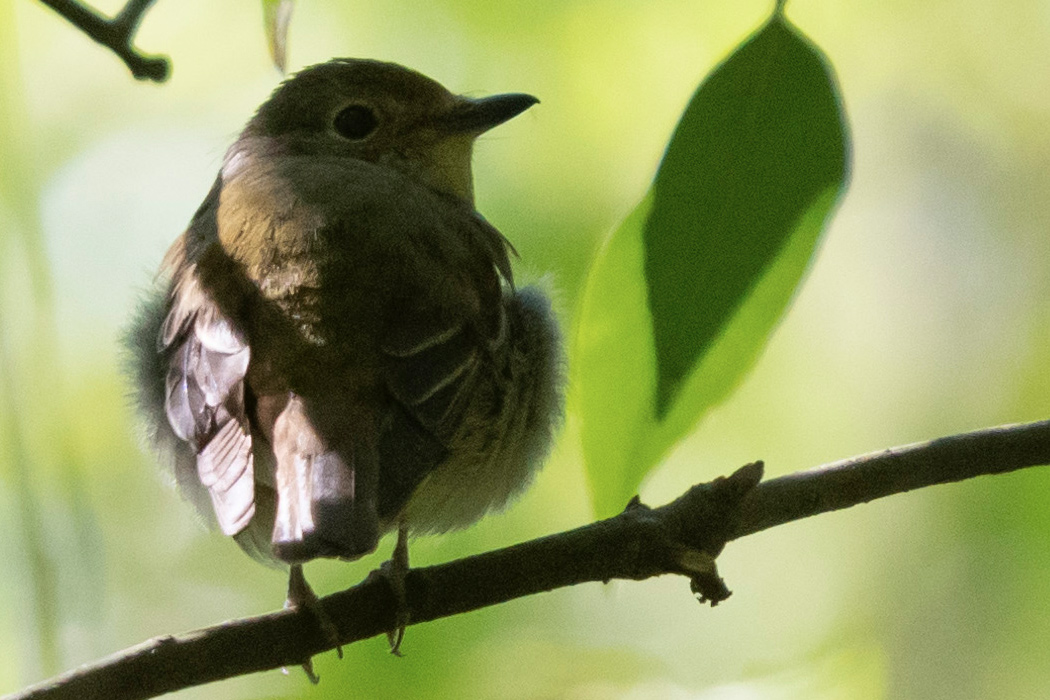
The entire body appears brown to olive.
The eye ring is light brown.
The wings are olive-colored with pale white feather edges. The belly becomes whiter toward the bottom.
The tail feathers are darker brown than the shoulders.
It looks very similar to the Blue-and-White Flycatcher, but this species appears slightly greener.
Juvenile
The back is mottled with pale brown and dark brown.
The beak is a pale flesh-colored color, not black.
The legs are also paler in color than those of the adult.
The beak of this species appears to be shorter than that of the Blue-and-White Flycatcher.
Song
They sing a beautiful "picchu picchu" and "churi churi" song. It sometimes imitates the calls of other birds.
Narcissus Flycatcher Ecology
Habitat
Inhabits bright broadleaf forests from mountainous to flatlands.
Food
Insects, spiders, etc. They also catch insects in the air by flying catch.
Life Cycle
They build nests in hollows in dead trees.
Narcissus Flycatcher Photos
Narcissus Flycatcher Photos are introduced.
Tap the photo to open the detail page.
Narcissus Flycatcher Information
Naming
The scientific name, "narcissina," means "daffodil," and is derived from the male's vibrant body color. The Japanese name, as the name suggests, refers to the yellow flycatcher.
Narcissus Flycatcher Found Locations
In the forest of Ura Takao Hikagesawa Campground
Found in the forest near Hikagesawa Campground in Takao-cho, Hachioji City.
A dull-colored female arrived first, followed shortly by a male who flew onto a branch. The male was singing noisily.
I also encountered summer birds such as blue-and-white flycatchers in the same area.
Narcissus Flycatcher Video
Narcissus Flycatcher is introduced by video.
The male was singing.
Narcissus Flycatcher Observation Log
These are the observation logs where we found Narcissus Flycatcher.
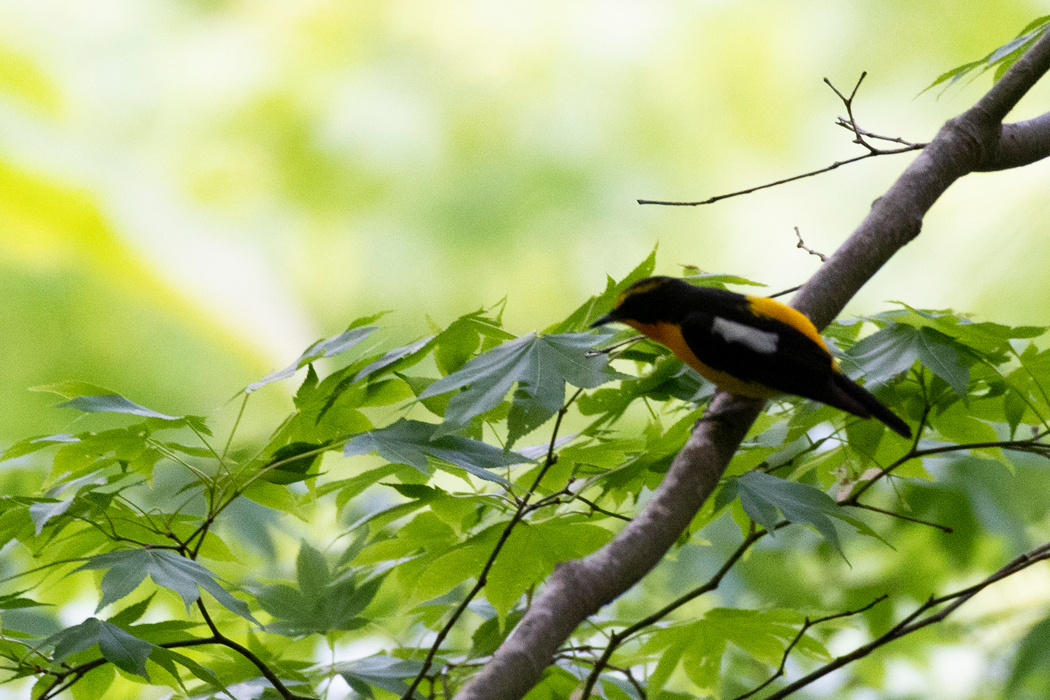
Narcissus flycatchers were everywhere in the forest. I also saw fierce fights between males.
Read more >
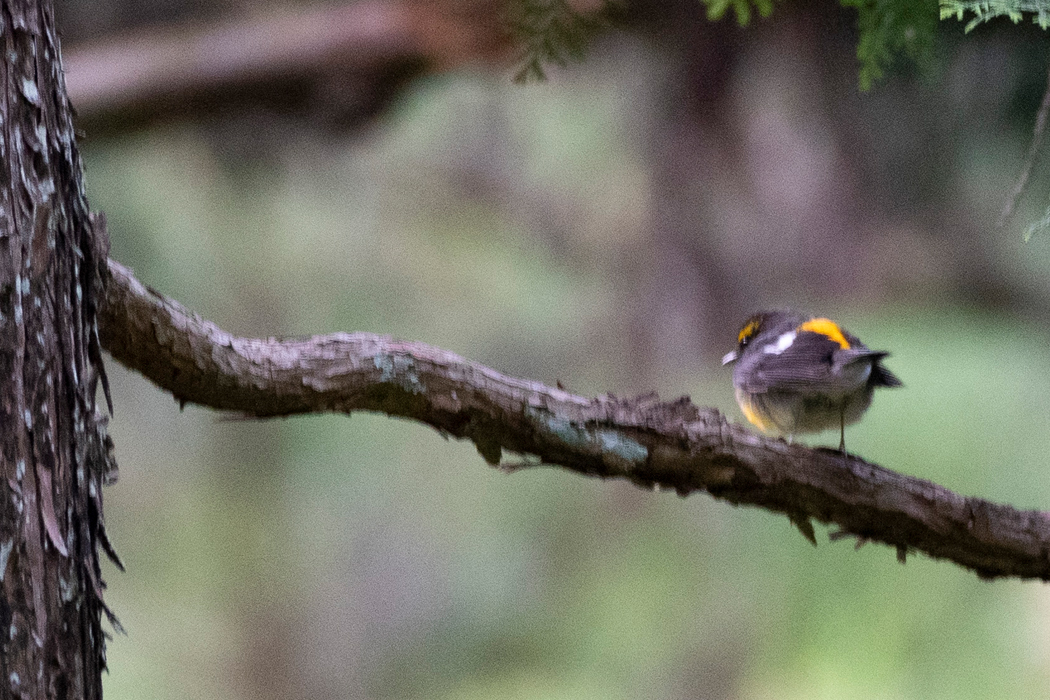
I photographed a Narcissus Flycatcher perched on a cedar tree.
Read more >
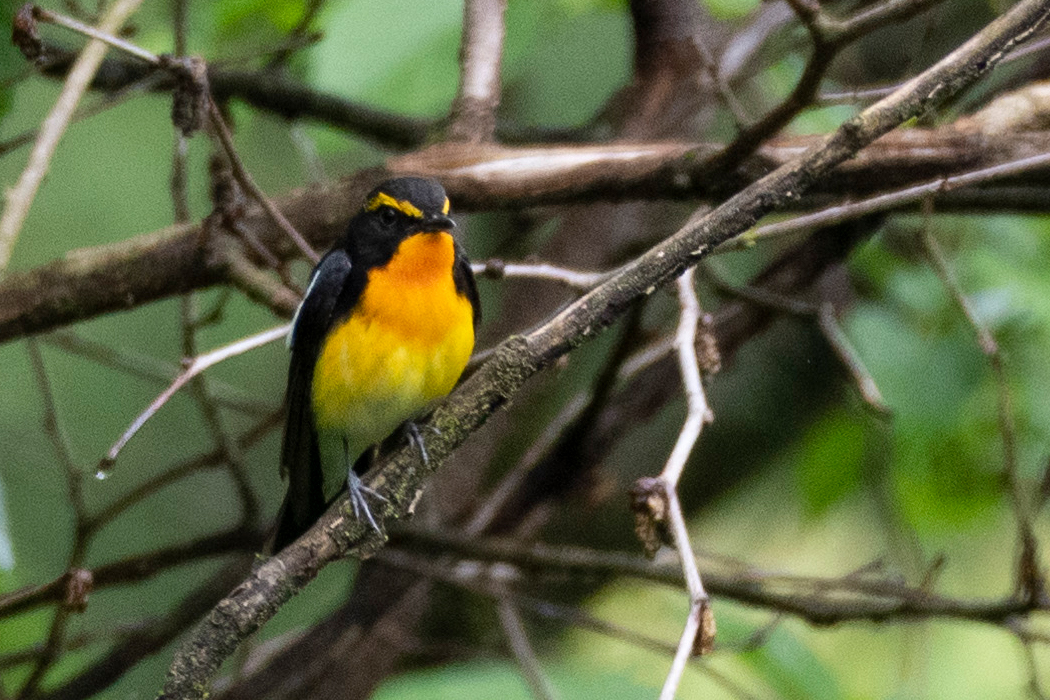
I came out of the forest and returned to the point where I saw the Grey-streaked Flycatcher. A Narcissus Flycatcher had appeared.
Read more >
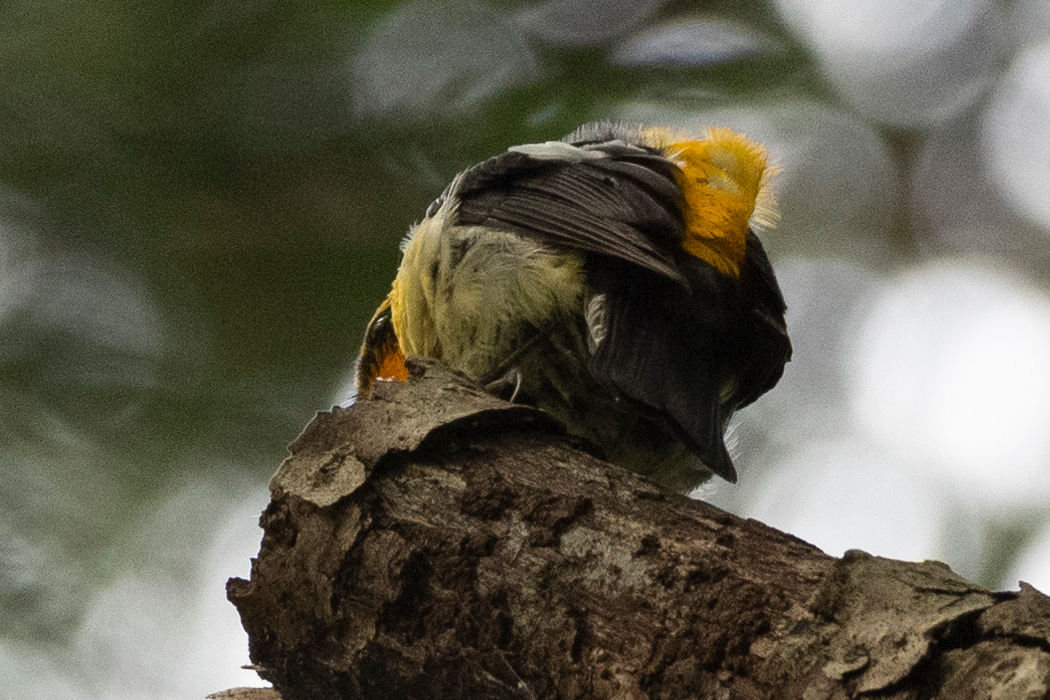
A male Narcissus Flycatcher was singing energetically near the mountain pass.
Read more >
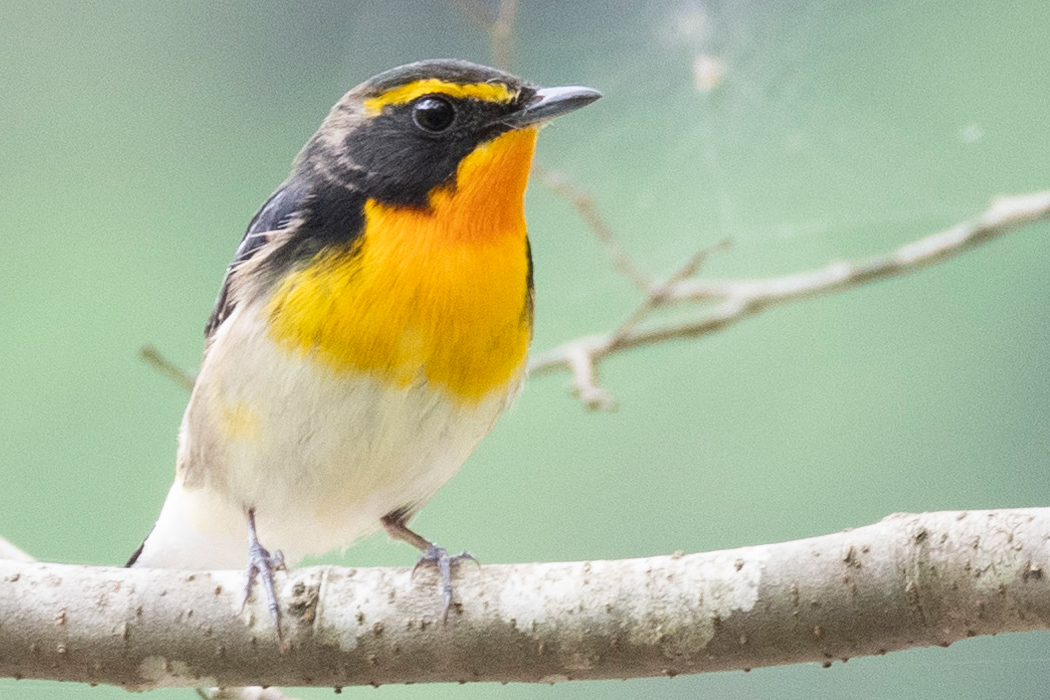
I photographed a Narcissus Flycatcher head-on as it came out onto the road.
Read more >
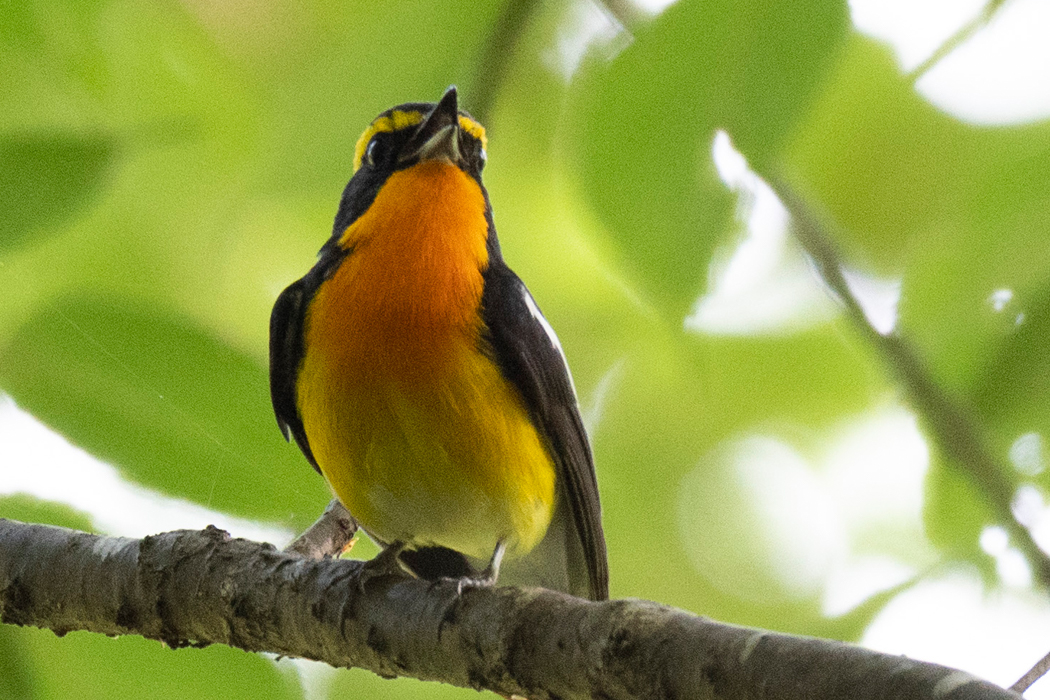
A Narcissus Flycatcher was singing frequently on the forest road along the stream.
Read more >
References
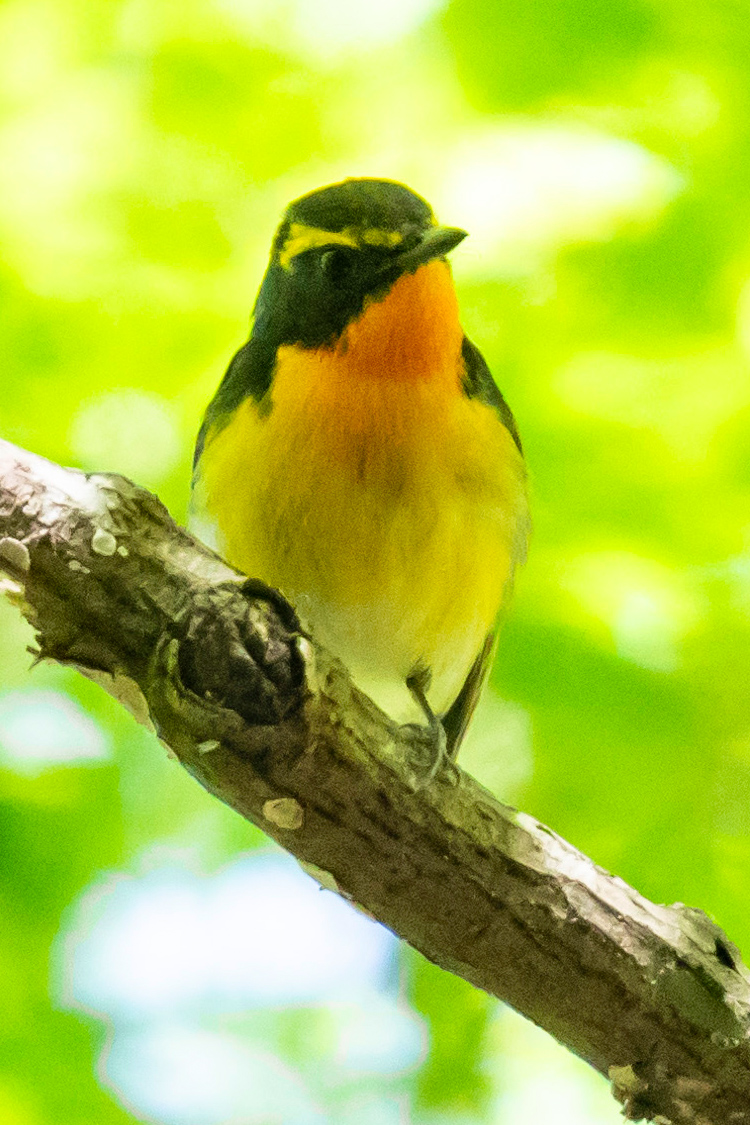
Picture book
Inhale plankton with a large mouth....... Read more
Blooms during the rainy season....... Read more
Eyeballs line the edge of the back....... Read more

Finely branched white dorsal process....... Read more
Comes to coastal coves in winter....... Read more
Contains a small amount of sweet nectar....... Read more