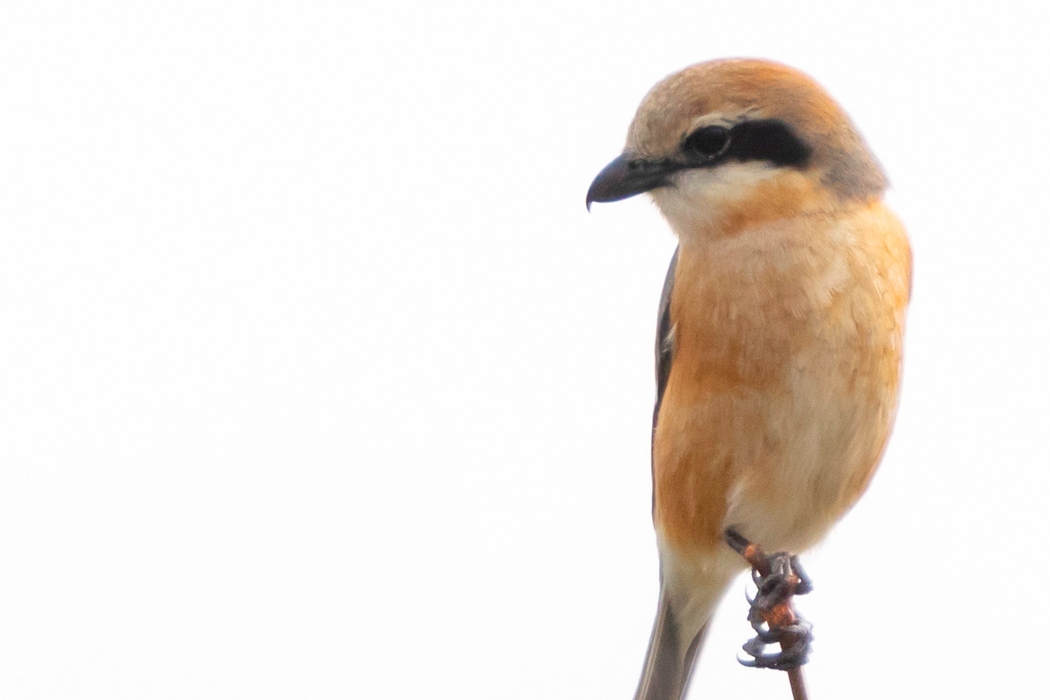
Bull-headed Shrike
Searches for prey from atop trees while wagging its tail.
| Scientific name | Lanius bucephalus |
| English name | Bull-headed Shrike |
| Japanese name | 百舌 |
| Class | Aves |
| Order | Passeriformes |
| Family | Laniidae |
| Genus | Lanius |
| Species | bucephalus |
| Full length | 20cm |
| Distribution | Hokkaido, Honshu, Shikoku, Kyushu |
Bull-headed Shrike Characteristics and Morphology
A size larger than a sparrow, overall brownish. Characterized by a silhouette with a long tail.
The head is round, large, and brown. The bill is short but sharp and hooked at the tip. The iris is black.
The area from the shoulders to the wings is a grayish-brown. The wings are tinged with gray and feature white spots on the edges. The belly is a lighter brown.
The tail feathers are long and blackish-brown.
Male
The general impression is the same as the female, but the face differs. It has a sharper look.
Has a distinct black mask (eyeline) that extends to the neck.
The color of the breast is deeper compared to the female.
Female
Has a gentler expression than the male.
The eyeline is brown, making the eyes appear wide and clear.
The color from the breast to the belly is paler than the male's.
Song
Characterized by a high-pitched call known as "Takanaki." They cry loudly with a "kee-kee-kee" sound, which is a classic sign of autumn in Japan. In Niimi Nankichi's "Gon, the Little Fox," the cry of the shrike is used to depict the autumn scenery.
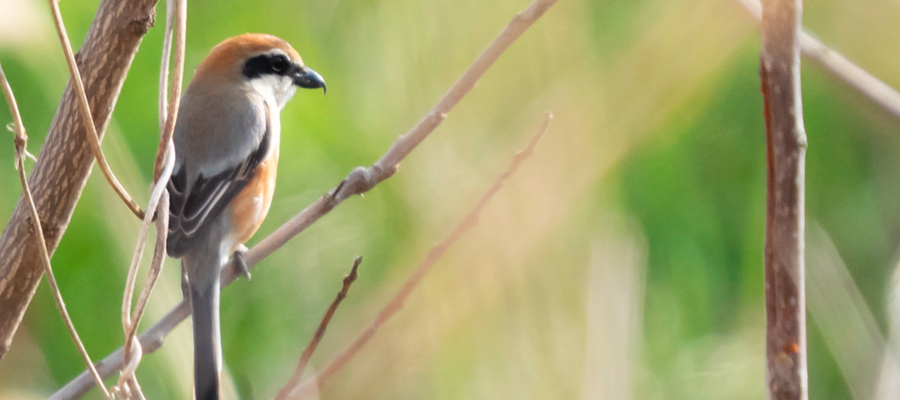
Bull-headed Shrike Ecology
Habitat
Frequently seen in open grasslands and riverbeds. Also found near human settlements, such as fields and parks.
Food
Carnivorous, feeding primarily on insects and amphibians. It has strong predatory instincts and may even attack small birds like sparrows. It searches for prey from treetops and consumes its catch on a branch.
Life Cycle
Breeds between early spring and summer.
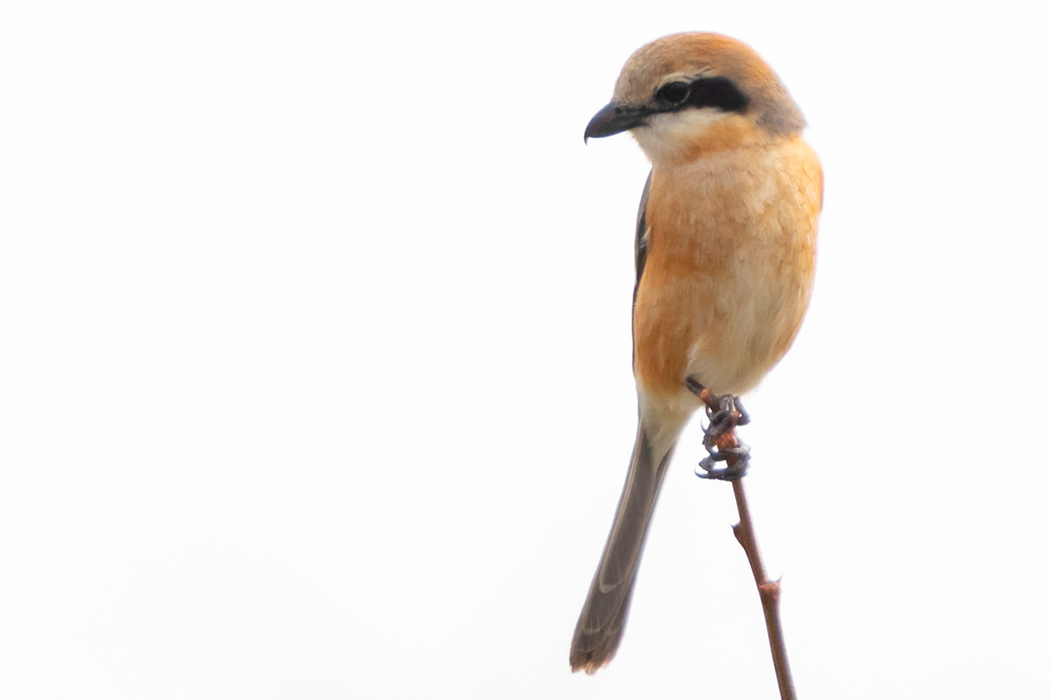
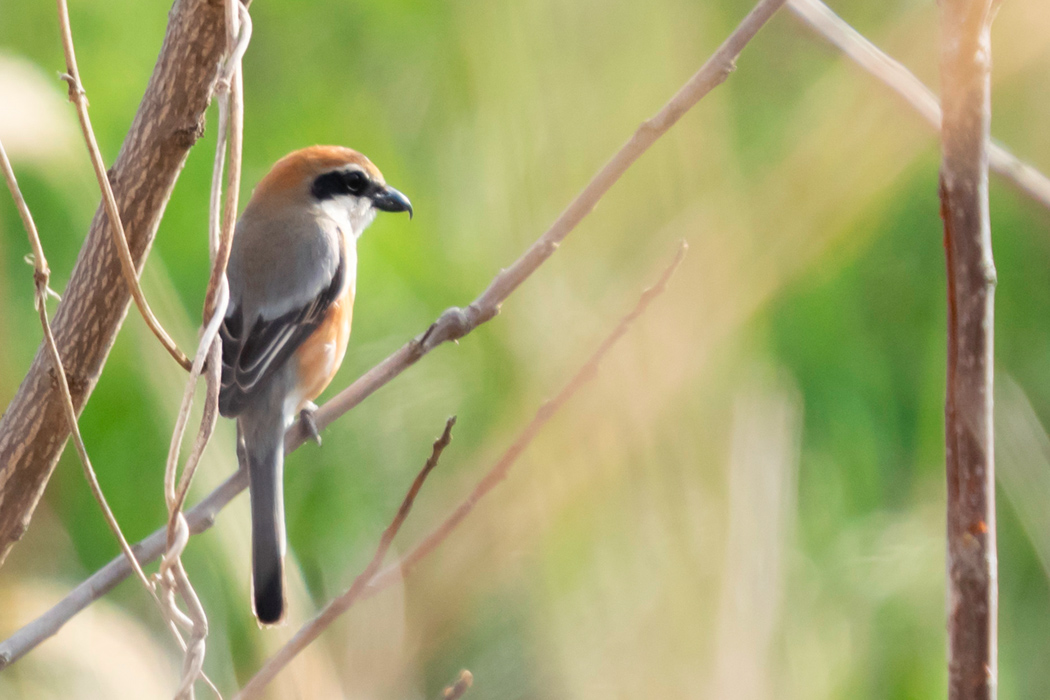
Bull-headed Shrike Photos
Bull-headed Shrike Photos are introduced.
Tap the photo to open the detail page.
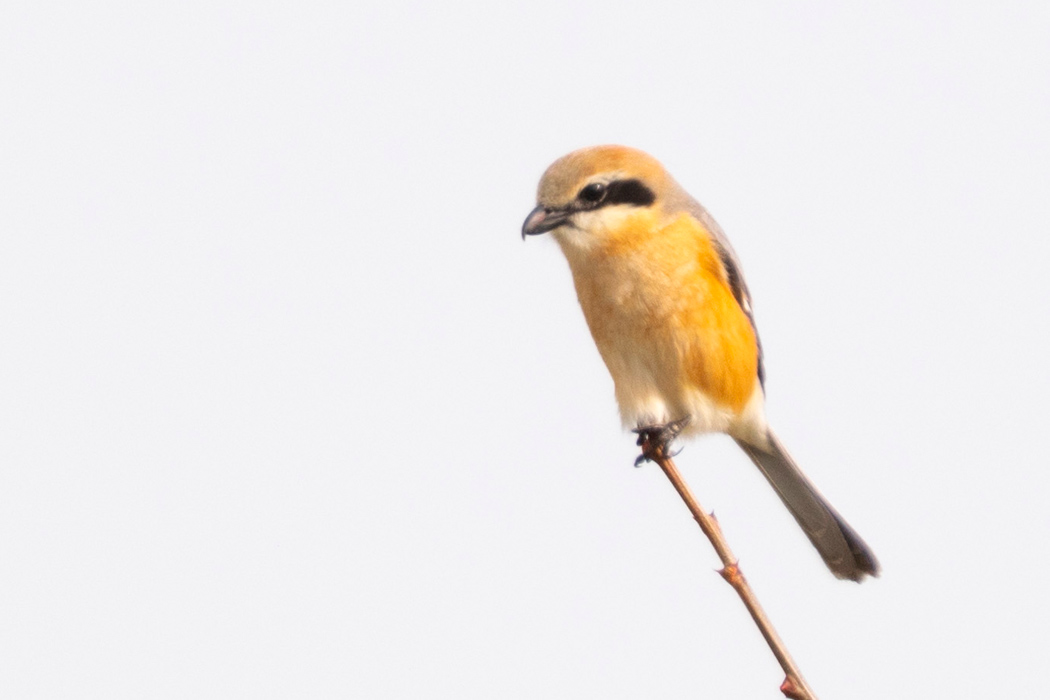
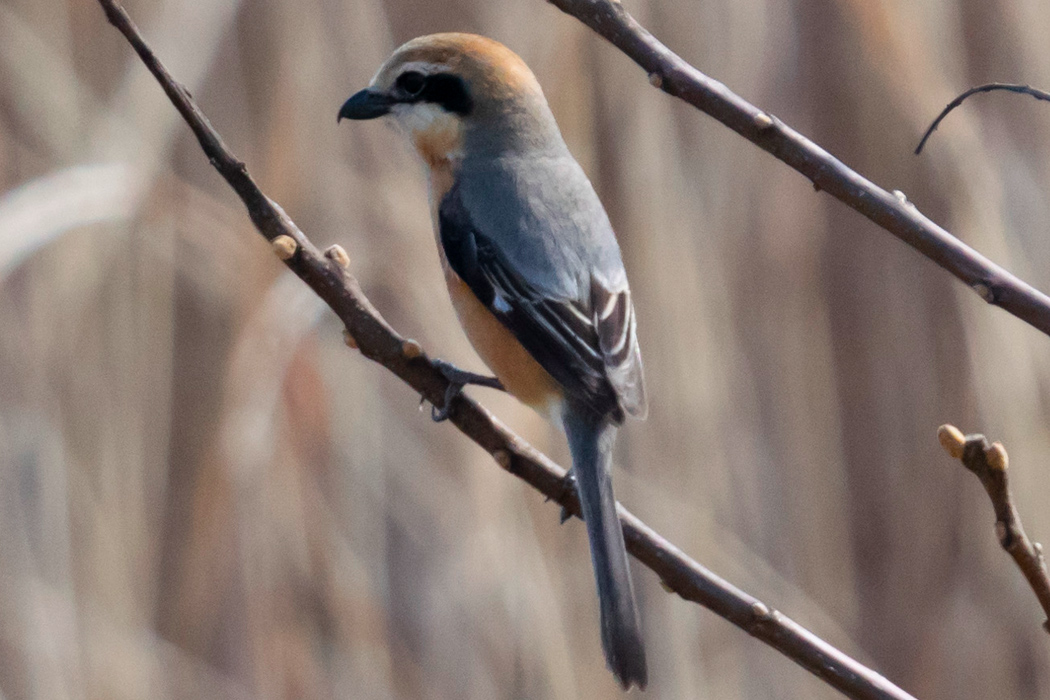

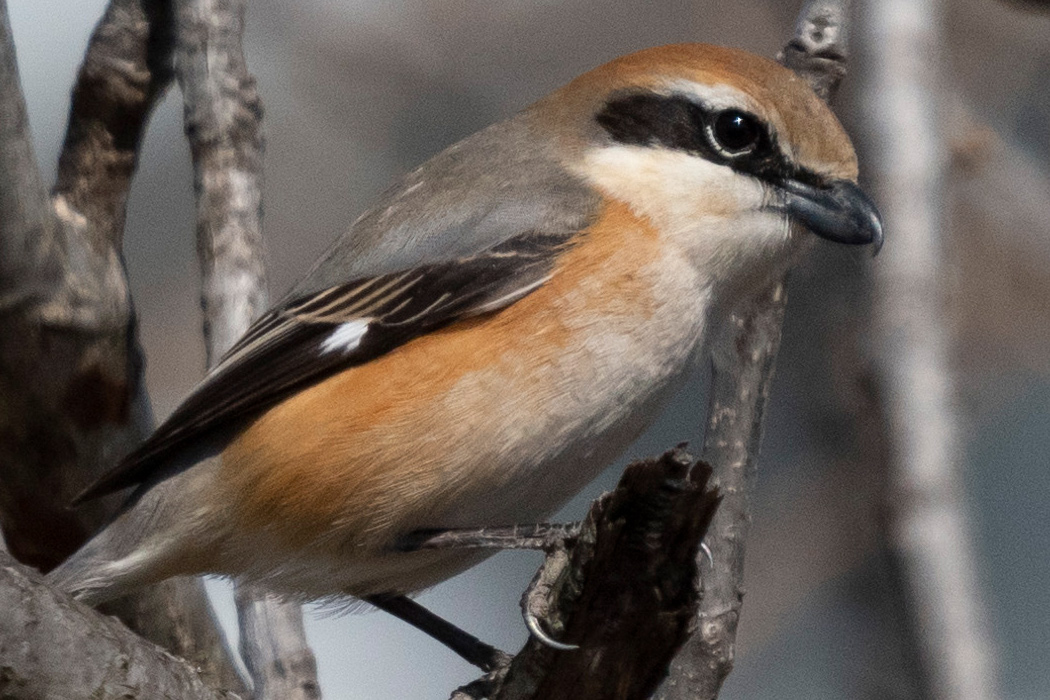
Bull-headed Shrike Behavior
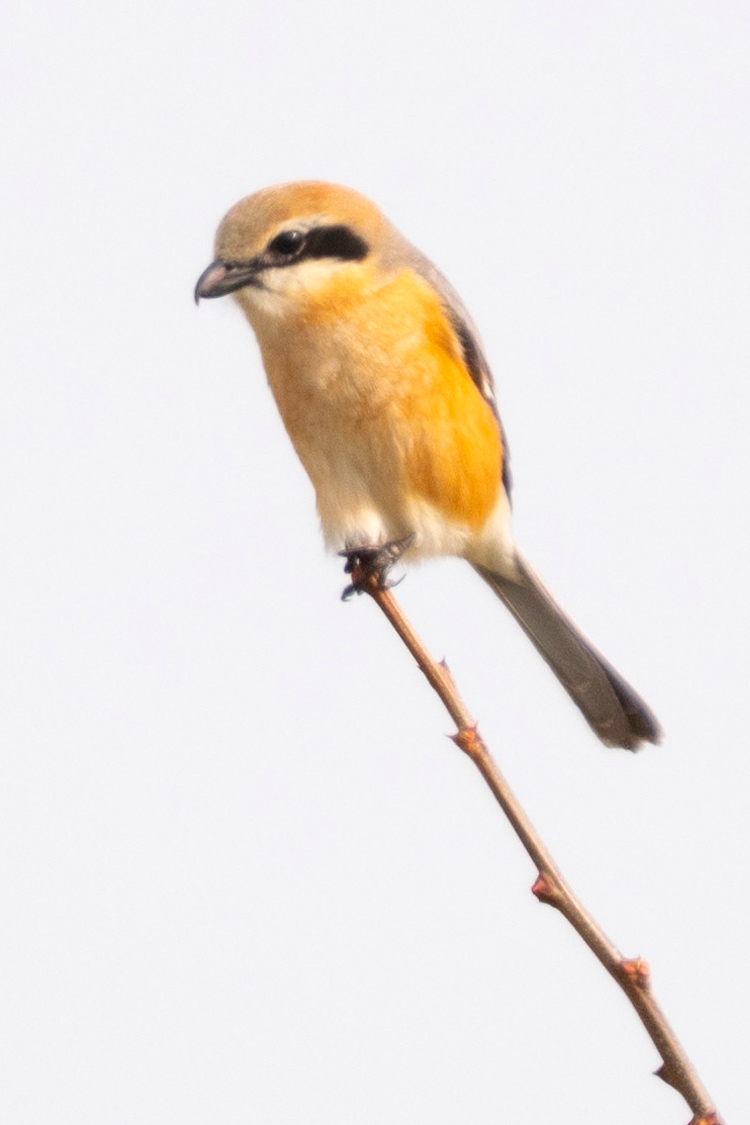
Highly territorial; individuals maintain their own territories outside of the breeding season. They prefer to perch near the tips of branches and wag their tails in a circular motion.
Hayanie (Shrike's Larder)
They perform a behavior called "Hayanie," where they impale captured prey on thorns or twigs. While the exact reason isn't fully understood, it seems to be a habit unique to shrikes that dine in trees.
Mimicry
The Japanese name is written with characters meaning "hundred tongues" (百舌), and as the name implies, they sometimes mimic the calls of various other birds, such as the Bamboo Partridge or the Japanese White-eye.
Bull-headed Shrike Information
Naming
The scientific name "bucephalus" means "ox-headed," referring to the large size of the shrike's head. The Japanese name "Mozu" (Hundred-tongued bird) comes from its ability to mimic various bird calls.
Bull-headed Shrike Found Locations
Riverbed of the Asa River, Hachioji City
I spotted one perched on the tip of a branch along the Asa River in Hachioji. It scanned the surroundings while rotating its tail and occasionally descended to the ground. It clearly prefers being up in the trees; even when moving, it only stayed on the ground for a split second before hopping back to a branch. Its flight speed wasn't particularly fast; it would fly about a dozen meters, stop, and let out a unique "kyu-kyu" call.
Picture book
Male breeding plumage is colorful....... Read more
boxy silhouette....... Read more
Known for its beautiful yellowish-green back....... Read more

Known as the "Bush Warbler," it is one of Japan's Three Celebrated Songbirds....... Read more
Lace-like flowers bloom at night....... Read more
fairly large with wings open....... Read more