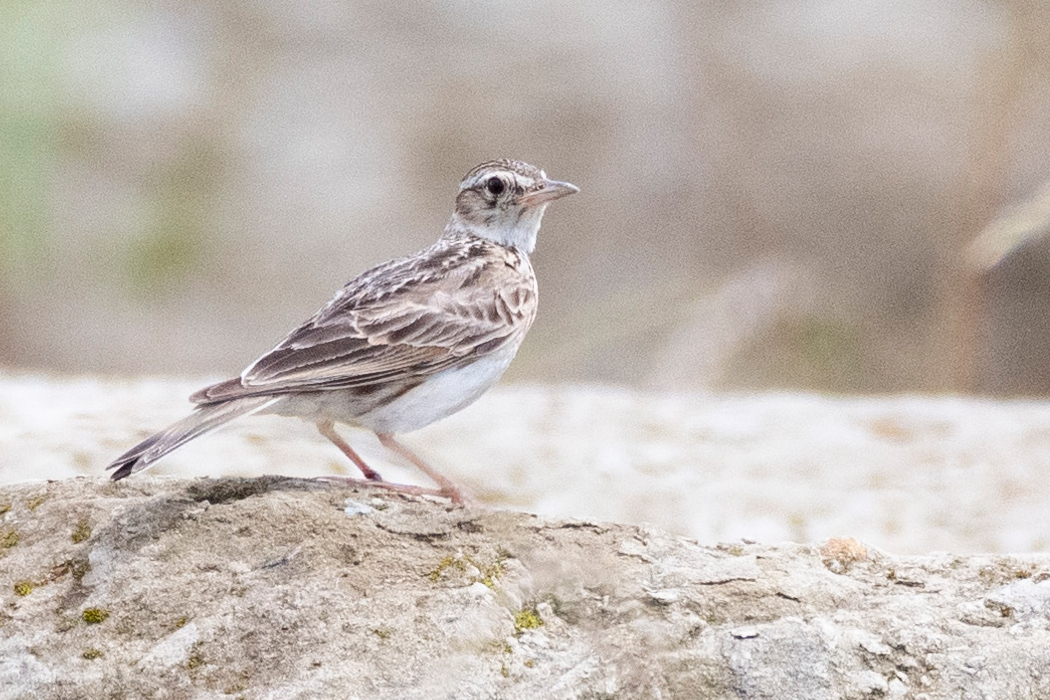
Eurasian skylark
A spring bird loved around the world.
| Scientific name | Alauda arvensi |
| English name | Eurasian skylark |
| Japanese name | 雲雀 |
| Class | Aves |
| Order | Passeriformes |
| Family | Alaudidae |
| Genus | Alauda |
| Species | arvensi |
| Full length | 17cm |
| Distribution | Africa, Eurasia. |
Eurasian skylark Characteristics and Morphology
A bunting-sized bird, about 17cm long, with brownish plumage overall. Males and females are mostly the same color.
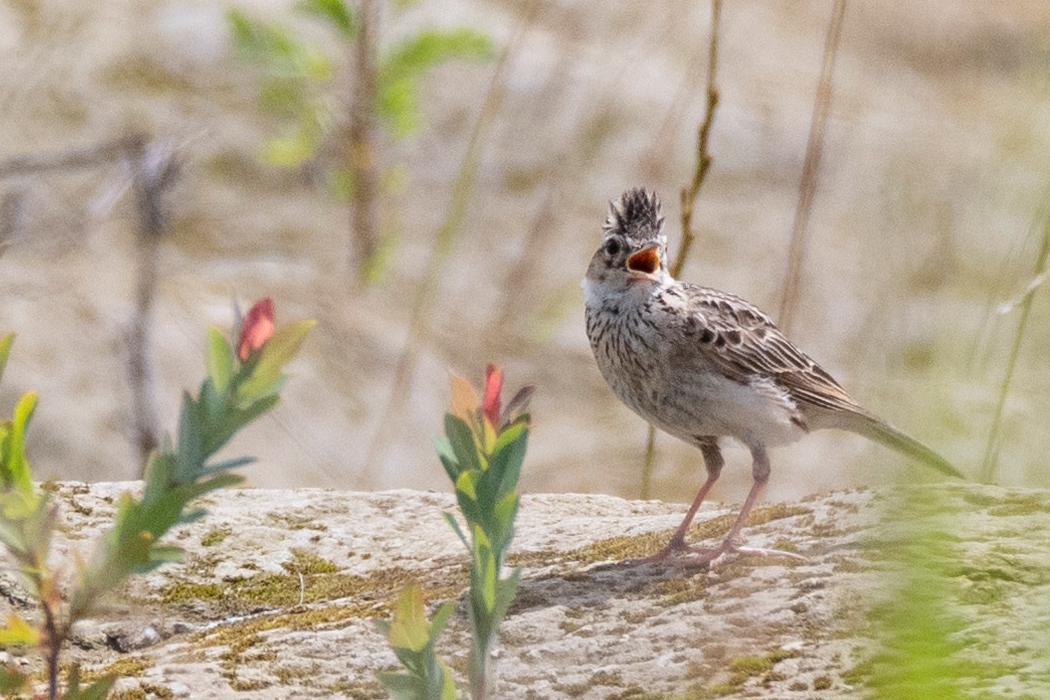
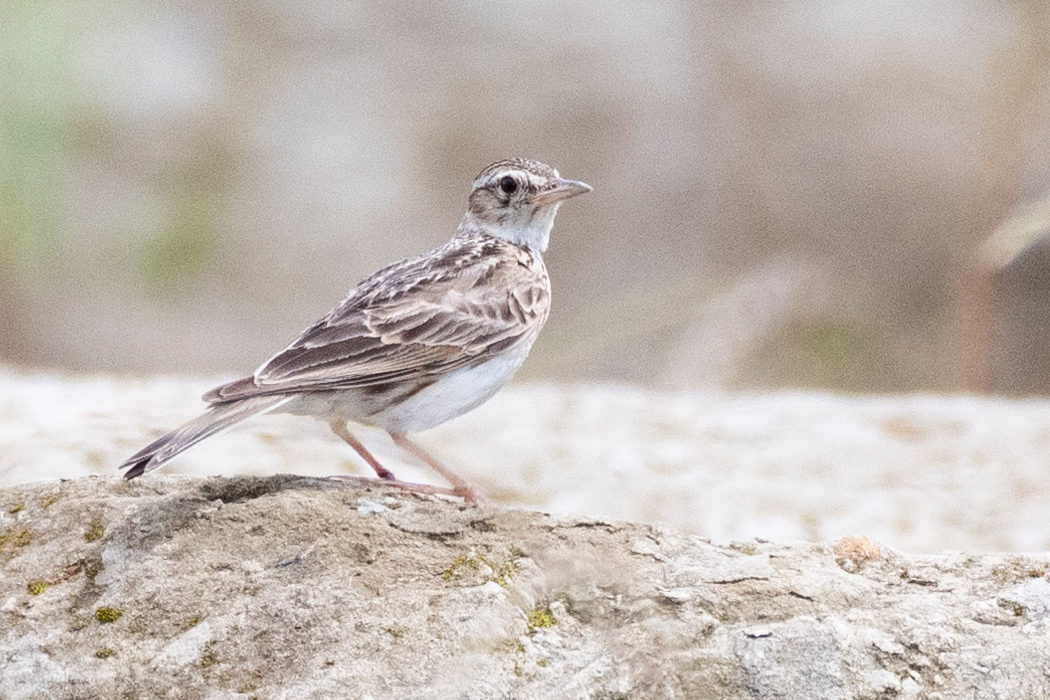
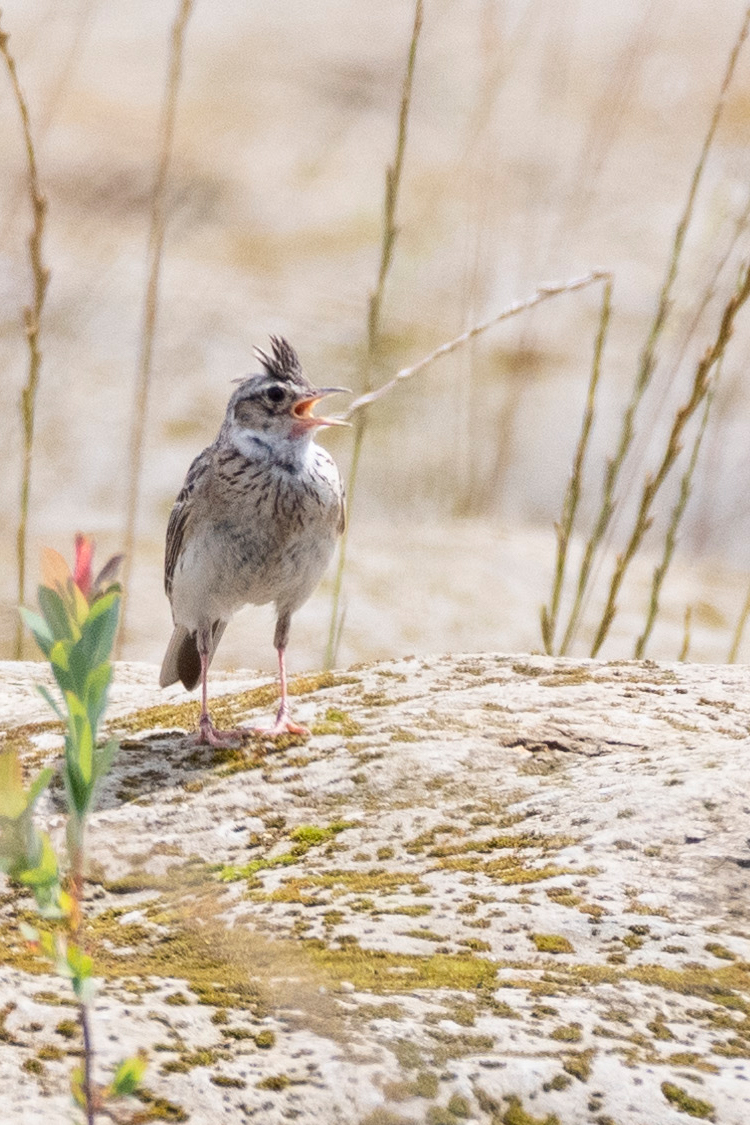
Sometimes raises its crest on its head. It has a white supercilium. The cheeks are a darker shade of brown. The beak is slightly thinner than that of a bunting, and is flesh-colored and lead-gray. The iris is black.
The back is a mix of brown and light brown. The neck has a mottled pattern. The belly is white to light brown.
The tail feathers are V-shaped and blackish-brown. The legs are flesh-colored.
Song
Sings "pichii pichii pichii" in a high, continuous voice. When hovering, it may continue to sing for more than a minute.
Eurasian skylark Ecology
Habitat
Inhabits riverbeds and grasslands. The decrease in grasslands suitable for breeding has reduced its habitat in some areas.
Food
Eats plant seeds and insects.
Life Cycle
Nests are built on the ground. During the breeding season, they act in pairs.
Eurasian skylark Photos
Eurasian skylark Photos are introduced.
Tap the photo to open the detail page.
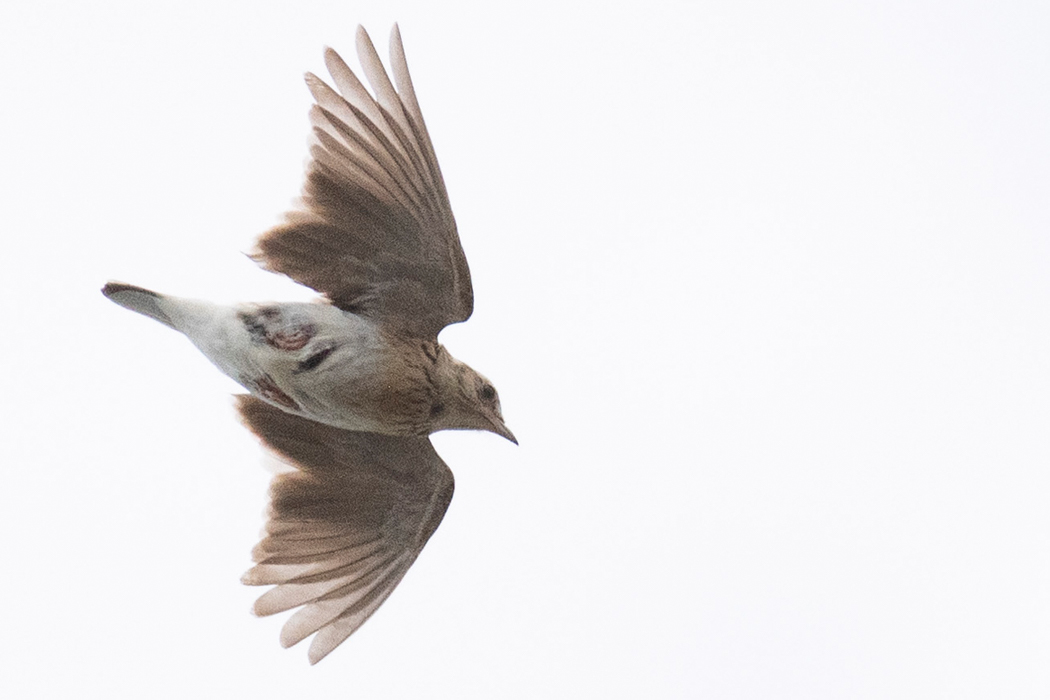
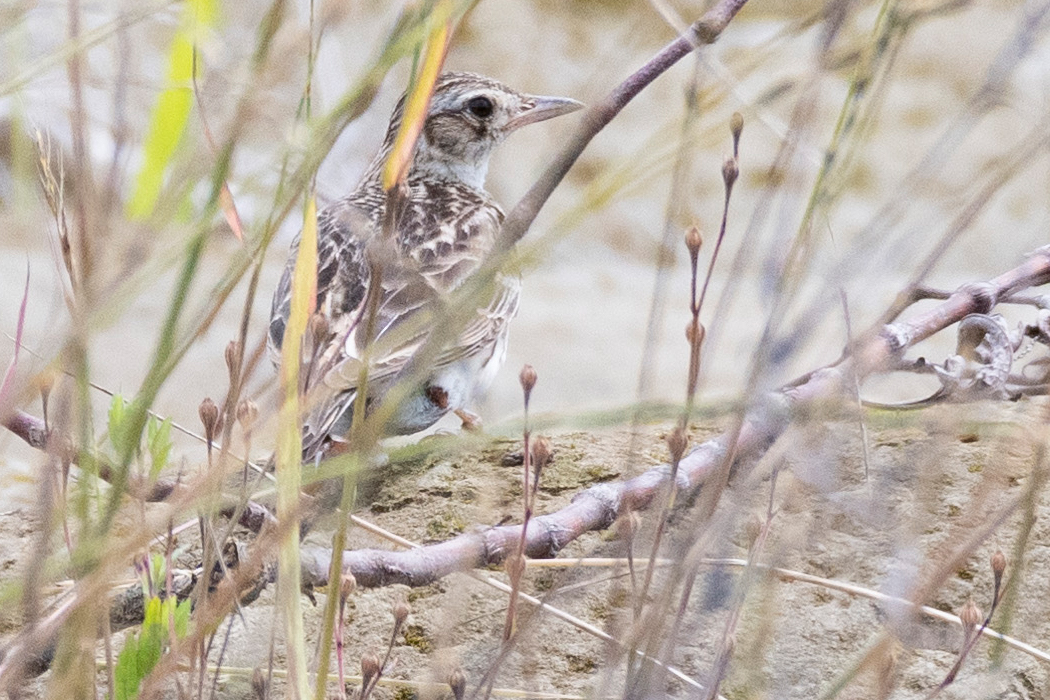
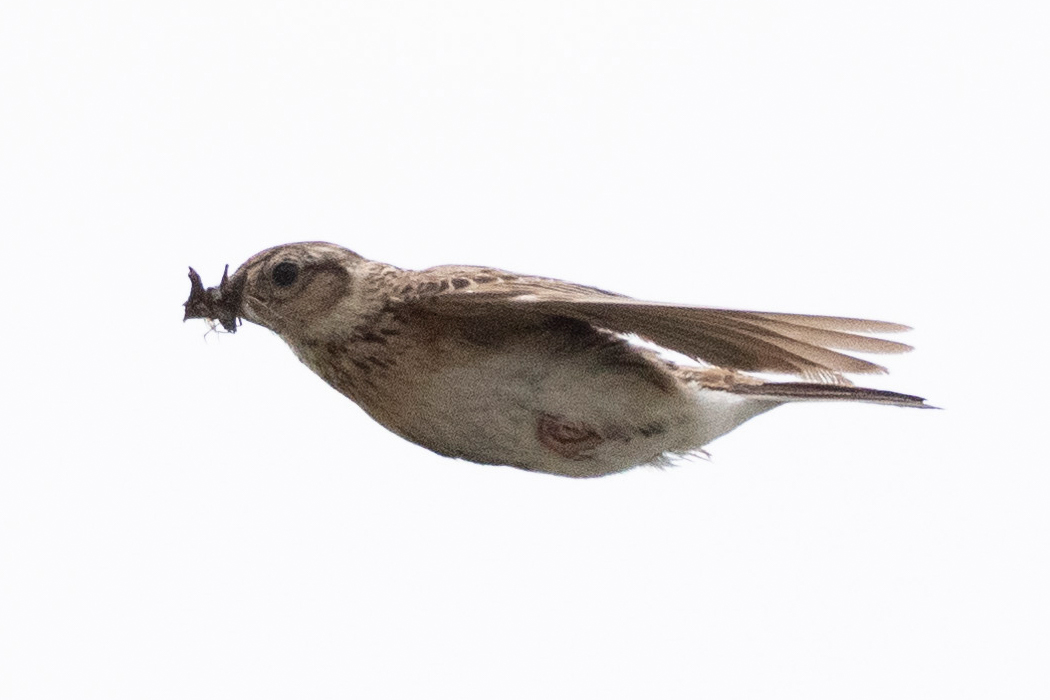
Eurasian skylark Behavior
Skylarking
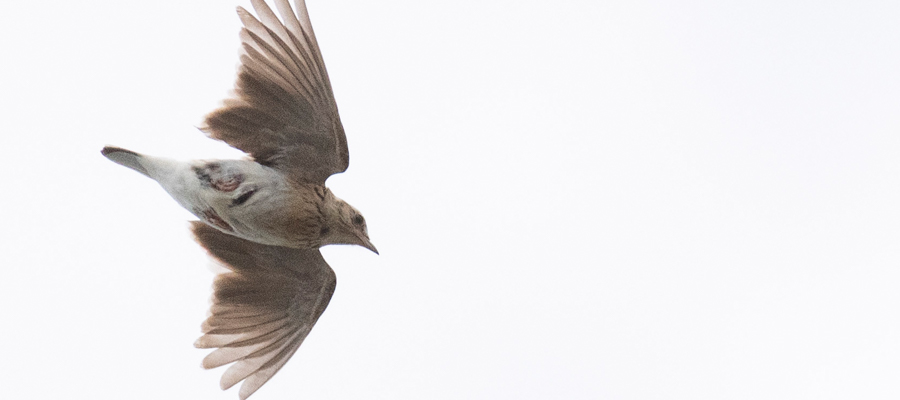
It flies high into the sky while singing and hovers for a while (this behavior is called "skylarking"). This behavior is thought to be a declaration of the male's territory. It often hides in bushes.
Eurasian skylark Information
Naming
The scientific name "arvensis" means "of the cultivated field," which is related to the fact that this bird is often seen in cultivated fields. In some regions, it has other names such as "Kōtenshi."
Eurasian skylark Found Locations
Tama Ōhashi Bridge
I took this photo on the riverbed near the Tama Ōhashi Bridge in the middle reaches of the Tama River. Several pairs were in the riverbed, singing vigorously. Every few minutes, a male would start hovering and fly high into the sky. It continued to rise for more than a minute. I think it has amazing stamina.
Nearby, I saw birds that make their homes in the riverbed, such as Little Ringed Plovers, birds that live in reed beds such as Oriental Reed Warblers and Zitting Cisticolas, and Eurasian Kestrels that threaten them. It's interesting that Zitting Cisticolas, Skylarks, and Eurasian Kestrels, which live in the same riverbed, all hover.
Eurasian skylark Video
Eurasian skylark is introduced by video.
Flying high in the sky.
Eurasian skylark Observation Log
These are the observation logs where we found Eurasian skylark.
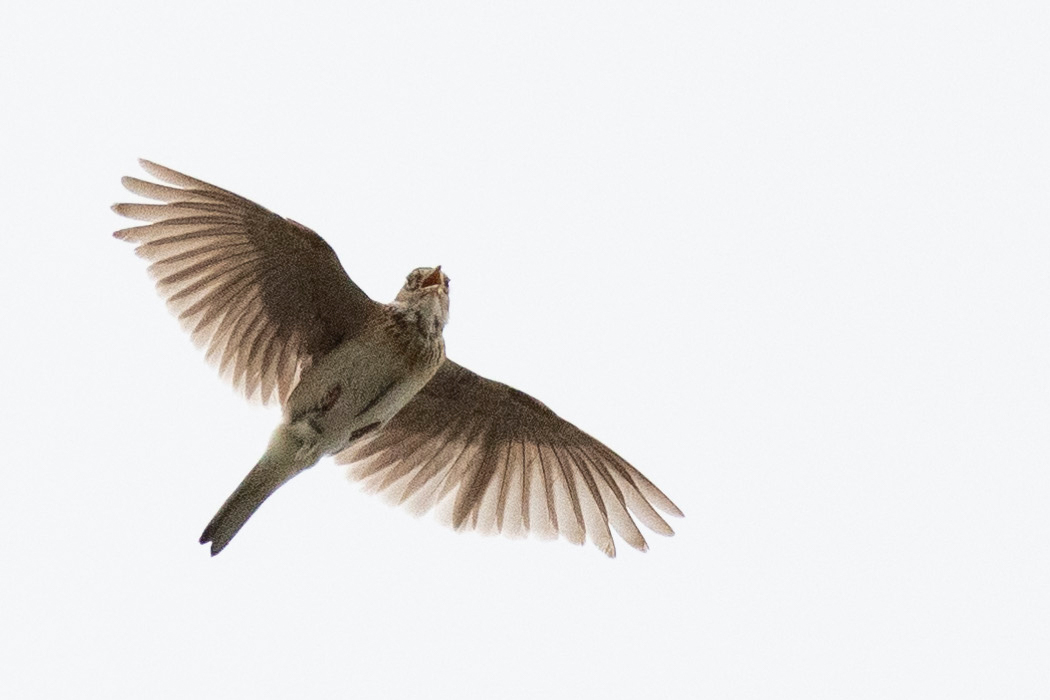
A male Skylark was hovering while singing. It continued for a minute or two, and I was impressed by its stamina.
Read more >
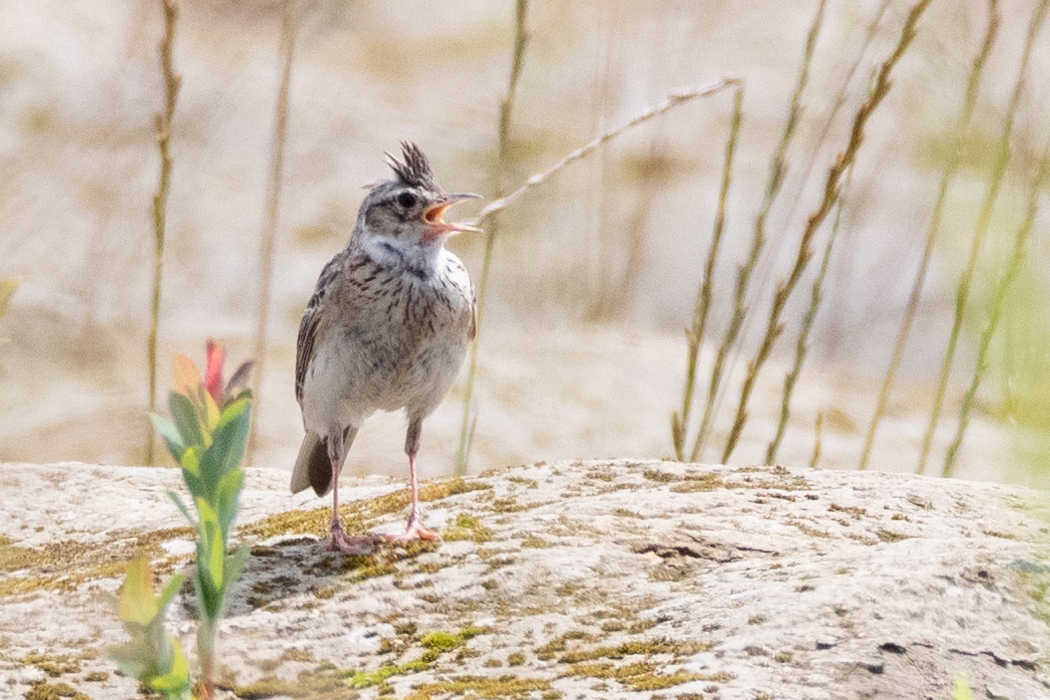
I photographed a Eurasian Skylark walking on the ground.
Read more >
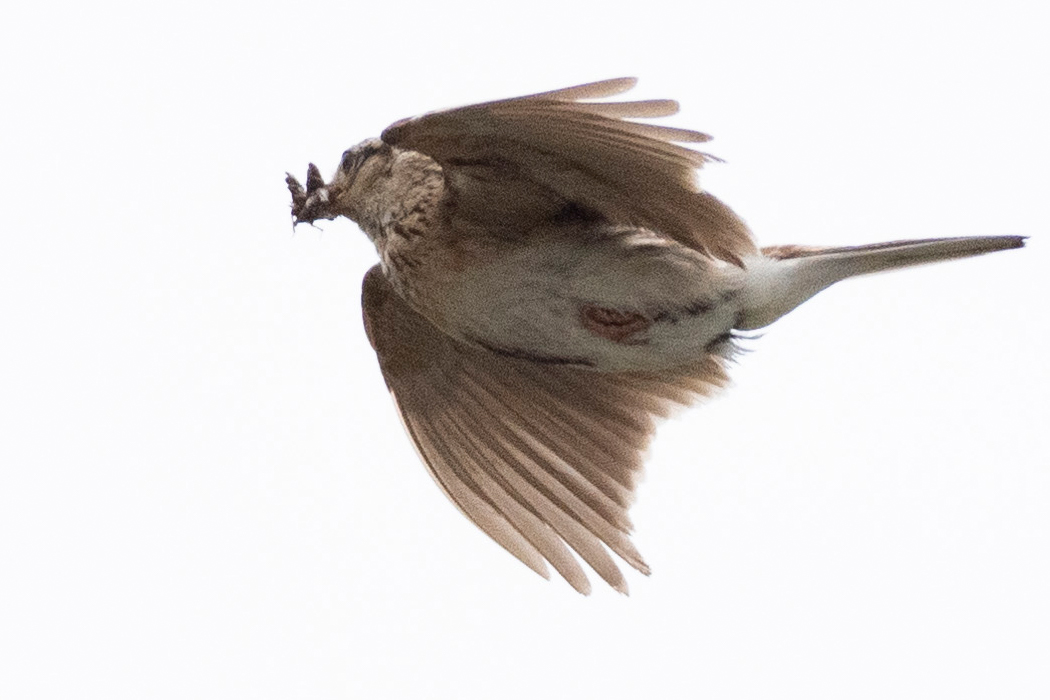
A male Eurasian Skylark was flying upwards. When I took a picture, some were carrying insects in their beaks.
Read more >
Picture book
It has compound eyes and antennae-like patterns....... Read more
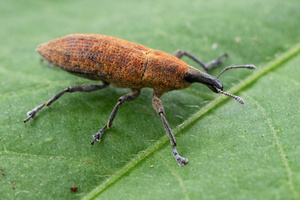
The color and shape look like katsuobushi....... Read more
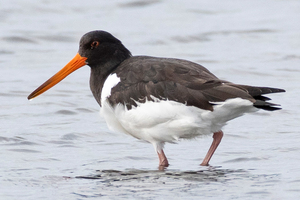
carrot-like orange beak...... Read more
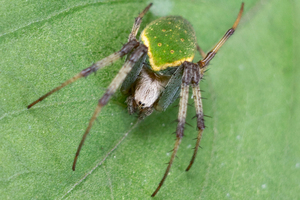
Abdomen bright green....... Read more
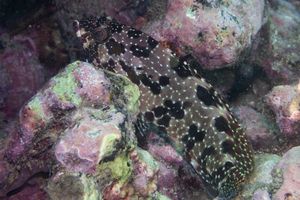
white spots scattered in a stone wall pattern....... Read more

Has fine spots on the back....... Read more