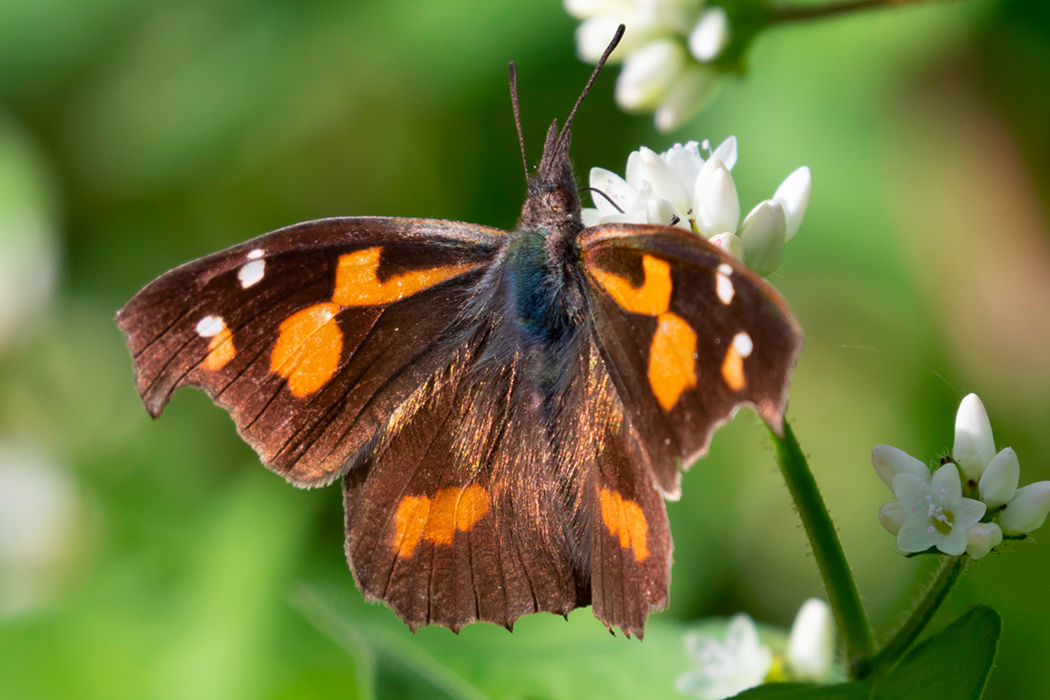
Nettle-tree Butterfly
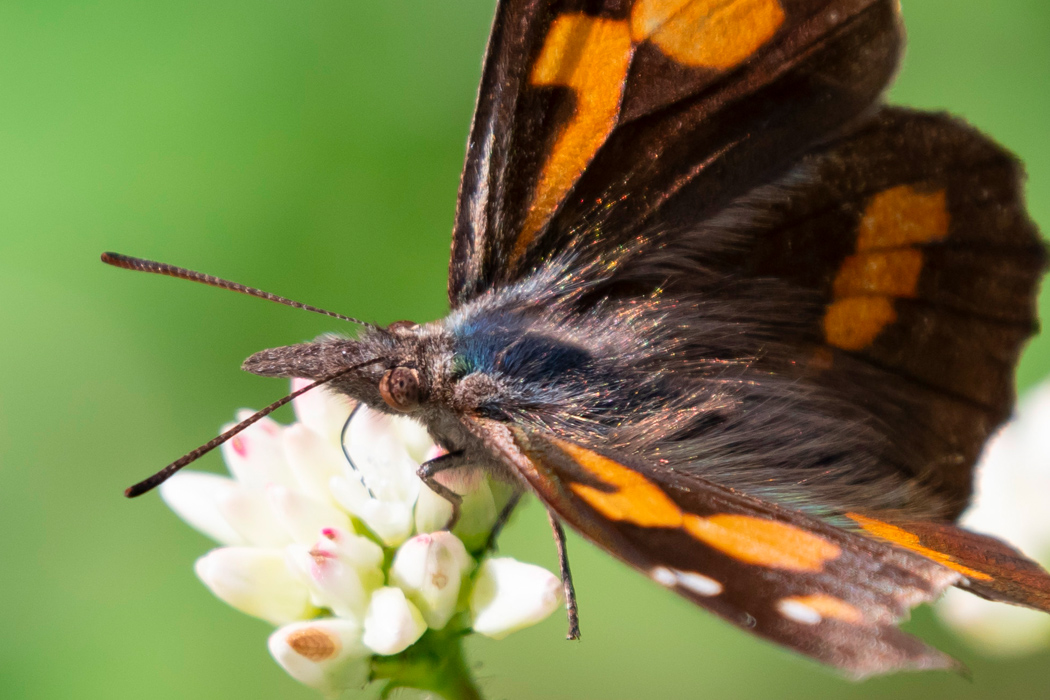
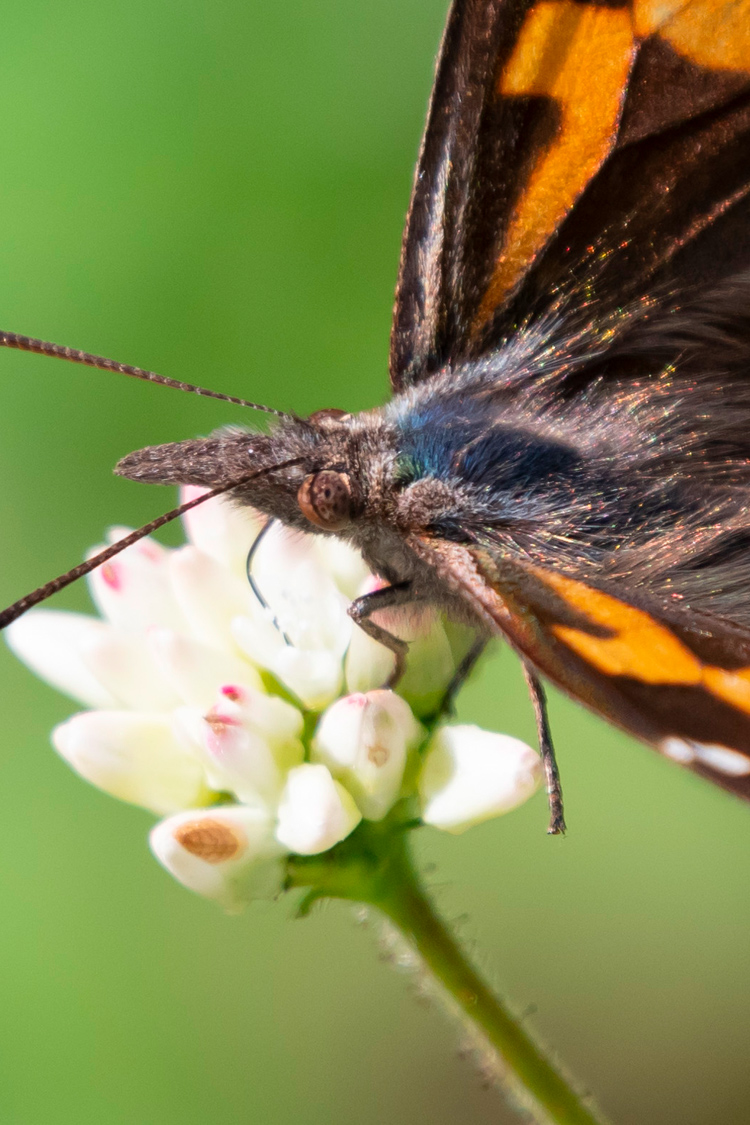
Characterized by a snout-like projection on its face, resembling a tengu (a long-nosed Japanese goblin).
| Scientific name | Libythea celtis |
| English name | Nettle-tree Butterfly |
| Japanese name | 天狗蝶 |
| Class | Insecta |
| Order | Lepidoptera |
| Family | Nymphalidae |
| Genus | Libythea |
| Species | celtis |
| Full length | 20-30mm |
| Distribution | Honshu and southward |
Nettle-tree Butterfly Characteristics and Morphology
A butterfly with brownish-orange markings. As the Japanese name suggests, it has a distinctive head.
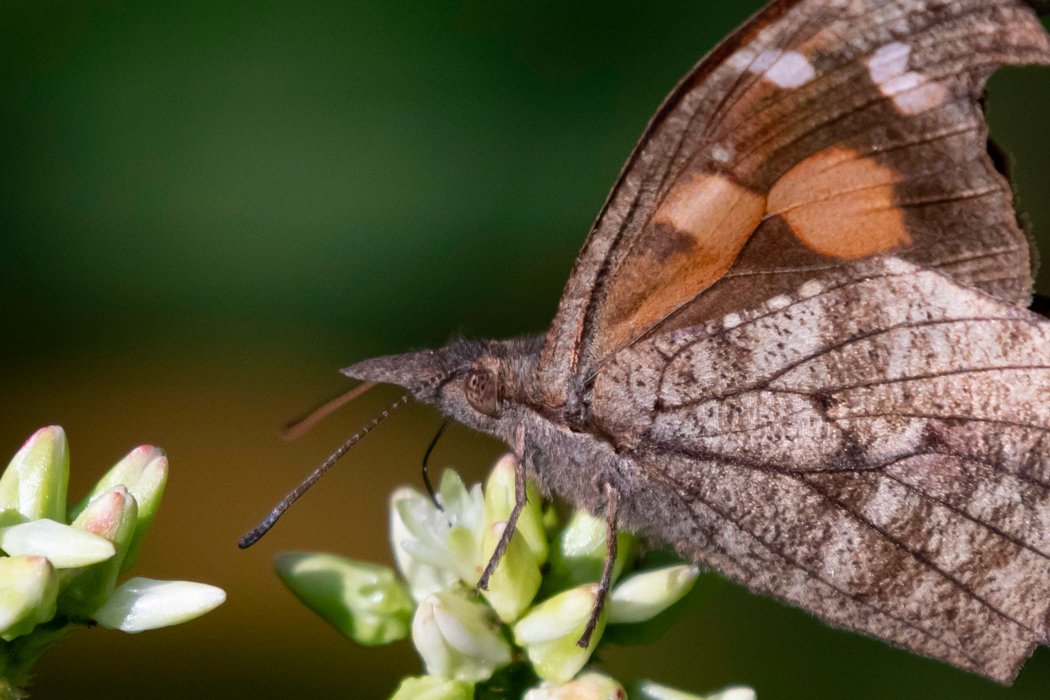
The proboscis (palpi, labial palps) extending forward from the head is developed like a tengu's nose.
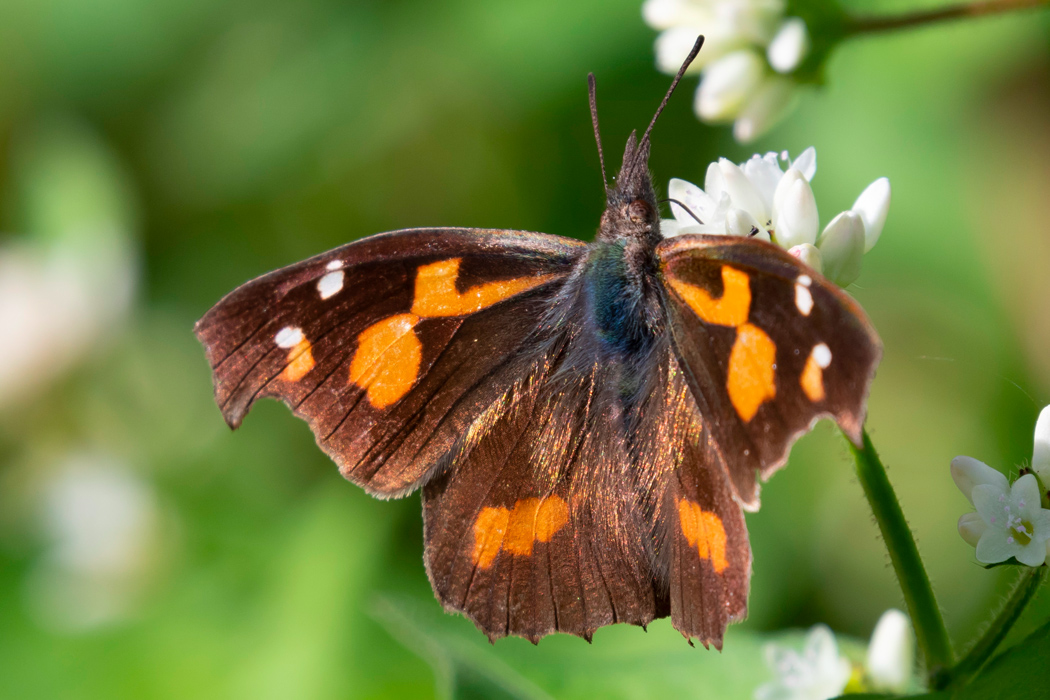
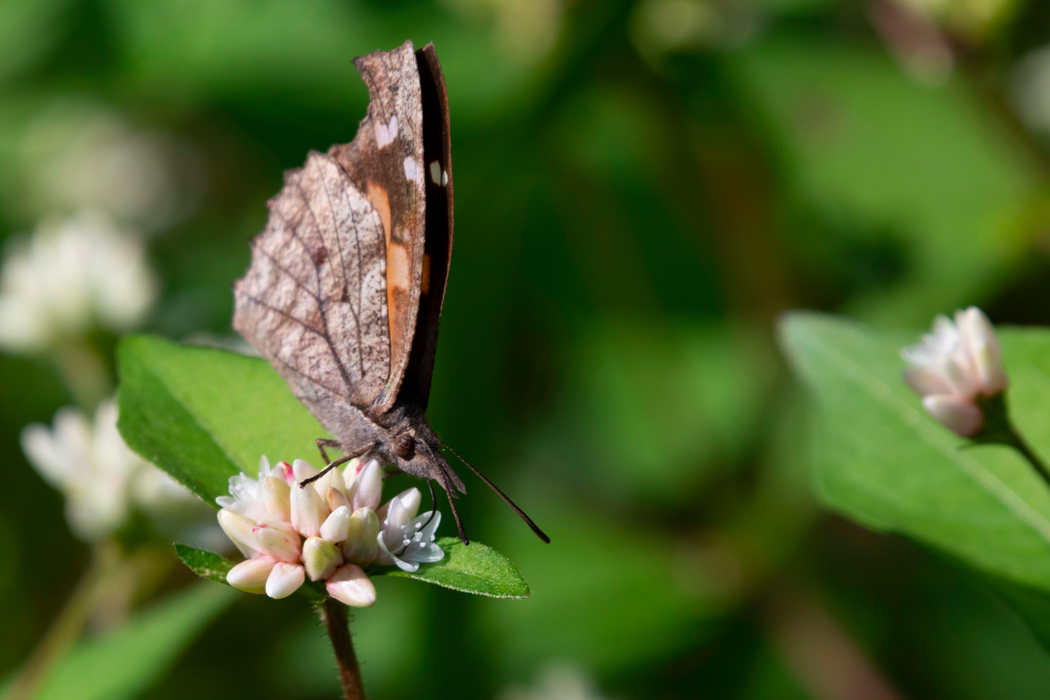
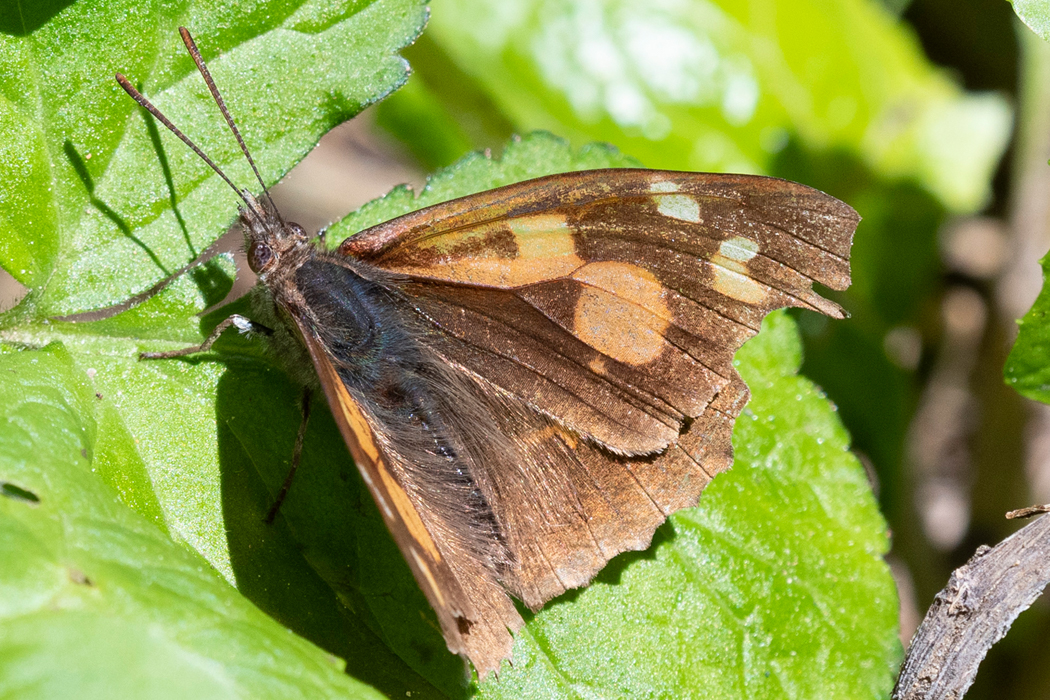
The upperside of the wings is brown with orange patterns, and there are two white spots on the edge of the forewings. The underside of the wings is a plain brown color, resembling wood for camouflage.
Male
The orange pattern on the forewings of males is slightly smaller.
Female
The orange pattern on the forewings of females is slightly more spread out towards the edge.
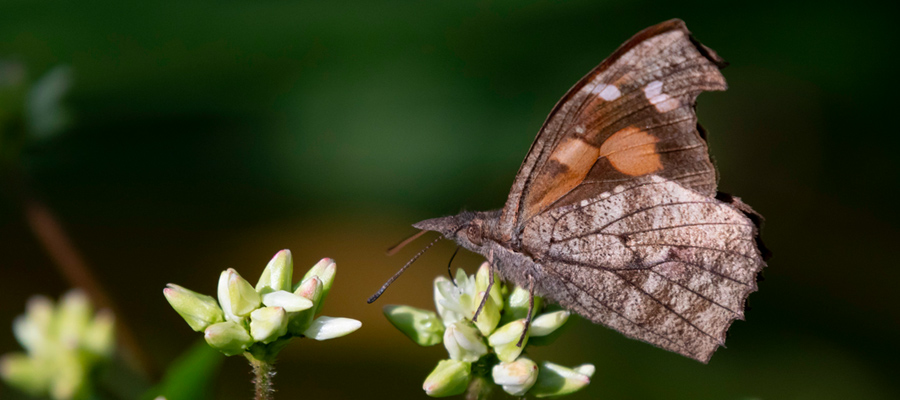
Nettle-tree Butterfly Ecology
Habitat
Inhabits forests in plains and mountains.
Food
Larvae feed on the leaves of hackberry trees (Celtis sinensis). Adults feed on flower nectar.
Life Cycle
Occurs about twice from summer to autumn. Adults overwinter and become active again in spring.
Nettle-tree Butterfly Photos
Nettle-tree Butterfly Photos are introduced.
Tap the photo to open the detail page.
Nettle-tree Butterfly Behavior
Adults fly quickly.
Nettle-tree Butterfly Information
Naming
The specific name "celtis" is derived from the genus name "Celtis" (hackberry trees), referring to the larval food plant.
Previously, this species constituted its own family, Libytheidae, but it is now classified as a subfamily of the Nymphalidae family.
Nettle-tree Butterfly Found Locations
Katakurajō跡 Park, Hachiōji
Observed at Katakurajō跡 Park in Hachiōji. Katakurajō跡 Park has a variety of creatures due to the different environments from the grassland at the entrance to the forest on the slope.
This Libythea celtis was perched on the grass near the entrance of the forest. It flew quickly from flower to flower, sucking nectar. The nose-like palpi give it a different silhouette from other butterflies.
Nettle-tree Butterfly Observation Log
These are the observation logs where we found Nettle-tree Butterfly.
Picture book
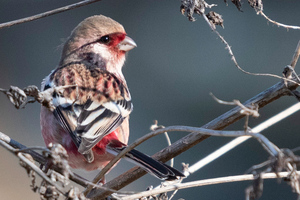
The male's crimson color is reflected on the riverbed....... Read more

A small falcon inhabiting farmland....... Read more
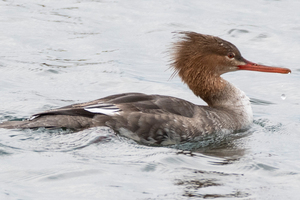
Comes to coastal coves in winter....... Read more
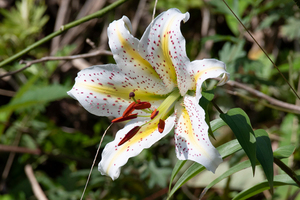
Opening large petals in the forest....... Read more
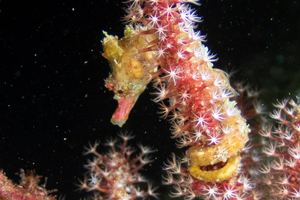
Wrapping its body in seaweed....... Read more
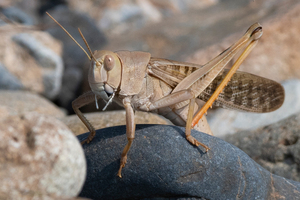
It is also called the Daimyo grasshopper....... Read more