
Japanese weasel
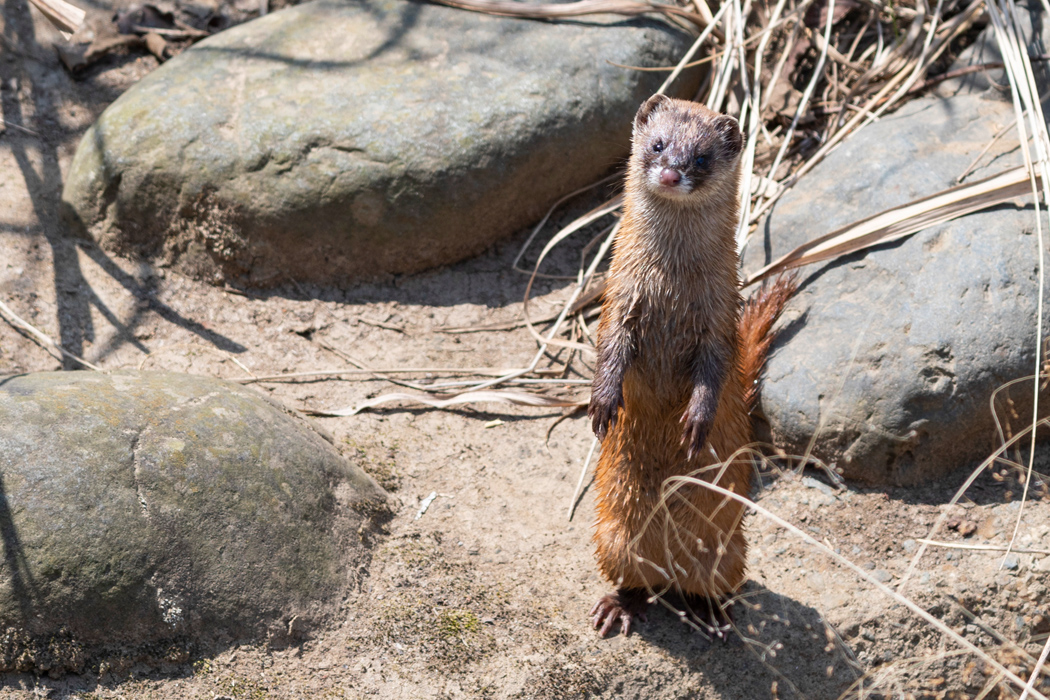
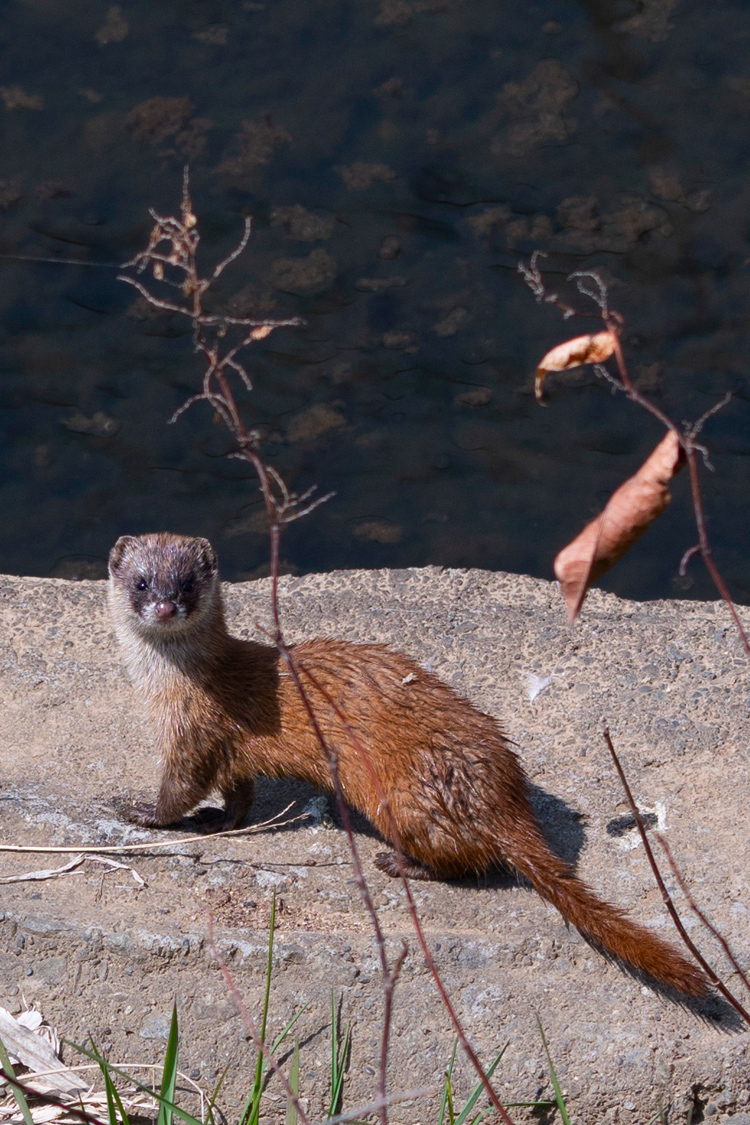
Stands on its hind legs to look around.
| Scientific name | Mustela itatsi |
| English name | Japanese weasel |
| Japanese name | 日本鼬 |
| Class | Mammalia |
| Order | Carnivora |
| Family | Mustelidae |
| Genus | Mustela |
| Species | itatsi |
| Full length | Male 27-37cm Female 16-25cm |
| Distribution | Honshu, Shikoku, Kyushu |
Japanese weasel Characteristics and Morphology
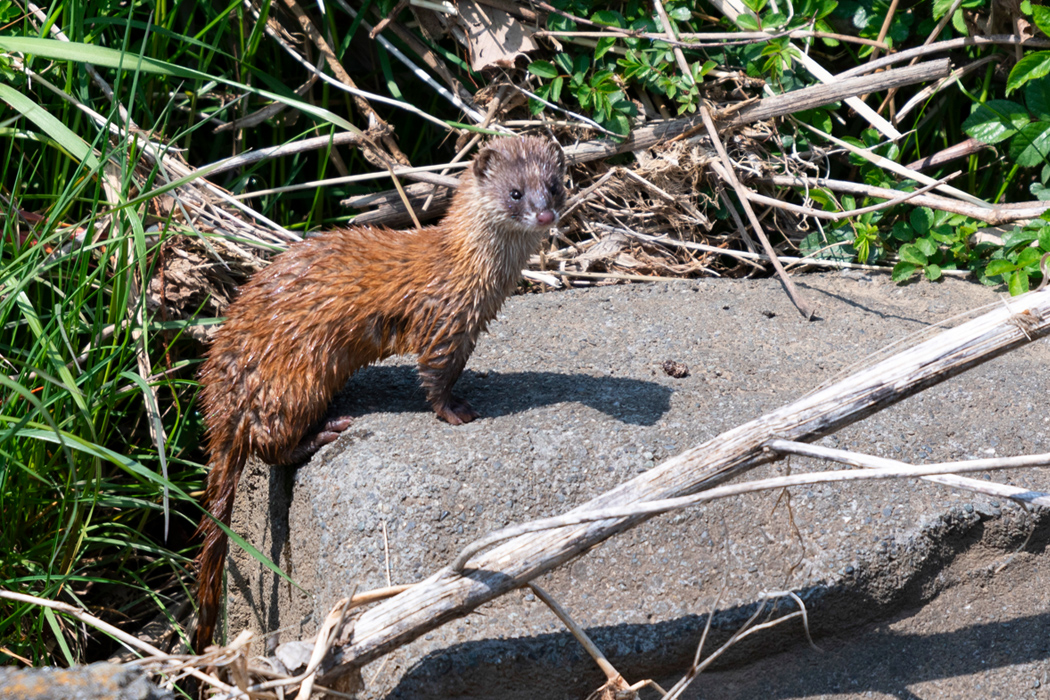
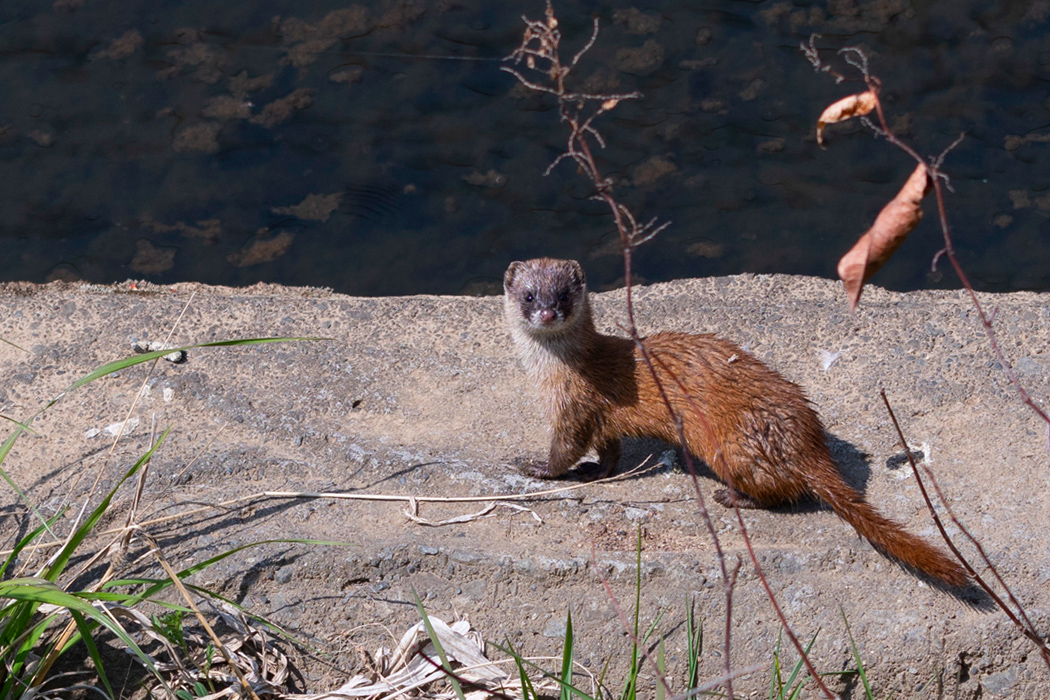
Slender silhouette. The entire body is brownish-red, with varying shades depending on the individual. Males and females differ in body length.
The head is round. The ears are small and not pointed. The dark brown color around the nose is distinctive.
The torso is slender. Has webbing between the toes.
The legs appear short. The tail is somewhat thick and bushy. Has webbing between the toes.
The Japanese weasel and the Siberian weasel look very similar. The key to distinguishing them is the length of the tail; if the tail length is more than half the length of the body, it is a Siberian weasel. The body color of the Japanese weasel is brownish-red, while the Siberian weasel is slightly lighter brown. For more details, the Ministry of the Environment has compiled points on how to distinguish them.
Male
Males and females differ in body size by about 10cm, with males being larger.
Female
Females are smaller than males, not reaching 30cm.

Japanese weasel Ecology
Habitat
Mainly inhabits watersides such as rivers and lakes.
Food
Mainly eats animal matter such as mice, birds, and amphibians.
Life Cycle
Breeds from spring to summer, with the female raising the young.
Japanese weasel Photos
Japanese weasel Photos are introduced.
Tap the photo to open the detail page.

Japanese weasel Behavior
Acts alone regardless of day or night. Swims well using its webbed feet. Sometimes climbs trees. When wary of its surroundings, it stands on its hind legs to look around. Uses holes and gaps as nests, and also likes to enter holes other than nests.
Japanese weasel Information
Naming
The origin of the scientific name "itatsi" represents the Japanese name "Itachi". Because it is a species endemic to Japan, Japanese is used in the scientific name.
In some areas, they were artificially released for the purpose of exterminating mice.
Japanese weasel Found Locations
Asakawa upstream
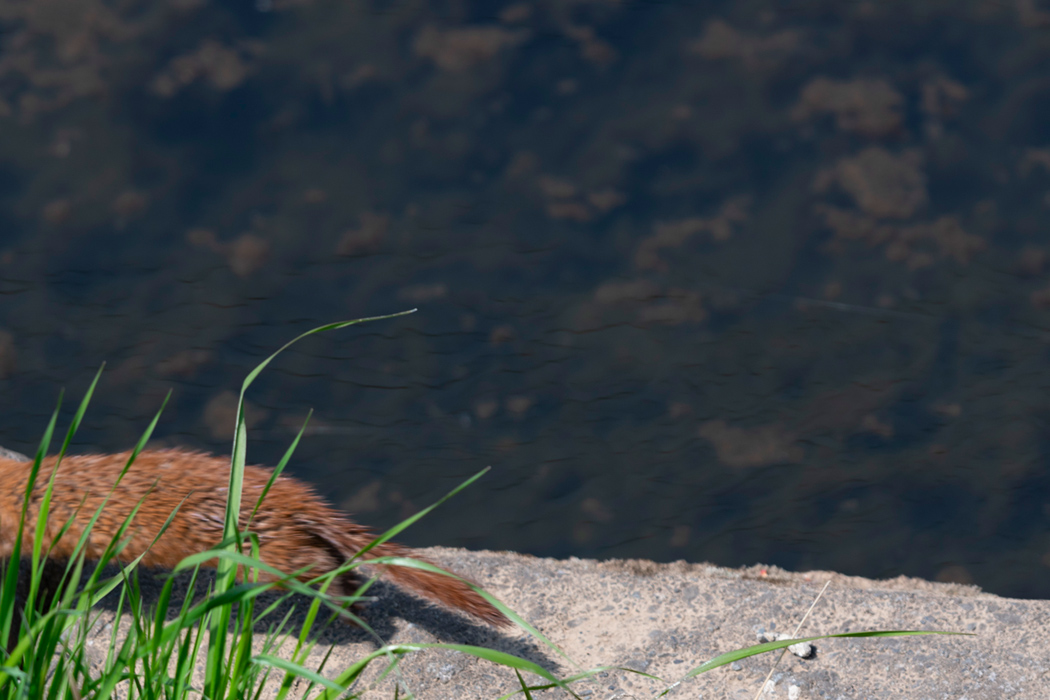
Discovered on the riverbank of the Asakawa upstream. When it noticed me, it swam away for several meters, then stood on its hind legs to be cautious. If I didn't approach it, it didn't run away and I was able to observe it. After a while, it quickly ran away into a gap in the concrete blocks.
References
Picture book
White green and black pattern....... Read more
changes sex from female to male....... Read more
A brown line enters the eye vertically....... Read more
Glass-like body....... Read more
ornamental flower with developed calyx. "Patient love"....... Read more
They come to the tidal flats in large numbers....... Read more