
Japanese serow
A forest-dwelling bovine with short horns.
| Scientific name | Capricornis crispus |
| English name | Japanese serow |
| Japanese name | 日本羚羊 |
| Class | Mammalia |
| Order | Cetartiodactyla |
| Family | Bovidae |
| Genus | Capricornis |
| Species | crispus |
| Full length | 100-112cm |
| Distribution | Honshu, Shikoku, Kyushu |
Japanese serow Characteristics and Morphology
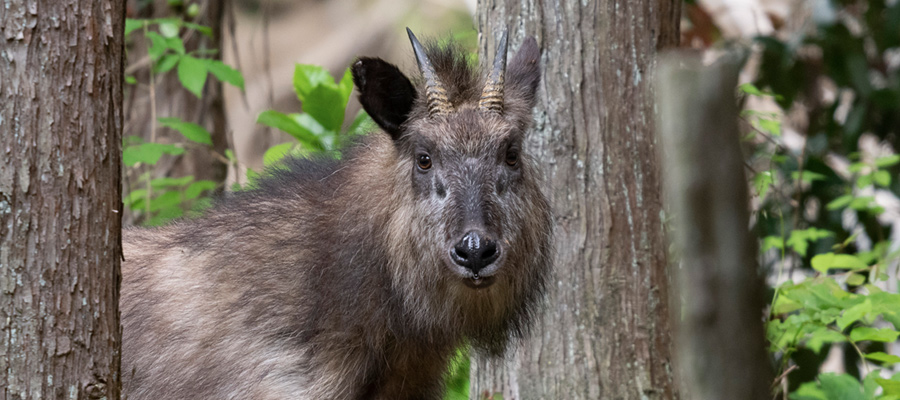
A bovid mammal with a total length of just over 1m. Its silhouette is stocky, suggesting it is closer to a cow than a deer. The entire body is covered in brownish fur, though it can be gray or white depending on the region.
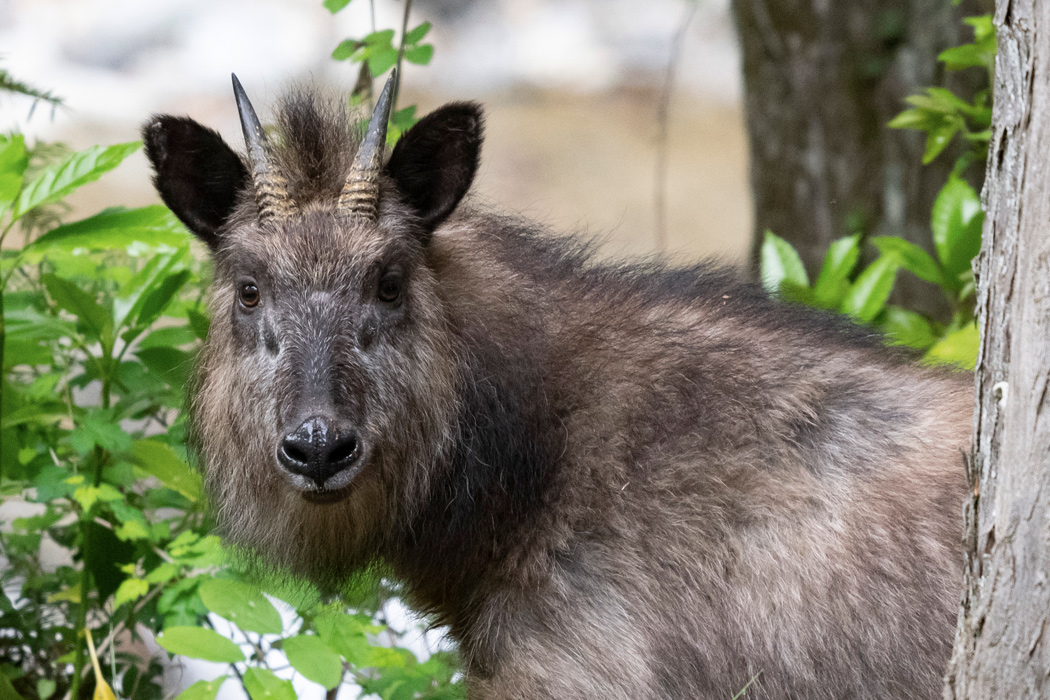
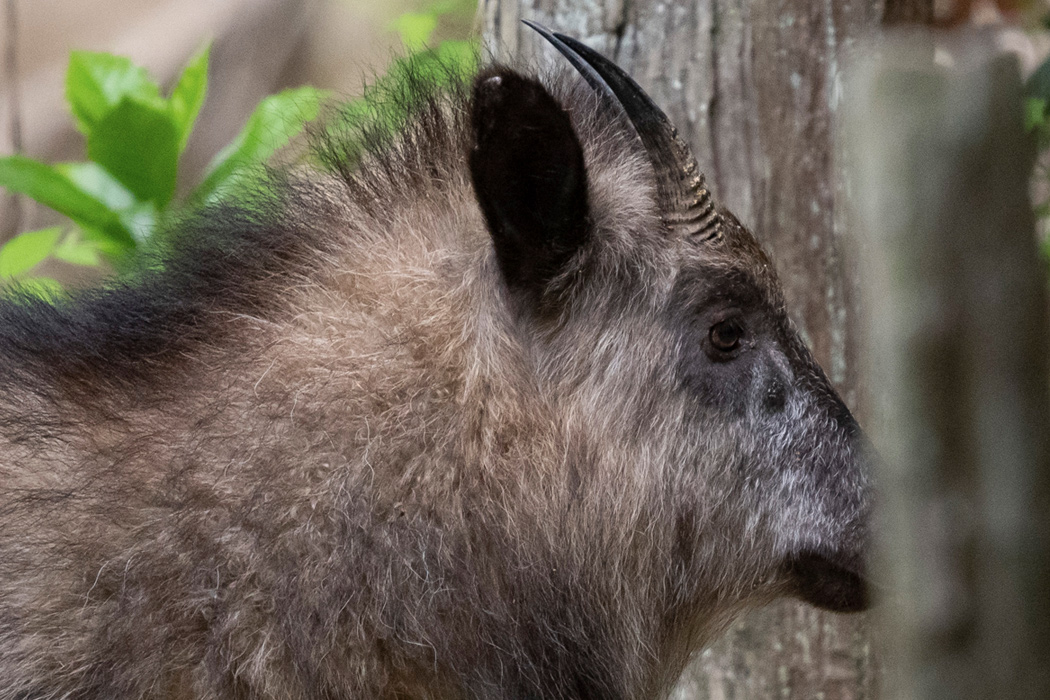
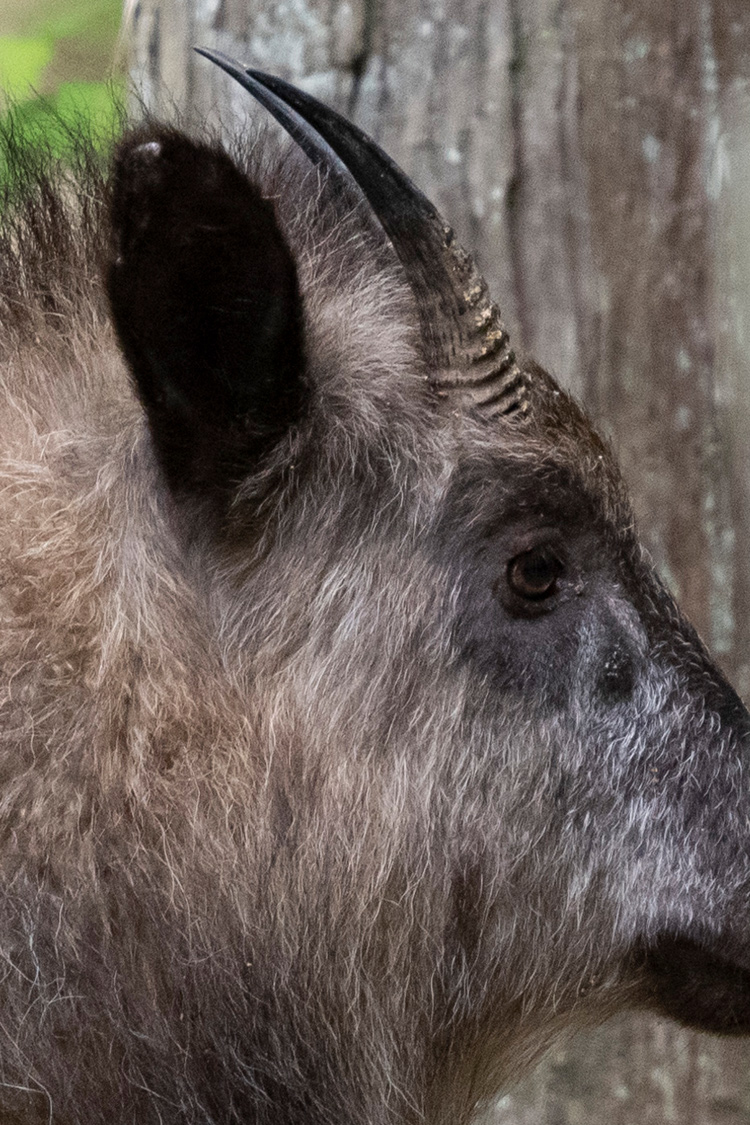
Both males and females have conical horns about 10-15cm long. The fur grows thickly under the face like a beard, and the ears stand upright on the outside of the horns. The fur toward the neck is whitish.
The body appears somewhat stocky and is covered in brown fur.
The legs are blackish-brown.
Japanese serow Ecology
Habitat
Inhabits mountain forests from high altitudes to low mountains in Honshu, Kyushu, and Shikoku.
Food
Eats tree bark, buds, and fruits.
Japanese serow Photos
Japanese serow Photos are introduced.
Tap the photo to open the detail page.
Japanese serow Behavior
They do not form herds and mostly act alone, with each individual maintaining its own territory. They can be seen near human living areas and sometimes stay still rather than fleeing immediately upon seeing humans.
Japanese serow Information
Endemic to Japan. Although the Japanese name contains "shika" (deer), it is not a member of the deer family.
Alias of the Serow
They prefer terrain with steep slopes and cliffs. The sight of them standing for long periods on a cliff in winter is sometimes called "Ao no Kandachi" (the cold standing of the blue one).
Japanese serow Found Locations
On the forest road leading to Todogasaki, Iwate Prefecture
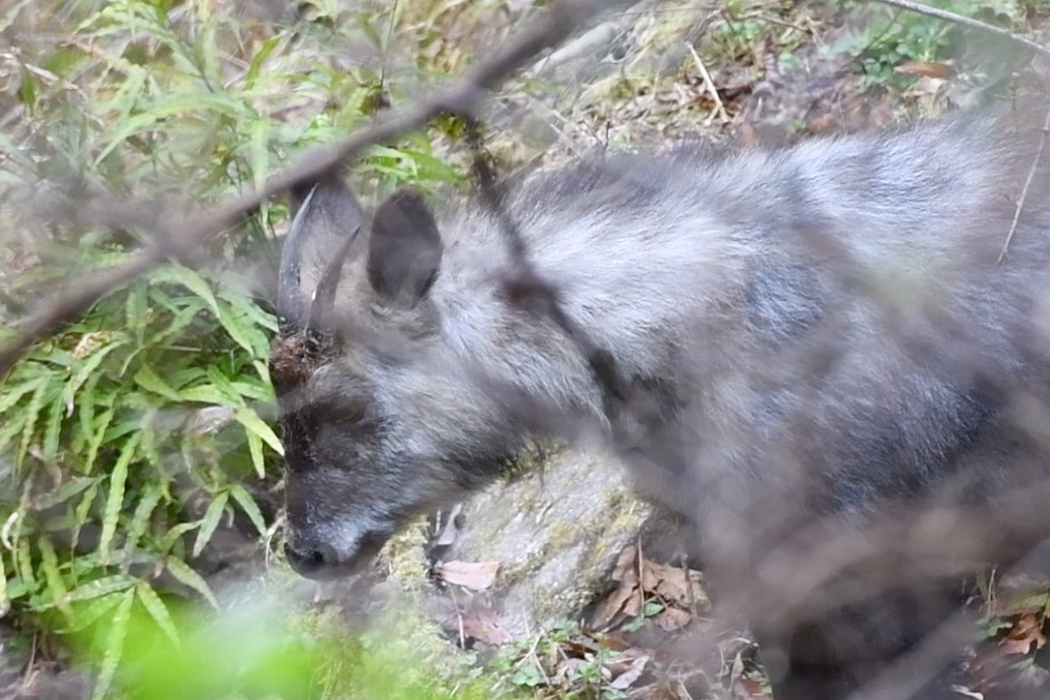
I have encountered Japanese serows twice while walking on forest roads. Both were sudden encounters that surprised both of us.
I encountered a Japanese serow on a forest road when I visited Todogasaki, the easternmost point of Honshu in Iwate Prefecture. It was on my way back after watching the sunrise at Todogasaki Lighthouse. While walking on a forest road facing a coastal cliff, I ran into one around a curve. The serow also seemed surprised and turned on its heels to flee toward the cliff. Since a local man at the lighthouse had told me the previous night that there were Asian black bears in the area, I was truly startled.
On a forest road along the Aki River
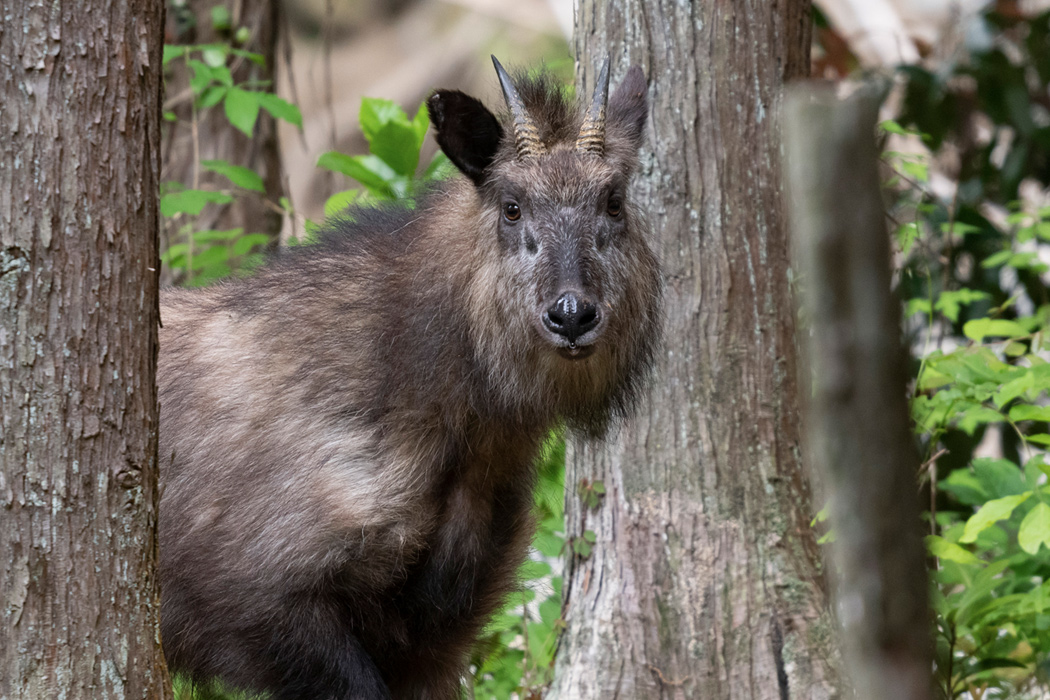
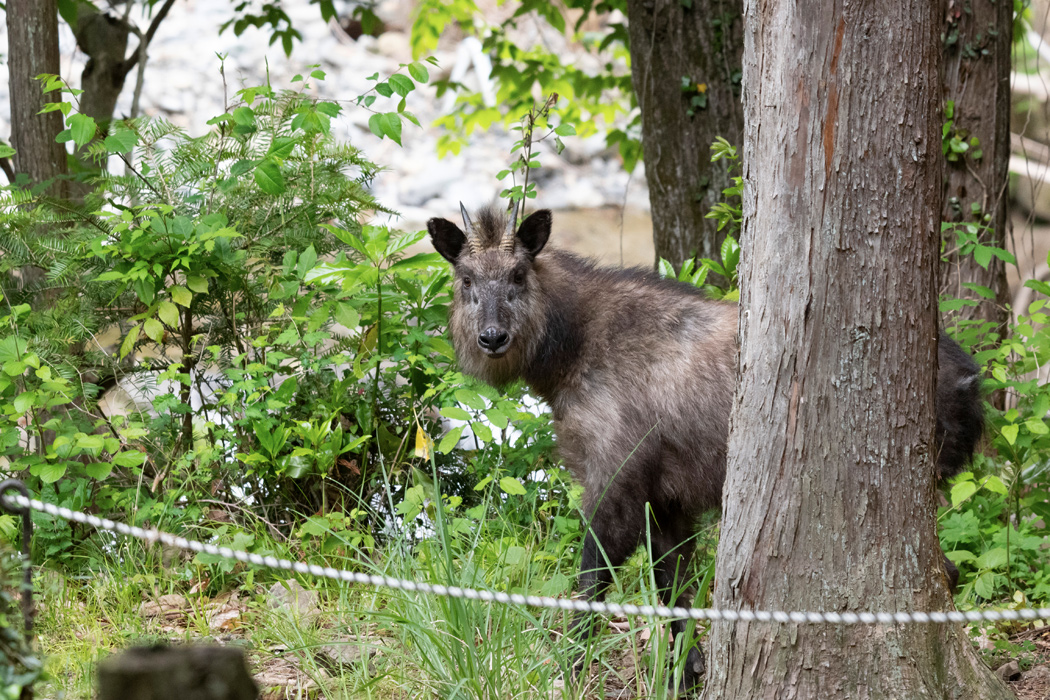
I encountered one while taking an early morning walk on a forest road along the Aki River in Tokyo. The photos on this page were taken at that time. It emerged quietly from the cliffside by the river, and upon noticing me, it stood still while trying to hide its body behind a tree. It might have thought it was hidden, but since it was poking out from the tree, I was able to photograph it.
After a while, it turned around and went back the way it came toward the cliff. It didn't seem to be in much of a hurry.
Japanese serow Video
Japanese serow is introduced by video.
Found at Mt. Imaguma in the early morning.
Japanese serow Observation Log
These are the observation logs where we found Japanese serow.
Picture book
A grey back paired with a yellow belly....... Read more
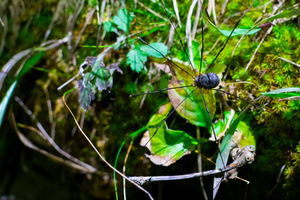
Has wire-like legs and is nicknamed "Uncle Long Legs" in the United States....... Read more
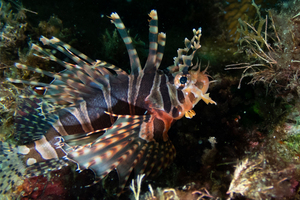
Beautiful fan-shaped pectoral fins....... Read more
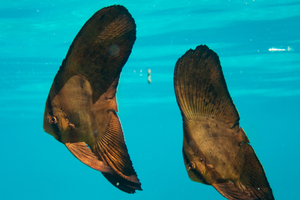
Juveniles camouflage on dead leaves....... Read more
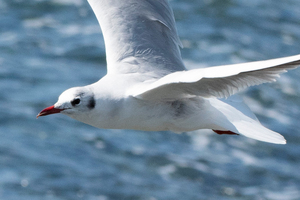
There is a black spot behind the eye....... Read more
Red under belly....... Read more