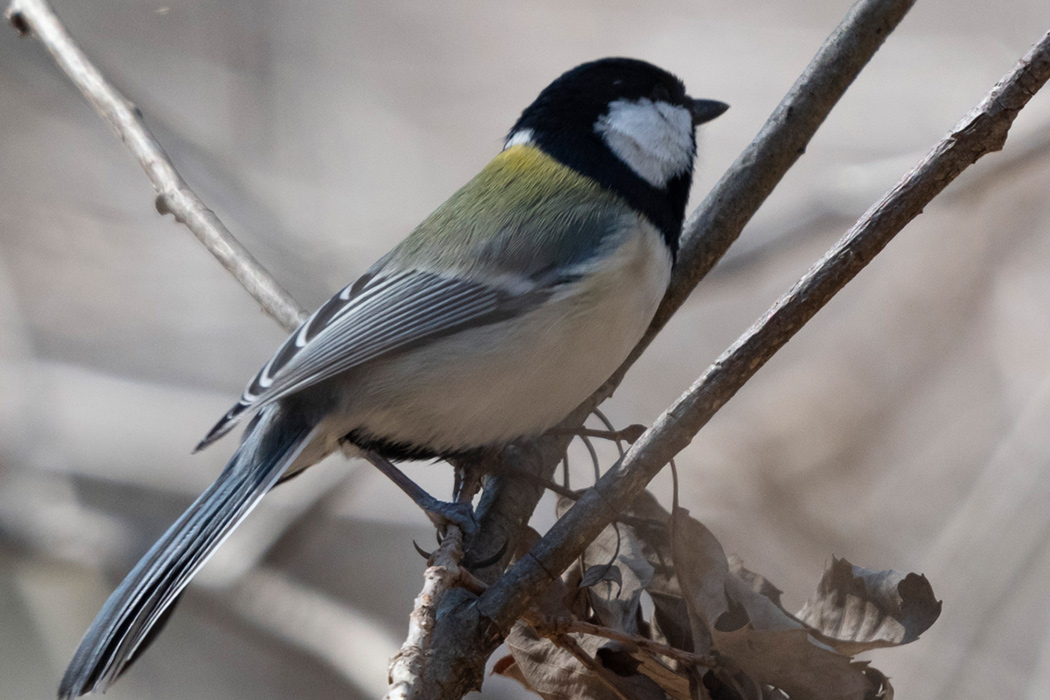
Japanese Tit
Known for its beautiful yellowish-green back.
| Scientific name | Parus minor |
| English name | Japanese Tit |
| Japanese name | 四十雀 |
| Class | Aves |
| Order | Passeriformes |
| Family | Paridae |
| Genus | Parus |
| Species | minor |
| Full length | 15cm |
| Distribution | Distributed across eastern Eurasia and throughout Japan. |
Japanese Tit Characteristics and Morphology
A small bird about 15cm long, roughly the size of a sparrow.
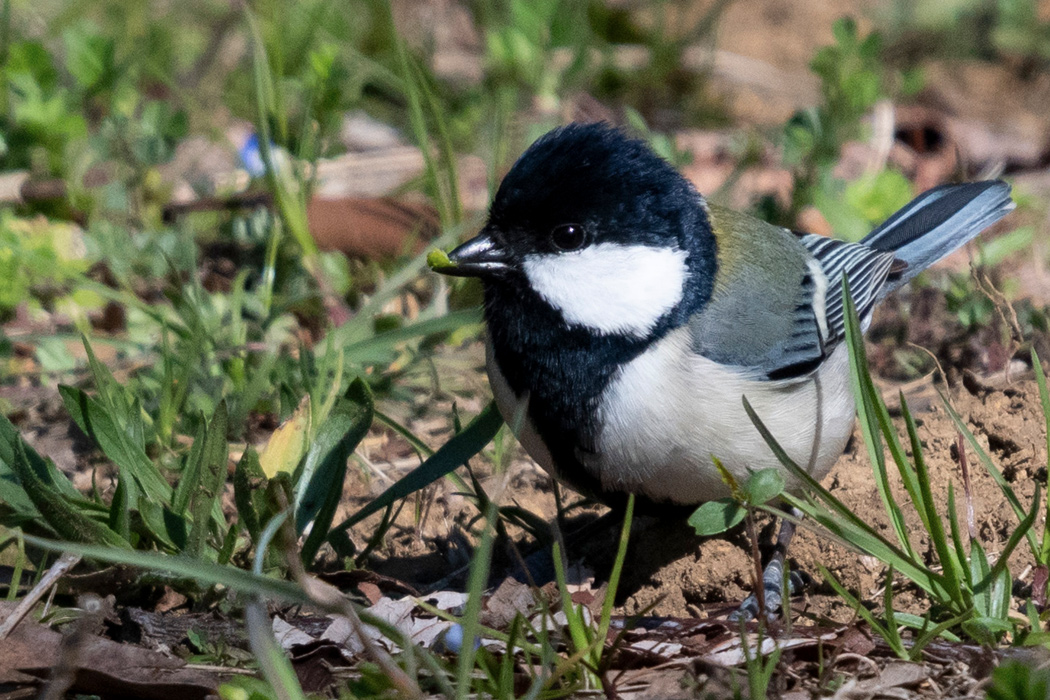
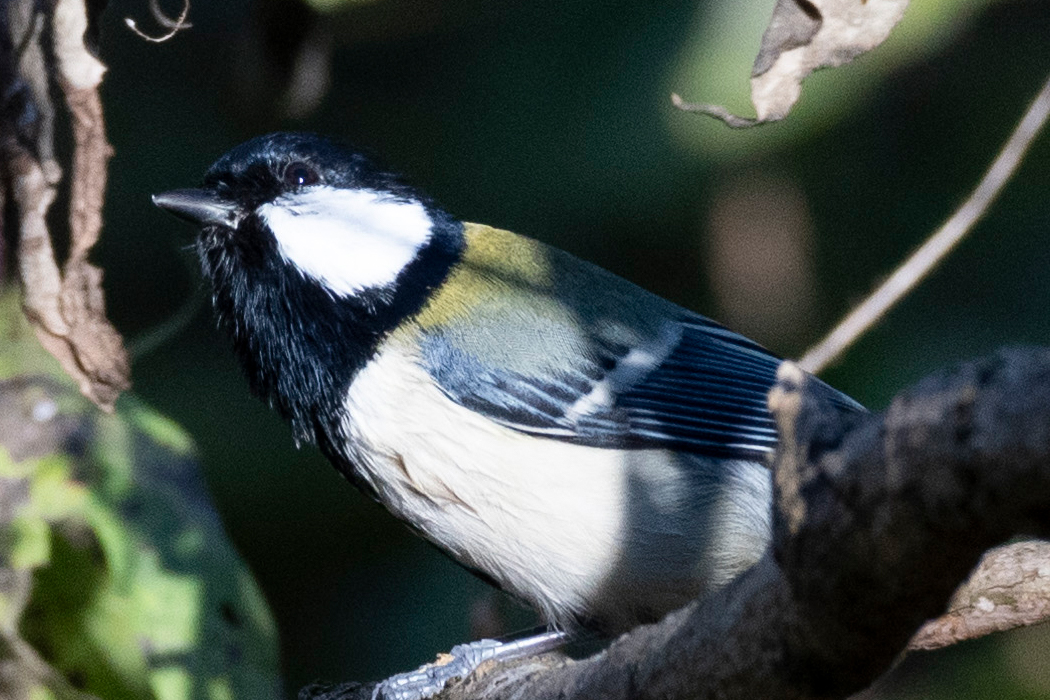
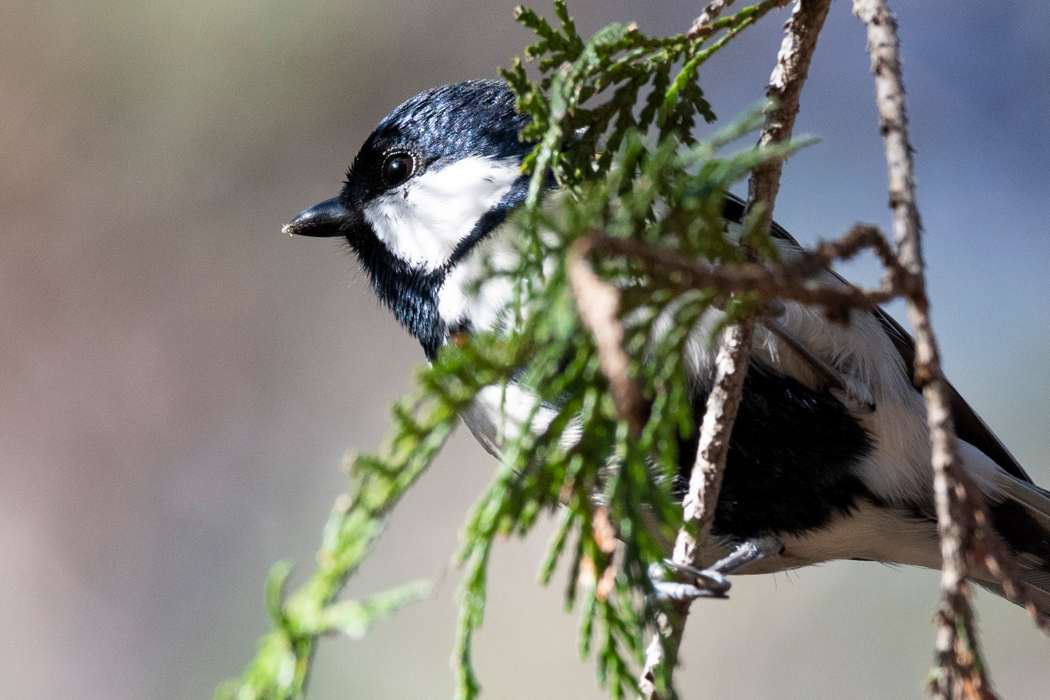
The head is round without a crest. It is jet black from the crown to the eyes, with white cheeks. A band of black feathers wraps around the neck. The bill is small and lead-colored.
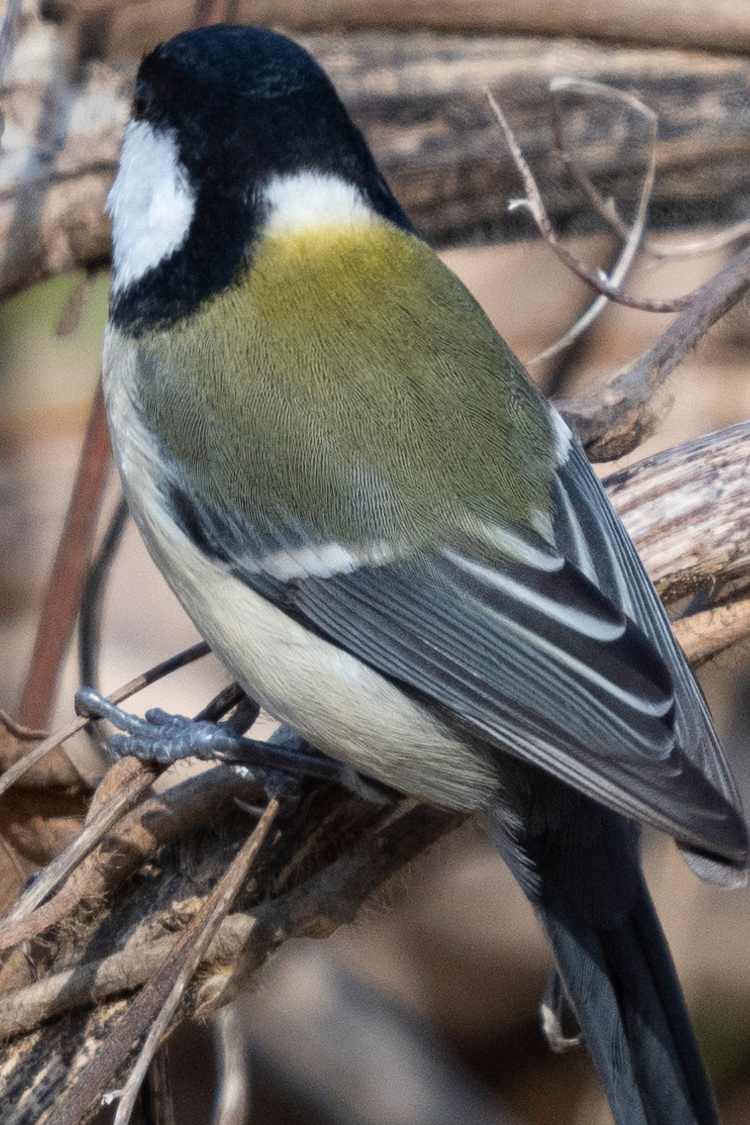
The back is yellow to yellowish-green, fading to gray toward the wing tips. A black band of feathers runs down the chest like a necktie. The belly is white.
The tail feathers appear slightly longer than those of a sparrow and are gray.
Male
Closely resembles the female, but the colors on the back are slightly more vivid.
The black band running down the chest is wider than the female's and extends all the way down the belly.
Female
Has slightly more muted colors compared to the male.
The black band on the chest is narrower or may break off partway down.
Song
The Japanese tit's vocalizations include a repetitive "tsupi-tsupi" song and a raspy, chattering "juku-juku" call. The song is frequently heard during the breeding season. Their voices carry well and have distinctive phrases, making them perfect for practicing bird-call identification.
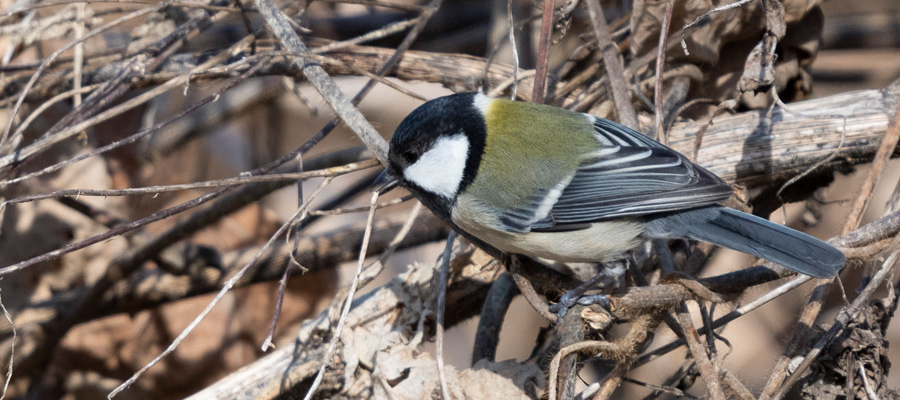
Japanese Tit Ecology
Habitat
Widely seen throughout Japan in wooded parks, forests, and thickets along riverbeds.
Food
Feeds on insects and spiders found in trees.
Life Cycle
Breeds from spring to early summer.
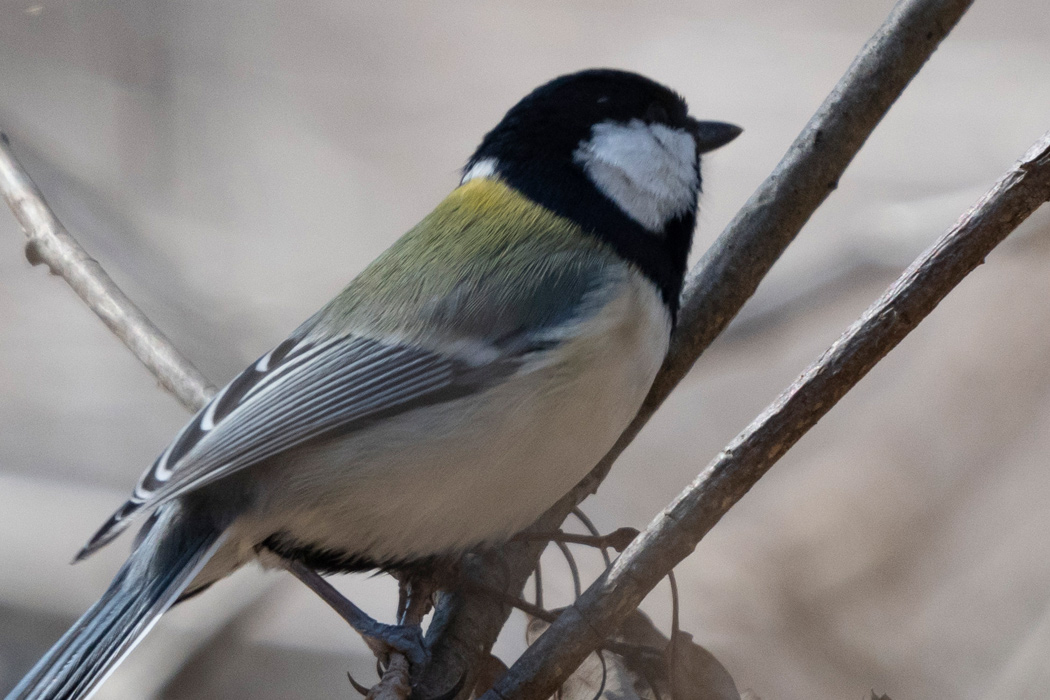
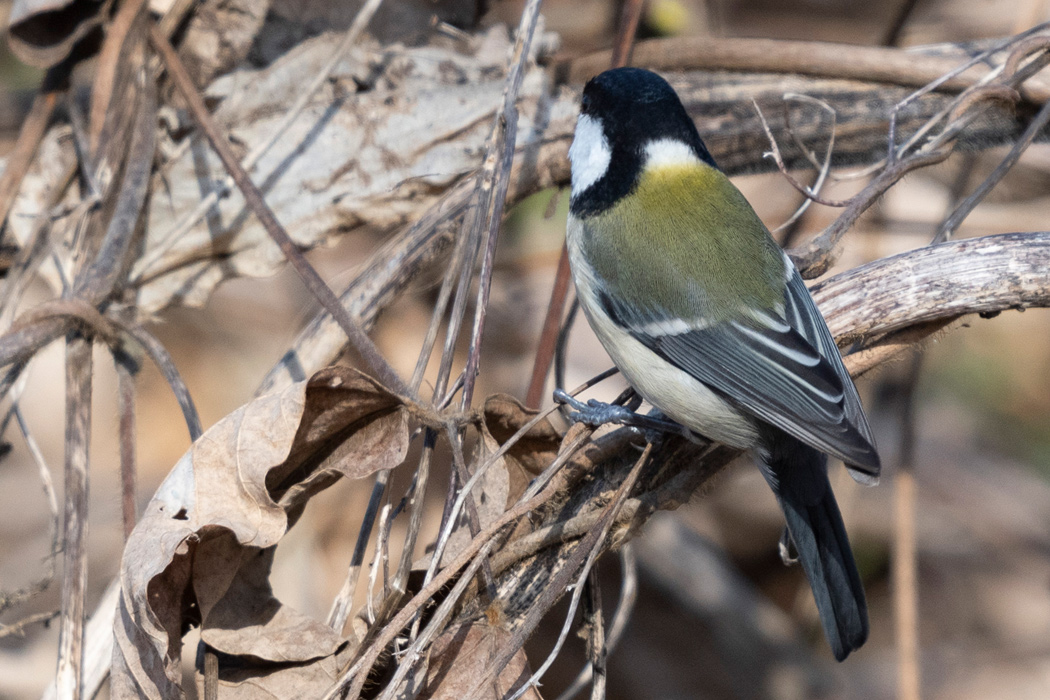
Japanese Tit Photos
Japanese Tit Photos are introduced.
Tap the photo to open the detail page.

Japanese Tit Behavior
During the breeding season, they act in pairs while declaring their territory. Outside of the breeding season, they move through trees in small flocks of about several to ten individuals.
Mixed-species Flocks
They sometimes form mixed-species flocks with other small birds such as Varied tits and Long-tailed tits.
Japanese Tit Information
Naming
The scientific name "cinereus" (often associated with related species) means "ash-colored," referring to the grayish tones of the bird.
Japanese Tit Found Locations
Hachioji City
Photographed in a park in Hachioji City in March. As the temperature rose, the number of Japanese tit pairs increased.
They are frequently seen even in urban areas; I once observed one bathing in water collected in a rain gutter the day after a rainfall. Despite their small bodies, their loud voices give them a strong presence. They are familiar birds that can be observed almost whenever you visit a park or forest.
Japanese Tit Video
Japanese Tit is introduced by video.
It was eating food.
Japanese Tit Observation Log
These are the observation logs where we found Japanese Tit.

Picture book
roams tree trunks....... Read more
strong beak, sharp call...... Read more
transparent wings with a black border....... Read more

Its call sounds like "Dē-dē-po-pō"...... Read more

Also called "Heike bird"....... Read more

The species name comes from the German Dönitz who collected it....... Read more