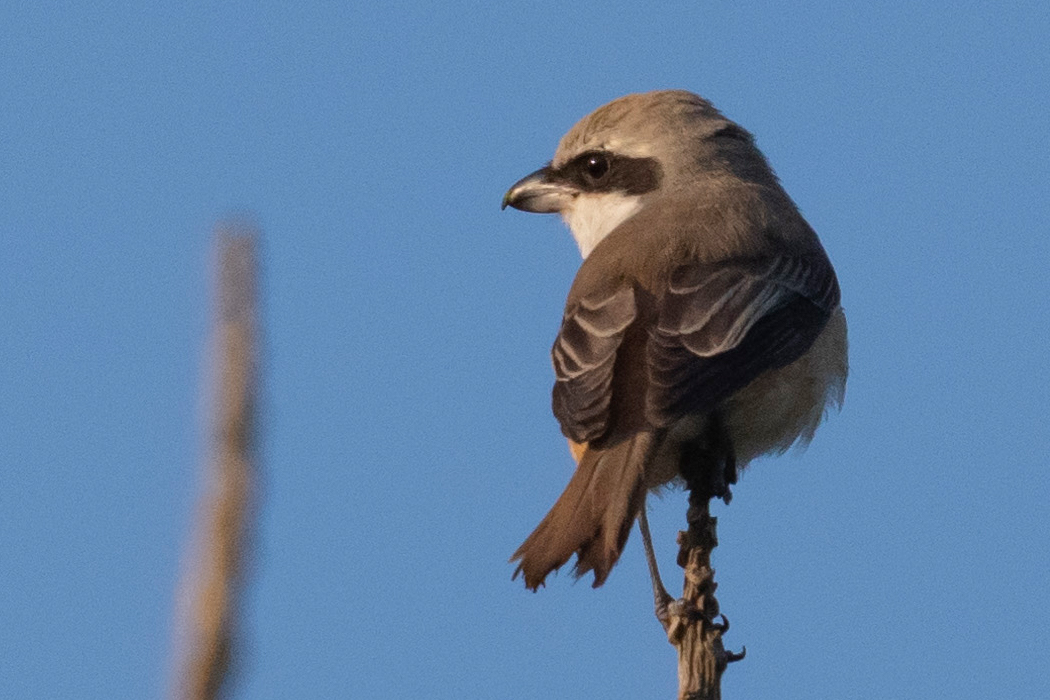
Brown shrike
A subspecies of the Brown Shrike with a gray head.
| Scientific name | Lanius cristatus lucionensis |
| English name | Brown shrike |
| Japanese name | 島赤百舌 |
| Class | Aves |
| Order | Passeriformes |
| Family | Laniidae |
| Genus | Lanius |
| Species | cristatus |
| Subspecies | lucionensis |
| Full length | 20cm |
| Distribution | In Japan, found in the Yaeyama Islands of Okinawa Prefecture. Rare in Honshu and Kyushu. |
Brown shrike Characteristics and Morphology
About the same size as a Bull-headed Shrike, with a generally grayish body. Mostly monomorphic.
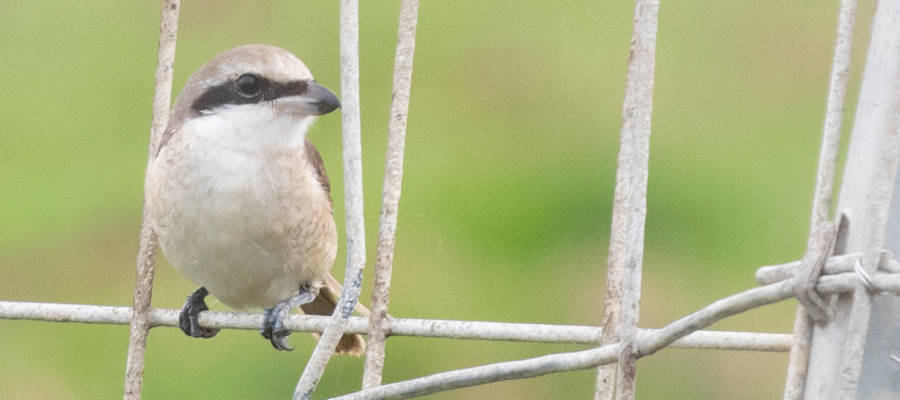
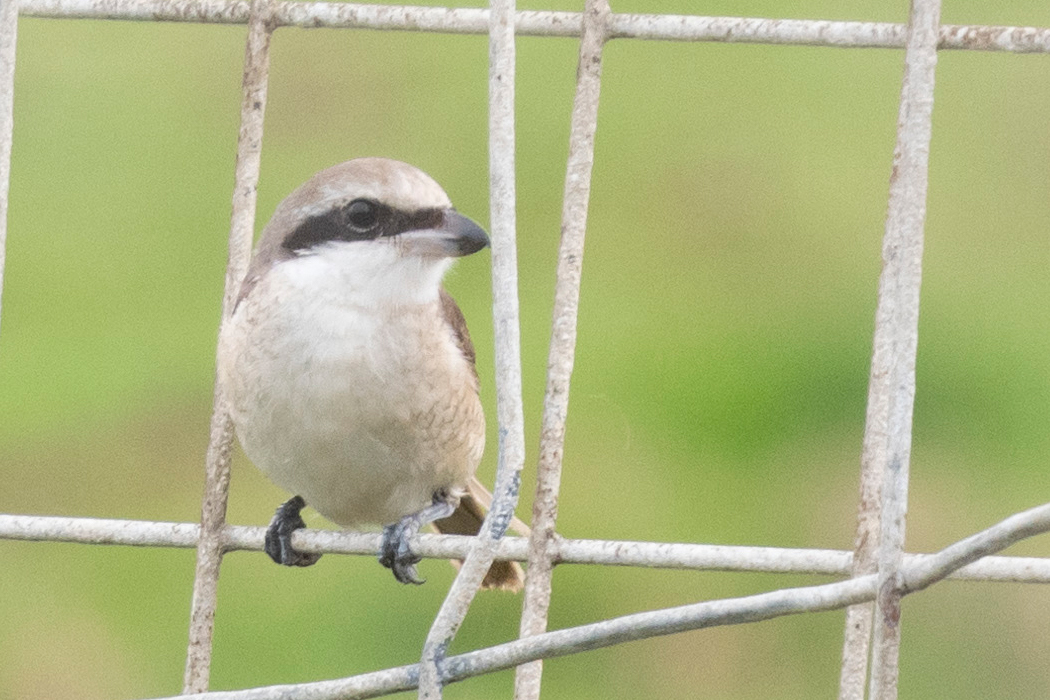
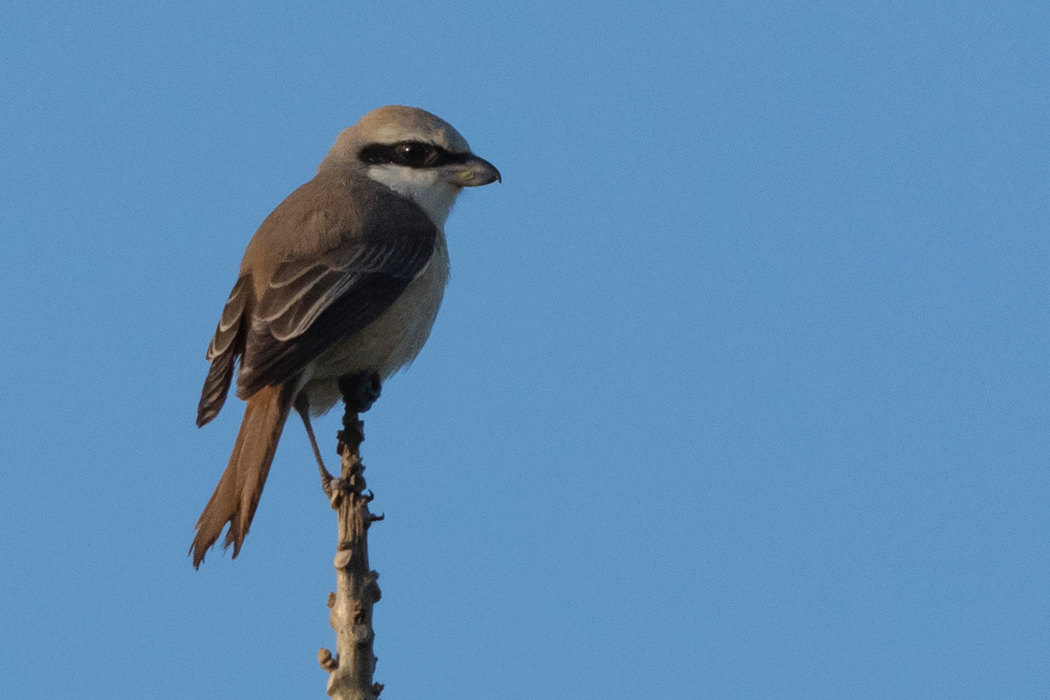
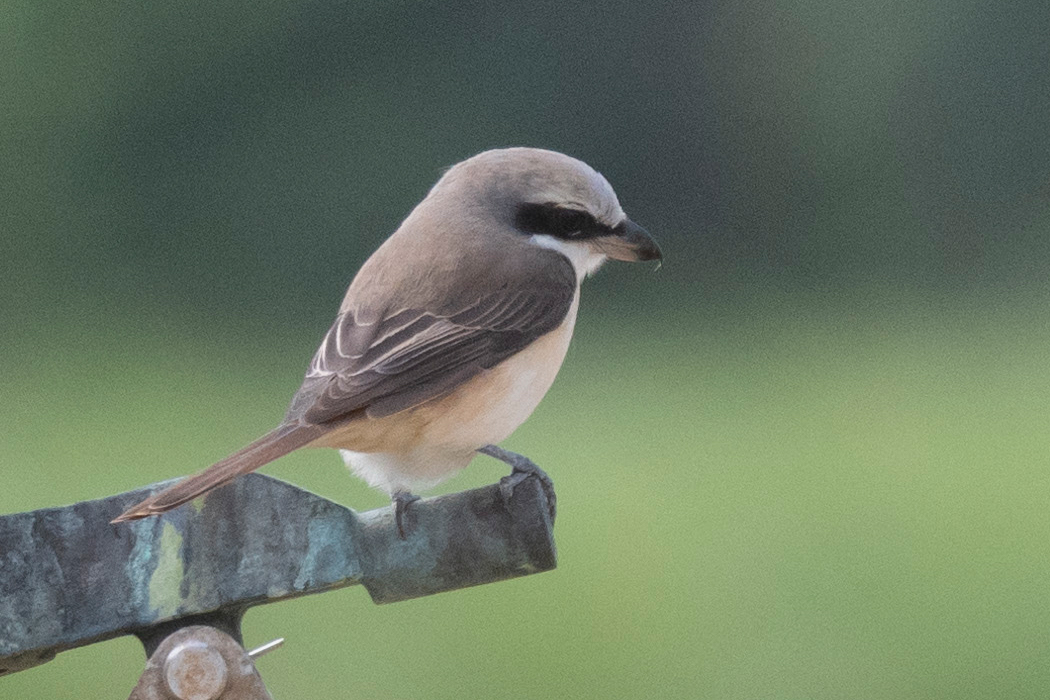
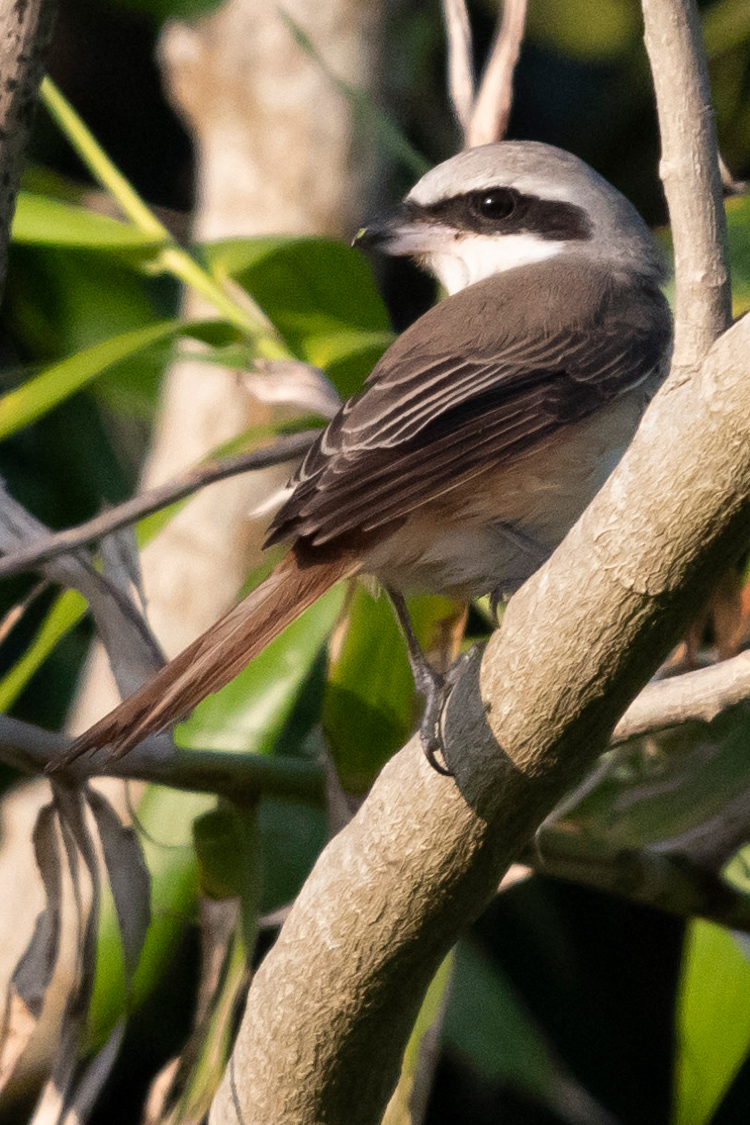
The head is large, similar to other shrikes. The crown is gray, while the forehead and cheeks are white. A black mask (eyeline) extends to the ear area. The iris is black. The bill is lead-colored and sharp.
The back is brown, and the belly ranges from pale brown to white.
The tail feathers are long and brown. The legs are lead-colored.
The difference from the nominate subspecies (Brown Shrike) is the coloration of the head. The Philippine Brown Shrike is gray and does not have a brownish tint on the head.
Song
Brown shrike Ecology
Habitat
Found around farmland and grasslands.
Food
Eats small animals such as insects and earthworms.
Brown shrike Photos
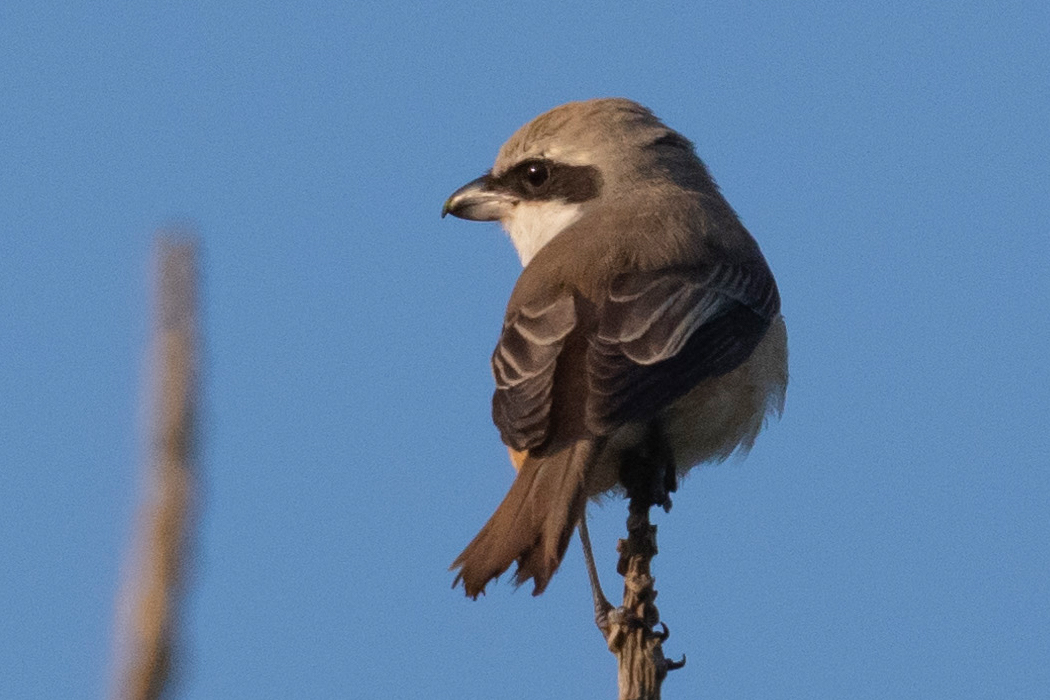
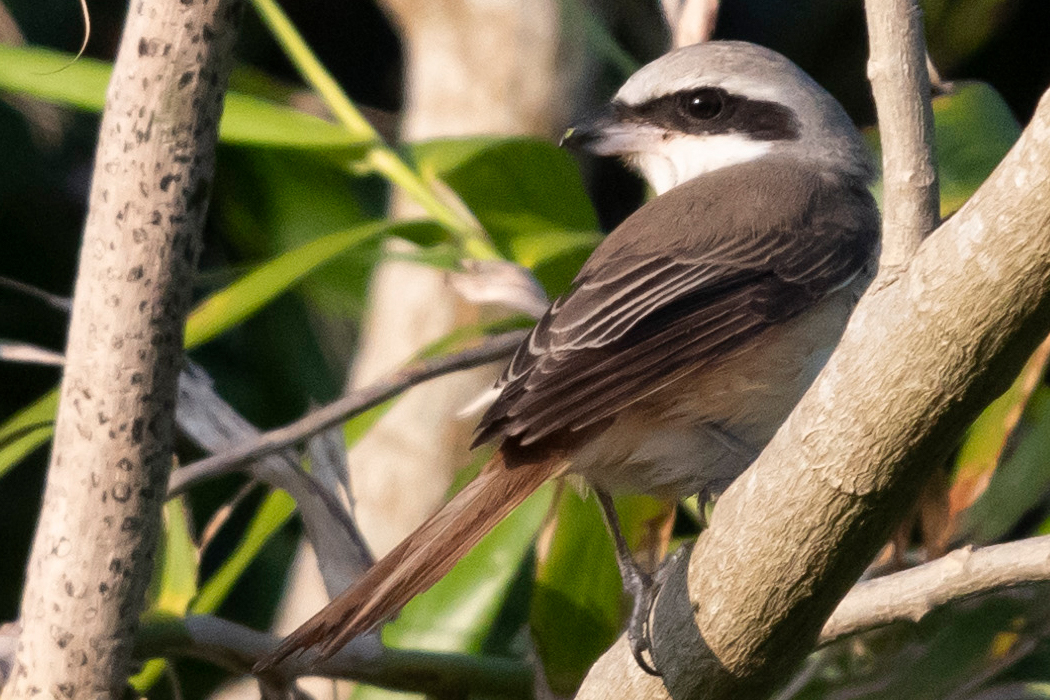
Brown shrike Photos are introduced.
Tap the photo to open the detail page.
Brown shrike Behavior
Perches on horizontal branches or man-made structures to scan the surroundings.
Brown shrike Information
Naming
The scientific name "cristatus" means "crested," likely referring to the head of this species. The subspecies name "lucionensis" means "of Luzon," as it was frequently observed on Luzon Island in the Philippines.
Brown shrike Found Locations
Ishigaki Island
I saw it many times near farmland. It would perch on man-made structures or horizontal tree branches, looking around the area. Its shape was very similar to the Bull-headed Shrike found in Honshu, but its coloring was gray.
Picture book
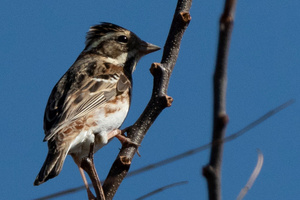
Characterized by bristling feathers on the top of the head....... Read more
The back half of the body is black....... Read more
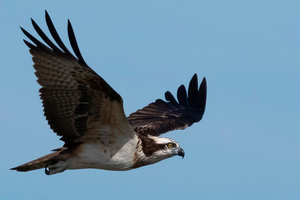
Strong legs to catch fish....... Read more
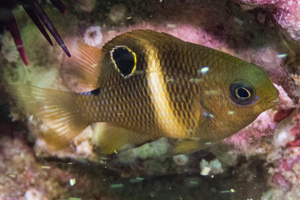
There is a white band in the middle of the body....... Read more

The contrast of black and white is strong....... Read more
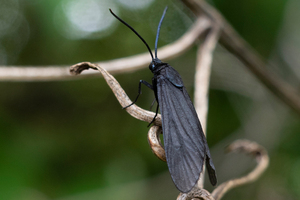
Its entire body is black, with slightly blue antennae....... Read more