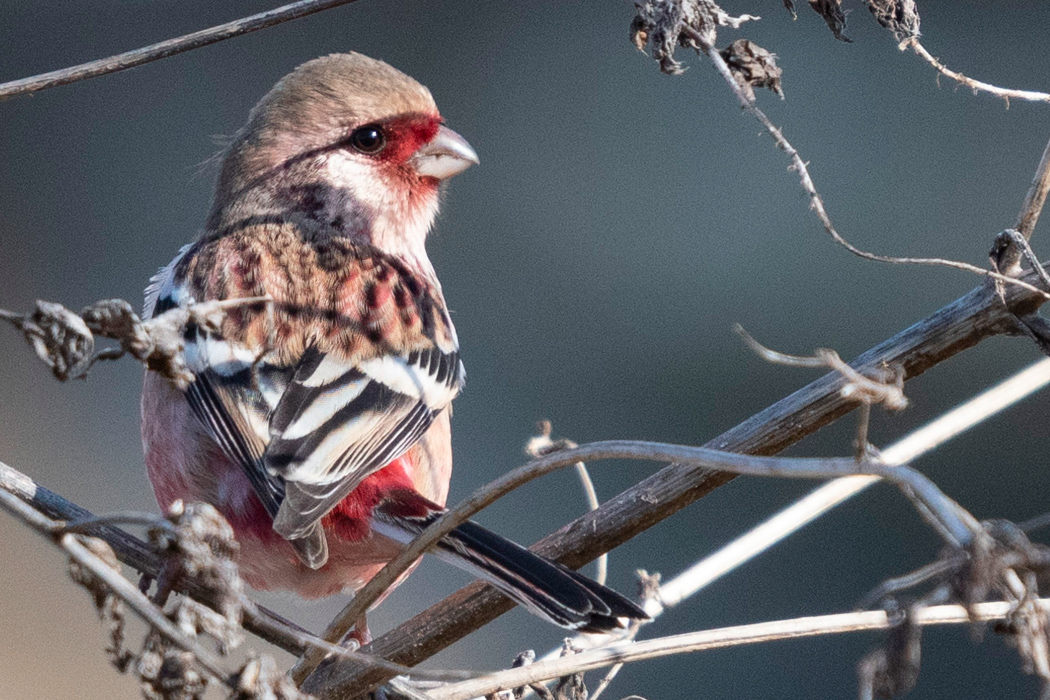
Long-tailed Rosefinch
| Scientific name | Uragus sibiricus |
| English name | Long-tailed Rosefinch |
| Japanese name | 紅猿子 |
| Class | Aves |
| Order | Passeriformes |
| Family | Fringillidae |
| Genus | Uragus |
| Species | sibiricus |
| Subspecies | --- |
| Full length | 15cm |
| Distribution | They come to Honshu and southwards as winter birds, and to Hokkaido as summer birds. |
Characteristics
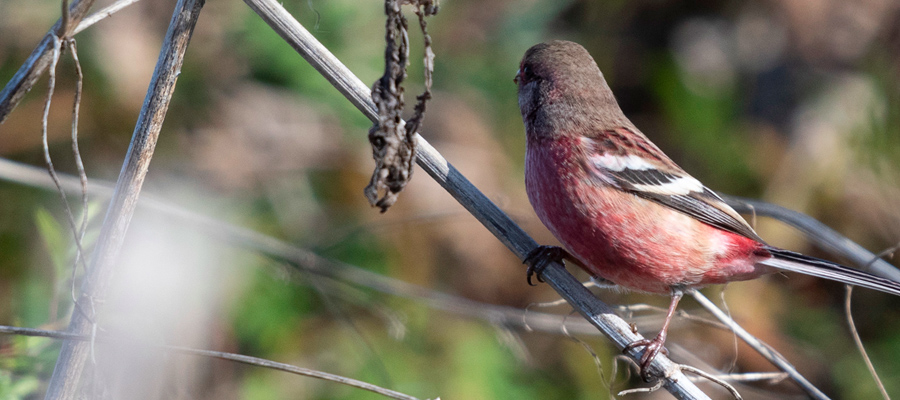
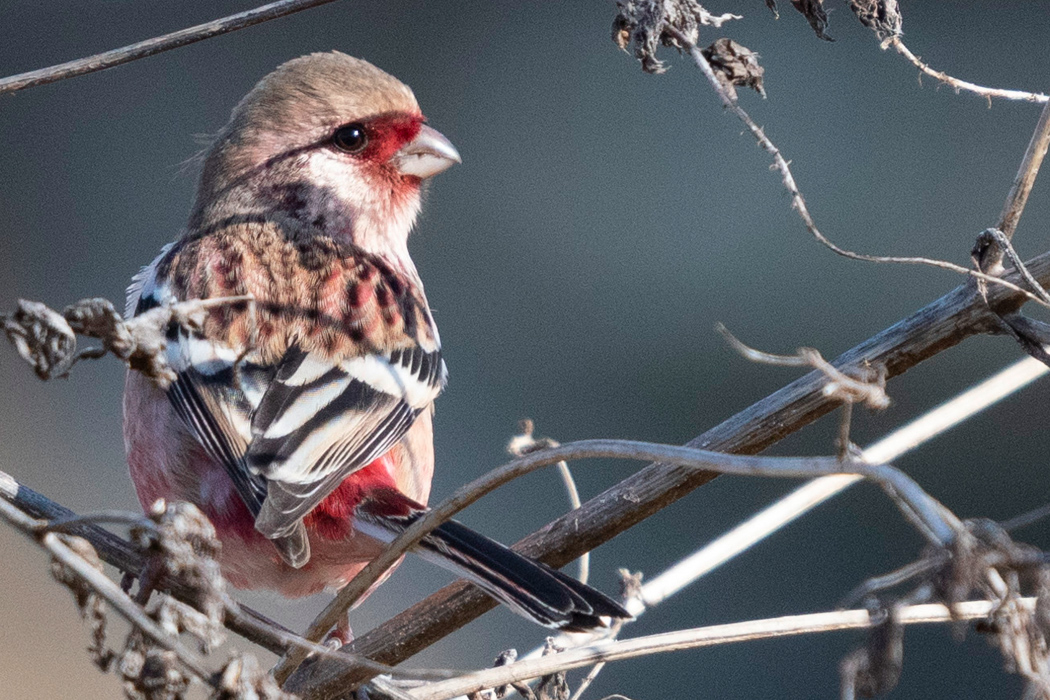
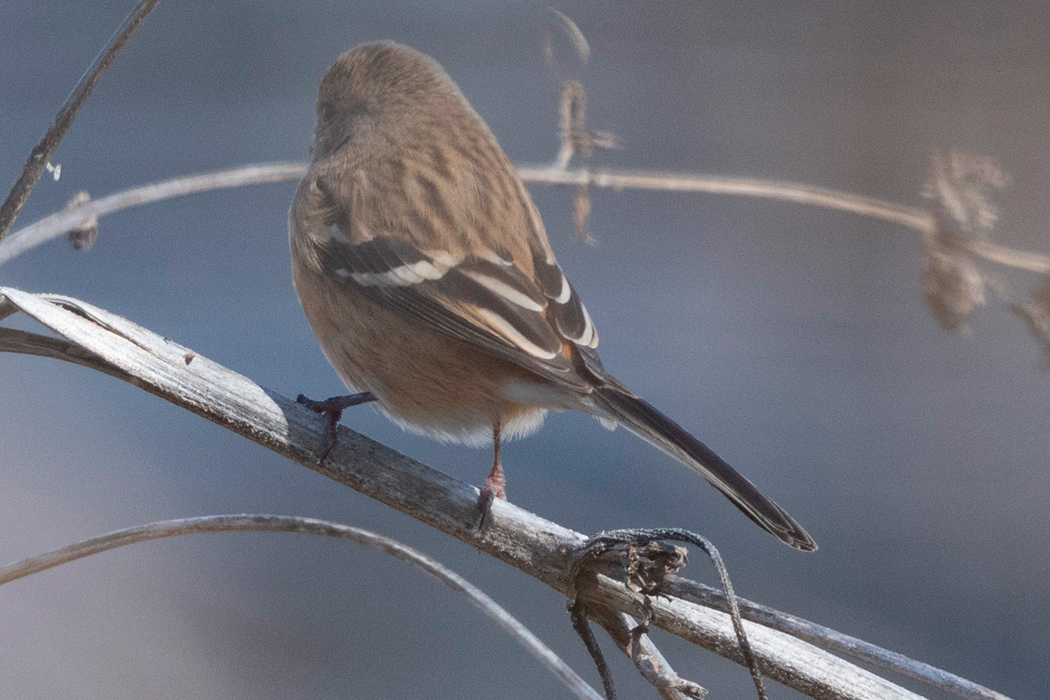
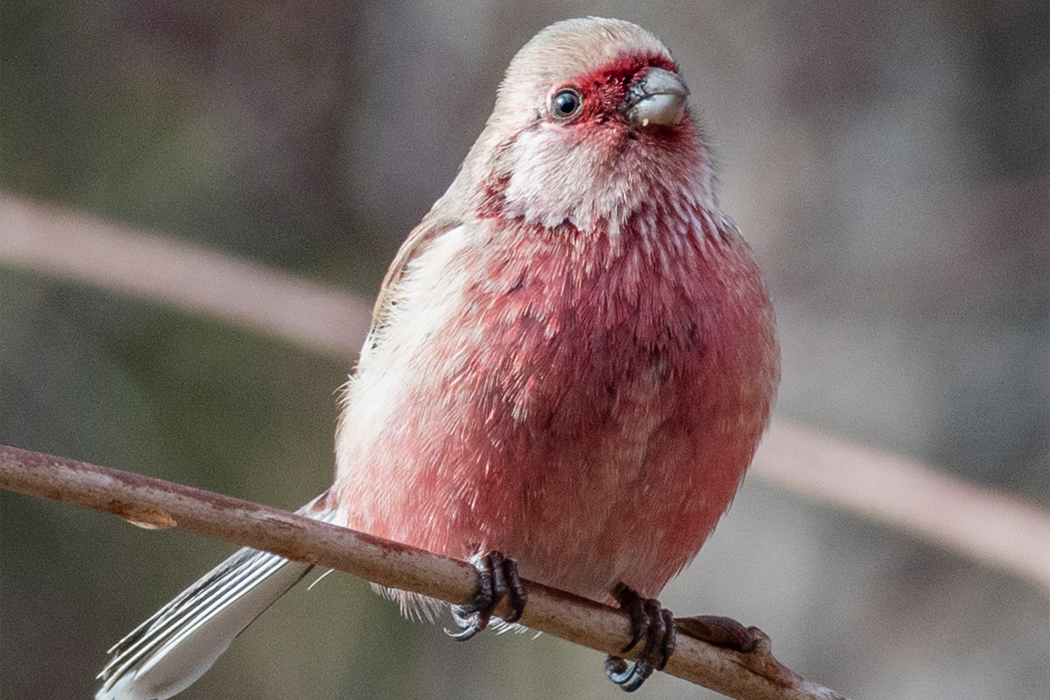
A wild bird of the family Cuckoo, which is characterized by the crimson color of males. Males are red all over, especially dark between the eyes and the beak. Males are more reddish in summer. Females are dull brown. Both males and females have black and white stripes on their wings. The short and powerful beak is pale skin color.
Calls
Benimashiko's squeals are "beep" and "fee-fee". The chirping is similar to bunting and sounds like "chorichori" and "chiri-chiri".
Origin of Benimashiko name
"Beni" in Benimashiko simply refers to the crimson one. "Mashiko" is written as "monkey" in kanji and refers to a monkey with a red face. The name emphasizes the red color that stands out among the bushes.
Ecology
They live in grasslands and riverbeds in areas south of Honshu, where they fly as winter birds. It flies around thickets and eats plant fruits such as knotweed with its proud beak.
In their breeding grounds, they live in places with thickets, such as grasslands, marshes, and coastal areas, where they prey on insects.
Habitat
Found in the riverbed of Asakawa, Hachioji City. When I was observing wild birds living in the grass, such as the Redstart and the Blue-faced Blue-eye, they suddenly appeared in pairs. The red color of the male was very beautiful on the reed-colored river bed.
The female has a subdued coloration, and unless you look carefully, you may not recognize it as a red finch.
Video
This video of Long-tailed Rosefinch.
Long-tailed Rosefinch eating.
Pictures
Introducing a picture of Long-tailed Rosefinch.




Picture book

Japanese Grosbeak
yellow with strong beak....... Read more
Silver-lined Skipper
A silver streak runs along the underside of the wing....... Read more
Eurasian Sparrowhawk
It looks smaller than a goshawk....... Read more
Rustic Bunting
Characterized by bristling feathers on the top of the head....... Read more