Scaly Thrush
Feared in ancient times as the "Nue" due to its eerie call.
| Scientific name | Zoothera aurea |
| English name | Scaly Thrush |
| Japanese name | 虎鶫 |
| Class | Aves |
| Order | Passeriformes |
| Family | Turdidae |
| Genus | Zoothera |
| Species | aurea |
| Full length | Approx. 30cm |
| Distribution | Year-round resident in Honshu, Kyushu, and Shikoku. |
Scaly Thrush Characteristics and Morphology
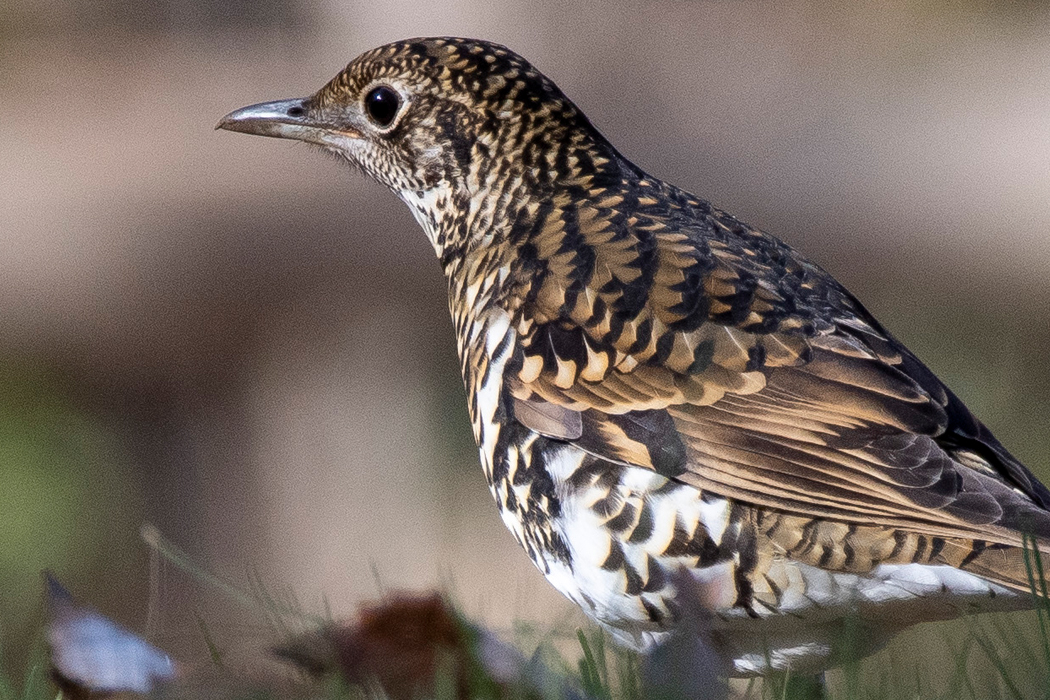
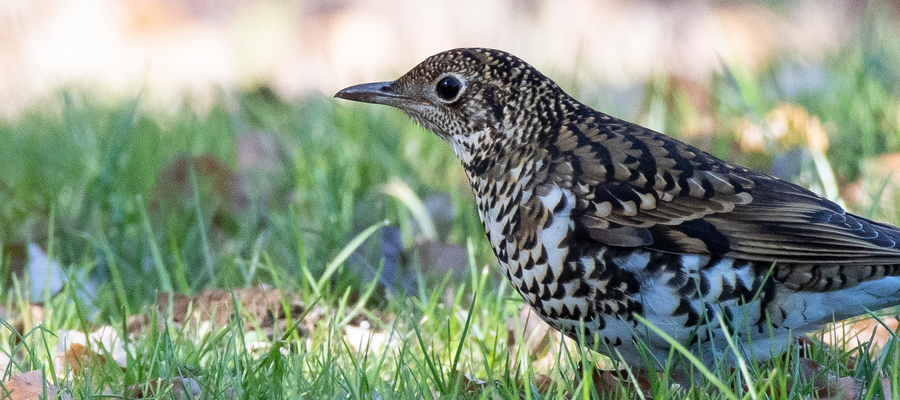
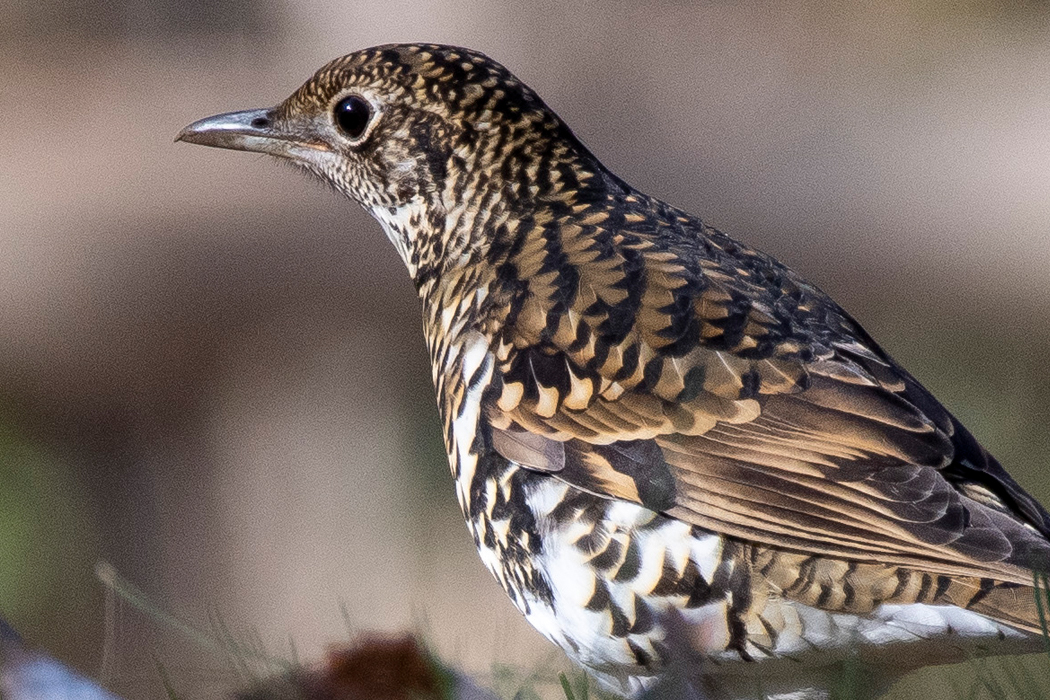
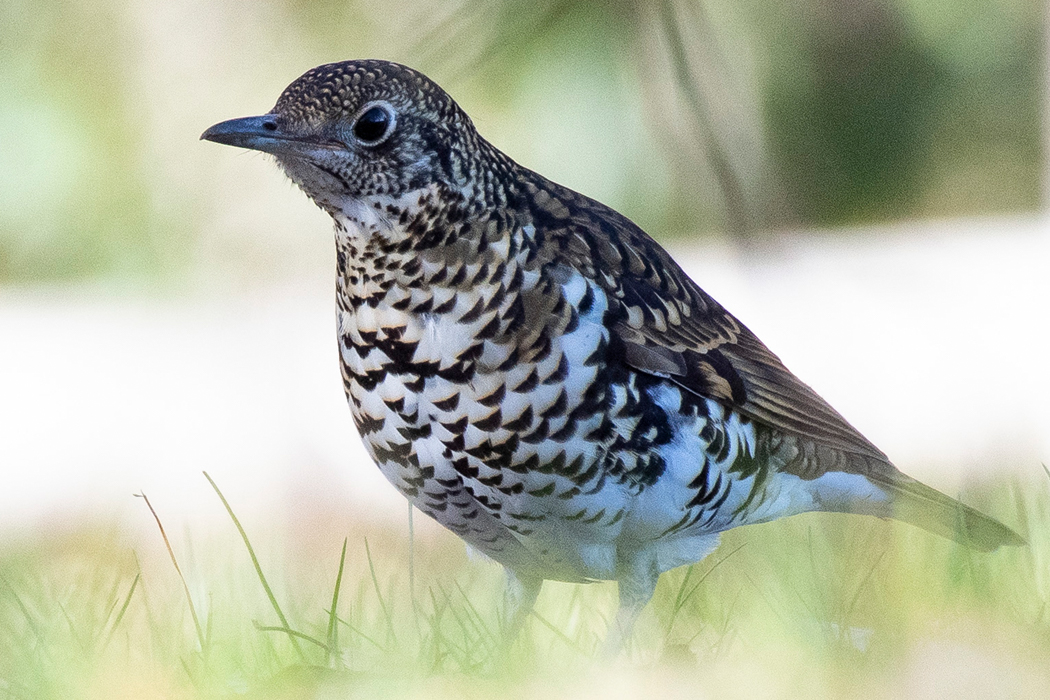
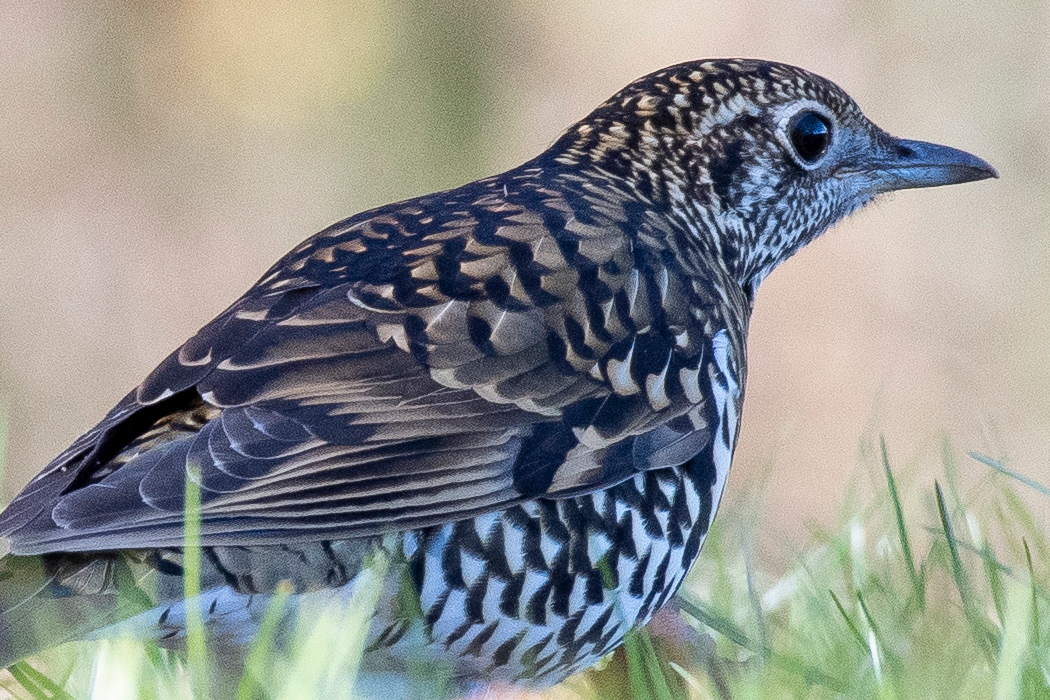
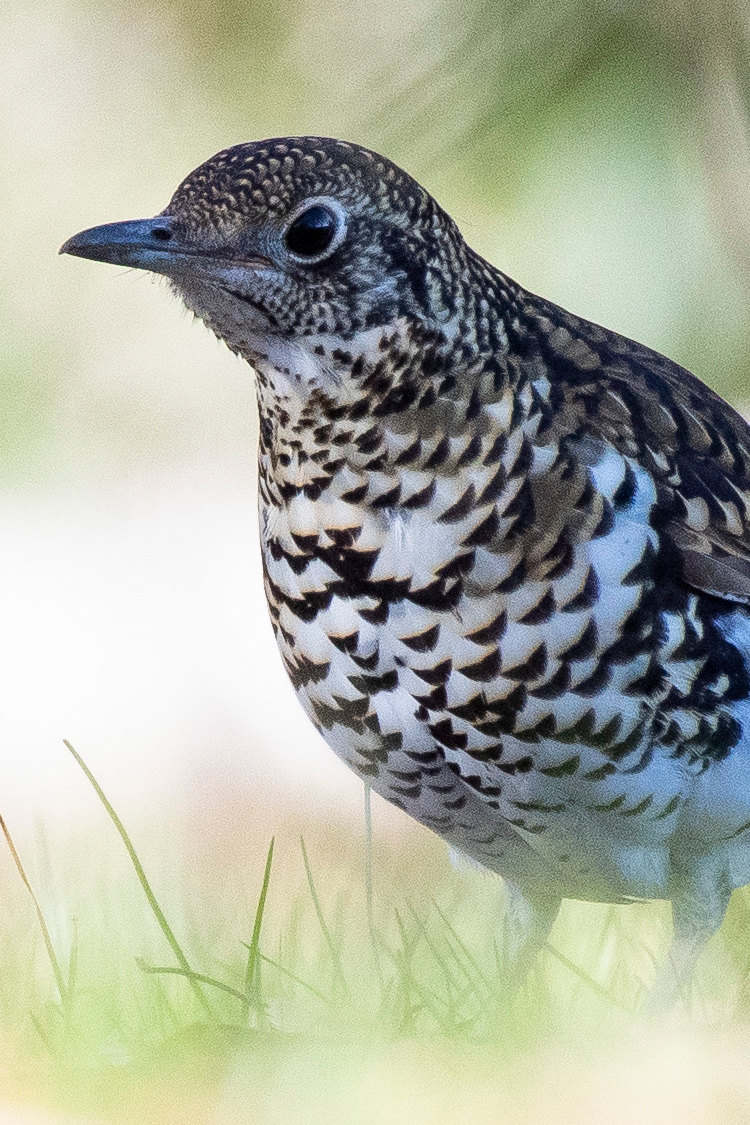
A bird about 30cm long, roughly the size of a Brown-eared bulbul. As the Japanese name suggests, it has an overall tiger-like pattern of yellow and blackish-brown. Males and females look the same.
The pattern on the head is fine. The iris is black, and the eye ring is pale brown. The bill is somewhat long and lead-colored. The upper mandible is slightly hooked.
On the back, the scaly tiger pattern becomes larger. The underside has a mottled pattern of white and blackish-brown. The flight feathers are blackish-brown.
There is no tiger pattern on the tail feathers. The legs are pink.
Song
The call of White's thrush echoing in the night forest has been considered eerie since ancient times and was called "Nue." The calling period is during the breeding season from April to July, mainly from midnight to dawn.
Scaly Thrush Ecology
Habitat
Inhabits broad-leaved forests in hilly areas and low mountains. Sometimes seen in urban areas or parks. While also confirmed in snowy regions like Hokkaido, those populations are summer birds that migrate to warmer regions.
Food
Omnivorous; it walks through fallen leaves to eat insects and earthworms from the soil.
Life Cycle
Breeds from April to July in nests built on trees. During this period, it emits a unique, whistle-like call at night.
Scaly Thrush Photos
Scaly Thrush Photos are introduced.
Tap the photo to open the detail page.
Scaly Thrush Behavior
Foraging Dance
When preying on insects or earthworms in the soil, it rhythmically shakes its body in a dance-like motion.
Scaly Thrush Information
Naming
The scientific name "aurea" means "golden," referring to the overall color of this species. The English name "Scaly" refers to how the body patterns look like the scales of a fish.
Nue
It appears in Japanese literature such as the Man'yoshu, and the phrase "Nuedori no" (like the Nue bird) serves as a "makurakotoba" (pillow word/epithet) in poetry.
Scaly Thrush Found Locations
Tama Forest Science Garden, Hachioji City
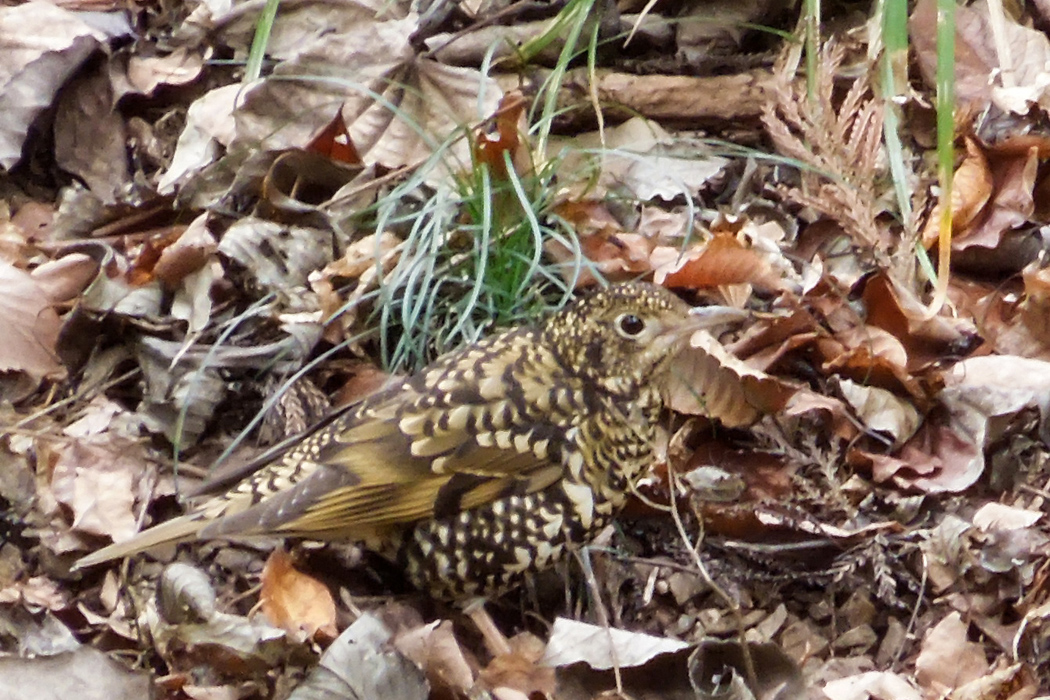
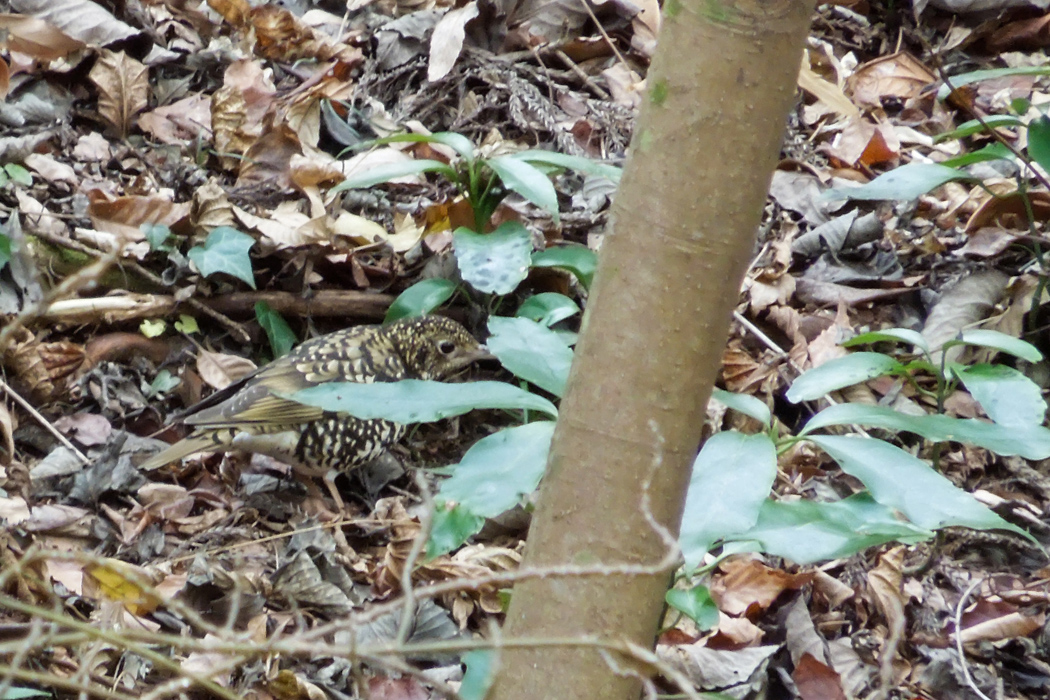
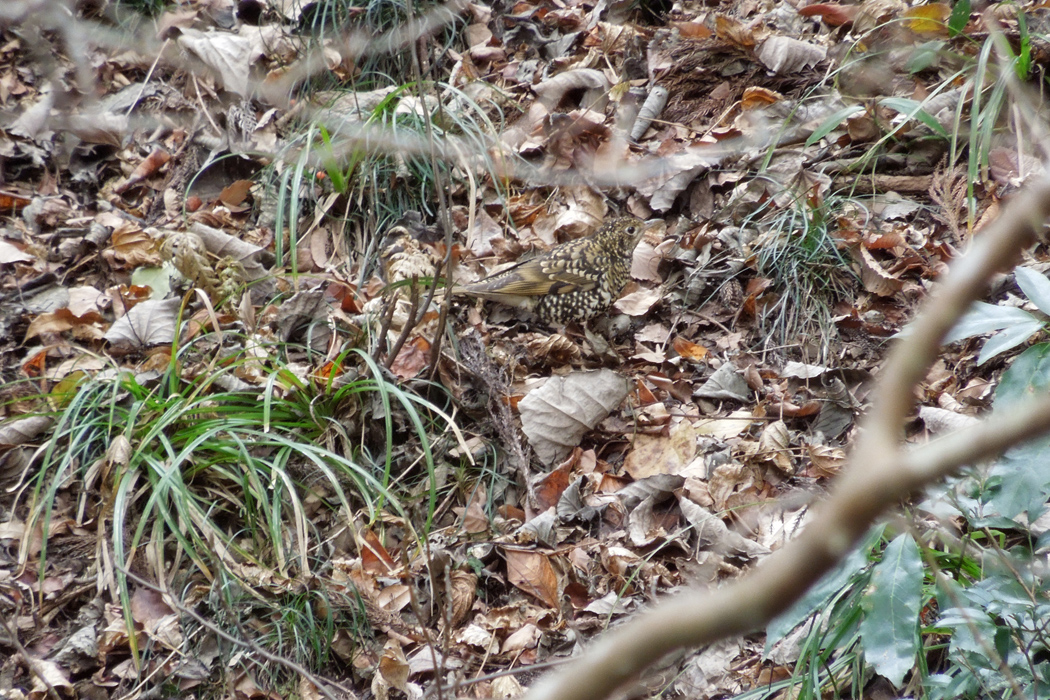
Discovered by the roadside within the Tama Forest Science Garden in Hachioji City.
On a cloudy day, I could tell something was moving on the forest slope, but it was so camouflaged against the ground that it was difficult to spot. Looking closely, I saw this slightly large bird walking on the ground. After a while, it stayed in one spot, dug into the soil, and ate something. While other birds were singing frequently, I couldn't hear the White's thrush's call since it was daytime.
Grassland in Hachioji City
Photographed while foraging in a grassland in Hachioji City. Since it was a bright time before noon, I was able to observe it well. It progressed by walking bit by bit while performing its characteristic "dance."
Scaly Thrush Video
Scaly Thrush is introduced by video.
Foraging while dancing in the grassland.
Picture book

The crimson color of the throat....... Read more
Characterized by its distinct, pure white eye-ring....... Read more
hides well in sand...... Read more
Fills the forest with its beautiful, melodious song....... Read more
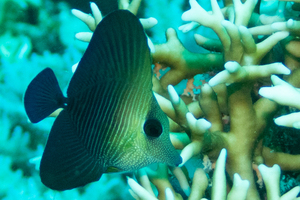
blackish from face to tail (juvenile fish)...... Read more

Forages by walking through bushes....... Read more