Red-breasted Flycatcher
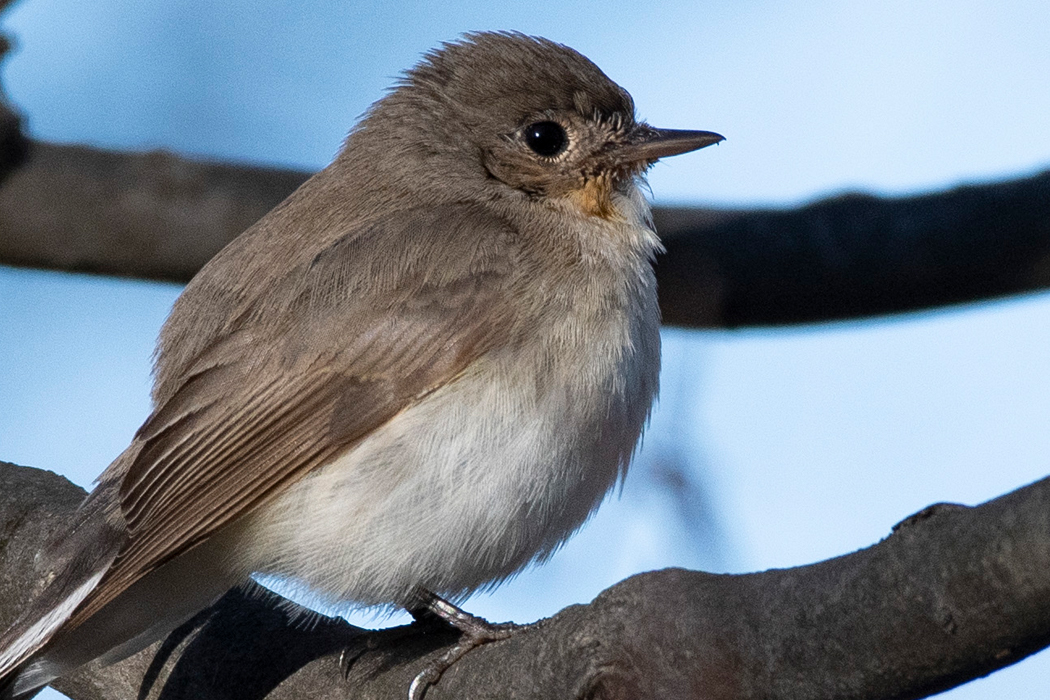
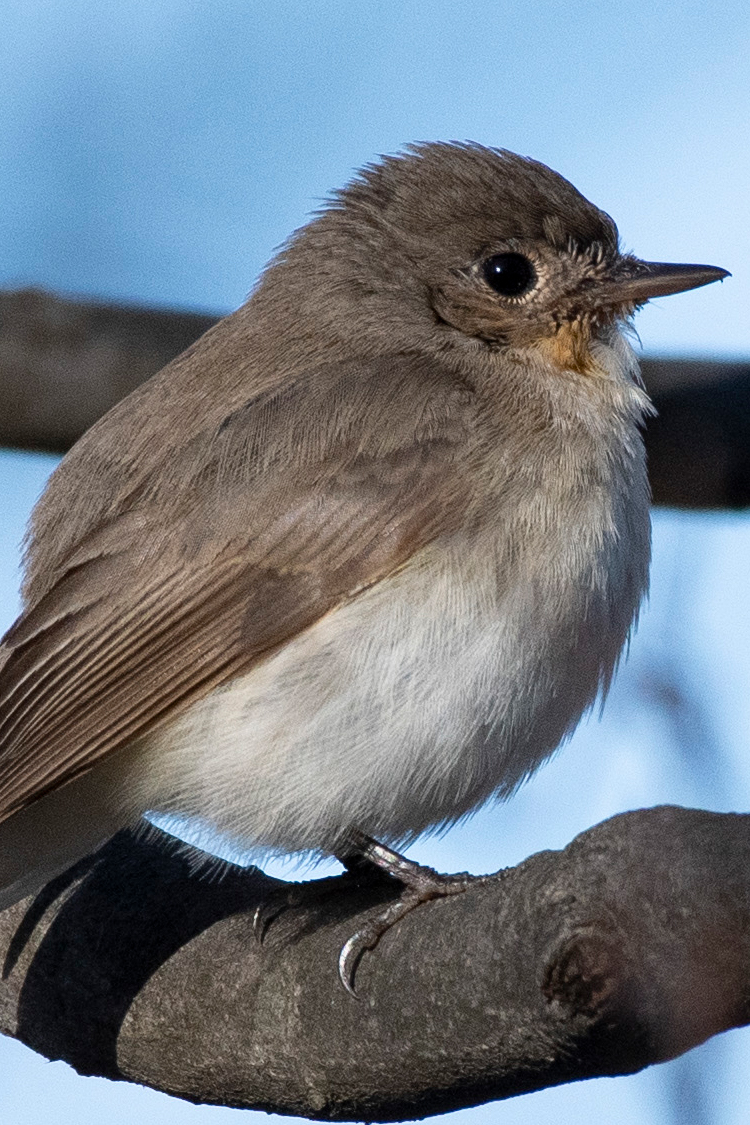
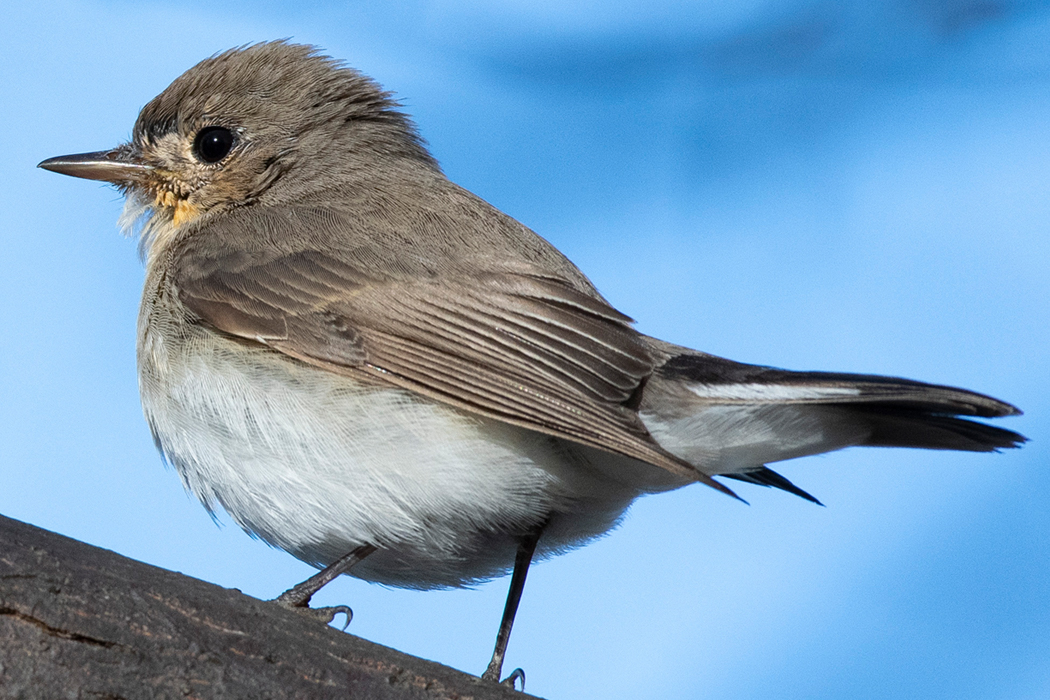
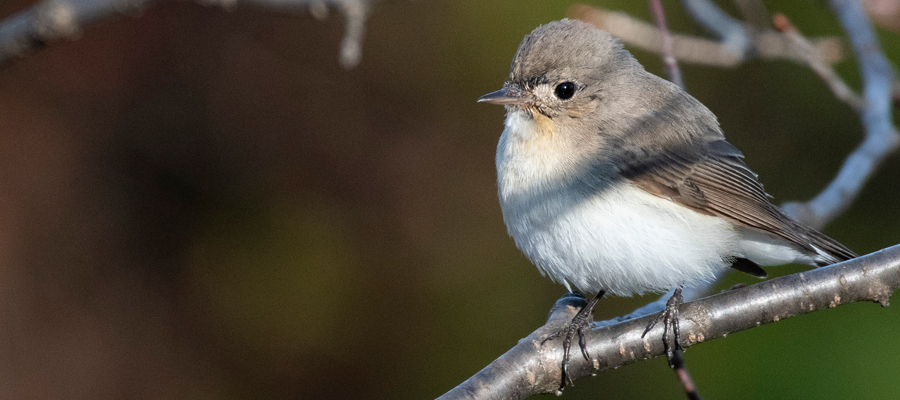
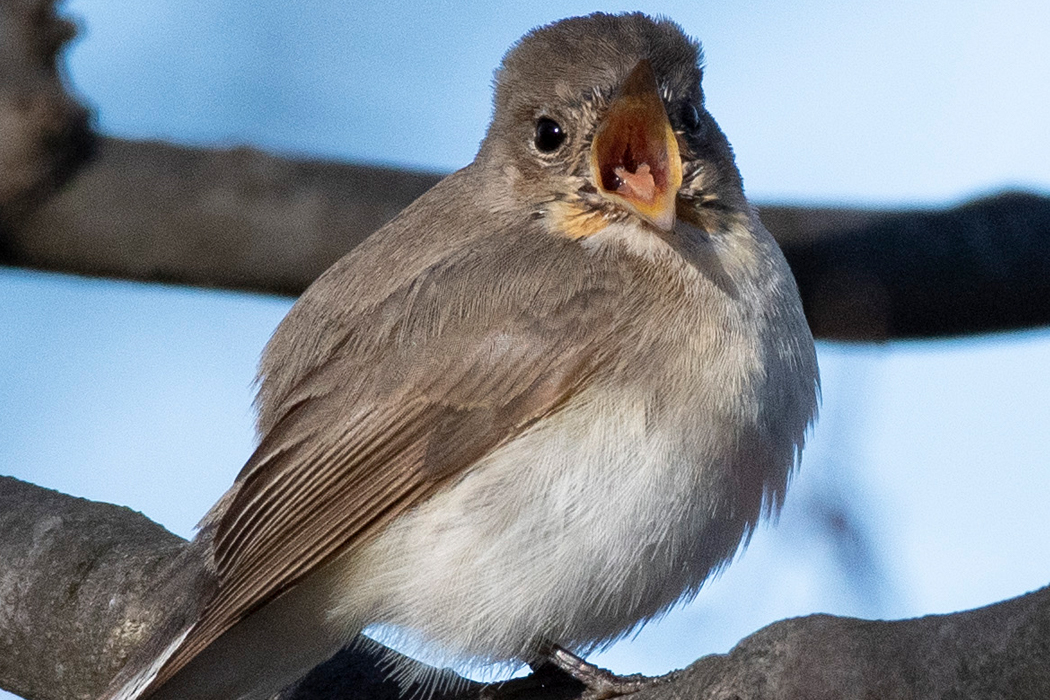
The chest is slightly buff-colored.
| Scientific name | Ficedula parva parva |
| English name | Red-breasted Flycatcher |
| Japanese name | 西尾白鶲 |
| Class | Aves |
| Order | Passeriformes |
| Family | Muscicapidae |
| Genus | Ficedula |
| Species | parva |
| Full length | Approximately 12cm |
| Distribution | Eurasia, from Eastern Europe to Siberia. In Japan, it is a passage migrant. |
Red-breasted Flycatcher Characteristics and Morphology
A flycatcher that is rarely seen as a passage migrant. It is slightly smaller than a sparrow. During the breeding season, the colors of males and females differ.
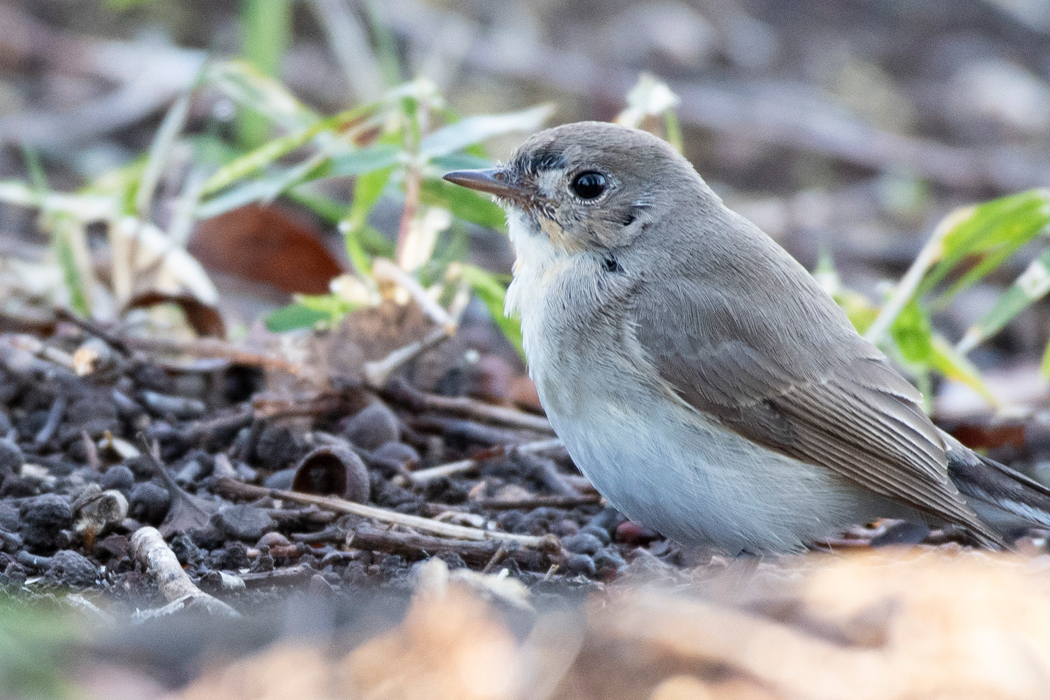
The head is light brown. The beak is generally lead-colored, but the lower mandible is pale flesh-colored. The iris is black and has a thin white eye-ring.
The upperparts of the body are gray and the abdomen is white. The throat to the chest is pale buff.
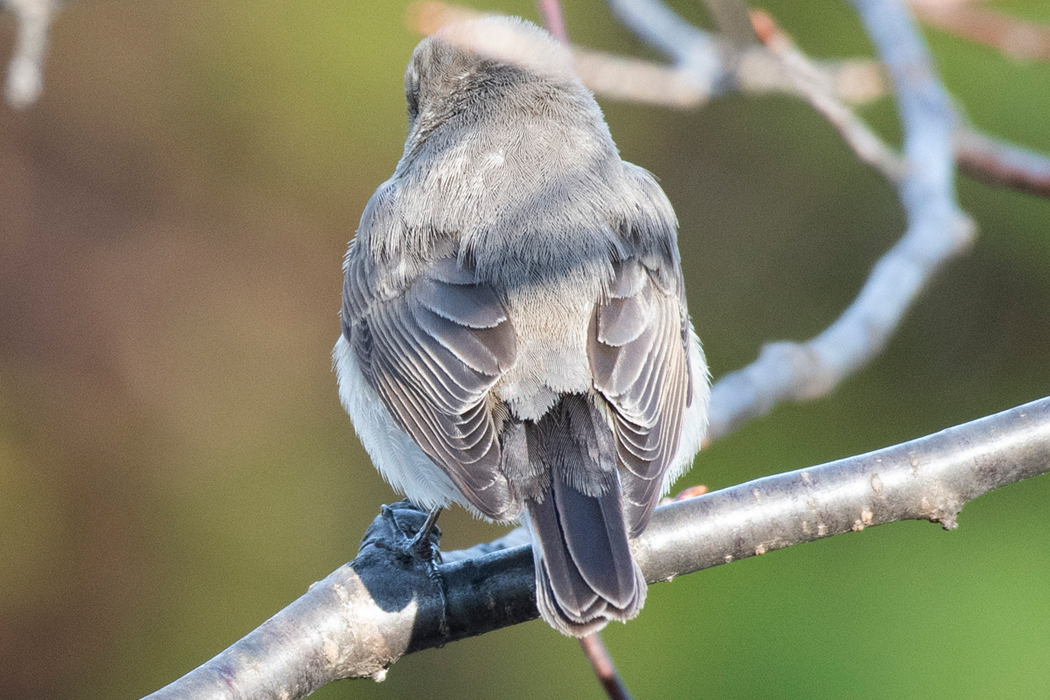
The uppertail coverts are gray.
The uppertail coverts are slightly lighter in color compared to those of the Red-breasted Flycatcher.
Male
The color of the back is similar to that of the female.
During the breeding season, the throat turns orange.
Female
The female's throat is not colored and is generally brown.
Song
It sings in a high-pitched voice, 'pee-pee'.
Red-breasted Flycatcher Ecology
Habitat
Inhabits bright forests from plains to mountains.
Food
Forages for arthropods while moving between the ground and trees. Also eats plant matter such as nuts.
Life Cycle
Rarely migrates to Japan as a winter bird. Breeds from late spring to early summer.
Red-breasted Flycatcher Photos
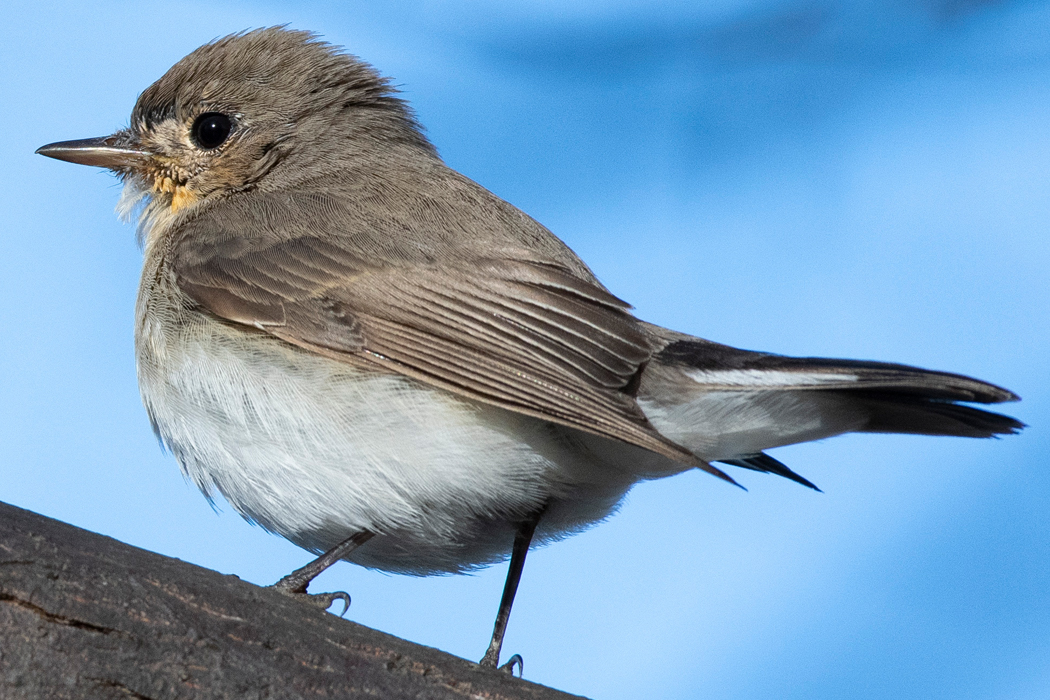
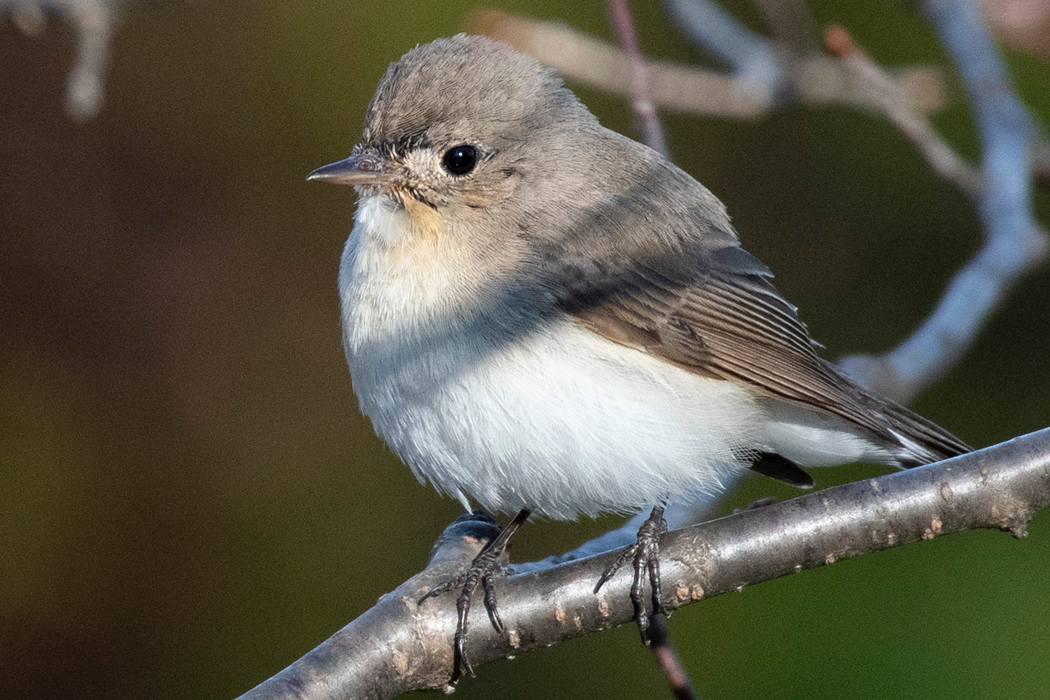
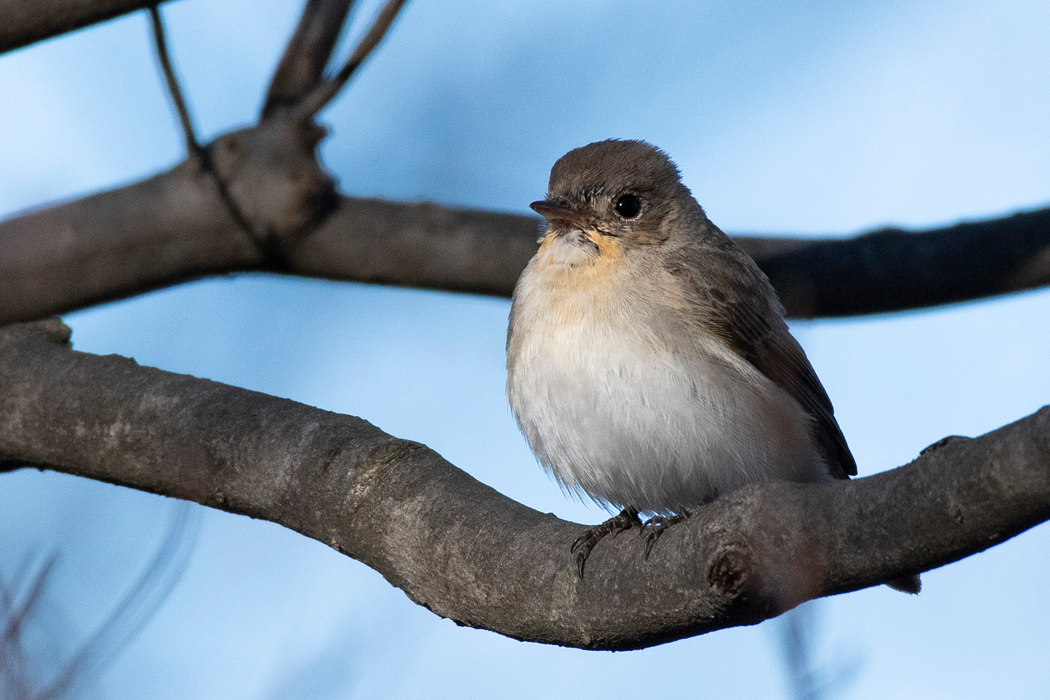
Red-breasted Flycatcher Photos are introduced.
Tap the photo to open the detail page.

Red-breasted Flycatcher Behavior
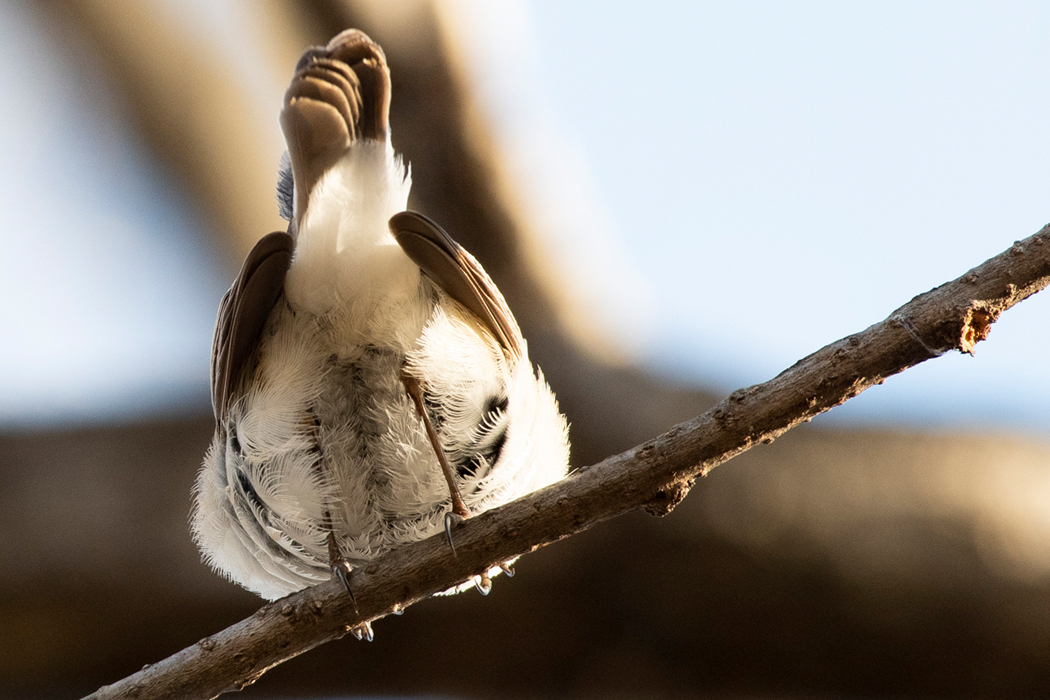
A characteristic pose is raising its tail.
Red-breasted Flycatcher Information
Naming
The specific name 'parva' means 'small', and is derived from the small size of this species.
Red-breasted Flycatcher Found Locations
Park in Hachiōji
I took this photo early in the morning in a bright forest with sunlight shining through. It was searching for food, fluttering around with flycatcher-like movements. It was light on its feet and sometimes perched vertically on tree trunks. After eating a bug in the tree, it looked at me and opened its beak wide.
Red-breasted Flycatcher Observation Log
These are the observation logs where we found Red-breasted Flycatcher.