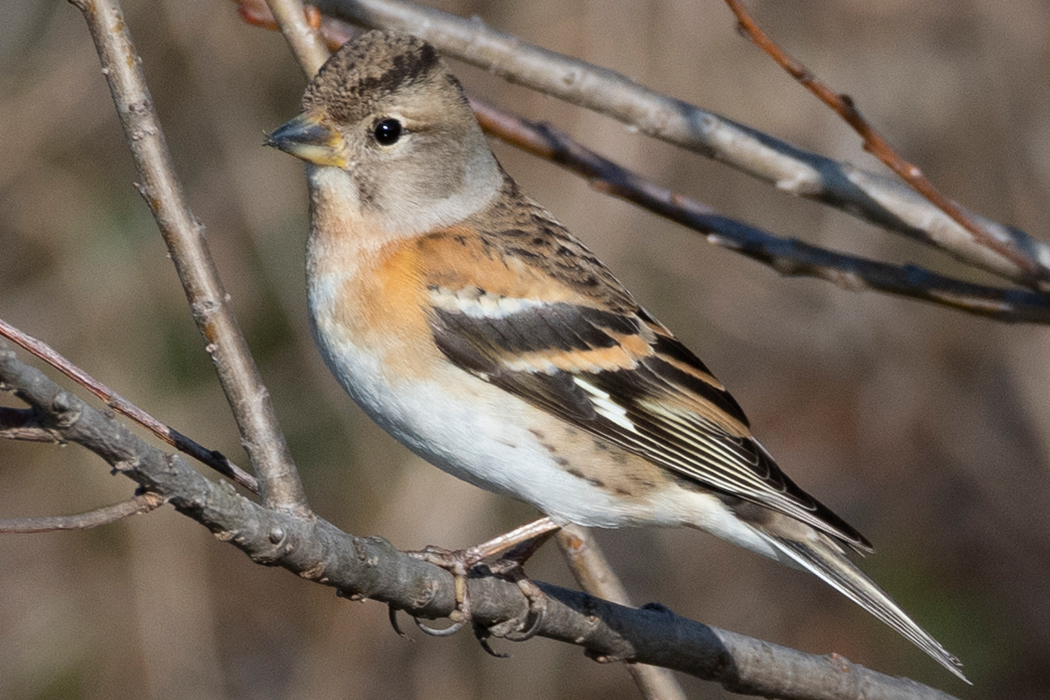
Brambling
A winter bird with bright brown plumage.
| Scientific name | Fringilla montifringilla |
| English name | Brambling |
| Japanese name | 花鶏 |
| Class | Aves |
| Order | Passeriformes |
| Family | Fringillidae |
| Genus | Fringilla |
| Species | montifringilla |
| Full length | 16cm. |
| Distribution | Breeds in northern Eurasia. Migrates to Japan (Hokkaidō to Kyūshū) as a winter bird. |
Brambling Characteristics and Morphology
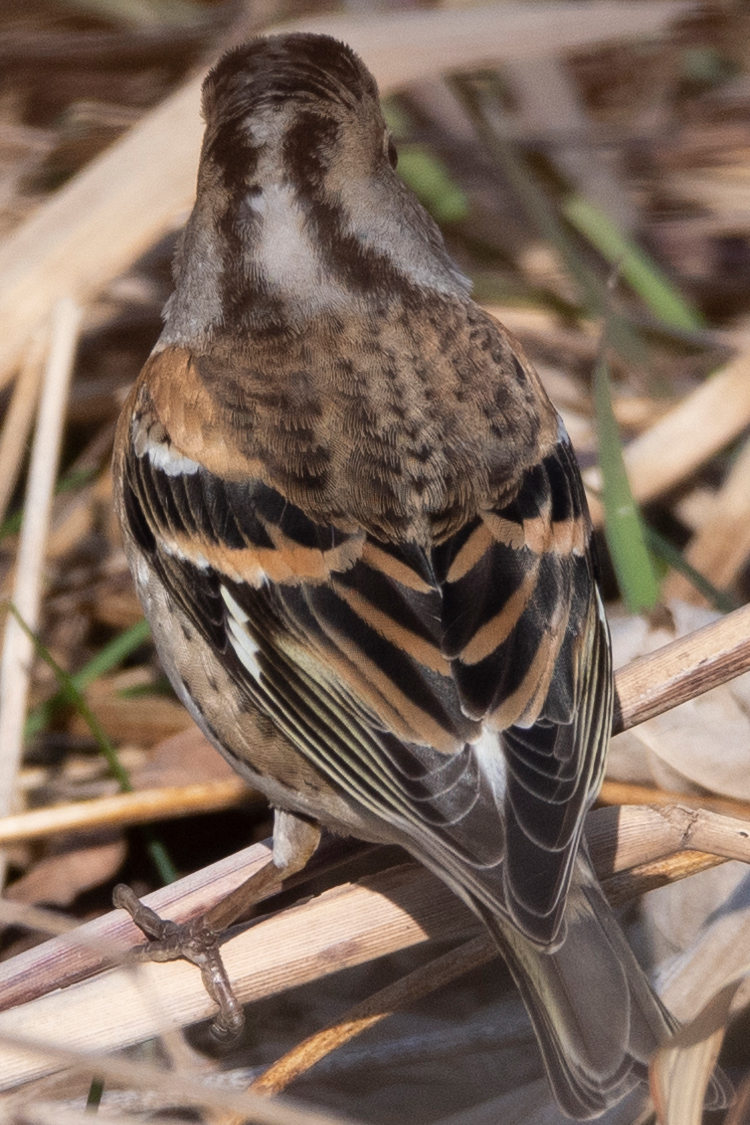
About the same size as or slightly smaller than the Rustic Bunting (Emberiza rustica). The entire body is brown. Males and females differ mainly in the color of their heads.
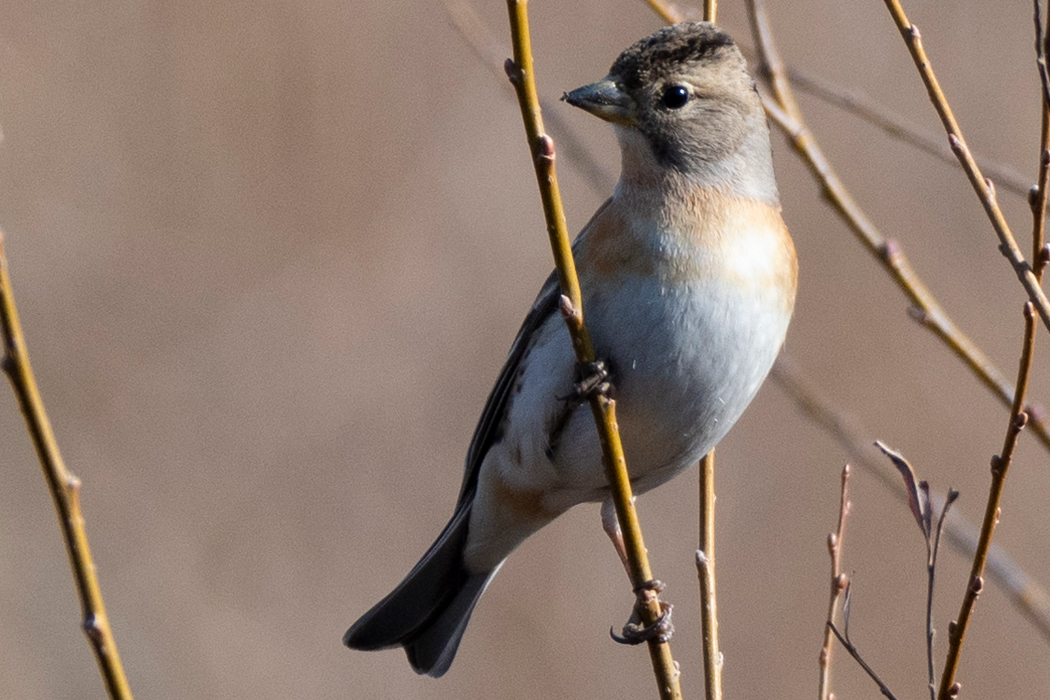
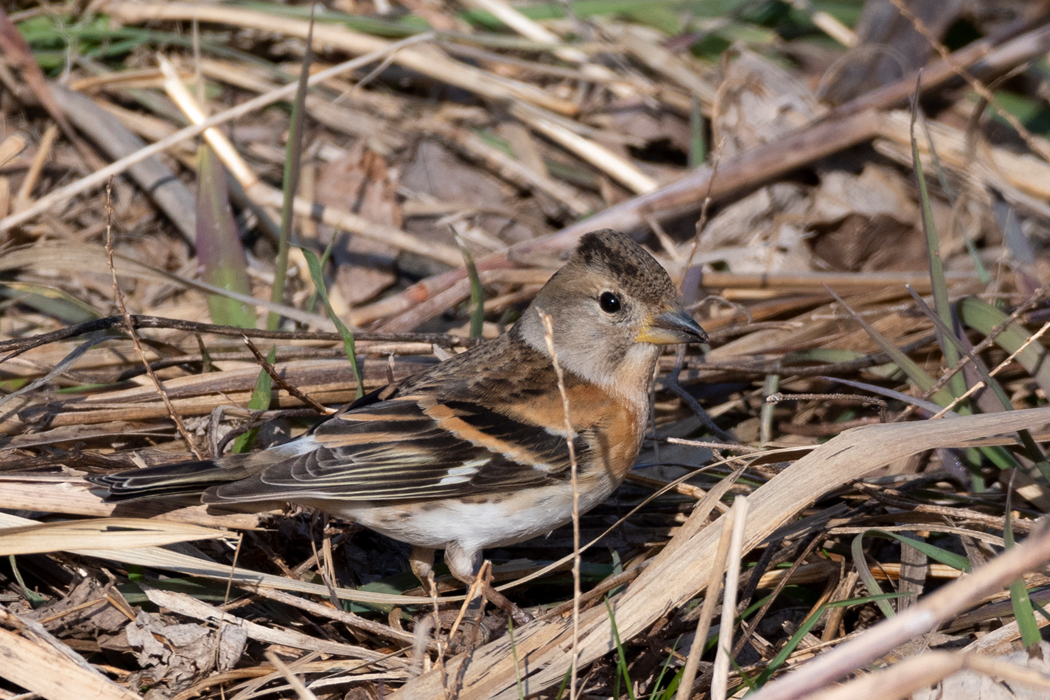
The relatively sharp beak is lead-colored towards the tip and yellowish at the base. The iris is black.
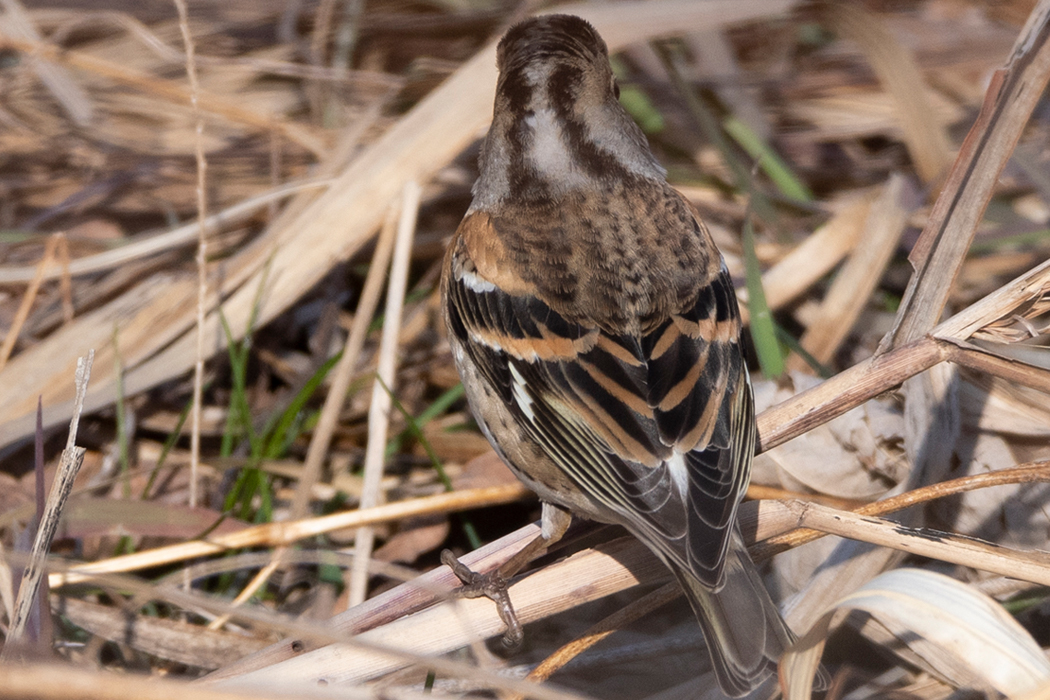
There is bright brown plumage around the shoulders. The back is a mix of bright brown and black, but the impression varies between males and females and depending on the season. The lower part of the abdomen is white.
The tail feathers are M-shaped and dark. The legs are flesh-colored to brown.
Male
More distinctly colored than the female.
The feathers on the head are generally black. Even in winter plumage, the proportion of black parts is high.
Female
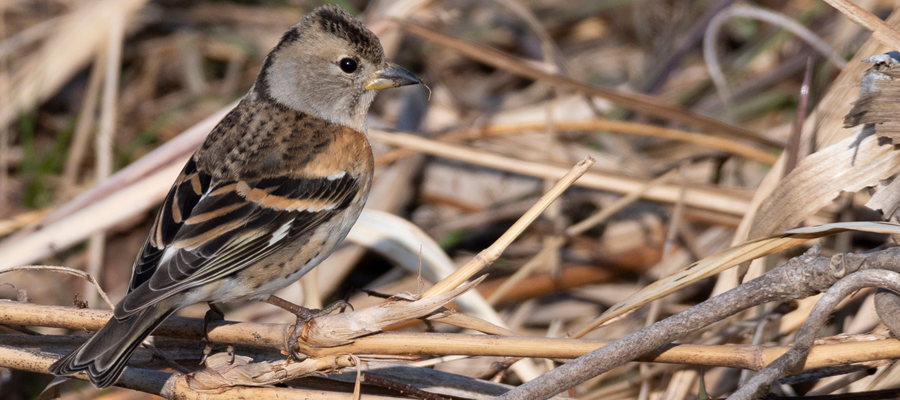
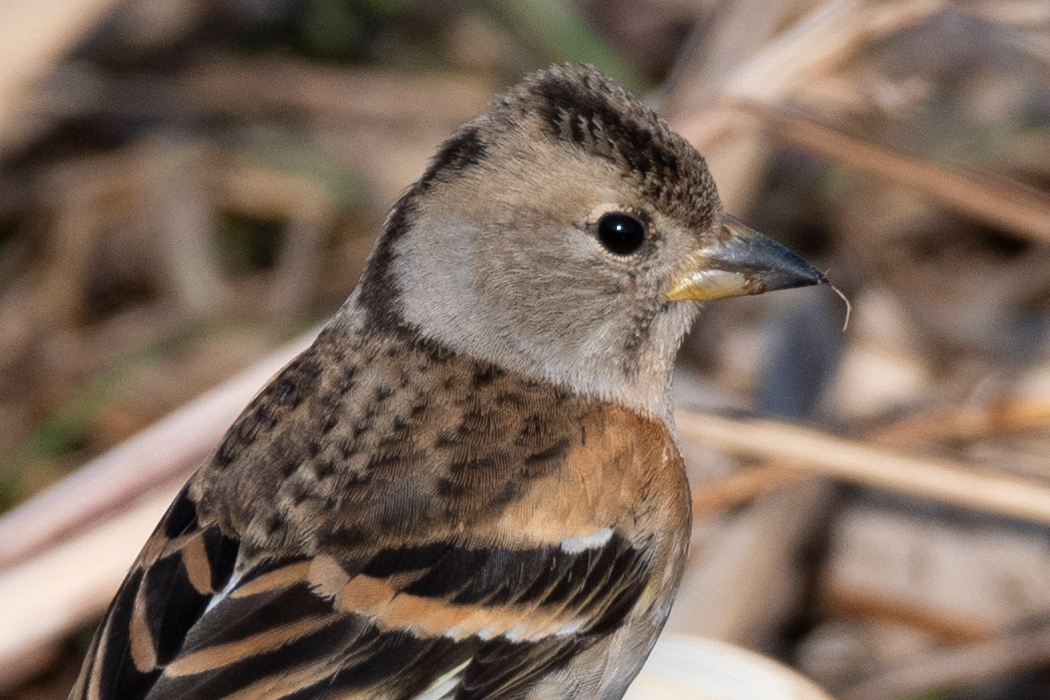
Overall, a more subdued color than the male.
The face is faded brown with some black feathers around the crown.
Song
Sings with a "kyo-kyo" sound.
Brambling Ecology
Habitat
Migrates to Japan as a winter bird and can be seen in forests, cultivated land, and riverbeds.
Food
Eats plant seeds and also feeds on insects.
Life Cycle
May form large flocks before migration.
Brambling Photos
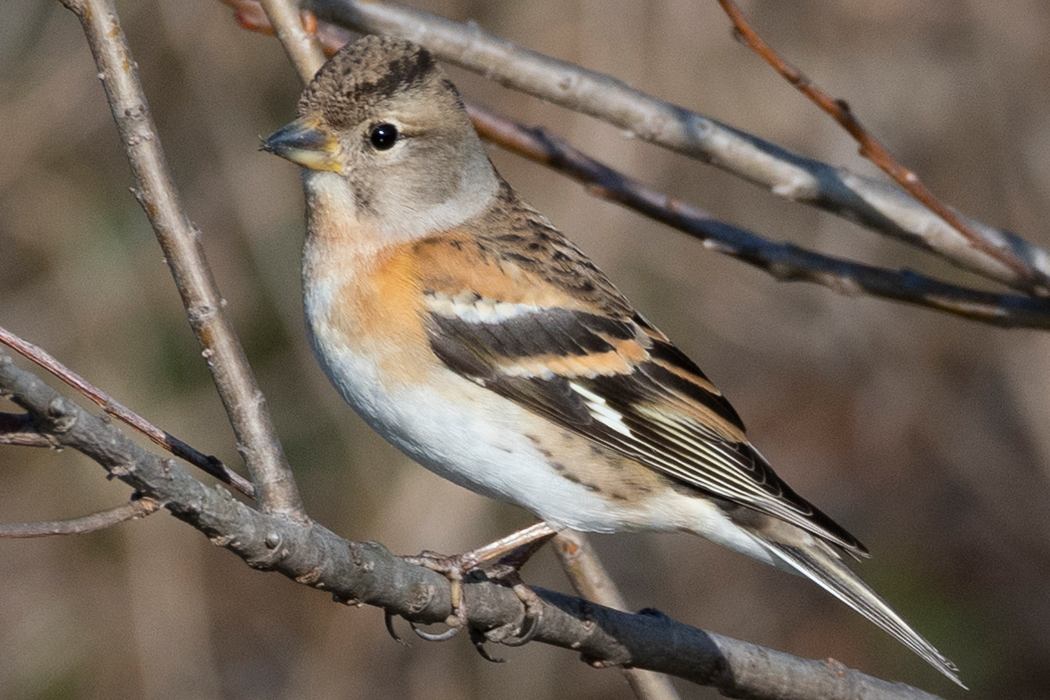
Brambling Photos are introduced.
Tap the photo to open the detail page.
Brambling Information
Naming
The scientific name "montifringilla" means "mountain finch," because in Europe it was mainly seen in the mountains. The kanji "花鶏" (flower bird) comes from the bright orange color being likened to a flower. The English name "Brambling" is derived from thorny shrubs (brambles) and is named after its habitat.
Brambling Found Locations
Riverbed in the midstream of the Tama River
Discovered on a warm February morning in the riverbed in the midstream of the Tama River. It was flying alone, mixed in with birds such as Rustic Buntings and Oriental Greenfinches. From a distance, its abdomen looked white, so at first I thought it was a White-cheeked Bunting.
It was not very wary, and stayed on a tree branch on the opposite side of the water for a while, and foraged on the ground with withered grass.
Brambling Video
Brambling is introduced by video.
It was foraging on the ground.
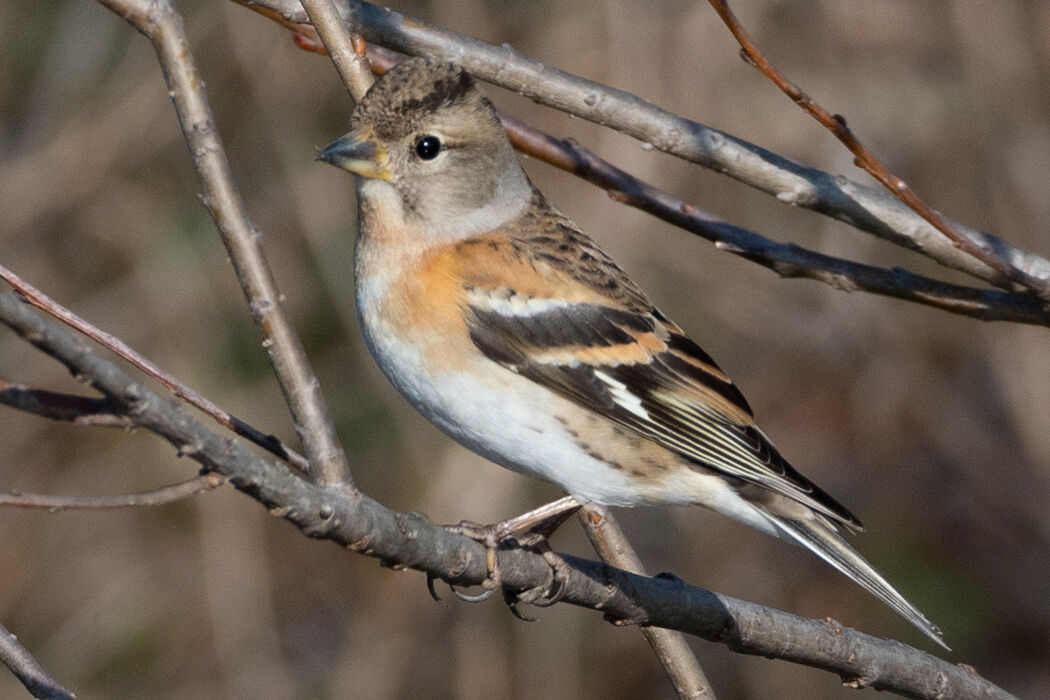
Brambling Observation Log
These are the observation logs where we found Brambling.
Picture book
An alien species with square and black eyes....... Read more
2 nostrils sticking out...... Read more
Characterized by its distinct, pure white eye-ring....... Read more
Goatfish with yellow rear part....... Read more

Finely branched white dorsal process....... Read more
Both eyes on the left side of the body....... Read more