Chinese hwamei
Fills the forest with its beautiful, melodious song.
| Scientific name | Garrulax canorus |
| English name | Chinese hwamei |
| Japanese name | 画眉鳥 |
| Class | Aves |
| Order | Passeriformes |
| Family | Timaliidae |
| Genus | Garrulax |
| Species | hwamei |
| Full length | 24cm |
| Distribution | Distributed from southern China to Southeast Asia. Also established in Japan as an invasive species. |
Chinese hwamei Characteristics and Morphology
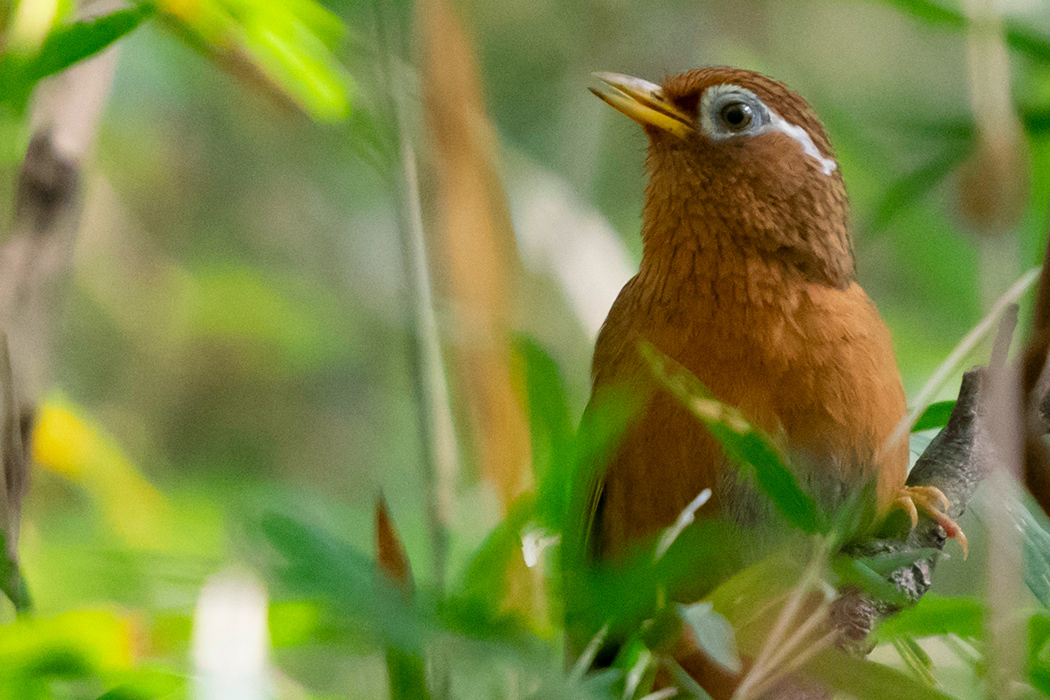
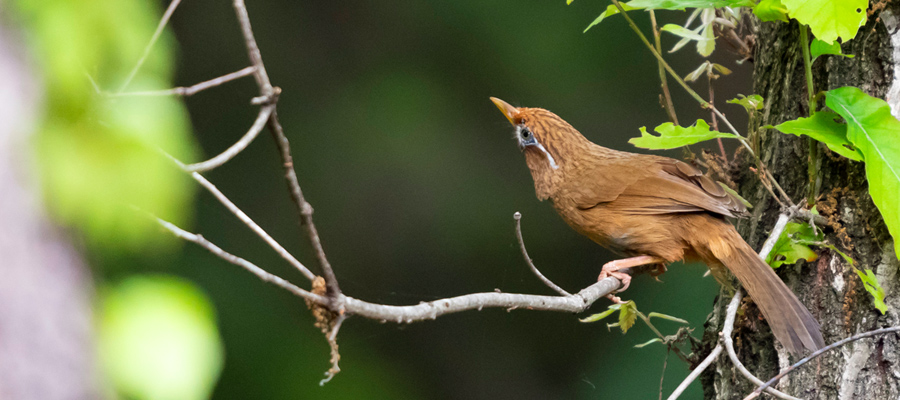
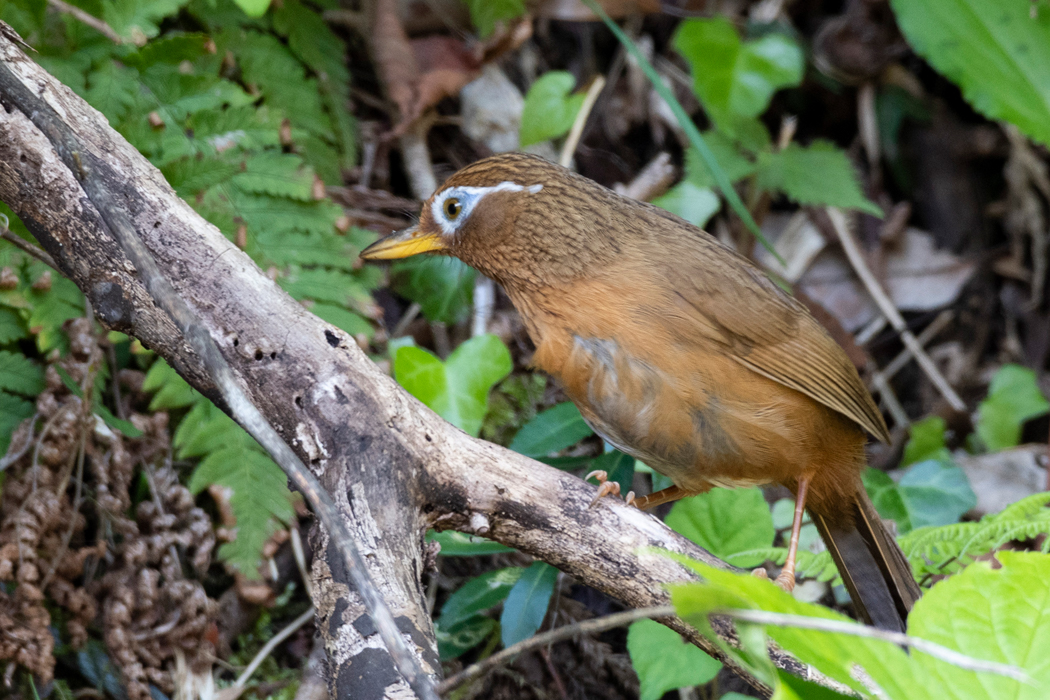
A bird about the size of a brown-eared bulbul, with a rounded belly and a long-tailed silhouette. Monomorphic (males and females look alike), with the entire body being brown.
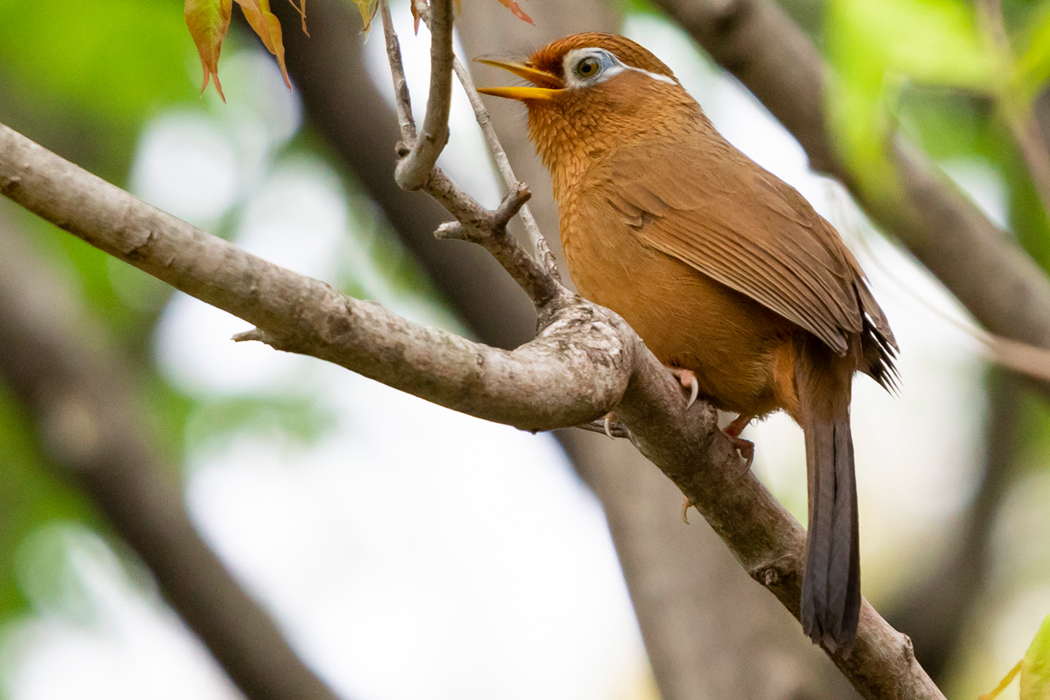
The head is a slightly lighter brown than the rest of the body. The inner part of the eye ring is pale blue, while the outer part is a distinct white. The white marking extends toward the back of the head. The bill ranges from yellow to orange.
The belly is rounded, giving it a somewhat plump appearance.
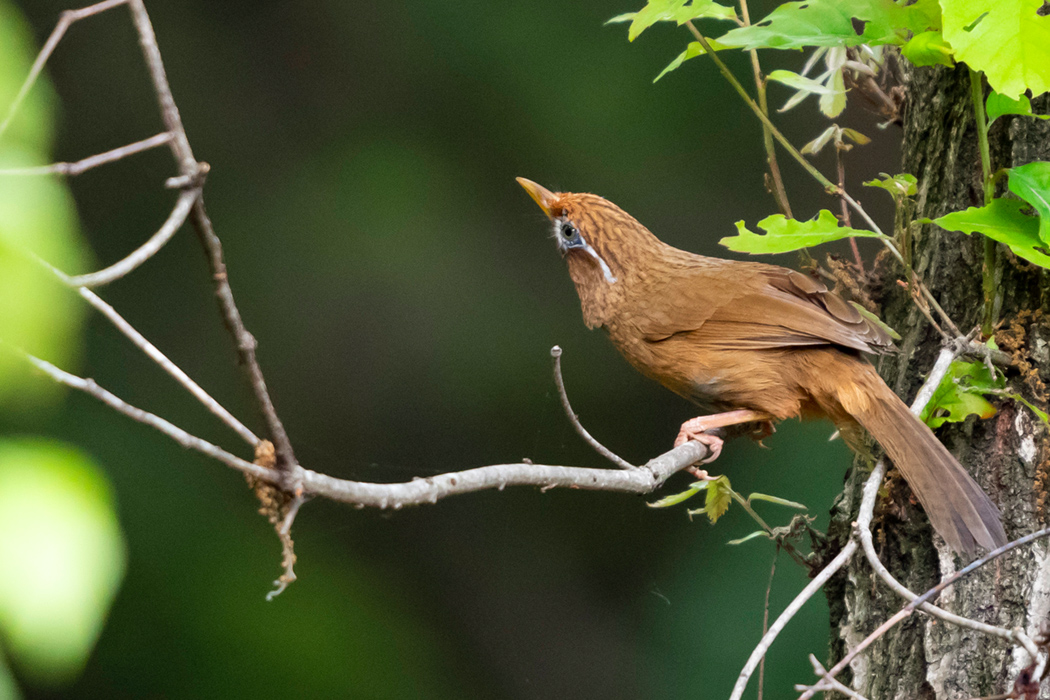
The tail feathers are long; when perched on a branch, the tip of the tail hangs down toward the ground.
Juvenile
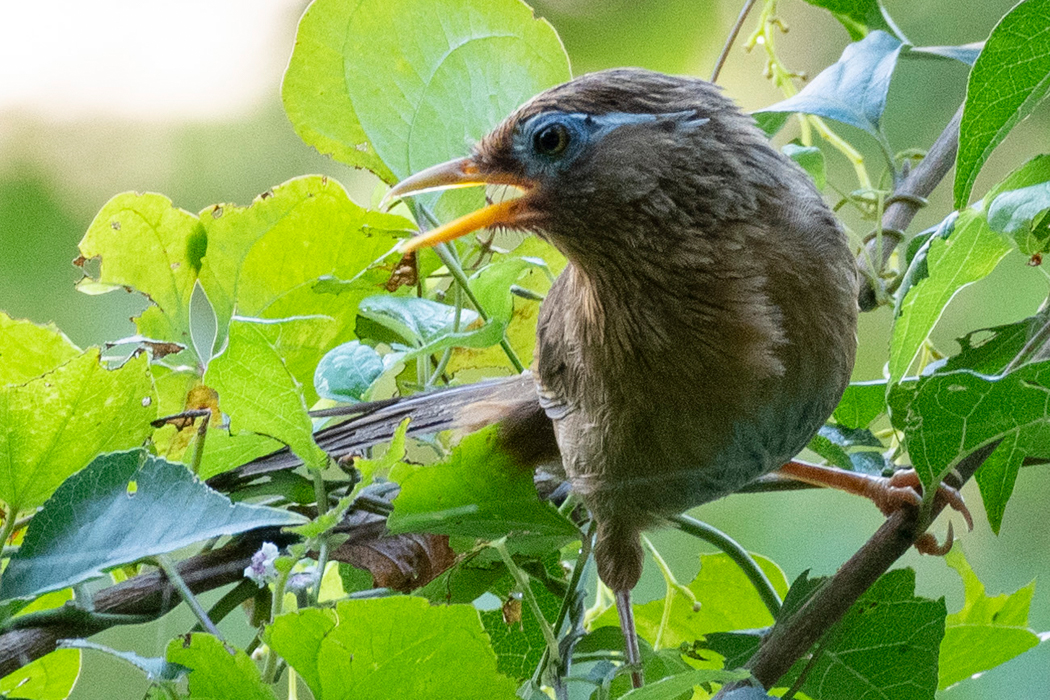
The tail is shorter, and the overall coloration is paler.
Song
It sings beautifully in the thickets using a variety of tones. While the song resembles that of the Japanese bush warbler, it is characterized by being much louder with longer melodies.
Chinese hwamei Ecology
Habitat
Inhabits thickets and secondary forests, moving through dense undergrowth. Found in wooded riverbanks as well as areas near human settlements.
Food
Feeds on insects and fruits while moving near the ground.
Life Cycle
They move in pairs during the breeding season and form flocks outside of the breeding season.
Chinese hwamei Photos
Chinese hwamei Photos are introduced.
Tap the photo to open the detail page.


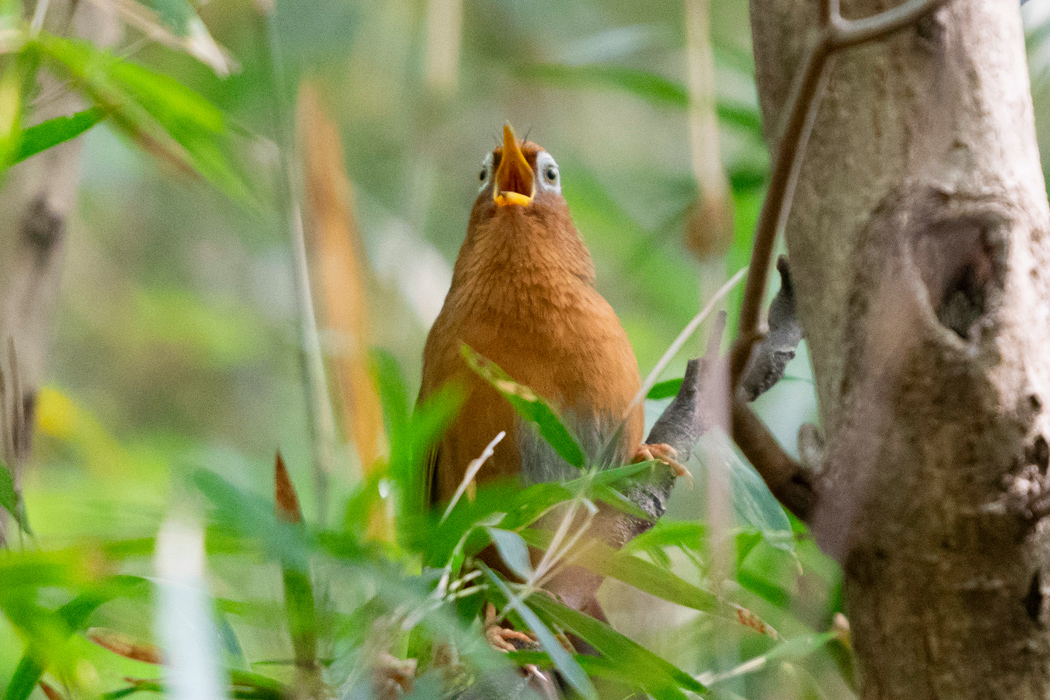
Chinese hwamei Behavior
When singing, it hops up onto a branch slightly higher than the ground.
Chinese hwamei Information
Naming
The scientific name "canorus" means "melodious" in Latin, referring to its complex singing style. The English name "hwamei" comes from the Chinese "huà-méi," meaning "painted eyebrow," highlighting the eye markings that look as if they were drawn.
Invasive Alien Species
Designated as an Invasive Alien Species under the Invasive Alien Species Act. Originally, it was not a bird native to Japan. It is believed that Hwamei kept as pets for their song escaped from cages and became established. Currently, they are widely distributed from Kyushu to the southern Tohoku region.
Chinese hwamei Found Locations
Machida City Oyamadairei Park
It was singing in the thickets of Oyamadairei Park.
Even though only a fence separated the forest from the walkway, it continued to sing even when people got quite close. It moves through the brush making a rustling sound; hearing only the sound of its movement, it can sound like an Oriental turtle dove foraging on the ground. Its hopping movement is what distinguishes it from a dove.
Chinese hwamei Observation Log
These are the observation logs where we found Chinese hwamei.
References
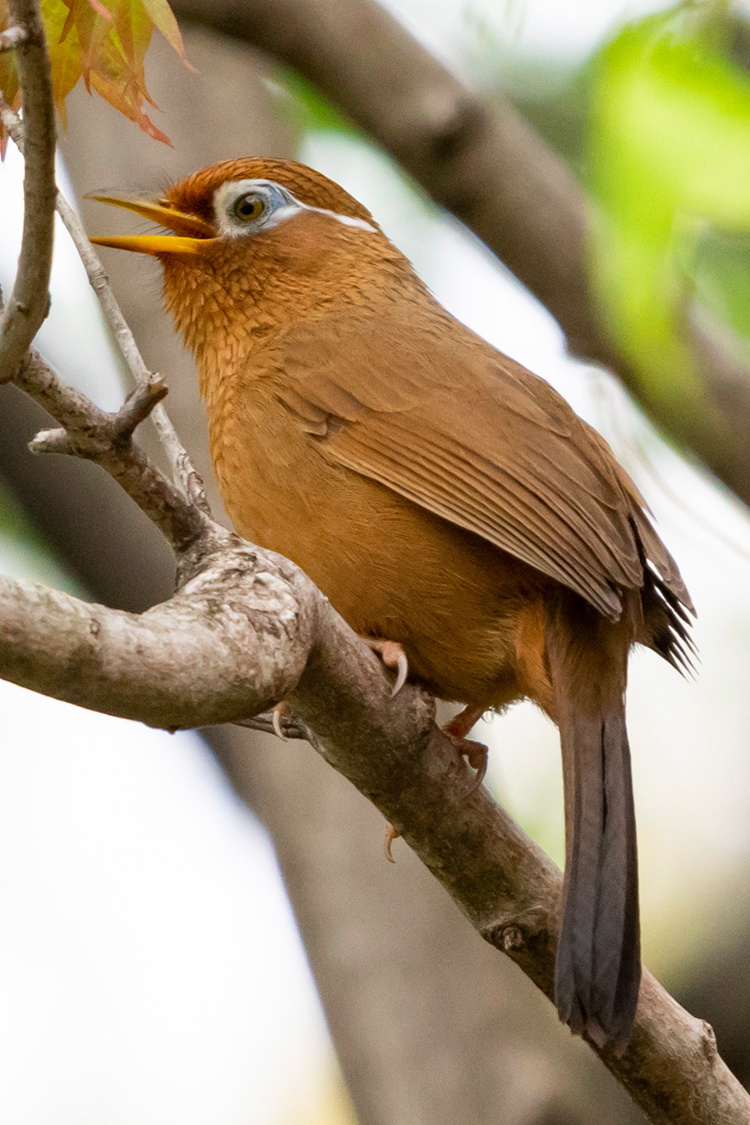
Picture book

running brown band....... Read more
Sings with its head up and chest puffed out...... Read more
It has poisonous spines on its tail....... Read more
A green spider that lives on leaves and trees....... Read more

Alien Species of Interest, also known as "green turtles"...... Read more
A winter bird with bright brown plumage....... Read more