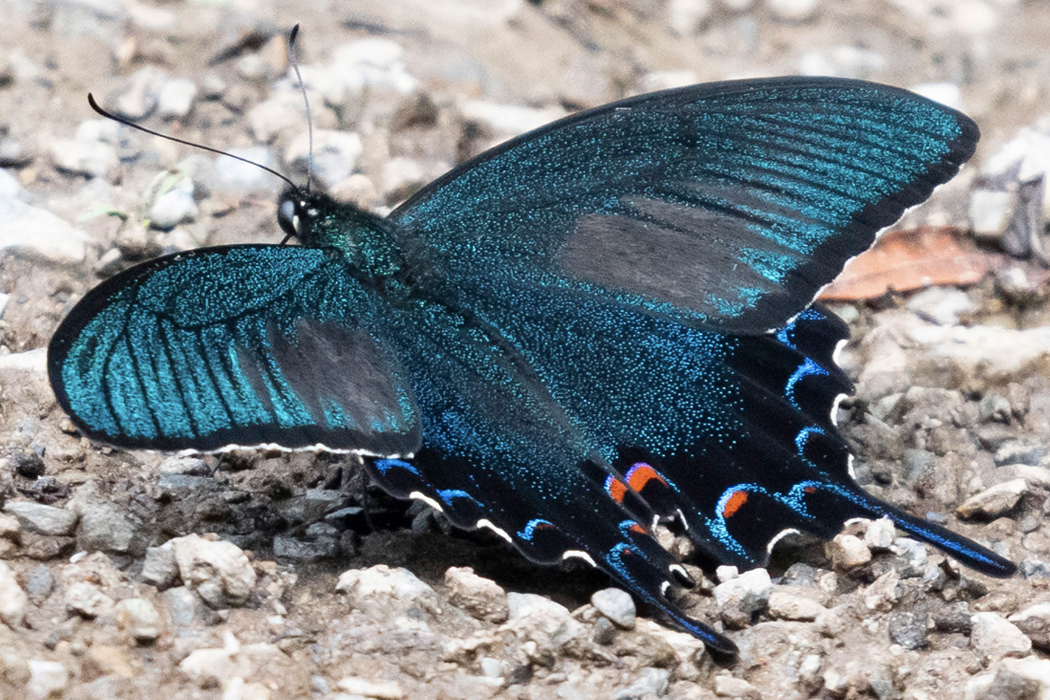
Crow swallowtail
A swallowtail butterfly with beautiful wings that shimmer in blue and green.
| Scientific name | Papilio dehaanii |
| English name | Crow swallowtail |
| Japanese name | 烏揚羽 |
| Class | Insecta |
| Order | Lepidoptera |
| Family | Papilionidae |
| Genus | Papilio |
| Species | dehaanii |
| Full length | 45-80mm |
| Distribution | Distributed throughout Japan, from Hokkaido to Kyushu. |
Crow swallowtail Characteristics and Morphology
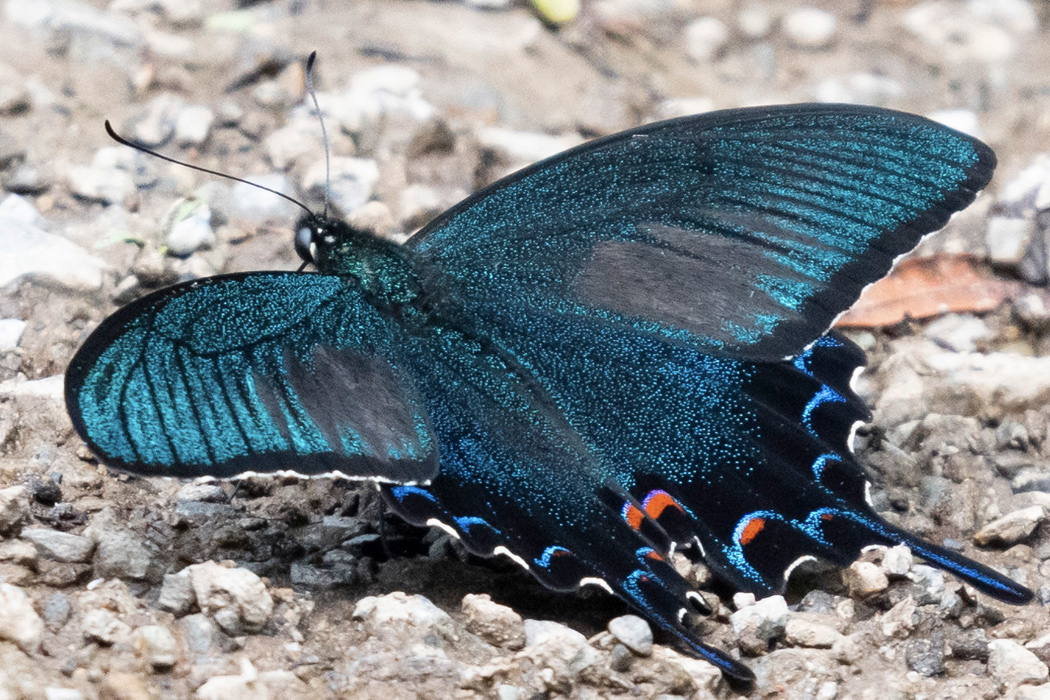
A beautiful swallowtail butterfly with glossy green and blue on a black background. The forewing length reaches about 8cm. It looks blackish while in flight.
The head is generally blackish.
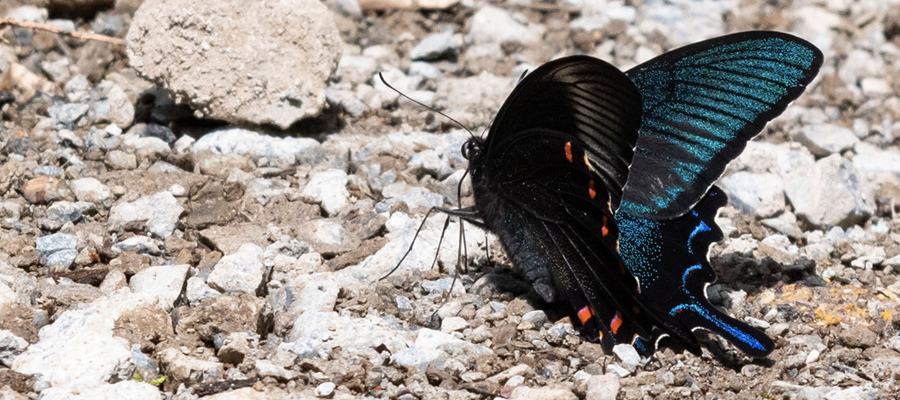
The forewings are large and wide, featuring glossy green and blue on black. Bright colors appear when hit by light. The underside of the forewings is generally black, with several red spots near the edges, and the tips of the forewings are slightly whitish. There are red markings near the base of the hindwings. The tail-like projections (tails) are also very gorgeous.
Very similar to the Alpine black swallowtail (Papilio maackii), but the Peacock swallowtail has a stronger bluish tint. The clear distinguishing point is the band on the hindwings. The Alpine black swallowtail has a light blue band on the upper surface of the hindwings and a white band on the underside.
Male
There is a non-glossy, matte-textured area near the center of the forewings. This part is called a "sex brand" (androconia) and is thought to be used for identifying males and females. The eye spots are subtle, and there are fewer red spots.
Female
Has flashier colors than the male and feels more glossy.
The eye spots on the edges of the hindwings are prominent, with many red spots. It lacks the sex brand found on males.
Crow swallowtail Ecology
Habitat
Found from spring to late summer around forests with mountain streams and valleys. Rarely seen in urban areas.
Food
Feeds on nectar from flowers or sucks water from damp ground. The larvae use plants like the Japanese pepper (Sansho) and Japanese orixa (Kokusagi) as host plants.
Life Cycle
Emerges twice a year starting around April. The summer generation tends to be larger.
Crow swallowtail Photos
Crow swallowtail Photos are introduced.
Tap the photo to open the detail page.
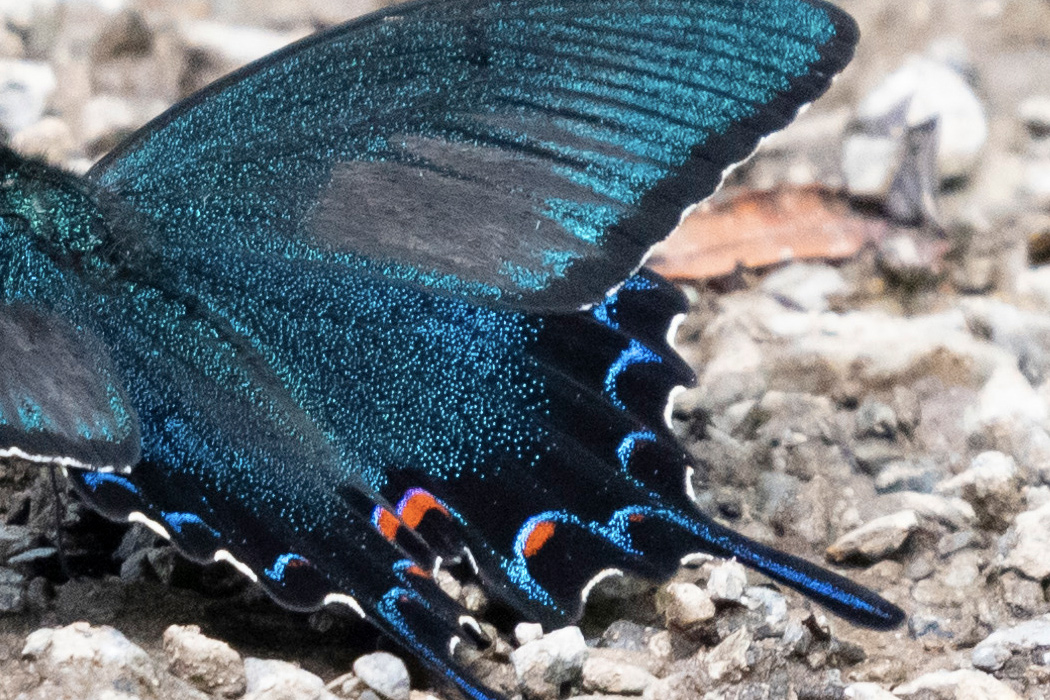
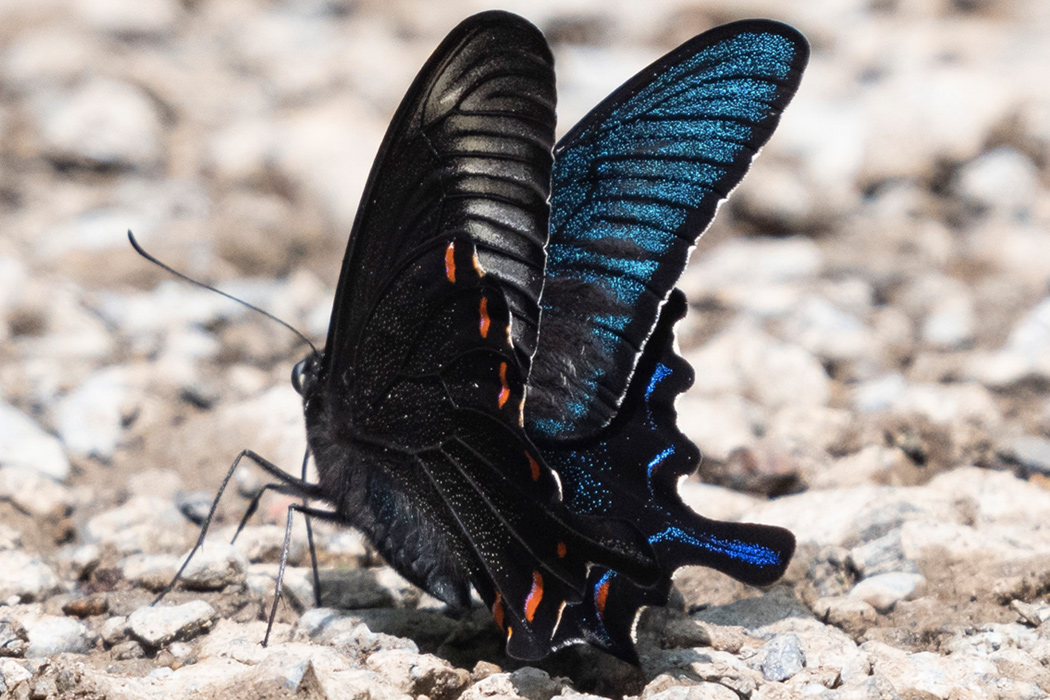
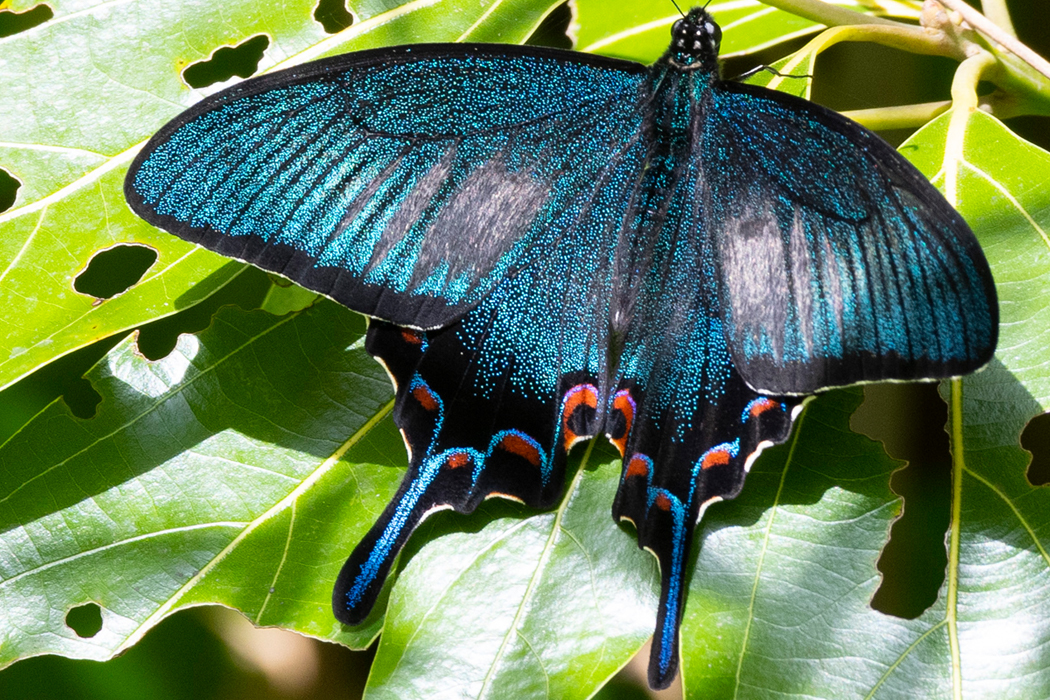
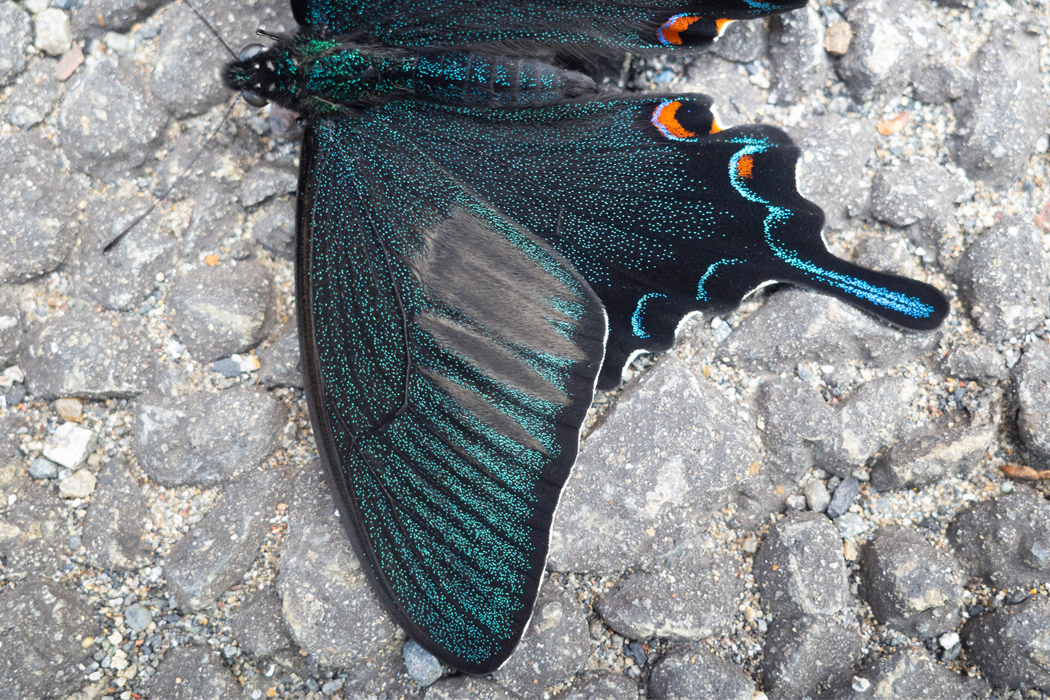
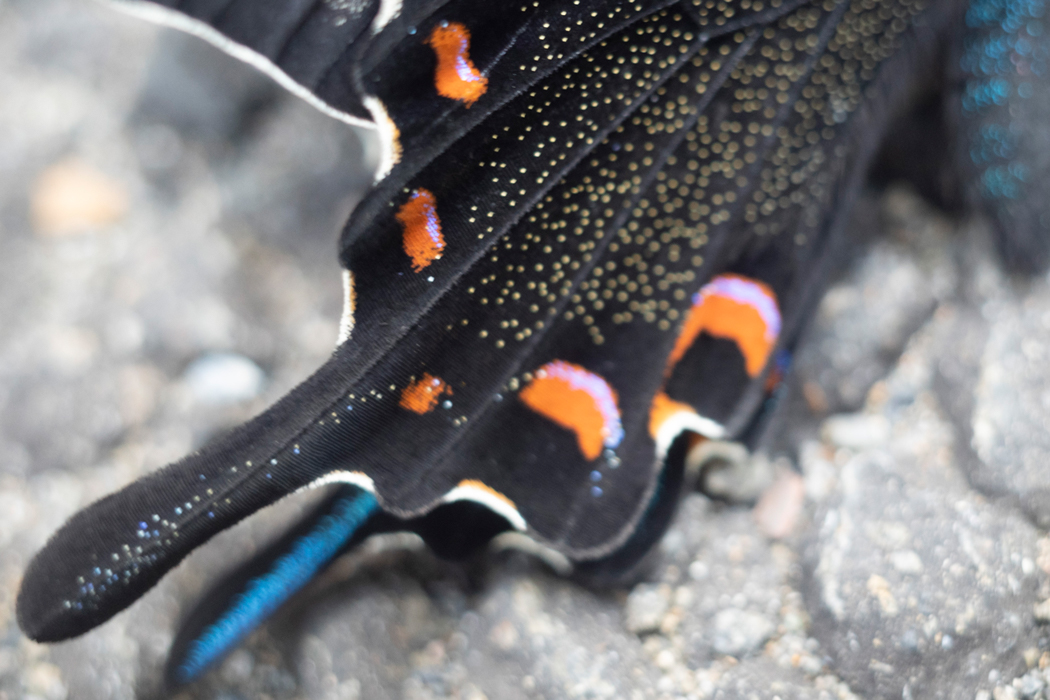
Crow swallowtail Behavior
The flight speed is not very fast, and it does not immediately fly away even if you get somewhat close. In sunny spots, it may rest with its wings open.
Crow swallowtail Information
Naming
The scientific name "dehaanii" is named after the Dutch zoologist Willem de Haan. The Japanese name "Karasu" (Crow) comes from the wings shining like the iridescent black feathers of a crow.
Crow swallowtail Found Locations
Forest in Minamiasakawa-machi, Hachioji City
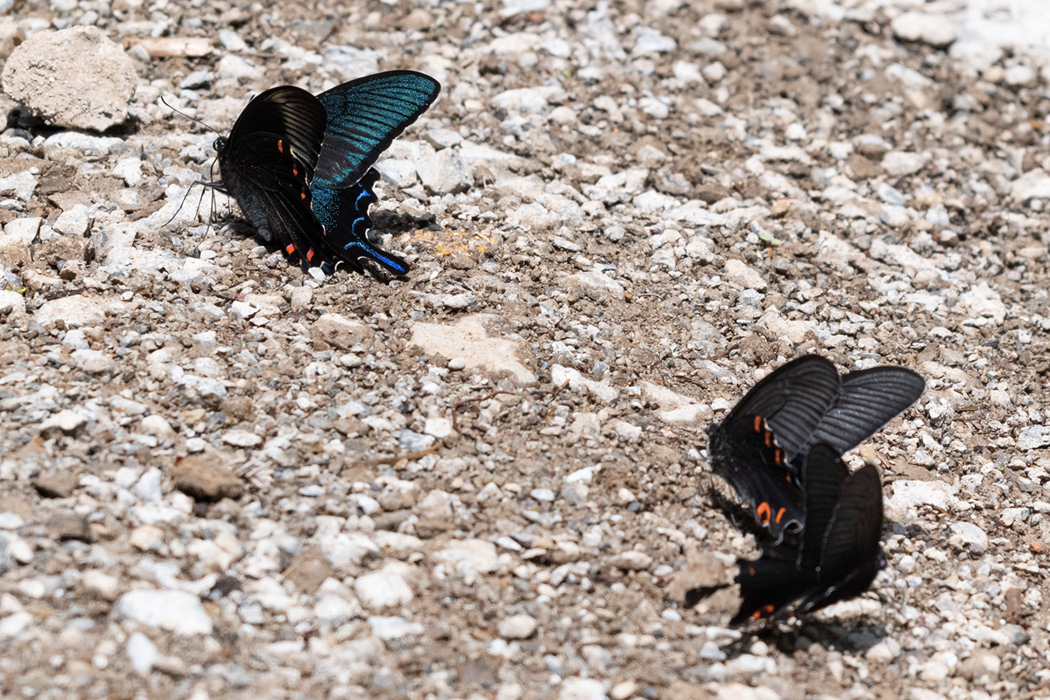
I found it in a forest in Hachioji City. It was a weekend after a rainy week, and it was drinking water in a sunny spot on damp ground. Various other types of butterflies, such as the Spangle, Common sailer, and Red admiral, were gathered at the same spot. As the sun grew stronger, it remained still with its wings open. It was very beautiful to see it in flight as well.
I also saw them flying over mountain streams and descending to the riverbed to drink water around the Golden Week holidays.
Crow swallowtail Observation Log
These are the observation logs where we found Crow swallowtail.
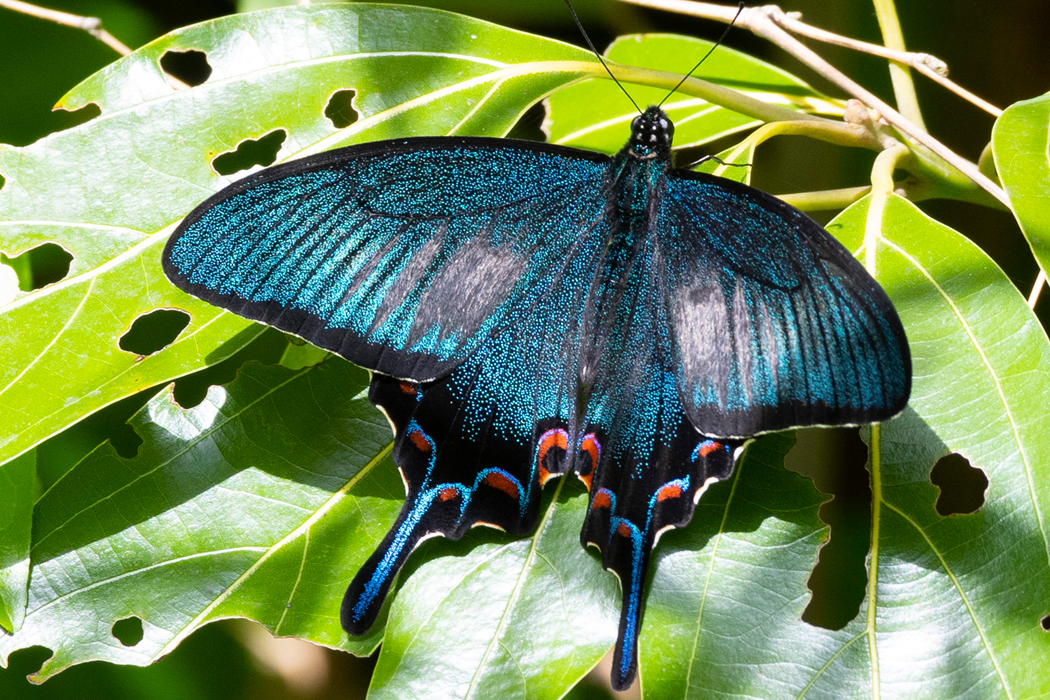
As I was going down along the stream after leaving the forest, a Chinese Black Swallowtail flew out over the river. After chasing it for a while, it landed on a leaf.
Read more >
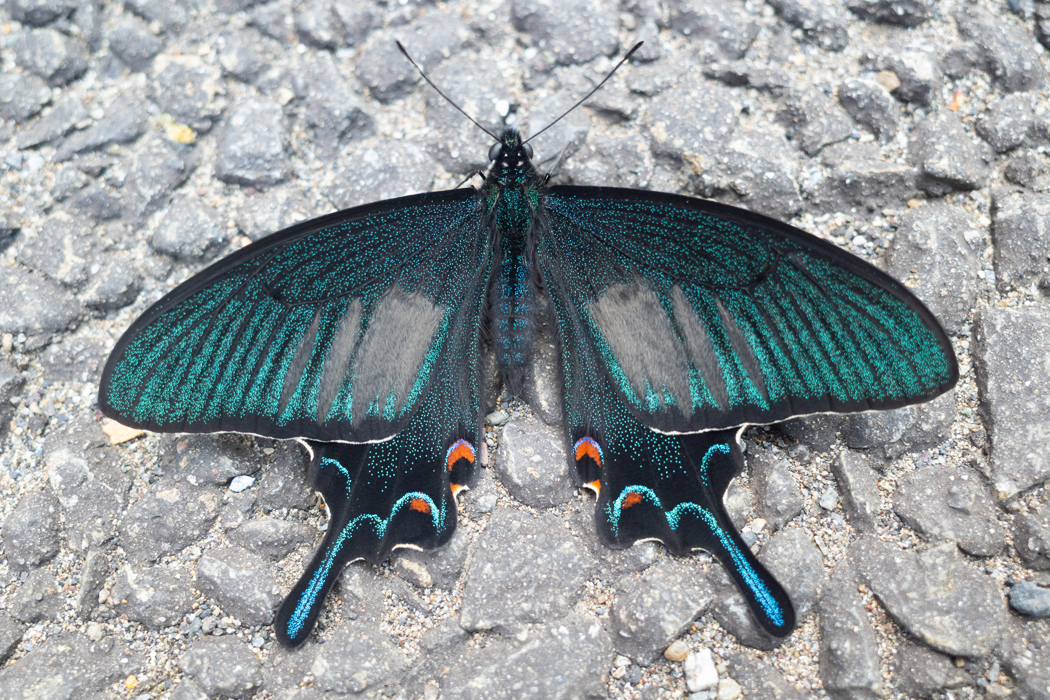
As I was walking on the sidewalk along the road, there was a Chinese Black Swallowtail. Perhaps it had just emerged from its pupa, as it did not fly away.
Read more >
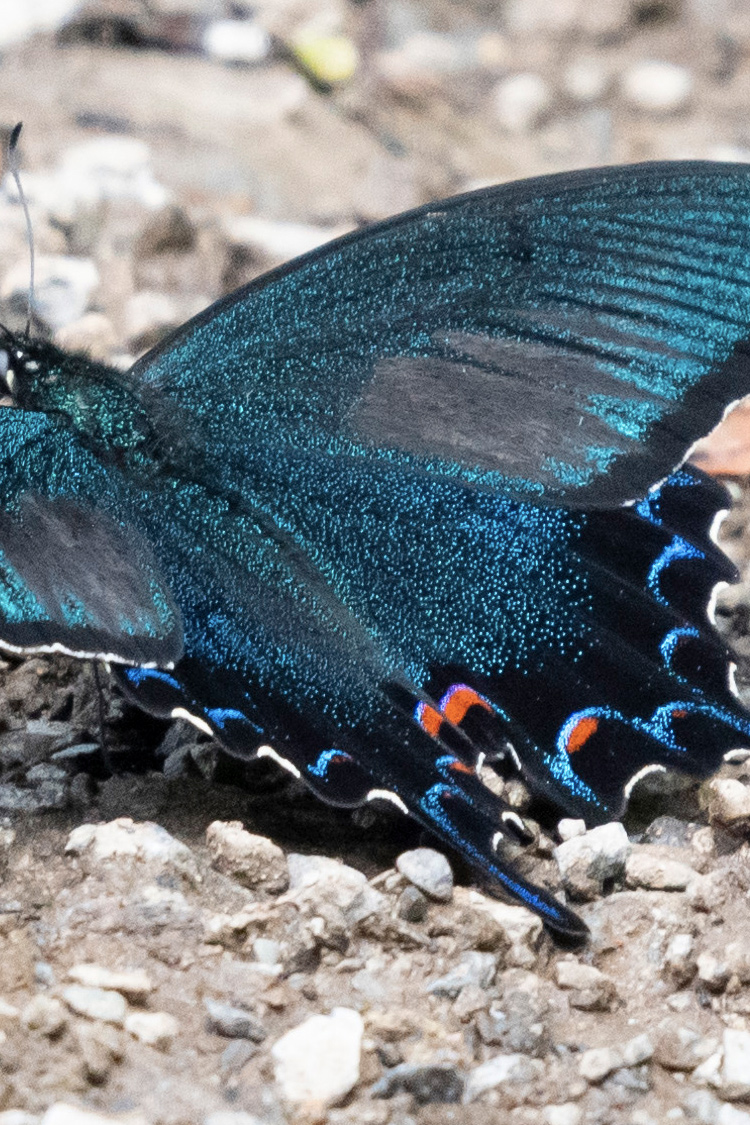
Picture book
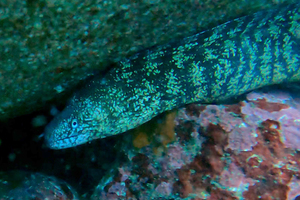
A mouth slit behind the eyes and lined with sharp teeth....... Read more
Spreads its legs to maintain balance....... Read more
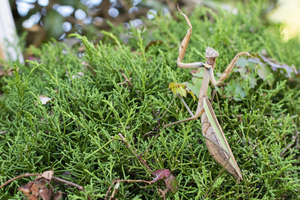
Catch prey with sickles on front legs....... Read more
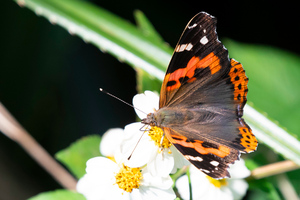
bright orange Nymphalidae...... Read more
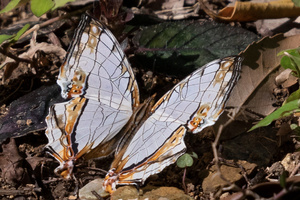
Characterized by streaked patterns resembling stone walls or rock faces....... Read more
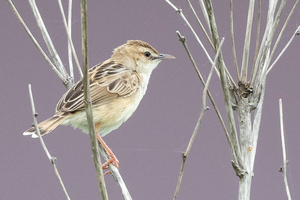
Inhabits rivers and marshes, and uses more than 12 different calls....... Read more