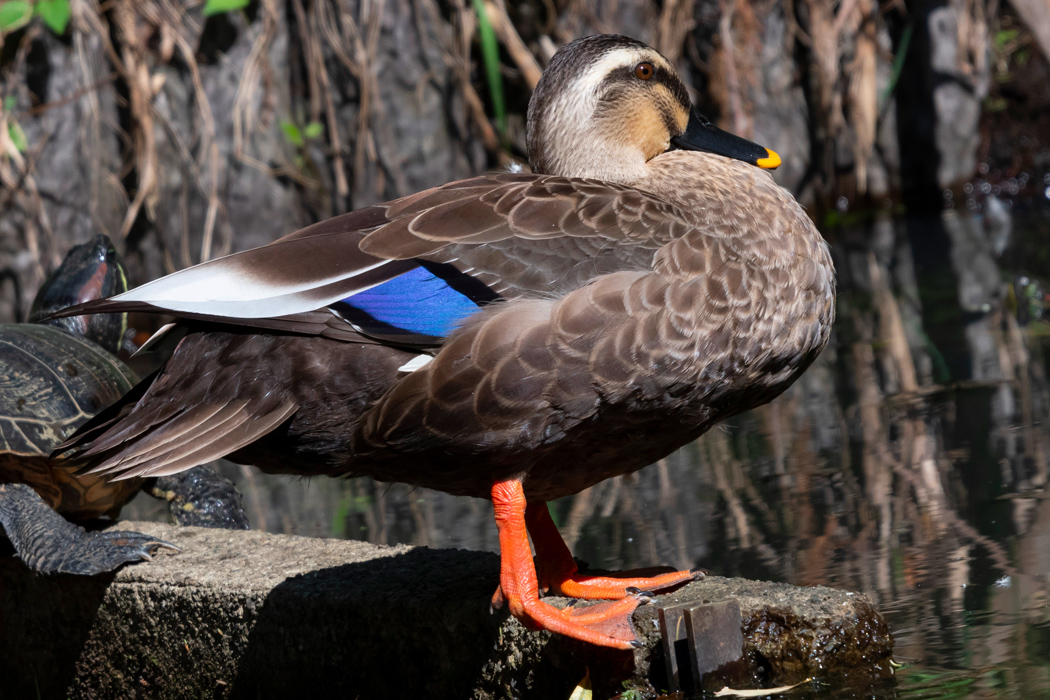
Eastern Spot-billed Duck
It was spinning around, carried by the river current.
| Scientific name | Anas zonorhyncha |
| English name | Eastern Spot-billed Duck |
| Japanese name | 軽鴨 |
| Class | Aves |
| Order | Anseriformes |
| Family | Anatidae |
| Genus | Anas |
| Species | zonorhyncha |
| Full length | 51-64cm |
| Distribution | Inhabits Honshu and southward. |
Eastern Spot-billed Duck Characteristics and Morphology
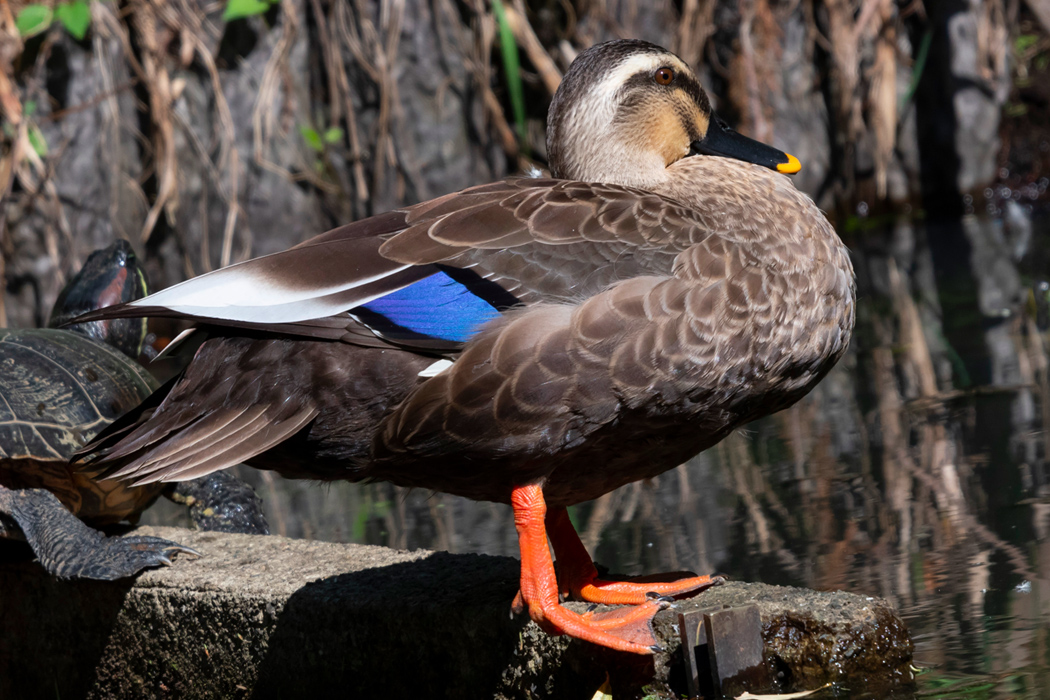
A duck about 60cm in length. The entire body is brown. Males and females look alike.
No crest; the head is rounded. The crown and eye-stripe are dark brown, while the areas above and below the eyes are pale brown. The beak is black with a yellow tip. Irises are also black.
The body appears somewhat plump. The back is dark brown, and the speculum is a lustrous blue or emerald green. From the neck to the breast, it is pale brown with scattered brown spots. There are white feathers on the tertials.
The silhouette of the tail feathers is spread out during flight. The legs are orange.
Song
Calls with a "ga-ga" or "gue-gue" sound.
Eastern Spot-billed Duck Ecology
Habitat
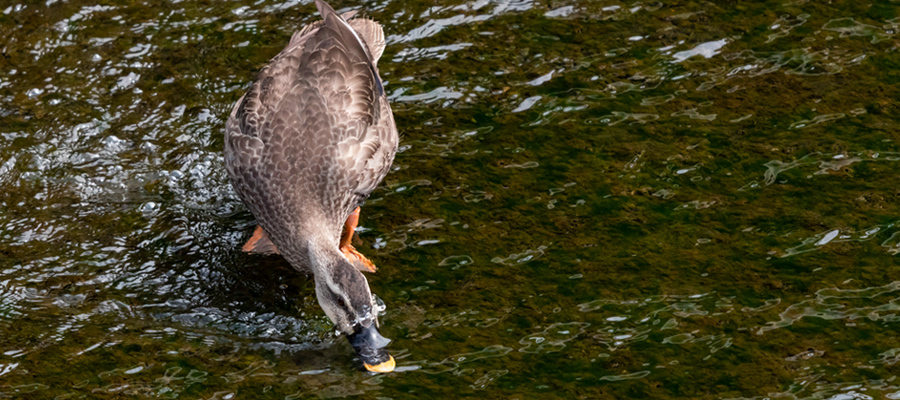
Inhabits areas within the human sphere such as rivers, estuaries, rice paddies, and park ponds, as well as grasslands along urban rivers and watersides.
Food
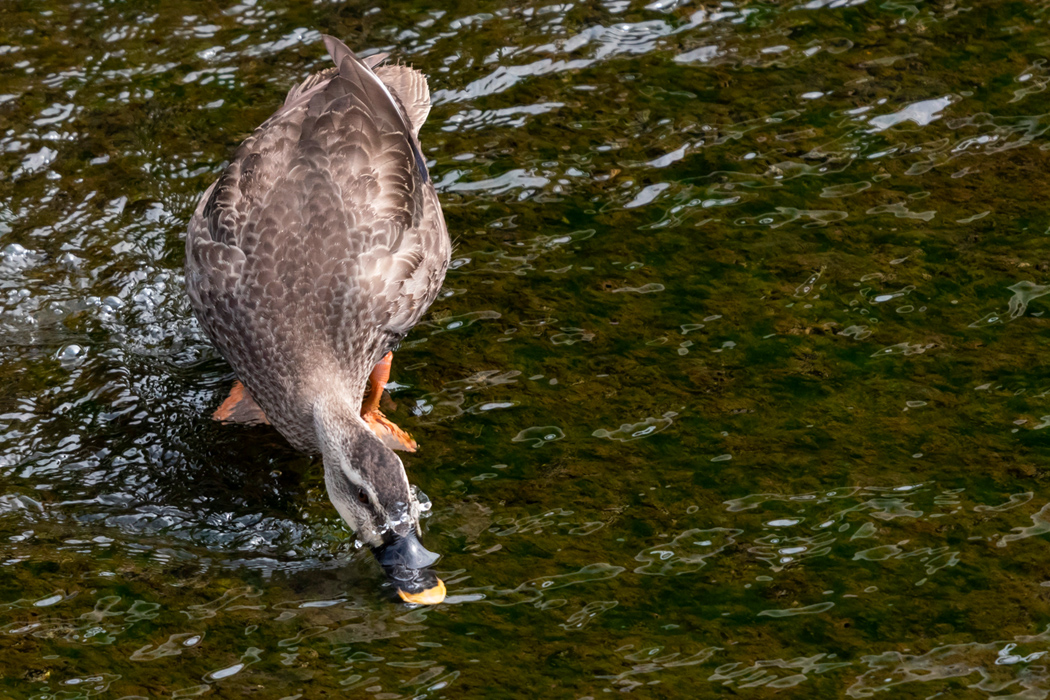
Eats plant seeds and pond snails.
Life Cycle
From spring to summer, they build nests in grasslands along urban rivers and swim with about 10 ducklings. The ducklings are precocial and follow the parent bird immediately after hatching.
Eastern Spot-billed Duck Photos
Eastern Spot-billed Duck Photos are introduced.
Tap the photo to open the detail page.


Eastern Spot-billed Duck Behavior
They live in groups near the water. They typically rest or sit during the day and become active at night.
Eastern Spot-billed Duck Information
Naming
The scientific name "zonorhyncha" means "banded beak," likely because the yellow part of the beak looks like a band.
They are also considered a nuisance bird as they trample and eat rice crops.
Eastern Spot-billed Duck Found Locations
Nogawa River, Chofu City
Found swimming in the Nogawa River in Chofu City. It was spinning around as it was carried by the river current. They are commonly seen in calm rivers and ponds, and they won't fly away if humans approach, as long as a certain distance is maintained.
Eastern Spot-billed Duck Video
Eastern Spot-billed Duck is introduced by video.
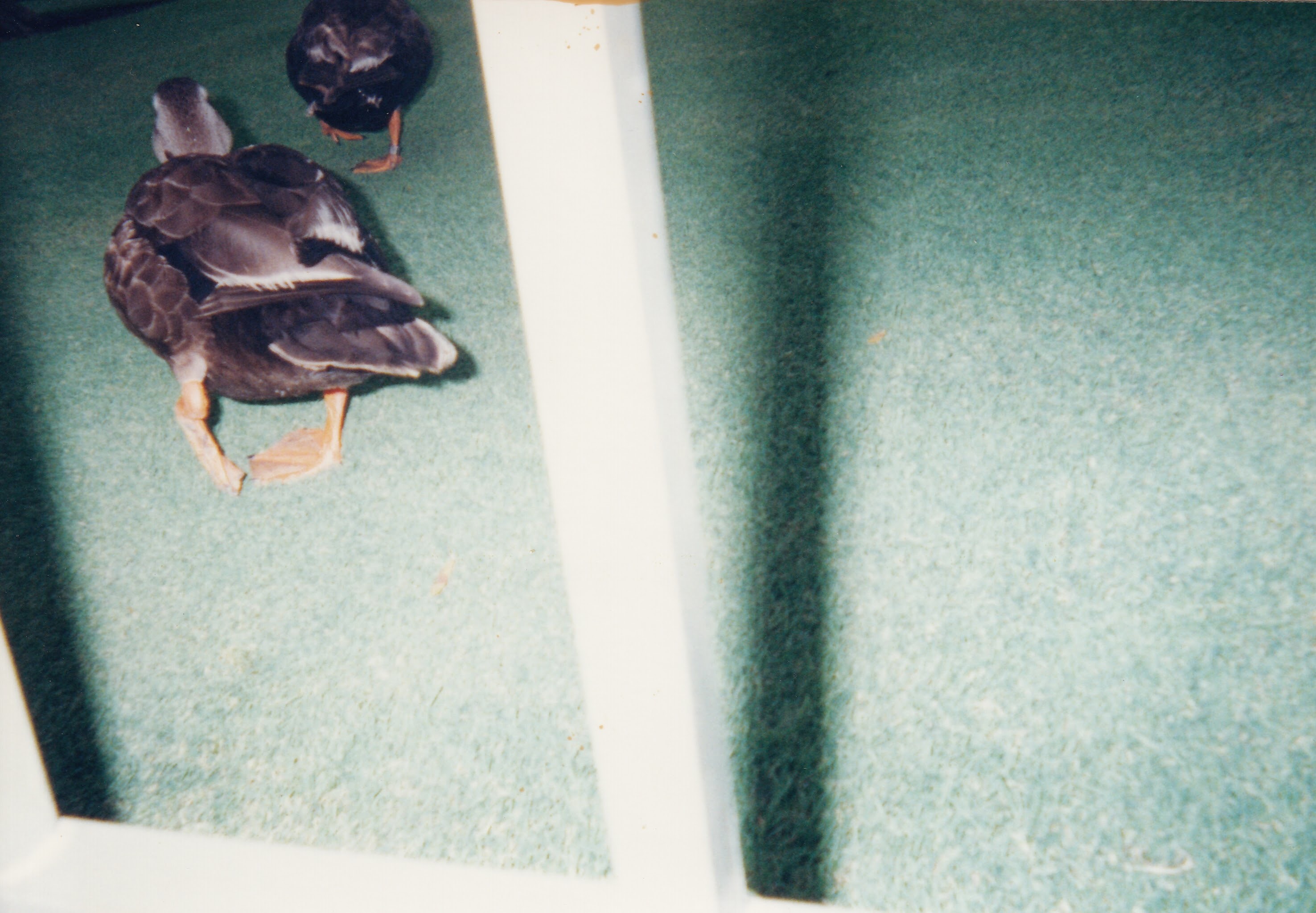
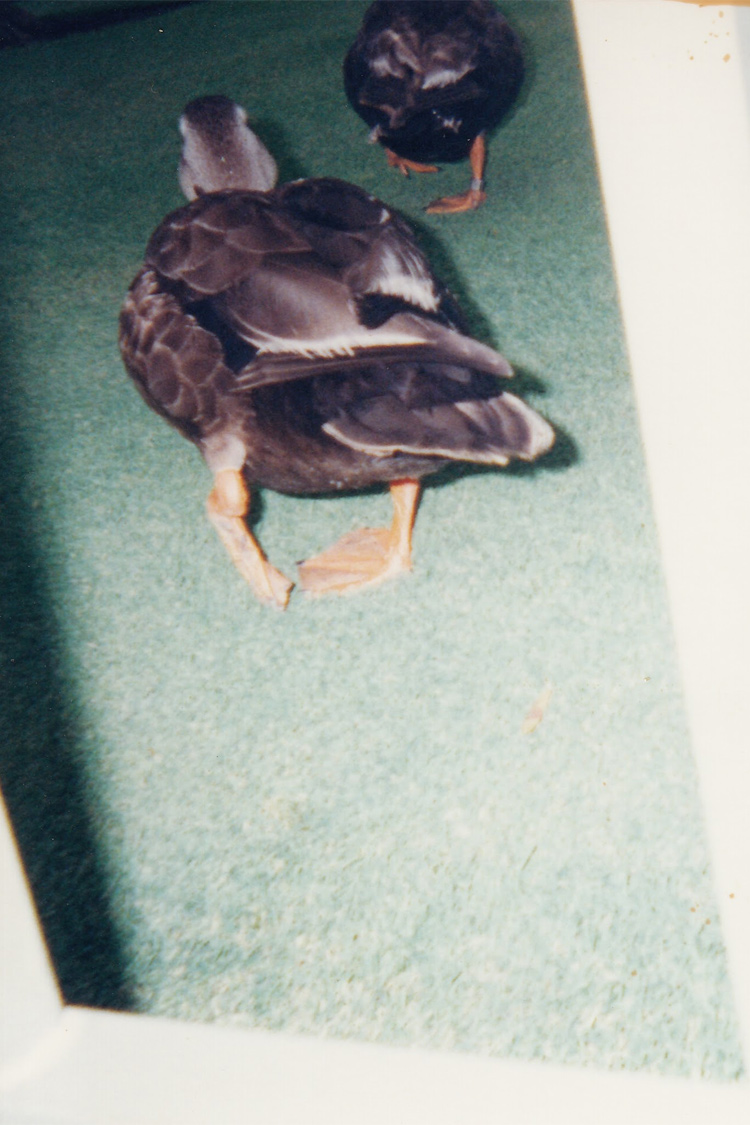
A parent and offspring napping.
Picture book
Has an elongated cylindrical mouth and body....... Read more
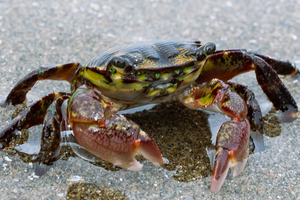
Crabs found while playing on the shore....... Read more
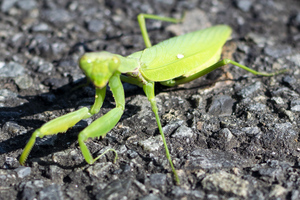
Can be seen until late autumn. It is characterized by the white stripes on the forewings....... Read more
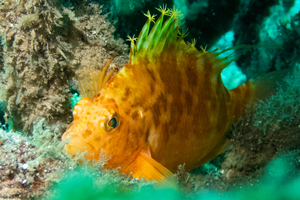
The tip of the dorsal fin spine is open....... Read more
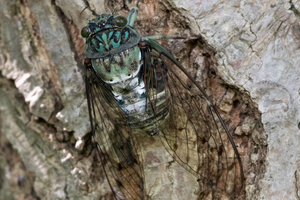
As its Japanese name suggests, it makes the sound "meenminmin"....... Read more

It peeks out of a hole in the reef....... Read more