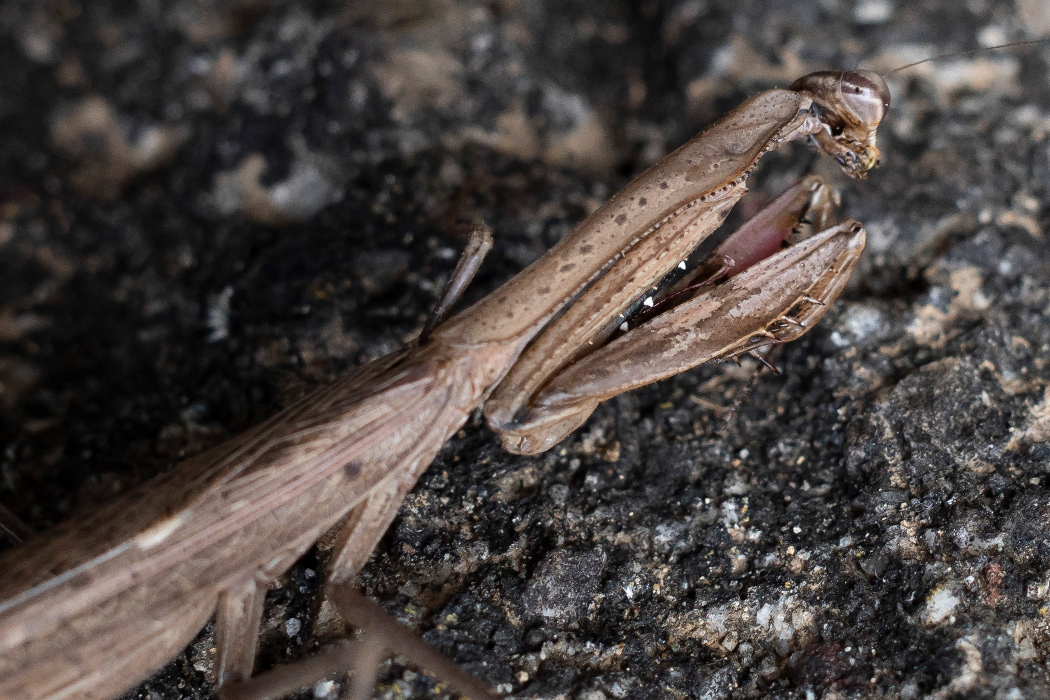
Asian jumping mantis
A small mantis the color of dead leaves.
| Scientific name | Statilia maculata |
| English name | Asian jumping mantis |
| Japanese name | 小蟷螂 |
| Class | Insecta |
| Order | Mantodea |
| Family | Mantidae |
| Genus | Statilia |
| Species | maculata |
| Full length | 45-58mm |
| Distribution | Distributed from Honshu to Kyushu. Also found in East Asia, including Taiwan. |
Asian jumping mantis Characteristics and Morphology
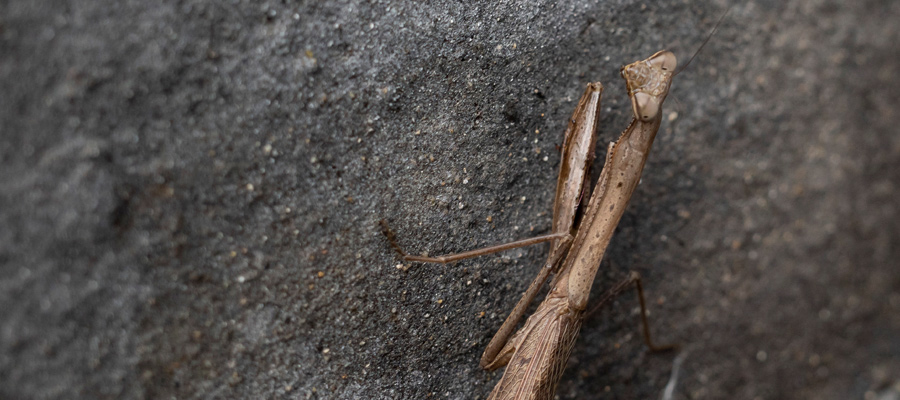
A small mantis colored like dead leaves. Most are light brown to purplish-brown, though color varies slightly by individual. Its coloration blends in well with fallen leaves.
Eyes are small.
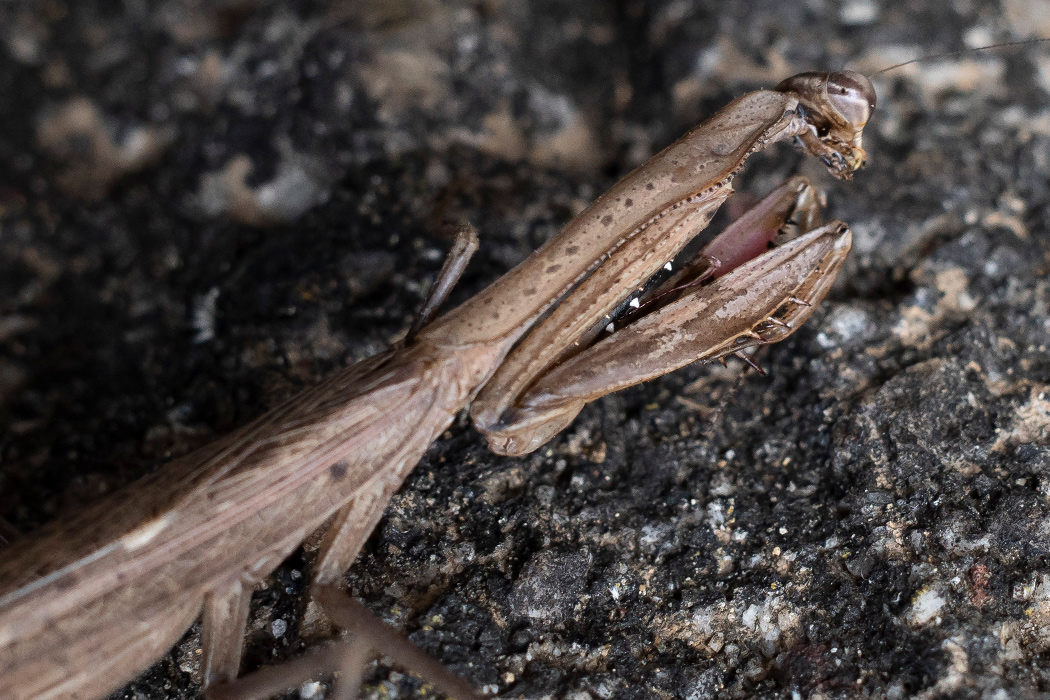
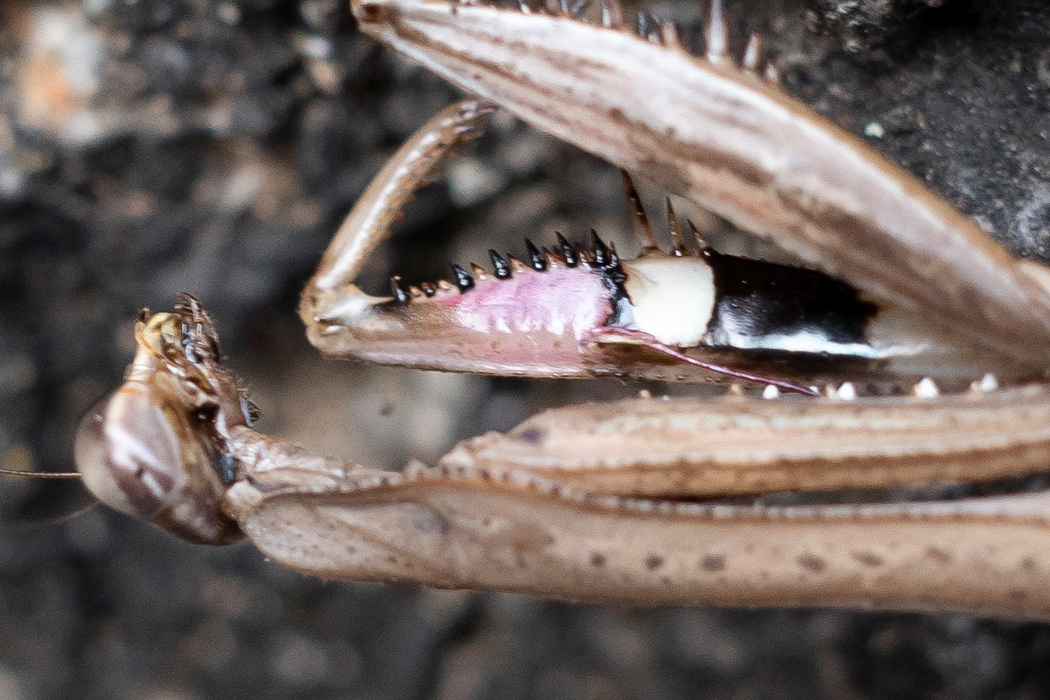
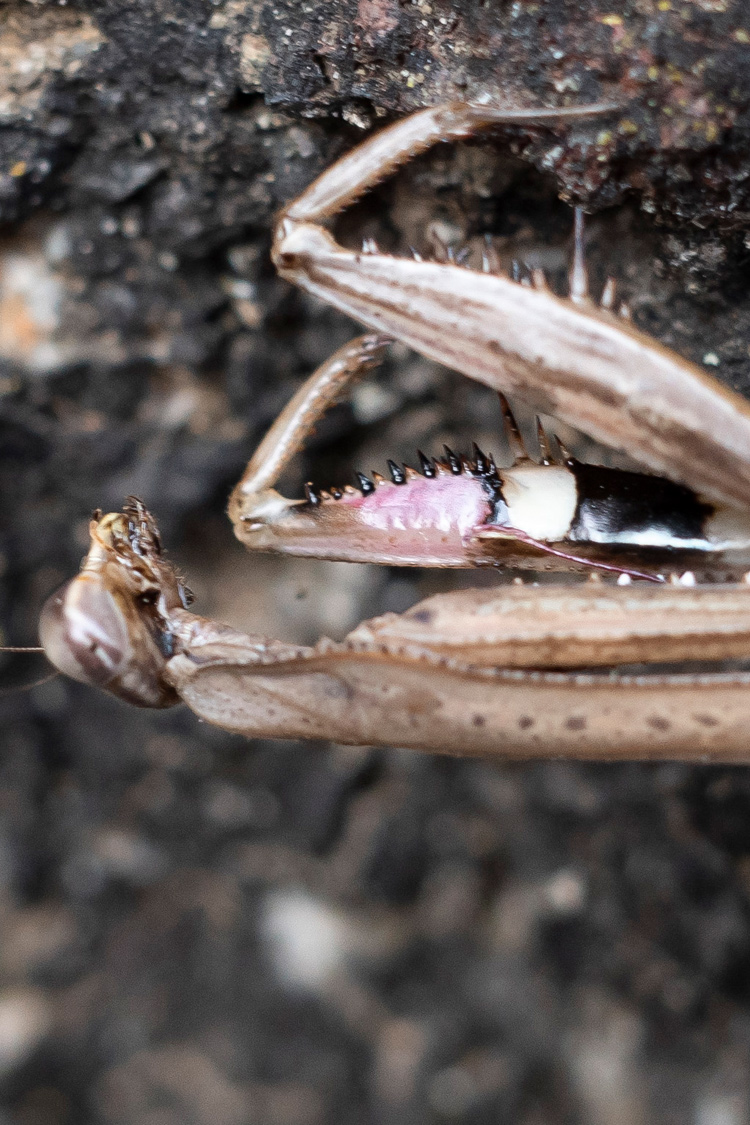
It has a pair of light brown spots near the middle of its wings. The inner side of the foreleg raptorial claws features black or reddish-purple markings.
Considerably smaller than the Tenodera aridifolia (Giant Mantis) or Hierodula patellifera (Giant Asian Mantis).
Male
A size smaller than the female, reaching about 5cm at most.
Antennae are longer than those of the female.
The abdomen is slender.
Female
Larger than the male, with some individuals exceeding 6cm.
Antennae are short.
The abdomen is plump and stout.
Asian jumping mantis Ecology
Habitat
Inhabits grasslands such as riverbeds. Commonly seen near houses and in parks.
Food
Walks along the ground to capture and eat small insects.
Life Cycle
Appears from summer to autumn. The egg cases (oothecae) look much more modest compared to those of the Giant Mantis and are laid on tree trunks or concrete.
Asian jumping mantis Photos
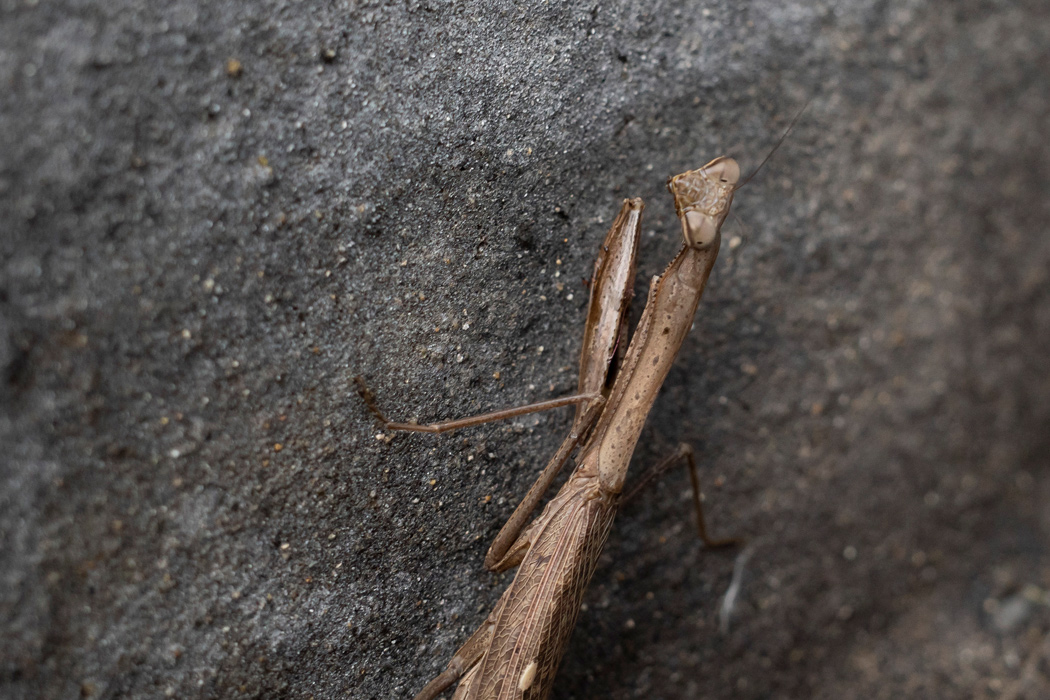
Asian jumping mantis Photos are introduced.
Tap the photo to open the detail page.

Asian jumping mantis Behavior
Not very aggressive; when they sense danger, they do not spread their claws to threaten like a Giant Mantis, but instead flee quickly or play dead.
Asian jumping mantis Information
Naming
The scientific name "maculata" means "spotted," referring to the spots found on its raptorial claws.
Its strong terrestrial nature is thought to be related to its soil-colored body.
Asian jumping mantis Found Locations
Hachioji City
I photographed this individual walking in my garden. Its color blends in perfectly with fallen leaves.
Since it is not a strong mantis, it will be eaten quickly if placed in the same insect cage as a Giant Mantis.
Picture book
It has white eyebrows....... Read more
The species name comes from the German Dönitz who collected it....... Read more

The chest is slightly buff-colored....... Read more

A head with clearly separated black and white....... Read more
fairly large with wings open....... Read more
Runs around the rocky beach and eats sea lice, small fish and seaweed....... Read more